Tiller vs. Cultivator: The Direct Answer
A tiller uses powerful rotating tines to break new or heavily compacted ground, driving 6–10+ inches deep to tear through hardpan and prepare a bed from scratch. A cultivator uses lighter, shallower tines — typically 2–6 inches deep — to loosen, aerate, and weed soil that has already been worked. The machines differ fundamentally in engine or motor power, tine working depth, weight, and the soil condition they are built to handle. If the ground has never been turned or has not been worked in years, you need a tiller. If you are maintaining an existing garden bed, aerating between rows, or uprooting weeds mid-season, a cultivator is the right tool.

Pros
- Manufacturer-stated 15 Amp corded power
- 18-inch size listed in the title
- Six steel tines per the listing
- Adjustable wheels included in the listing
Cons
- Corded design limits range to nearby outlets
- Power and tilling claims are unverified

Pros
- 13.5 Amp corded electric power stated
- 16-inch size listed in the title
- Steel tines per the listing
- Model SUJ-TJ604E identified
Cons
- Corded design limits range to nearby outlets
- Power and performance claims are unverified
Pros
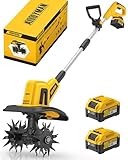
- Two 4.0Ah batteries and charger listed
- 360 RPM speed per the manufacturer
- 9-inch tilling width stated
- 6.6-inch tilling depth stated
Cons
- RPM, width and depth figures are unverified claims

Pros
- Battery-powered for cord-free tilling
- Designed for gardening and garden rototilling
Cons
- Battery, dimensions and power details not supplied
Tiller vs. Cultivator: Quick-Reference Comparison
The table below covers the five factors that matter most when choosing between the two tools.
| Factor | Tiller | Cultivator |
|---|---|---|
| Primary job | Break new or compacted ground | Loosen, aerate, and weed worked soil |
| Tine working depth | 6–10+ inches | 2–6 inches |
| Power (gas) | 150–390 cc engine | 25–100 cc engine (or electric equivalent) |
| Power (electric) | 8–15 amps / 40–80V battery | 2.5–6 amps / 20–40V battery |
| Weight | 35–300 lbs depending on type | 5–30 lbs |
| Best garden scale | Large plots, new beds, full-acre fields | Raised beds, small plots, row gardens |
| Typical price range | $300–$2,000+ | $50–$400 |
| Weed control | Buries weeds during initial tillage | Uproots weeds between established rows |
What Is a Tiller and What Does It Do?
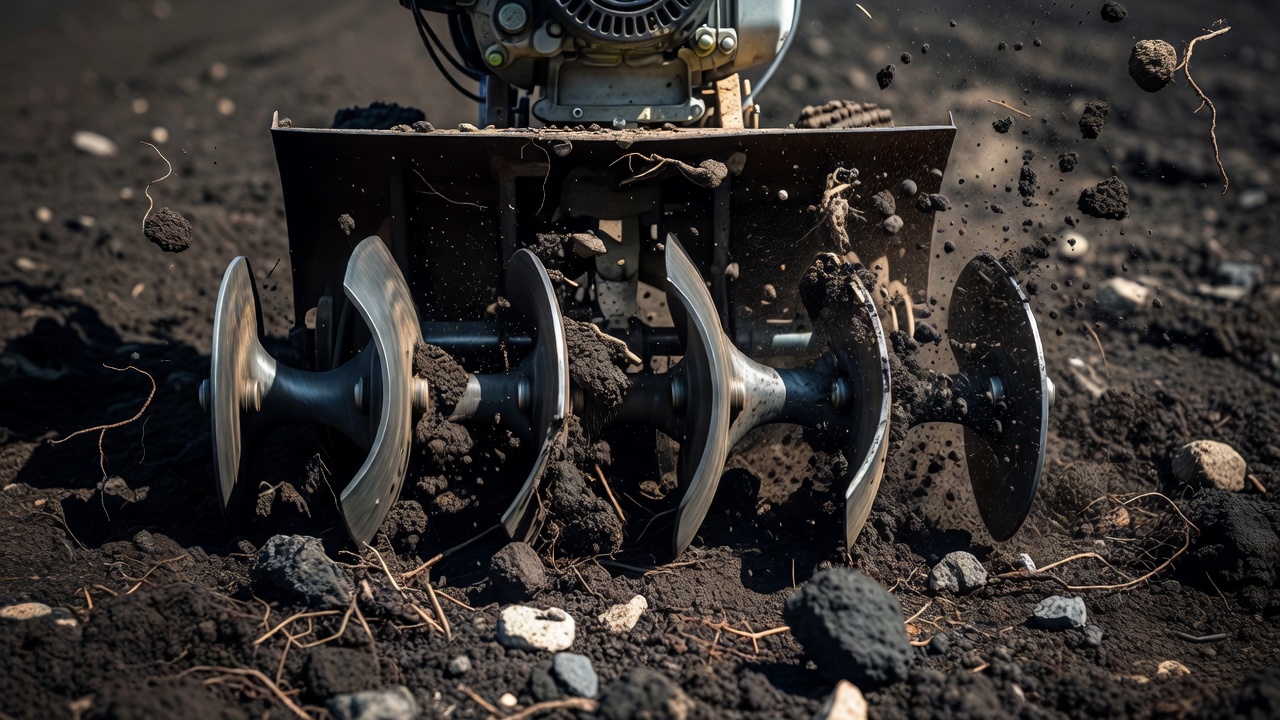
A garden tiller is a motorized machine fitted with rotating metal tines that pulverize soil to a workable consistency. Its defining characteristic is depth: tines penetrate 6 inches at a minimum and can reach 10–12 inches on heavy-duty rear-tine models. That depth generates enough disruption to break hardpan, incorporate large amounts of compost, uproot dense root systems, and level ground that has never seen cultivation. For complementary field maintenance guidelines, examine our breakdown of jbl partybox club 120 vs sony srs xv500.
Front-Tine Tillers
On a front-tine tiller, the tines sit ahead of the engine and pull the machine forward as they spin. This design is lighter and less expensive — typically 35–80 lbs — making it easier to maneuver in medium-sized plots. Front-tine tillers handle previously worked soil and moderately compacted ground well, but they can struggle with truly virgin soil or heavy clay without multiple passes. For complementary field maintenance guidelines, examine our breakdown of jbl partybox club 120 vs sony srs xv500.
Rear-Tine Tillers
On a rear-tine tiller, the tines sit behind the engine and are driven by a separate transmission rather than being self-propelled by tine action alone. According to University of Missouri Extension guidance on soil preparation equipment, rear-tine tillers provide greater traction, more consistent tine depth, and significantly more torque than front-tine models — making them the correct choice for breaking virgin ground, busting hardpan clay, or preparing large plots exceeding 5,000 square feet. Weight ranges from 150 to 300+ lbs. Counter-rotating rear-tine tillers (where tines spin opposite to wheel direction) are the most aggressive option for compacted or rocky soil. To evaluate matched hardware tolerances, consult our detailed overview of z890 vs x870e motherboard.
Typical Tiller Use Cases
- Creating a new garden bed in lawn or field that has never been cultivated
- Breaking up clay or compacted subsoil before a first planting season
- Turning in large volumes of compost, manure, or cover crops before planting
- Preparing soil for row cropping across large vegetable gardens or small market farms
- Annual deep soil renovation at the start or end of a growing season
What Is a Cultivator and What Does It Do?
A garden cultivator is a lighter, lower-powered tool designed to work soil that has already been broken and conditioned. Its tines — typically star-shaped, C-shaped, or pronged — penetrate only 2–6 inches, enough to disrupt the soil surface, sever weed roots, mix in granular fertilizer, and restore aeration to compacted topsoil without disturbing deeper plant root systems.
Rotary and Power Cultivators
A rotary cultivator uses spinning tine heads arranged around a central shaft. A power cultivator is the motorized version of the same concept — either corded electric, battery-powered, or small-engine gas — and is the most common type sold for residential gardening. Both terms describe the same functional category. Power cultivators typically weigh 5–30 lbs, making them manageable for gardeners who cannot handle heavier tilling equipment. To evaluate matched hardware tolerances, consult our detailed overview of z890 vs x870e motherboard.
Typical Cultivator Use Cases
- Aerating the top 2–4 inches of established vegetable or flower beds mid-season
- Uprooting young weeds between plant rows before they set seed — a practice supported by cooperative extension weed management guidelines, which recommend shallow cultivation timed to weed emergence rather than deep tillage
- Mixing granular fertilizer or top-dressed compost into the soil surface
- Breaking up surface crusting caused by irrigation or rainfall
- Preparing raised beds between planting cycles when soil is already loose
Important limitation: A cultivator cannot break new ground. Its tines lack the depth, torque, and mass to penetrate compacted or virgin soil without stalling, bending, or causing operator injury from kickback. Attempting to use a cultivator on unworked ground risks equipment damage and poor results.
Key Differences: Power, Tine Depth, and Soil Condition
Three structural factors separate tillers from cultivators at the engineering level. Understanding them lets you evaluate any product regardless of what the manufacturer calls it on the box. When planning workspace deployment, consider the engineering criteria outlined in our marshall stanmore iii vs harman kardon onyx studio 8 guide.
1. Engine or Motor Power
Tillers require substantially more power to drive tines through resistance. Gas-powered tillers range from approximately 150 cc on entry-level front-tine models to 390 cc on professional rear-tine machines. Electric tillers typically draw 8–15 amps on corded models or run on 40–80V battery platforms to approximate that output. Cultivators operate at a fraction of that power: small gas engines of 25–100 cc or corded electric motors drawing 2.5–6 amps are sufficient for shallow soil work.
The practical consequence: a gas-powered tiller generates enough torque to continue cutting through dense clay or root-bound soil. An underpowered cultivator applied to the same conditions will bog down, bounce on the surface, or stall entirely. Independent equipment testing published by agricultural extension programs consistently shows that gas-powered rear-tine tillers outperform electric models — and all cultivators — on breaking compacted or virgin soil, due to sustained torque output that electric motors and light gas engines cannot match across long working sessions. For additional operational safety benchmarks, see our published testing notes on dyson v8 cyclone vs bissell featherweight stick.
2. Tine Working Depth
Manufacturer specifications and cooperative extension soil preparation guidelines cite tiller tine depth at 6–10+ inches for standard models, with some rear-tine tillers capable of 12 inches on second or third passes. Cultivator tines work at 2–6 inches. This is not an arbitrary distinction: breaking and loosening the plow layer — roughly the top 6–8 inches of soil where most root growth occurs — requires the deeper tiller range. Weed control and surface aeration between established plants require only the shallower cultivator range, and going deeper risks severing feeder roots.
3. Soil Condition Requirement
This is the most practically important differentiator. Tillers are built for unworked or compacted soil — ground that resists penetration. Cultivators are built for previously worked soil — ground that is already loose enough to accept shallow tine penetration without stalling. Matching the tool to soil condition is not a preference; it is a functional requirement. Using a cultivator on hard ground produces ineffective results. Using a tiller repeatedly on already-loose raised bed soil creates unnecessary soil structure disruption and is an inefficient use of a heavier, more expensive machine. To compare alternative configurations, check our hands-on review of bissell crosswave hydrosteam vs shark stainforce.
Why Manufacturer Labels Create Confusion
Many manufacturers label the same product as both a tiller and cultivator — particularly in the mini-tiller and power cultivator category — because the marketing terms are not regulated and because lightweight machines genuinely occupy a functional grey zone. A mini-tiller rated at 35–60 cc with 4–6 inch tine depth can break moderately worked soil that a cultivator cannot handle, but lacks the power to substitute for a true tiller on virgin ground. When a label says both, check the tine depth rating and engine/motor output against the criteria above to determine which function the machine actually performs.
Which Tool Is Right for Your Garden Task?
Use the decision factors below to match the tool to the task, garden scale, and power source preference.
Breaking New Ground
You need a tiller — specifically a rear-tine tiller for plots larger than 1,000 square feet or for soil that has not been worked in multiple years. A front-tine tiller is acceptable for smaller new beds in moderately compacted soil. No cultivator, including a mini-tiller, is appropriate for this task.
Maintaining Established Beds
A cultivator handles this task completely. For raised beds — where soil is already loose and plant roots are close to the surface — a hand cultivator or lightweight power cultivator is the correct tool. A full tiller is unnecessary and risks damaging roots or disrupting bed structure.
Weed Control Between Rows
A cultivator is the right choice. Cooperative extension weed management programs recommend shallow cultivation at 1–3 inches between established vegetable rows to sever young weed roots without bringing dormant weed seeds to the surface — a phenomenon called the weed seed bank effect, where deep tillage exposes buried seeds to germination conditions. A tiller’s depth and width make it inappropriate between established plants.
Garden Scale
- Raised beds and container gardens: Hand or power cultivator only
- Small plots under 1,000 sq ft (first-time bed creation): Front-tine tiller or capable mini-tiller
- Medium plots 1,000–5,000 sq ft: Front-tine or mid-size rear-tine tiller for initial prep; cultivator for maintenance
- Large plots over 5,000 sq ft or full garden rows: Rear-tine tiller for soil prep; walk-behind power cultivator for row maintenance
Gas vs. Electric vs. Battery
For tillers, gas-powered models remain the most capable option for breaking compacted or virgin ground over large areas. Electric corded tillers suit medium plots where an outlet is accessible and soil is moderately workable. Battery-powered tillers on 40–80V platforms are improving but still best suited to previously worked soil rather than true first-time ground breaking. For cultivators, corded electric and battery-powered options are entirely adequate — the shallow tine depth and light resistance mean power source is primarily a convenience decision rather than a performance one.
Where Tillers and Cultivators Overlap — and How to Avoid Buying the Wrong Tool
The mini-tiller and power cultivator categories genuinely overlap. A mini-tiller — typically 25–60 cc gas or 20–40V battery — weighs 20–30 lbs and reaches 4–6 inches of tine depth. Manufacturers market these as suitable for both tilling and cultivating, which is partially accurate: they outperform dedicated cultivators on moderately compacted previously worked soil, but underperform dedicated tillers on new or heavily compacted ground.
Use these spec-based criteria to evaluate any product before purchasing, regardless of what it is called:
- Tine depth rating: Under 4 inches = cultivator only. 4–6 inches = mini-tiller grey zone. 6 inches and above = true tilling capacity.
- Engine displacement or motor output: Under 100 cc / under 8 amps = cultivator-range power. 150 cc and above / 10+ amps = tiller-range power.
- Weight: Under 30 lbs = cultivator or mini-tiller. Over 50 lbs = front-tine tiller territory. Over 150 lbs = rear-tine tiller.
- Tine configuration: Star or open C-shaped tines = cultivator design. Bolo or pick-shaped tines = tilling design built for soil penetration.
One machine can do both jobs only if the soil condition is right. A rear-tine tiller set to a shallow pass can maintain a previously worked large plot. A capable mini-tiller can break moderately worked soil in a small bed. However, no single machine is optimal at both ends of the spectrum. If you are starting a new large garden and planning to maintain it over multiple seasons, the practical and cost-effective approach is a tiller for initial ground breaking and a separate cultivator — even a hand-powered one — for ongoing maintenance.
Everything You Need to Know: What Is The Difference Between A Tiller And A Cultivator FAQ
Can I use a cultivator instead of a tiller to break new ground?
No. A cultivator’s tines lack the depth and torque to penetrate compacted or virgin soil. Attempting this risks stalling the machine, bending tines, or causing operator kickback. Use a front-tine or rear-tine tiller for any ground that has not been previously worked or has been left unworked for multiple seasons.
What is the difference between a front-tine and rear-tine tiller?
On a front-tine tiller, the tines are positioned in front of the engine and propel the machine forward through their rotation — suitable for previously worked or moderately compacted soil in small to medium plots. On a rear-tine tiller, the tines sit behind the engine and are driven independently, providing greater depth, torque, and stability — the correct choice for breaking new ground, heavy clay, or large plots where sustained power output is needed.
Is a mini-tiller the same as a power cultivator?
Functionally, they occupy the same grey zone. Both weigh under 30 lbs and reach 4–6 inches of tine depth. The distinction comes down to tine design and power output: a mini-tiller typically has more aggressive tine geometry and slightly more power, allowing it to handle moderately compacted previously worked soil. A power cultivator is optimized for surface aeration and weed control in already-loose soil. Check the tine depth rating and engine output — not the product name — to determine which category a specific machine falls into.
Do I need a tiller or cultivator for a raised bed?
A cultivator — or even a hand fork — is sufficient for raised beds. Raised bed soil is typically loose, well-amended, and shallow by design. A tiller is too wide, too heavy, and too aggressive for raised bed dimensions and will disrupt the layered soil structure most raised bed gardening methods rely on. Use a lightweight power cultivator or hand cultivator for mid-season aeration, weed control, and fertilizer incorporation in raised beds.
For more detailed testing breakdowns and top recommendations, check our in-depth guide to cordless stick vacuum buyer guide.
For more hands-on benchmarks and buying recommendations, consult our guides on robotic pool cleaner comparison guide, as well as deep carpet cleaning machine reviews, as well as automated robotic vacuum cleaning systems, as well as all-in-one vacuum steam mop combo guide.
Mechanical safety standards, operational tolerances, and protective gear guidelines align with benchmark specifications established by the American National Standards Institute (ANSI).