The Short Answer: Yes for Four-Stroke, Never for Two-Stroke
Car engine oil can be used in a lawn mower, with one non-negotiable condition: your mower must have a four-stroke engine. Any standard detergent motor oil rated SAE 30 or 10W-30 and meeting API service rating SJ or higher is a safe, direct substitute for dedicated lawn mower oil in a four-stroke engine. If your mower runs on a two-stroke engine, car oil must never be used, not even once. The engine type is the single deciding factor, and you must confirm it before acting on any advice in this article.
✔ Four-stroke mower → Car engine oil (SAE 30 or 10W-30, API SJ+) works fine.
✗ Two-stroke mower → Use dedicated two-stroke oil only. Car oil will destroy the engine.
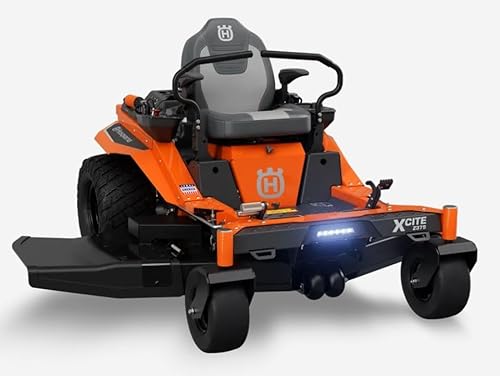
Pros
- Robust 26HP Kohler engine provides ample power for demanding mowing tasks and thick vegetation
- Large 60-inch fabricated steel deck enables faster coverage of extensive lawn areas
- Durable 3-blade fabricated construction enhances deck longevity and resistance to wear
- Zero-turn capability offers precise control and reduced mowing time in complex layouts
Cons
- Large 60-inch deck and overall zero-turn size demand significant storage space and may not suit smaller properties
- Base specifications lack details on accessories such as mulching kits or baggers, which may need separate purchase
- High-powered engine setup could increase fuel use during long sessions relative to lower-horsepower models
The Husqvarna Xcite Z375 is a zero-turn riding lawn mower engineered for large-scale residential and light commercial mowing. It combines a solid fabricated steel build with a capable Kohler power plant, creating an immediate impression of durability and purposeful design suited to expansive properties.
Performance centers on the 26HP 747cc Kohler V-Twin engine that supplies strong, consistent power for thick grass and varied terrain, paired with the 60-inch 3-blade fabricated steel deck. This setup delivers a wide, clean cut that covers ground efficiently and maintains quality across long sessions.
Considerations include the substantial footprint of the 60-inch deck and zero-turn frame, which requires ample storage and may feel oversized for compact yards. Available data also omits specifics on add-ons or comfort options, so buyers should confirm full feature sets independently.
The Husqvarna Xcite Z375 delivers the most value for owners of large lawns or light commercial operators who prioritize raw cutting power, deck durability, and zero-turn efficiency over compact size or extensive accessory packages.

Pros
- 22HP Kawasaki FR730V 726cc V-Twin engine
- 54-inch 3-blade fabricated steel deck
Cons
- No customer reviews or detailed description provided
- Listed weight of 780 pounds requires transport planning

Pros
- Strong 24HP FR730 engine power for demanding cutting conditions
- Wide 54-inch FAB deck reduces total mowing time
- Zero turn design delivers excellent maneuverability
- Fabricated deck supports durable everyday operation
Cons
- Sparse details beyond engine and deck leave other features unspecified
- Gas-powered FR730 engine needs regular fuel and maintenance
- Large 54-inch deck size may feel oversized on compact properties
The Husqvarna Z254F is a zero turn mower from the established Husqvarna brand in the riding lawn mowers category. It centers on a solid build that pairs a 24HP 726cc FR730 engine with a 54-inch FAB deck for straightforward residential grass care.
Performance stems directly from the listed specifications. The FR730 engine delivers the horsepower needed for steady operation across typical lawns while the wide FAB deck completes passes efficiently. Zero turn handling improves control in real yard layouts based on the model design.
Considerations arise from the limited data available. Secondary elements such as comfort features fuel capacity or extras receive no mention and the gas engine format involves routine upkeep. The large deck suits open areas better than confined spaces.
The Husqvarna Z254F provides the most value for owners of medium or large properties who want reliable engine power and a broad cutting width. Users with smaller lots or those seeking extensive accessory options should weigh the core specs carefully before purchase.
How to Tell If Your Lawn Mower Has a Four-Stroke or Two-Stroke Engine
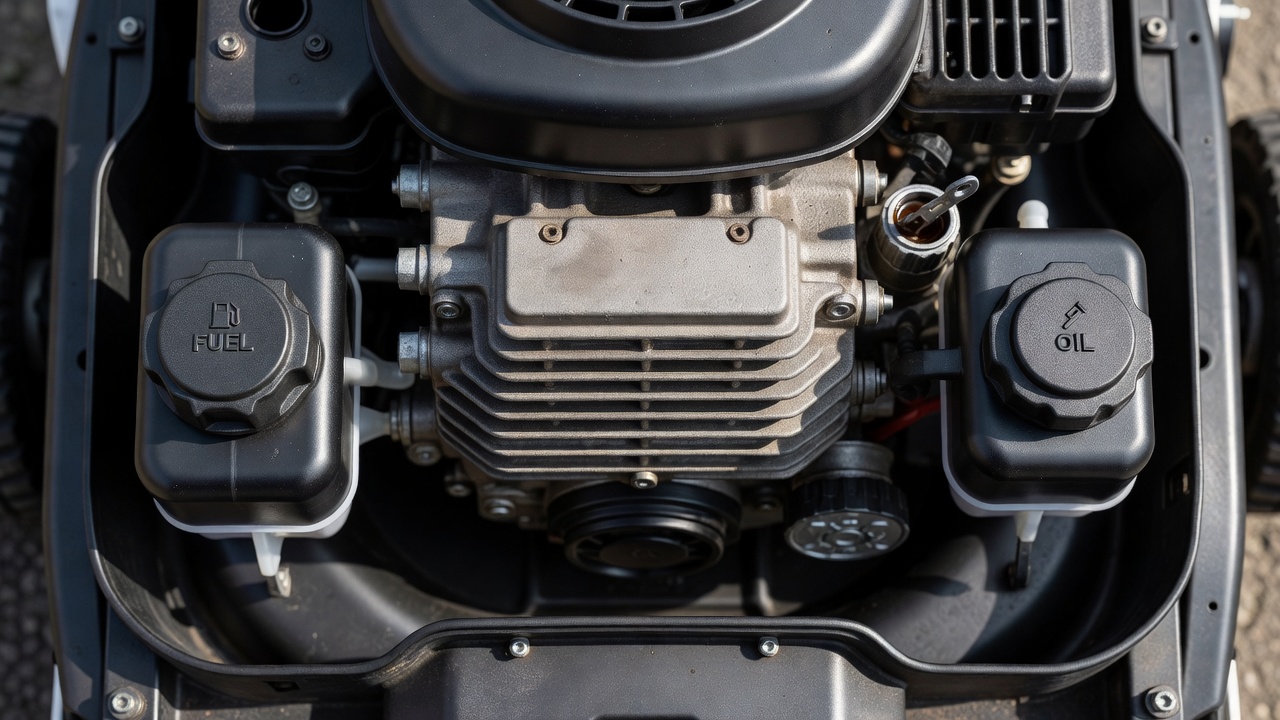
Before anything else, identify your engine type. The check takes under 60 seconds.
- Two separate reservoirs, one for fuel, one for oil, means a four-stroke engine. The vast majority of modern walk-behind and riding mowers fall into this category. Brands like Briggs & Stratton, Honda, Kawasaki, and Kohler power almost all current four-stroke consumer mowers.
- No separate oil reservoir, and the manufacturer instructs you to mix oil directly into the fuel, means a two-stroke engine. Some lightweight and older walk-behind mowers use this design. The fuel cap or engine shroud will often be labelled “2-cycle” or “2-stroke.”
- When in doubt, check the owner’s manual or look up the engine model number stamped on the engine block. The manufacturer’s product page will confirm the engine type within seconds.
If you have identified a four-stroke engine, continue reading. If you have a two-stroke engine, skip directly to the two-stroke section below, the rest of the viscosity and API guidance does not apply to you.
Which Car Engine Oil Grades Work in a Four-Stroke Lawn Mower?
Four-stroke lawn mower engines are small, air-cooled, and operate under sustained load, conditions that influence which viscosity grade from your garage shelf is appropriate.
SAE 30, Best for Warm Climates
SAE 30 is the grade most commonly specified by small-engine OEMs including Briggs & Stratton for operation in temperatures above 40°F (4°C). If you mow in a consistently warm region and your car oil shelf includes a bottle of SAE 30, it is a direct match for what most mower manufacturers recommend.
10W-30, Best for Variable Temperatures
10W-30 is the most versatile substitute and the grade most car owners already have on hand. The “W” rating means it flows adequately at lower temperatures, making cold starts cleaner, while still protecting at operating temperatures. Briggs & Stratton explicitly states that 10W-30 is acceptable across a wide temperature range and is the recommended choice when ambient temperatures vary. This is the car oil grade most likely sitting in your garage right now, and it works.
5W-30, Best for Cold-Weather Starts
5W-30 is appropriate for mowing in cold climates or early-season starts where temperatures may drop below 40°F (4°C). Honda Power Equipment owner documentation lists 5W-30 as acceptable for low-temperature operation in their four-stroke engines. Its thinner cold-flow characteristics reduce engine strain at startup without sacrificing high-temperature film strength.
| Oil Grade | Best Temperature Range | Common Availability |
|---|---|---|
| SAE 30 | Above 40°F (4°C) | Moderate, found in auto stores |
| 10W-30 | Wide range, 0°F to 100°F+ (−18°C to 38°C+) | Very high, standard car oil |
| 5W-30 | Below 40°F (4°C) down to −4°F (−20°C) | Very high, standard car oil |
Avoid heavy-viscosity grades like 20W-50 in small engines. Those grades are engineered for high-displacement automotive engines with tighter tolerances and liquid cooling, small air-cooled engines run hotter and need oil that flows freely to compensate.
What API Service Rating Does Lawn Mower Oil Need to Meet?
The API (American Petroleum Institute) service rating is the second number to check, and it is printed on every bottle of motor oil in a circular “donut” or starburst symbol. For four-stroke lawn mower engines, the minimum acceptable rating is API SJ. Any rating at or above SJ in the current service sequence , SL, SM, SN, SP , also meets or exceeds the requirement. For broader ecosystem context, read through our operational guide on marshall stanmore iii vs harman kardon onyx studio 8.
In practice, virtually every bottle of car engine oil sold today carries an API SN or SP rating, both of which exceed the SJ threshold. If you are pulling a bottle off a store shelf or out of your garage, confirm the API rating on the label before pouring. The rating appears on the back label or within the API donut on the front.
Briggs & Stratton, the world’s largest producer of small engines for outdoor power equipment, specifically calls for high-quality detergent motor oil with API service rating SF, SG, SH, SJ or higher. Standard car engine oil is detergent oil by default , this is not a special formulation requirement, it is simply the baseline of modern motor oil. For troubleshooting and reliability insights, consult our in-depth dyson v8 cyclone vs bissell featherweight stick report.
Can I Use Synthetic Car Oil in a Lawn Mower?
Yes, synthetic car oil is acceptable in most modern four-stroke lawn mower engines. Briggs & Stratton confirms that synthetic motor oil meeting the required viscosity grade and API rating can be used in their engines. The performance advantages of synthetic oil, better thermal stability, cleaner burn-off of combustion byproducts, and extended film strength, apply to small engines just as they do to automotive engines.
Two practical considerations apply: Readers comparing setup options can review our technical analysis on bissell crosswave hydrosteam vs shark stainforce.
- Older air-cooled engines: Some older or lower-spec small engines run significantly hotter than modern designs. A minority of older OEM manuals advise against full synthetic in these engines, citing concerns about oil consumption and seal compatibility. Check your owner’s manual if your mower is more than 10 to 15 years old.
- Oil change interval: Synthetic oil does not extend oil change intervals in small engines the way it does in cars. Small engine manufacturers still recommend the standard interval, typically every 50 hours of operation or once per season, regardless of oil type. The operating environment of a mower engine (dust, debris, heat cycling, partial-load operation) degrades oil faster than highway driving does.
Conventional car oil is equally acceptable and often more economical given the small volume a mower requires (typically 15 to 20 oz / 450 to 600 mL). Whether you use synthetic or conventional, the API rating and viscosity grade matter more than the base oil type.
Why Car Oil Must Never Go in a Two-Stroke Lawn Mower Engine
Two-stroke engines work on a fundamentally different principle than four-stroke engines. In a two-stroke design, the oil is mixed directly into the fuel and combusted alongside it in every power stroke. The oil must burn completely and cleanly as part of this process.
Car engine oil, conventional or synthetic, is formulated to not burn. It contains a package of additives (detergents, dispersants, anti-wear agents, viscosity modifiers) that are designed to survive heat and combustion byproducts without breaking down. In a two-stroke engine, these same properties become catastrophic:
- Car oil does not combust cleanly, leaving behind carbon deposits that foul the spark plug, coat the exhaust port, and clog the piston rings.
- Ash-forming additives in car oil accumulate on combustion chamber surfaces, causing pre-ignition and hot spots.
- Progressive carbon buildup restricts exhaust flow, reduces power, and ultimately causes engine seizure, a fatal failure where the piston welds itself to the cylinder wall from heat and friction.
Dedicated two-stroke oil (also labelled TC-W3 for water-cooled or JASO FD / ISO-L-EGD for air-cooled engines) is formulated specifically to combust fully and leave minimal residue. It is not interchangeable with four-stroke or car oil under any circumstances. Use it at the fuel-to-oil ratio specified in your mower’s owner’s manual, commonly 50:1, but always confirm the exact ratio for your engine.
Will Using Car Oil Void Your Lawn Mower Warranty?
Potentially, and this is the one scenario where the substitution carries real financial risk.
Most major OEMs do not require you to use their branded oil as a condition of warranty coverage. However, they do require that the oil used meets specified viscosity grades and API ratings. Using car oil that meets those specifications, SAE 30 or 10W-30, API SJ or higher, does not, in itself, void a warranty under this framework.
The risk arises in two situations:
- Using the wrong grade or rating: If engine damage occurs and the oil in the crankcase is outside the OEM specification, the manufacturer has grounds to deny the warranty claim regardless of the oil’s origin (car oil vs. dedicated mower oil).
- OEMs that specify proprietary or approved-list oils: Some manufacturers, particularly at the commercial or premium end of the market, list specific approved oil products in their warranty documentation. Using an oil not on that list, including generic car oil, may be cited as a basis for denial if a related failure occurs.
The action: before substituting car oil in a mower that is still under warranty, open the owner’s manual and read the lubrication section and warranty terms. If the manual lists specific approved products, use one of them while the warranty is active. Once the warranty period ends, any detergent motor oil meeting the grade and API requirement is a legitimate substitute.
How to Check and Change Lawn Mower Oil When Using Car Oil
Car engine oil follows the same service schedule as dedicated mower oil, there is no modified procedure for substituting it.
Before Each Use
Check the oil level with the dipstick before every mowing session. Small engines consume and lose oil faster than automotive engines due to high operating temperatures and the absence of liquid cooling. Running a mower low on oil causes rapid wear and can seize the engine within minutes.
Oil Change Interval
Briggs & Stratton recommends changing small engine oil every 50 hours of operation under normal conditions, or at least once per mowing season, whichever comes first. For a new engine, the first oil change should occur after the initial 5 hours of break-in operation to remove metal particles released during the break-in period.
How Much Oil a Lawn Mower Takes
Most walk-behind four-stroke mowers require between 15 oz and 20 oz (450 to 600 mL) of oil. Riding mowers typically require 48 to 64 oz (1.4 to 1.9 L) depending on engine displacement. Always fill to the “Full” mark on the dipstick, do not overfill, as excess oil can be pushed into the air filter and cause smoking or fouling.
Disposal
Used motor oil from your mower, whether car oil or dedicated mower oil, is classified as hazardous waste. Do not pour it into drains, soil, or trash. Take it to an auto parts store, quick-lube shop, or municipal recycling center that accepts used motor oil. Most accept it at no charge.
Step-by-Step Oil Change
- Run the mower for 2 to 3 minutes to warm the oil (warm oil drains faster and more completely).
- Disconnect the spark plug wire before any maintenance work.
- Locate the drain plug (underside of the deck on some models) or use an oil extractor pump through the dipstick tube.
- Drain completely into a sealable container.
- Replace the drain plug and torque to specification.
- Add the correct grade and quantity of oil as specified on the dipstick.
- Check level, reconnect the spark plug wire, and run for 30 seconds to circulate.
- Recheck level and top off if needed.
Buyer FAQs: Can I Use Car Engine Oil In My Lawn Mower Solved
Can I use 5W-30 car oil in my lawn mower?
Yes, in a four-stroke mower. 5W-30 is the appropriate grade for cold-climate or early-season mowing when temperatures drop below 40°F (4°C). Honda Power Equipment lists 5W-30 as acceptable for low-temperature operation. At normal operating temperatures, 5W-30 performs within acceptable limits for small air-cooled engines. Do not use it in a two-stroke engine.
What happens if I accidentally put car oil in a two-stroke lawn mower?
Do not start the engine. Drain the fuel-oil mixture from the fuel tank immediately, flush the tank with fresh fuel, and refill with the correct two-stroke premix at the ratio specified in your owner’s manual. If the engine was run with car oil already in the fuel, inspect the spark plug for heavy carbon fouling and replace it if necessary. Running the engine for an extended period with car oil in a two-stroke will cause carbon buildup and can lead to engine seizure.
Is car engine oil the same as small engine oil?
For four-stroke engines, the base product is the same, detergent motor oil meeting API service standards and a viscosity grade appropriate to operating temperature. Dedicated “small engine oil” or “lawn mower oil” products are often simply SAE 30 or 10W-30 motor oil repackaged in smaller quantities with a higher per-volume price. The oil itself is not meaningfully different from car engine oil of the same grade and API rating. The distinction matters for two-stroke engines: dedicated two-stroke oil is chemically different from any four-stroke or car oil and is not interchangeable.
How often should I change car oil in my lawn mower?
Every 50 hours of operation or once per mowing season, whichever comes first. This interval applies whether you use dedicated mower oil or car engine oil; the change schedule is set by the engine’s operating conditions, not the oil brand. On a brand-new engine, perform the first oil change after the initial 5-hour break-in period to clear metal particles produced during engine seating.
Related Maintenance and Operating Guides
To keep your equipment running at peak operating efficiency, explore our related technical walkthroughs and maintenance tutorials:
- Consult our detailed breakdown on heavy-duty chainsaw buyer guide.
- Consult our detailed breakdown on durable ride-on lawn tractor guide.
Guidance on Engine Oil Use
Owners often ask whether automotive oil can work in a mower engine, and the owner’s manual is the main reference. General safety information on outdoor power equipment is also available from American National Standards Institute (ANSI).