Quick Answer: Calories Burned Mowing the Lawn
A 155 lb (70 kg) person burns approximately 250–350 calories per hour using a push or walk-behind mower and 150–200 calories per hour on a riding mower. Body weight scales the number directly — heavier individuals burn more, lighter individuals burn less. The table below gives precise figures for four common weight brackets across all three mower types.
Calorie Burn by Body Weight and Mower Type (Quick-Reference Table)

The figures below are derived from the MET × body weight (kg) formula using Metabolic Equivalent of Task (MET) values from the Compendium of Physical Activities (Ainsworth et al.). Each cell is calculated independently — not pulled from a third-party calculator.
| Body Weight | Push Mower — 30 min | Push Mower — 1 hr | Self-Propelled — 30 min | Self-Propelled — 1 hr | Riding Mower — 30 min | Riding Mower — 1 hr |
|---|---|---|---|---|---|---|
| 120 lb (54 kg) | 149 cal | 297 cal | 122 cal | 243 cal | 68 cal | 135 cal |
| 155 lb (70 kg) | 193 cal | 385 cal | 158 cal | 315 cal | 88 cal | 175 cal |
| 185 lb (84 kg) | 231 cal | 462 cal | 189 cal | 378 cal | 105 cal | 210 cal |
| 220 lb (100 kg) | 275 cal | 550 cal | 225 cal | 450 cal | 125 cal | 250 cal |
MET values used: push/walk-behind mower = 5.5, self-propelled mower = 4.5, riding mower = 2.5. Formula: Calories/hour = MET × weight in kg. Source: Ainsworth et al., Compendium of Physical Activities.
Key takeaways from the table:
- A 120 lb person pushing a mower for one hour burns roughly the same as a 220 lb person riding one — body weight and mower type interact significantly.
- Switching from a riding mower to a push mower more than doubles calorie burn at every weight bracket.
- A 30-minute mowing session on a push mower delivers a calorie burn comparable to a 30-minute brisk walk for most weight ranges.
What MET Values Are Used to Calculate Lawn Mowing Calories?
MET stands for Metabolic Equivalent of Task — a standardized unit that expresses how much energy an activity demands relative to sitting quietly (1 MET = resting metabolic rate, roughly 1 kcal per kg per hour).
The formula is straightforward:
Calories burned per hour = MET × body weight in kilograms
For 30 minutes, divide the hourly result by 2. For any duration in minutes: Calories = MET × weight (kg) × (minutes ÷ 60).
The Compendium of Physical Activities (Ainsworth et al.) assigns the following MET values to lawn mowing tasks:
- Push or walk-behind mower: MET 5.5 — classified as moderate-to-vigorous physical activity. The operator propels both themselves and the mower, engages the upper body to steer and push, and maintains continuous movement.
- Self-propelled mower: MET 4.5 — the mower drives itself forward, reducing lower-body push effort. The operator still walks, steers, and maneuvers, but with less exertion than a manual push mower.
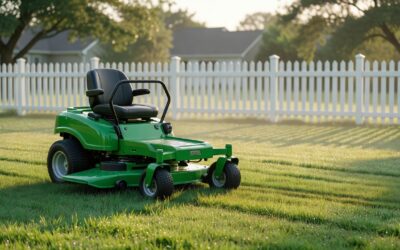
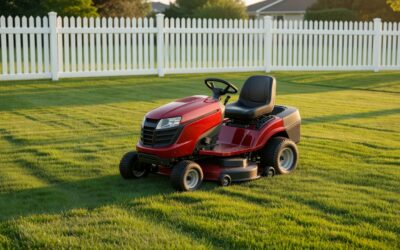
- Riding mower: MET 2.5 — classified as light activity. The operator sits, steers, and operates foot controls but performs no locomotive effort. Calorie burn is roughly equivalent to light desk work or slow walking.
Why push mowers burn more than riding mowers: Calorie expenditure correlates with muscle mass recruited and total mechanical work performed. Pushing a mower engages the quadriceps, hamstrings, glutes, core, and upper body simultaneously. A riding mower eliminates lower-body locomotion almost entirely, dropping the MET value by more than half.
Calculate your own figure: Convert your weight to kilograms (pounds ÷ 2.205), multiply by the MET for your mower type, then multiply by session hours. Example: 175 lb person (79.4 kg) pushing a walk-behind mower for 45 minutes → 5.5 × 79.4 × 0.75 = 327 calories.
Factors That Increase or Decrease Calories Burned Mowing
The MET formula produces a solid baseline, but real-world calorie burn shifts based on several variables. Each factor below has a directional effect on intensity.
Terrain: Flat vs. Hilly
Mowing uphill increases calorie burn meaningfully. Incline walking research consistently shows that a 5–10% grade raises energy expenditure by 17–35% compared to flat walking at the same pace. Applied to mowing, a yard with moderate hills adds significant extra load — the operator must propel both body mass and the mower against gravity. Steep or rolling terrain can push push-mower mowing into vigorous-intensity exercise (MET ≥ 6) for heavier individuals. No single peer-reviewed mowing-specific percentage is available for hills, so quantified estimates beyond the walking-incline literature are omitted here; the directional effect is well established.
Mowing Pace
Faster walking pace increases oxygen consumption and, therefore, calorie burn. The Compendium MET values represent average effort. A brisk, uninterrupted mowing pace will push burn toward the upper end of any range; a slow, stop-start pace (frequent obstacle navigation, resting) pulls it toward the lower end. Treating the session like a workout — maintaining a consistent, purposeful pace — is the single easiest lever to increase lawn mowing calorie burn.
Grass Height and Density
Tall or thick grass creates more resistance against the mower blade, requiring more force to push the mower forward. Letting grass grow longer before mowing increases the physical effort of each pass. Dense, wet grass compounds this effect — a wet lawn after rain requires noticeably more push effort than dry, trimmed grass.
Bagging vs. Mulching
Bagging grass clippings adds a collection step — stopping, detaching, carrying, and emptying the bag — that increases total energy expenditure per session. The activity is intermittent rather than continuous, and carrying a full grass bag engages the arms and core. The calorie increment per emptying is modest in isolation, but over a full session with multiple bag empties on a large lawn, the cumulative addition is real. No peer-reviewed source quantifies a specific percentage increase for bagging vs. mulching in a mowing context, so a precise figure is not stated here.
Lawn Size and Session Duration
Calorie burn scales linearly with time at a given intensity. A larger lawn means more time mowing, which means more total calories burned — the MET value stays roughly constant, and duration drives the total. A quarter-acre lawn typically takes 30–45 minutes to push-mow; a half-acre takes 60–90 minutes. Total session burn differences are substantial: a 155 lb person burns ~193 calories push-mowing for 30 minutes but ~578 calories for 90 minutes.
Heat and Humidity
Exercising in heat increases cardiovascular demand and sweat rate. Mowing in summer sun elevates heart rate above what the same effort would produce in cool conditions, increasing overall calorie burn modestly. This effect is real but moderate — the MET formula does not account for environmental conditions. Staying hydrated and mowing in early morning or late afternoon reduces heat stress without sacrificing the workout benefit.
Operator Fitness Level
Aerobically fit individuals perform the same activity at a lower relative intensity (lower heart rate, lower perceived effort). The calorie burn per unit of time is slightly lower for highly trained individuals compared to sedentary individuals at the same absolute MET, because their bodies have adapted to move more efficiently. For most recreational mowers, this difference is small and the MET formula remains a reliable estimate.
How Does Mowing Compare to Other Yard Work and Common Exercise?
Placing lawn mowing calorie burn in context helps readers assess whether mowing meaningfully contributes to a fitness goal. The following MET values are sourced from the Compendium of Physical Activities (Ainsworth et al.) and Harvard Health Publishing’s MET reference tables. Calorie estimates are for a 155 lb (70 kg) person over 30 minutes.
| Activity | MET | Calories — 155 lb / 30 min | Intensity Classification |
|---|---|---|---|
| Push mowing (walk-behind) | 5.5 | 193 | Moderate-to-vigorous |
| Self-propelled mowing | 4.5 | 158 | Moderate |
| Riding mower | 2.5 | 88 | Light |
| Raking lawn | 3.9 | 137 | Moderate |
| General gardening | 3.5 | 123 | Moderate |
| Brisk walking (3.5 mph) | 4.3 | 151 | Moderate |
| Casual cycling (<10 mph) | 4.0 | 140 | Moderate |
| Water aerobics | 3.0 | 105 | Moderate |
Is mowing the lawn good exercise? Push mowing qualifies as moderate-to-vigorous physical activity under established exercise science classifications (moderate = MET 3–6, vigorous = MET ≥ 6). The U.S. Department of Health and Human Services recommends 150–300 minutes of moderate-intensity aerobic activity per week. A 155 lb person who push-mows for 45 minutes twice a week accumulates roughly 90 minutes of qualifying moderate exercise — 60% of the weekly minimum from yard work alone.
What yard work burns the most calories? Among common yard tasks, push mowing (MET 5.5) and digging or spading (MET ~5.0) rank at the top. Raking (MET 3.9) and general gardening (MET 3.5) are meaningful but lower-intensity. Riding mowing (MET 2.5) sits below the threshold for moderate exercise and does not contribute meaningfully to aerobic fitness goals.
How to Maximize Calories Burned While Mowing
For readers who want to treat mowing as structured exercise rather than a chore, the following strategies increase total calorie expenditure without requiring additional equipment.
Choose a Push Mower Over a Riding or Self-Propelled Model
The mower type is the highest-leverage decision. Switching from a riding mower to a push mower more than doubles the MET value (2.5 vs. 5.5), which more than doubles calorie burn for the same duration. If the yard is physically manageable on foot, push mowing is the clear choice for maximizing exercise benefit.
Maintain a Brisk, Uninterrupted Pace
Treat the session like a walk — move at a purposeful pace without unnecessary stops. Continuous movement keeps heart rate elevated and metabolic rate consistent. Minimizing idle time (extended rests, long conversations mid-mow) preserves the aerobic stimulus.
Mow in Patterns That Maximize Distance
Diagonal stripe patterns and spiral patterns cover more total distance across a given yard area than simple back-and-forth strips, because turns are wider and the overall path length increases. More distance at the same pace equals more time at elevated heart rate and more total calories burned.
Target Hilly Sections Deliberately
If the yard has both flat and hilly areas, mowing the hilly sections at full pace — rather than slowing down for them — maximizes the calorie-burn benefit. Hill effort elevates intensity into the vigorous range for most people, delivering cardiovascular benefit beyond what flat mowing provides.
Combine Mowing with Other Yard Tasks
Following a mowing session with raking clippings, edging, or bagging debris extends total active time and engages different muscle groups. A combined 60-minute session of push mowing (30 min) plus raking (30 min) yields roughly 330 calories burned for a 155 lb person — equivalent to a moderate gym session.
Skip Ride-Along Options on Self-Propelled Mowers
Self-propelled mowers often allow the operator to disengage the drive and push manually. Doing so raises the effort to push-mower levels (MET ~5.5) and significantly increases calorie burn over the same session length.
Frequently Asked Questions
How many calories do you burn mowing for 30 minutes?
At 155 lb (70 kg): approximately 193 calories with a push mower, 158 calories with a self-propelled mower, and 88 calories on a riding mower. At 185 lb (84 kg): approximately 231 calories, 189 calories, and 105 calories respectively. Use the formula MET × weight in kg × 0.5 to calculate any weight bracket.
Does mowing the lawn count as exercise?
Push mowing qualifies as moderate-to-vigorous physical activity (MET 5.5), which meets the CDC and DHHS definition of aerobic exercise. It can count toward the recommended 150 minutes of weekly moderate activity. Riding mowing (MET 2.5) is classified as light activity and does not qualify as aerobic exercise under standard public health guidelines.
Does mowing uphill burn significantly more calories?
Uphill mowing increases calorie burn meaningfully. Incline walking research shows energy expenditure rises 17–35% on a 5–10% grade versus flat terrain at the same pace. A hilly yard pushes push-mower mowing toward vigorous intensity (MET ≥ 6) for most body weights. The exact increment depends on grade steepness, mower weight, and pace — no mowing-specific peer-reviewed percentage is currently available to cite precisely.
How does lawn mowing compare to walking for calorie burn?
Push mowing (MET 5.5) burns more calories per hour than brisk walking at 3.5 mph (MET 4.3) for the same body weight. A 155 lb person burns ~385 calories per hour push-mowing versus ~301 calories per hour walking briskly. Self-propelled mowing (MET 4.5) is roughly equivalent to brisk walking. Riding mowing (MET 2.5) burns significantly less than walking at any pace above a stroll.