

Quick Answer: How Long Does a Riding Lawn Mower Battery Last?
A riding lawn mower battery lasts 3–5 years for lead-acid batteries and 5–10 years for lithium-ion batteries under normal residential use. That range narrows or widens based on how well the battery is maintained, how it is stored during the off-season, and the climate it operates in. Most riders see lead-acid failure closer to the 3-year mark when batteries are left discharged over winter without a maintainer.

Pros
- Powerful 80V brushless motor delivers 32HP gas-equivalent performance with quiet fume-free operation and no engine maintenance.
- Complete kit includes four 6.0Ah batteries and 600W charger for substantial runtime up to 1.5 acres.
- SmartCut technology and 42-inch heavy-duty steel deck ensure consistent cuts without bogging in tough conditions.
- Versatile towing up to 350 lbs and optional cargo hauling plus comfort features like high-back seat and LED lights.
- Strong 4-year limited warranty and full compatibility with the Greenworks 80V tool ecosystem.
Cons
- Rear utility cargo bed for 200 lb hauling is sold separately and not included in the kit.
- Runtime of up to 1.5 acres varies with conditions and may require recharging or battery swaps on larger properties.
- As a fully cordless model continuous operation depends on battery levels unlike gas engines with unlimited runtime.
The Greenworks 80V 42" CrossoverT Cordless Riding Lawn Tractor is a ready-to-mow zero-emission tractor designed for homeowners managing medium to large lawns. It features a reinforced 42-inch stamped steel deck of 12-gauge construction along with premium comfort elements such as a high-back padded seat with foldable armrests. The overall build emphasizes durability and user convenience right out of the box with the included battery and charger set.
Performance centers on the 80V TruBrushless motor that provides 32HP gas-equivalent power with instant torque and quiet fume-free operation. SmartCut technology senses grass conditions and automatically adjusts power to maintain a consistent cut even in tall thick or wet areas. The four 6.0Ah batteries support runtime for up to 1.5 acres depending on conditions while dual LED headlights and a 7-position deck height range from 1.5" to 4.5" add practicality. Front and rear attachments further allow towing up to 350 lbs for added yard utility.
Key considerations include that the rear utility storage bin capable of hauling 200 lbs is sold separately so full cargo functionality requires an extra purchase. Runtime remains condition-dependent and may fall short for properties significantly larger than 1.5 acres without using the 600W charger or swapping batteries. The cordless design prioritizes ease and low maintenance but trades off the continuous runtime of traditional gas models.
This tractor delivers strong value for eco-conscious owners of residential properties who want gas-like power without the emissions noise or upkeep. It suits those who already use or plan to expand into the Greenworks 80V family of tools and who appreciate the 4-year limited warranty. Users with exceptionally large or commercial-scale lawns should evaluate battery logistics carefully before purchase.

Pros
- Delivers strong 21 horsepower equivalent power comparable to gas riding mowers.
- Provides up to 1.5 acres of runtime on a full charge with the six included batteries.
- Features low-maintenance dual brushless motors without belts for greater durability.
- Offers versatile 12-position cutting height adjustment from 1.5 to 4.5 inches.
- Includes digital controls for blade settings, drive speeds, and cruise control.
Cons
- Limited to 1.5 acres of cutting per charge without purchasing additional batteries for bigger lawns.
- Requires recharging time for the six 56V batteries after each use session.
- Relies solely on battery power with no hybrid or gas backup option for extended operation.
The EGO Power+ TR4204 is a cordless electric riding lawn mower built as a modern tractor alternative for residential use. It features a robust 42-inch stamped steel deck and arrives ready to go with six 56V 6.0Ah batteries plus a charger, creating an immediate impression of convenience and solid construction free from gas engine complexity.
Performance shines through its equivalent 21 horsepower output and top speed of 6 MPH, allowing efficient coverage of up to 1.5 acres on a single charge. Dual brushless cutting motors operate without belts for added durability and less upkeep, while the digital display lets users select three blade settings, three drive speeds, and cruise control. The 12 adjustable heights ranging from 1.5 to 4.5 inches combined with anti-scalp wheels deliver precise results across varied terrain.
Drawbacks center on battery dependency, as larger properties beyond 1.5 acres require extra batteries and recharging intervals can interrupt workflow. The fully electric design eliminates fuel storage needs but demands access to power sources between sessions.
This mower suits homeowners with medium to large yards who value quiet, emission-free operation and reduced maintenance. Those seeking expandable battery capacity for bigger areas will find the EGO Power+ TR4204 a strong long-term investment in cordless lawn care.
Pros
- High-efficiency brushless motors maximize power output and durability over traditional motors
- Up to 2 acres runtime with three included 10.0 Ah batteries supports substantial mowing sessions
- Zero-emission operation with gas-equivalent 20 HP power for quieter environmentally friendly use
- Six-port auto-switchover battery system provides flexible extended runtime options
- Durable 42-inch steel deck plus included mulch and towing kits add immediate functionality
Cons
- Runtime is limited to approximately 70 minutes or 2 acres which may require recharging for larger properties
- Fully battery-dependent design means performance relies on charge levels and spare battery availability
- 42-inch deck size may require more passes on expansive lawns compared to wider commercial models
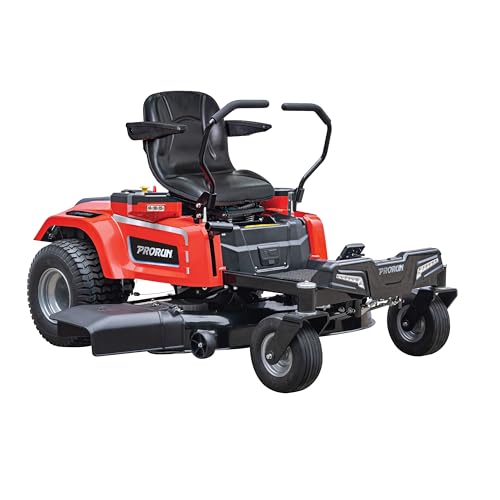
The PRORUN PZT60V42 is a fully electric 60V zero-turn riding lawn mower built for residential and light commercial use. Its primary design centers on a robust 42-inch 14-gauge stamped steel twin blade deck powered by direct-drive brushless motors, giving an immediate impression of solid construction and modern battery-focused engineering. The mower arrives complete with three 10.0 Ah batteries, a charger, mulch kit, and towing kit for ready-to-work versatility.
In performance terms, four high-efficiency brushless motors deliver power equivalent to a 20 HP gas engine while producing zero emissions. The system supports up to 2.0 acres or 70 minutes of runtime, and six battery ports with auto switchover intelligently manage all PRORUN 60V battery sizes for continuous operation. A washout port on the steel deck further simplifies post-mow maintenance during real-world sessions.
Potential drawbacks include the finite 70-minute runtime window which can limit coverage on larger properties without spare batteries or recharge breaks. As a fully electric model, it also depends entirely on battery charge levels rather than continuous fuel refills, and the 42-inch deck width may demand extra passes compared with wider traditional options.
Overall the PRORUN PZT60V42 offers strong value for homeowners and small-property managers who want gas-like cutting power without emissions or noise. Those with medium-sized lawns seeking quiet efficient zero-turn performance and included accessories will benefit most from this electric mower.

Pros
- Strong 24HP FR730 engine power for demanding cutting conditions
- Wide 54-inch FAB deck reduces total mowing time
- Zero turn design delivers excellent maneuverability
- Fabricated deck supports durable everyday operation
Cons
- Sparse details beyond engine and deck leave other features unspecified
- Gas-powered FR730 engine needs regular fuel and maintenance
- Large 54-inch deck size may feel oversized on compact properties
The Husqvarna Z254F is a zero turn mower from the established Husqvarna brand in the riding lawn mowers category. It centers on a solid build that pairs a 24HP 726cc FR730 engine with a 54-inch FAB deck for straightforward residential grass care.
Performance stems directly from the listed specifications. The FR730 engine delivers the horsepower needed for steady operation across typical lawns while the wide FAB deck completes passes efficiently. Zero turn handling improves control in real yard layouts based on the model design.
Considerations arise from the limited data available. Secondary elements such as comfort features fuel capacity or extras receive no mention and the gas engine format involves routine upkeep. The large deck suits open areas better than confined spaces.
The Husqvarna Z254F provides the most value for owners of medium or large properties who want reliable engine power and a broad cutting width. Users with smaller lots or those seeking extensive accessory options should weigh the core specs carefully before purchase.
Factors That Affect Riding Lawn Mower Battery Lifespan
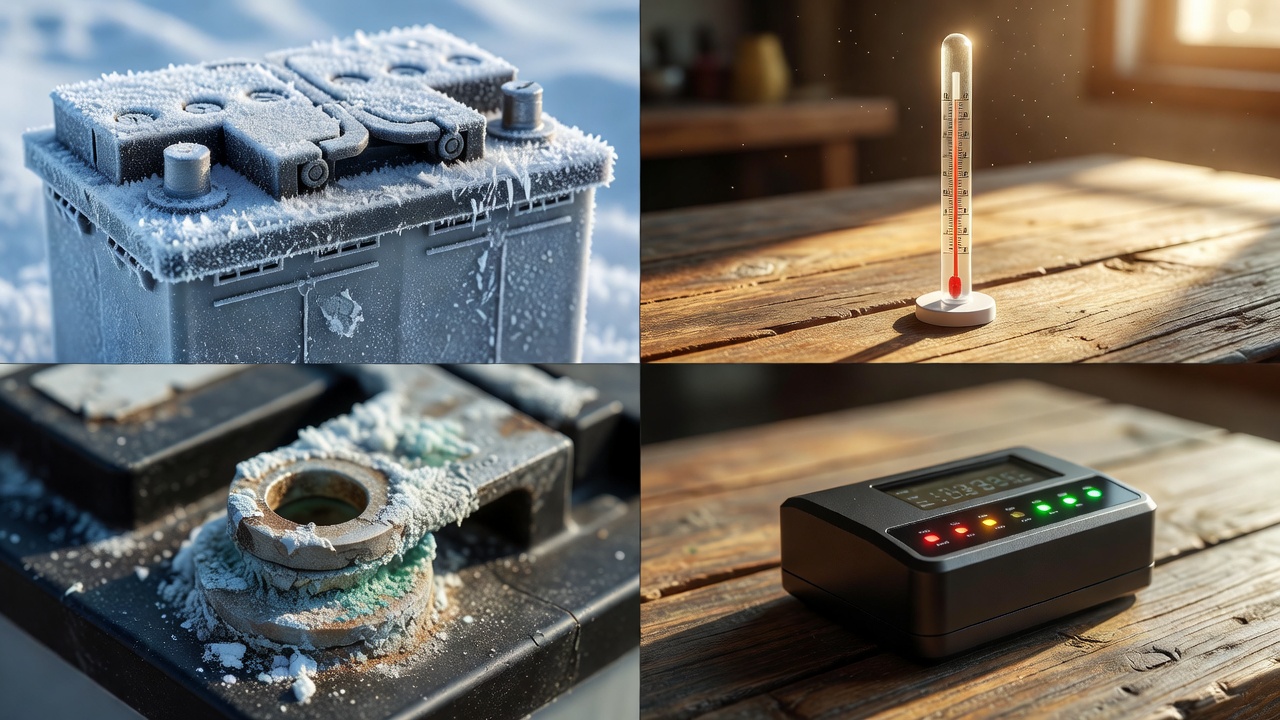
Battery lifespan is not fixed — it is the product of several compounding variables. Understanding each one lets you act on the ones within your control.
Battery Chemistry
The single largest predictor of lifespan is battery type. The vast majority of riding mowers ship with a 12V flooded lead-acid battery. These are inexpensive and widely available but are sensitive to deep discharge and temperature extremes. Absorbed glass mat (AGM) lead-acid batteries — a sealed, spill-proof variant — handle vibration better and resist sulfation slightly more effectively, pushing their lifespan toward the upper end of the 3–5 year range. Lithium-ion batteries, still less common in residential mowers, tolerate deeper discharge cycles and lose far less capacity sitting unused, which is why their rated lifespan reaches 5–10 years. For additional operational safety benchmarks, see our published testing notes on jbl partybox club 120 vs sony srs xv500.
Charging Habits
Both undercharging and overcharging shorten a lead-acid battery’s life. Chronic undercharging allows lead sulfate crystals to harden on the battery plates — a process called battery sulfation — permanently reducing capacity. A basic onboard charging system on a riding mower typically keeps a battery healthy during regular mowing sessions, but a battery that sits for weeks between uses will self-discharge. Lead-acid batteries self-discharge at roughly 5–15% per month at room temperature; lithium-ion batteries self-discharge at 1–3% per month, which is why they tolerate storage far better. Overcharging with an unregulated charger generates excess heat and accelerates plate corrosion. Using a smart charger that switches to float mode prevents overcharge damage. For additional operational safety benchmarks, see our published testing notes on jbl partybox club 120 vs sony srs xv500.
Storage Practices
Off-season storage is where most lead-acid riding mower batteries fail prematurely. Storing a battery in a deeply discharged state — even once — can cause irreversible sulfation. Storing it in an unheated garage through a cold winter compounds the damage because a discharged lead-acid battery can freeze at temperatures just below 32°F (0°C), cracking the case and destroying the battery outright. A fully charged lead-acid battery does not freeze until approximately −76°F (−60°C). To compare alternative configurations, check our hands-on review of z890 vs x870e motherboard.
Climate and Temperature
Temperature affects battery chemistry in both directions. Cold weather temporarily reduces available capacity and raises the internal resistance of a lead-acid battery, demanding more cranking effort from a battery that is simultaneously delivering less power. Repeated cold-starts accelerate plate degradation. Heat is equally damaging: sustained ambient temperatures above approximately 77°F (25°C) accelerate the chemical reactions inside a lead-acid battery, speeding up water loss in flooded cells and plate corrosion throughout. Batteries stored or operated consistently in hot climates often fail in 2–3 years rather than 4–5.
Usage Frequency
Residential seasonal use — mowing once or twice a week from spring through fall, then storing the mower for 4–6 months — is harder on a battery than year-round light use because of the extended idle periods. Commercial or daily-use mowers that maintain a consistent charge cycle can actually see batteries perform at or beyond the top of their rated lifespan, provided charging and storage are managed correctly. Conversely, a mower used only a few times per season and left discharged in a shed will likely need a new battery within 2 years. To compare alternative configurations, check our hands-on review of z890 vs x870e motherboard.
Parasitic Drain
Some riding mowers draw a small amount of current even when switched off — from clocks, safety interlocks, or electronic modules. This parasitic drain is typically minor but cumulatively significant over months of storage. Disconnecting the negative terminal or using a battery disconnect switch during off-season storage eliminates this drain entirely.
How to Make a Riding Lawn Mower Battery Last Longer
These practices consistently push lead-acid batteries toward the 5-year ceiling and keep lithium-ion batteries healthy for a decade. Users looking for related component recommendations can explore our marshall stanmore iii vs harman kardon onyx studio 8 breakdown.
Use a Battery Tender or Trickle Charger During Off-Season Storage
A battery tender (also called a smart maintainer) monitors charge level and applies a low current only when the battery drops below a set threshold. It does not overcharge. Connected throughout winter storage, it eliminates self-discharge, prevents sulfation, and keeps the battery at full charge so it cannot freeze. A basic trickle charger without automatic shutoff can overcharge — use a smart charger with float or maintenance mode. This single habit extends lead-acid battery life more than any other intervention.
Store the Battery Fully Charged in a Moderate-Temperature Location
Before winter storage, fully charge the battery and either leave the maintainer connected or store the battery indoors — in a basement or climate-controlled space — rather than in an unheated garage or shed. Ideal storage temperature for a lead-acid battery is between 50°F and 70°F (10°C–21°C). Lithium-ion batteries tolerate a broader range but still benefit from storage above freezing. Before finalizing equipment decisions, refer to our comprehensive dyson v8 cyclone vs bissell featherweight stick comparison.
Clean Battery Terminals Regularly
Battery terminal corrosion increases electrical resistance, forces the battery to work harder during starts, and can cause incomplete charging cycles. Clean terminals with a wire brush and a baking-soda-and-water solution at the start and end of each mowing season. Apply a thin layer of dielectric grease or petroleum jelly after cleaning to slow corrosion recurrence. This is a 10-minute task that meaningfully extends battery service life.
Avoid Deep Discharge
Never run a lead-acid battery completely flat. Deep discharge — allowing voltage to fall below approximately 10.5V under load — causes irreversible sulfation damage. If a mower has been sitting and the battery is low, charge it before attempting repeated starts. If the engine does not start on the first two or three tries, stop cranking and charge the battery first. For broader ecosystem context, read through our operational guide on bissell crosswave hydrosteam vs shark stainforce.
Check Water Levels in Flooded Lead-Acid Batteries
Flooded (non-sealed) lead-acid batteries have removable caps on each cell. Check electrolyte levels at the start of each season and top off with distilled water — never tap water — if plates are exposed. Low electrolyte accelerates plate sulfation and shortens battery life. AGM and lithium-ion batteries are sealed and require no water maintenance.
Signs Your Riding Lawn Mower Battery Is Failing
Identifying a failing battery early prevents being stranded mid-mow and avoids unnecessary starter or charging system diagnosis.
- Slow or labored cranking: The engine turns over sluggishly on startup, especially on the first start of the day or in cool morning temperatures. This is the most common early sign of reduced battery capacity.
- Failure to hold a charge: The battery charges fully but loses charge within hours or days without use, indicating high self-discharge from internal damage or sulfation.
- Multiple failed start attempts: The engine clicks once or cranks weakly before the battery voltage collapses under load. This distinguishes a battery problem from a starter or fuel issue.
- Visible corrosion or physical damage: Heavy terminal corrosion, a bloated or cracked case, or visible acid leakage are all indicators of an end-of-life battery that should be replaced immediately.
- Age over 4 years: A lead-acid battery older than 4 years that requires jump-starting or shows any of the above symptoms is unlikely to recover. Testing is warranted.
- Dim headlights or weak accessories: Noticeably dim mower lights or sluggish PTO engagement can reflect insufficient battery voltage under load.
Lead-Acid vs. Lithium-Ion Riding Mower Batteries: Lifespan Compared
| Feature | Flooded Lead-Acid | AGM Lead-Acid | Lithium-Ion |
|---|---|---|---|
| Typical lifespan | 3–4 years | 3–5 years | 5–10 years |
| Self-discharge rate | 5–15% per month | 3–10% per month | 1–3% per month |
| Deep discharge tolerance | Low | Low–moderate | High |
| Cold weather performance | Reduced capacity | Reduced capacity | Moderate reduction |
| Maintenance required | Water top-off, terminal cleaning | Terminal cleaning only | Minimal |
| Upfront cost | Lowest | Moderate | Highest |
| Weight | Heavy | Heavy | Significantly lighter |
Cold Cranking Amps (CCA) and Why They Matter
Cold cranking amps (CCA) measure how much current a battery can deliver for 30 seconds at 0°F (−18°C) while maintaining at least 7.2V. Most riding mowers require a battery rated between 145 and 300 CCA depending on engine displacement. Replacing a battery with one that meets or exceeds the OEM CCA rating is critical for reliable cold-morning starts. Lead-acid batteries lose a significant portion of their effective CCA as they age, meaning a 4-year-old battery with a 200 CCA rating may be delivering well under 150 CCA in real-world conditions. Lithium-ion batteries maintain their CCA rating more consistently across their lifespan and perform better in sub-freezing conditions than lead-acid, though they should not be charged below 32°F (0°C) without a battery management system (BMS) that includes low-temperature charge protection.
Is a Lithium-Ion Riding Mower Battery Worth the Extra Cost?
Lithium-ion riding mower batteries cost significantly more upfront than lead-acid equivalents. The cost premium is offset by a longer service life, lower maintenance burden, lighter weight, and better storage characteristics. For homeowners in climates with long off-seasons who have previously lost batteries to winter discharge, the switch to lithium-ion typically pays for itself by the second replacement cycle avoided. For homeowners who already use a battery tender diligently through the off-season and get 5 years from a lead-acid battery, the financial case for lithium-ion is less compelling.
When to Replace a Riding Lawn Mower Battery
Voltage Test
A battery voltage test with a basic multimeter is the fastest first step. Measure voltage across the terminals with the mower off and the battery rested (not immediately after charging or use):
- 12.6–12.8V: Fully charged, battery is healthy.
- 12.4–12.5V: Approximately 75% charged — charge before testing further.
- 12.0–12.3V: Partially discharged; may indicate a battery that is not holding a full charge.
- Below 12.0V at rest: Significant discharge or internal damage. Charge fully, then retest. If voltage returns to below 12.4V within 24 hours of a full charge, replace the battery.
- Below 10.5V: Deep discharge — battery may be unrecoverable.
Load Test
A voltage test alone does not reveal a battery’s true condition because a failing battery can show full resting voltage yet collapse under load. A load test applies a controlled current draw (typically half the battery’s CCA rating) for 15 seconds while monitoring voltage. A healthy 12V battery holds above 9.6V during the load test. A battery that drops below 9.6V under load is failing and should be replaced even if its resting voltage appears normal. Many auto parts retailers offer free battery load testing. A dedicated battery load tester can also be purchased inexpensively for home use.
Age-Based Replacement Threshold
If a lead-acid battery is 4 or more years old and showing any symptoms — slow cranking, failure to hold charge, need for jump-starts — replacement is the correct decision rather than further diagnosis. The cost of a replacement riding mower battery is low relative to the value of a mowing season lost to repeated failures. Testing a lithium-ion battery is warranted at the same symptom threshold, but the age threshold for proactive replacement extends to 7–8 years.
When Replacement Doesn’t Make Sense
If the mower itself is aging, mechanically unreliable, or approaching end-of-life, investing in a premium battery replacement deserves consideration against the alternative of equipment replacement. A new battery in a mower with worn belts, a tired engine, or significant deck damage is rarely the best allocation of maintenance budget.
Common Questions on How Long Does A Riding Lawn Mower Battery Last Answered
How long does a riding lawn mower battery last if I only mow on weekends?
Weekend seasonal use is typical residential use, and a lead-acid battery under these conditions lasts 3–5 years with proper off-season storage and a battery tender connected through winter. Without a maintainer, expect closer to 2–3 years due to sulfation from repeated winter self-discharge cycles.
Can I leave my riding mower battery connected all winter?
Leaving the battery connected without a maintainer allows self-discharge and potential freezing if the battery drops below full charge in cold temperatures. Connect a smart battery tender to the battery while leaving it installed in the mower, or disconnect it and store it indoors on a maintainer. Either method protects the battery through winter storage.
Why does my riding lawn mower battery keep dying?
The most common causes are sulfation from chronic undercharging or deep discharge, a faulty charging system on the mower (a bad stator or voltage regulator that fails to recharge the battery during operation), heavy terminal corrosion preventing full charge acceptance, or a battery that has simply reached end of life. Test the battery with a multimeter immediately after a long mow — voltage should read 13.5–14.5V with the engine running, confirming the charging system is functioning. If resting voltage after a full charge falls below 12.4V within 24 hours, the battery is the fault.
At what voltage should I replace a 12V riding mower battery?
Replace a 12V lead-acid riding mower battery when resting voltage (measured after a full charge and at least 1 hour of rest) falls below 12.4V, or when the battery fails a load test by dropping below 9.6V under a half-CCA load for 15 seconds. A battery reading below 12.0V at rest after a full charge cycle has likely sustained permanent sulfation damage and will not recover to reliable service.
For more hands-on benchmarks and buying recommendations, consult our guides on heavy-duty chainsaw buyer guide, as well as high-CFM commercial leaf blower guide, as well as durable ride-on lawn tractor guide, as well as automated robotic lawn mower guide.
Mechanical safety standards, operational tolerances, and protective gear guidelines align with benchmark specifications established by the American National Standards Institute (ANSI).









