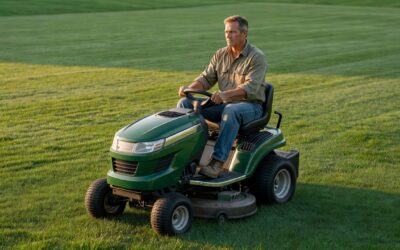
A zero turn mower is a specialized lawn mower designed with a unique steering system that allows it to make tight turns with a turning radius of essentially zero. This technology enables the mower to pivot completely in place, making it exceptionally efficient for navigating complex lawn layouts, tight spaces, and areas with obstacles.
What Is a Zero Turn Mower?
At its core, a zero turn mower represents a significant advancement in lawn care equipment technology. Unlike traditional riding mowers that rely on a single steering mechanism and have a fixed turning radius, zero turn mowers feature a sophisticated system of dual rear-wheel motors and caster front wheels that allow for near-360-degree turns. The term ‘zero turn radius’ refers to the minimal distance required to make a complete turn, typically measured in inches rather than feet.
How Zero Turn Mowers Work: The Steering Mechanism
The operation of a zero turn mower is based on differential steering principles. The key components that enable this technology include:
- Dual independent rear-wheel motors: These motors provide separate control for each rear wheel, allowing them to rotate at different speeds or in opposite directions.
- Caster front wheels: These wheels remain stationary during turns, providing stability while the rear wheels perform the maneuvering.
- Independent wheel control: The ability to control each rear wheel independently creates the capability for tight turns and complete pivots.
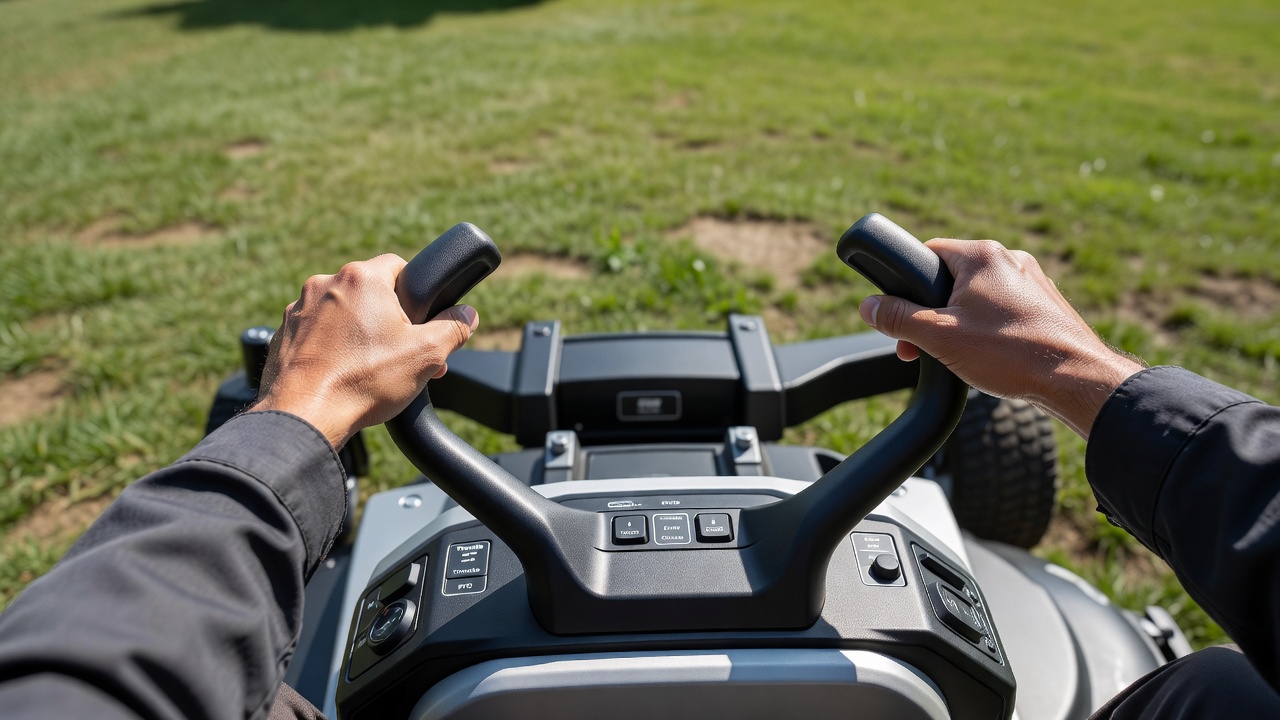
When the operator applies pressure to one control lever, the corresponding rear wheel speeds up or slows down, causing the mower to turn in that direction. By controlling both rear wheels independently, the operator can achieve the characteristic tight turns and 360-degree pivots that define zero turn mowers.
Key Features of Zero Turn Mowers
Zero turn mowers are distinguished by several key design elements and features:
- Dual rear-wheel motors: The primary mechanism enabling zero turn capability.
- Caster front wheels: Provide stability during operation.
- High-performance cutting decks: Available in various configurations including single, dual, or triple decks.
- Ergonomic operator stations: Typically feature comfortable seats, control levers for forward/backward movement and turning, and sometimes foot pedals for engagement.
- Adjustable cutting heights: Allow for customization based on grass type and growth conditions.
- Powerful engines: Range from residential models with 20-30 horsepower to commercial models with 40+ horsepower.
The control layout is designed for intuitive operation, with levers positioned for easy access while seated. Many models include features like foot-operated engagement systems and variable speed controls to enhance user experience.
Zero Turn Mowers vs. Traditional Riding Mowers: Key Differences
Zero turn mowers differ significantly from traditional riding mowers in several important aspects:
- Turning radius: Zero turn mowers typically have a turning radius of 18-36 inches, compared to standard riding mowers which have a turning radius of 50-80 inches.
- Maneuverability: The ability to pivot completely in place makes zero turn mowers far more capable in tight spaces and around obstacles.
- Control mechanisms: Zero turn mowers use levers for control, while traditional mowers often rely on a steering wheel or tiller.
- Design and frame: Zero turn mowers have a different frame design optimized for the zero turn system, often with a more compact profile.
- Deck size: While both types come in various deck sizes, zero turn mowers are commonly available with wider decks for increased efficiency.
These differences result in significantly different performance characteristics, with zero turn mowers excelling in maneuverability and efficiency for complex lawn layouts.
Main Benefits of Zero Turn Mowers
The primary advantages of zero turn mowers include:
- Time efficiency: The ability to make tight turns and pivot in place reduces mowing time by up to 30-50% compared to traditional mowers.
- Maneuverability: Exceptional capability for navigating tight spaces, around trees, flower beds, and other landscaping features.
- Precision: Allows for more even cutting and better coverage of complex lawn layouts, resulting in a more professional appearance.
- Versatility: Suitable for various lawn sizes and shapes, from small residential lawns to larger properties with complex features.
- Reduced fatigue: The ability to make tight turns reduces the physical effort required for mowing, particularly on irregularly shaped lawns.
For homeowners with challenging lawn layouts or those who want to maximize their mowing efficiency, zero turn mowers offer significant advantages over traditional equipment.
Residential vs. Commercial Zero Turn Mowers
Zero turn mowers are available in two main categories, each designed for different applications and workloads:
- Residential models: Designed for home use, typically featuring lower horsepower engines (20-30 HP), smaller cutting decks (42-60 inches), and more compact designs optimized for residential properties.
- Commercial models: Built for professional use, featuring higher horsepower engines (40+ HP), larger cutting decks (up to 72 inches), and enhanced durability for heavy-duty use.
Commercial zero turn mowers often have more robust construction, better suspension systems, and more powerful engines to handle demanding workloads. They may also include additional features like larger fuel tanks, more durable cutting decks, and enhanced safety systems.
When Should You Consider a Zero Turn Mower?
Zero turn mowers are particularly suitable for:
- Complex lawns: Properties with irregular shapes, multiple obstacles, or complex landscaping features.
- Large lawns: When the lawn area exceeds what can be efficiently mowed with a traditional mower.
- Time efficiency: For homeowners who want to reduce mowing time and effort.
- Professional landscapers: For commercial lawn care businesses that need equipment capable of handling large areas quickly and efficiently.
- Properties with obstacles: Lawns with trees, flower beds, or other landscaping elements that require frequent maneuvering around.
However, it’s worth noting that zero turn mowers may not be the best choice for all situations. For very small, simple lawns with minimal obstacles, a traditional riding mower or push mower might be more appropriate and cost-effective.