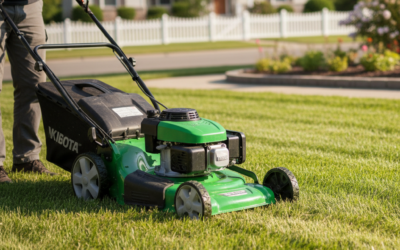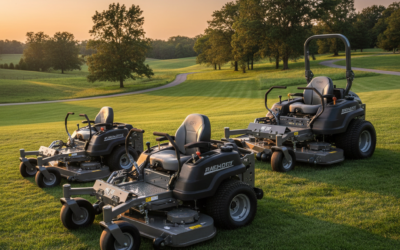
A self-propelled walk-behind mower uses power from its gasoline engine or electric motor to turn the drive wheels, so you walk behind and steer instead of pushing the full weight of the machine. A user-engaged drive system—typically a bail, lever, or variable-speed control—sends that power through a clutch, belt, gearbox, or similar transmission to the front, rear, or all wheels. That is the main difference from a standard push mower, which powers the blade but relies entirely on the operator for forward motion.
Self-Propelled vs. Push Mowers
On a walk-behind mower, “self-propelled” means the machine can apply its own power to the wheels. You still start it, hold the handle, choose a path, turn, and stop. You are not sitting on the deck, and the mower is not deciding where to go. The point of the drive system is to reduce how much forward force you have to supply, not to remove you from the job.
A conventional push mower is also a walk-behind machine, and it usually has a powered cutting blade. What it does not have is powered ground travel. The engine or motor spins the blade under the deck; the operator supplies every bit of forward motion by pushing. On thick grass, wet turf, slopes, or a heavy bagger, that push load can feel substantial because you are moving the mower’s weight plus the resistance of the grass.
A self-propelled walk-behind unit can power both the cutting blade and the drive wheels. Those two jobs share a power source on many designs, but they are not the same function. You can often have the blade running while wheel drive is off, or pause powered travel while you reposition. That flexibility is why the operator still matters: the machine will not mow a lawn by itself just because the wheels can turn under power.
It also helps to separate this category from machines that look related but work differently:
- A push mower powers the blade only. You provide all forward force.
- A self-propelled walk-behind mower can power the blade and, when you engage drive, the wheels. You still walk behind it and steer.
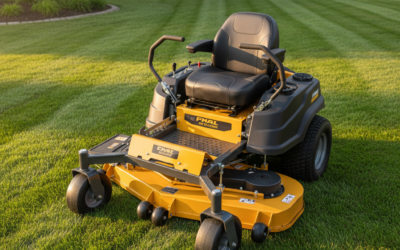
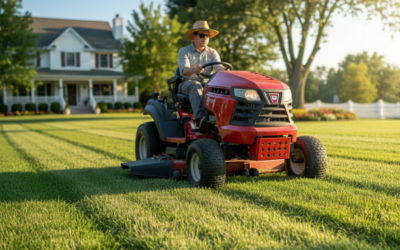
- A riding mower or lawn tractor carries the operator and uses a different control layout, often with a seat, pedals, and a steering wheel or lap bars.
- A robotic mower is meant to navigate with little or no hands-on guidance. That is not what “self-propelled” means on a walk-behind unit.
Self-propelled does not automatically mean easy for every person or every yard. Grass height, moisture, terrain, bag weight, and which wheels are driven all change how much you still have to help, especially on turns and slopes. The operator remains responsible for starting, blade control, direction, and stopping.
The Power Path From Engine or Motor to the Wheels
The mechanism is easier to picture if you follow the power instead of memorizing one universal parts list. Designs vary, but the idea is consistent: a power source creates rotation, a user-controlled engagement device decides whether that rotation may reach the wheels, and a transmission or similar drive carries motion to one or more axles.
Where the drive power comes from
On a gasoline walk-behind mower, a small engine is the usual power source. On a battery or corded electric model, an electric motor does that job. In both cases the same power source often also turns the cutting blade, either directly or through a separate path. Gasoline engines and electric motors are not identical hardware, but they can feed the same conceptual chain: create rotation, then split or share that rotation between cutting and travel.
What sits between the power source and the wheels
Wheel drive is normally user-engaged. Until you ask for travel, a clutch, idler pulley, cable-operated engagement arm, or electronic enable keeps the wheels from being driven. When you squeeze a drive bail or move a speed control, that engagement device connects the rotating power source to a drive belt, gearbox, transaxle, or a similar transmission. The transmission reduces speed and increases the twisting force enough for the drive wheels to roll the machine at a walking pace.
A transaxle, when present, combines gear reduction and an axle in one assembly so both wheels on that axle can be driven. Other layouts use a belt to a gearbox on one axle, or more than one driven axle. There is no single belt type, gear set, or shaft arrangement that defines every self-propelled mower. What matters is the sequence: power source, operator-controlled engagement, then a mechanical or electromechanical path to the wheels.
How the blade can keep spinning while drive is on or off
The cutting blade and the wheel-drive system are related when they share an engine or motor, but they are not one function. Many machines keep the blade on its own path—often a blade brake, clutch, or dedicated motor circuit—so blade rotation and ground travel can be controlled separately. That is why you can typically disengage drive and still have a spinning blade, or stop the blade according to the machine’s controls while the engine or motor is still running. Do not assume the blade and wheels share one shaft, and do not assume every interlock works the same way. The specific starting sequence, blade control, and drive enable belong in that mower’s manual.
How You Engage Drive and Control Ground Speed
From the operator’s side, a self-propelled mower feels like a push mower until you ask the wheels to help. The handle usually carries the drive control, and that control is what tells the transmission it may send power to the drive wheels.
Telling the mower to start driving
A common pattern is a drive bail or squeeze bar on the handle. Holding it against the grip engages the clutch or equivalent device. Some machines use a separate lever, button, or zone on the handle. Variable-speed designs may combine engagement and pace in one control: the farther you squeeze, or the higher you set a dial or lever, the faster the intended ground speed. These patterns are typical, not universal. Read the symbols on your handle and the manual before the first use, because a control that looks similar on two mowers may not work the same way.
Matching your walking pace
Ground speed is meant to be a walking pace you can sustain while steering. Many walk-behind units offer more than one speed, either in steps or through a continuously variable control. The useful setting is the one that lets you walk comfortably without being dragged or left shoving the handle. Tall, wet, or dense grass can make the same setting feel slower because the deck and wheels meet more resistance. If the mower pulls ahead of you, reduce the setting or ease off the drive control. If you are still doing most of the pushing, increase speed only after you are balanced and ready to walk with the machine.
Exact miles-per-hour ranges are not a reliable way to choose a setting. People walk at different paces, lawns differ, and manufacturers do not all use the same control geometry. Treat the numbers on a dial, if any, as relative marks on that machine, not as a promise that a given mark matches every operator.
What happens when you let go
On many walk-behind designs, releasing the drive control is intended to stop powered wheel motion. The clutch opens, the belt relaxes, or the electronic drive drops out, and the wheels are no longer being driven. That does not mean the mower cannot roll. On a slope, on slick grass, or if you have momentum, the machine can still move. You should stay ready to stop and hold it. Blade-brake behavior is a separate question: some controls stop the blade when released, some do not, and some combine functions. Never assume the blade and the drive shut down together. Follow the manual for starting, blade, and drive interlocks instead of copying a neighbor’s habit.
Front-Wheel, Rear-Wheel, and All-Wheel Drive Layouts
Which wheels actually receive power changes how the mower feels when you turn, climb, or push into thick grass. Layout is a mechanical tendency, not a ranking. No arrangement is best for every lawn, and none of them steer the machine for you.
Front-wheel drive
Front-wheel drive sends power to the front axle. Because the front of a walk-behind mower is also where you often pivot for a turn, this layout can make it easier to swing the front around once you lighten or lift slightly through the handle—always within what the manual allows and never by tipping in a way that exposes the blade. The tradeoff is traction: the front wheels may carry less of the engine’s weight than the rear, so they can lose grip in tall, wet, or downhill conditions more readily than a rear-driven layout. You may still need to help on a slope or in heavy growth.
Rear-wheel drive
Rear-wheel drive puts power at the wheels that often carry more of the engine’s or motor’s weight. That extra load on the driven tires can help them keep turning when the grass is thick or the ground is uneven. Turning can feel different than with front drive, because the powered rear wants to keep pushing while you swing the front. Many operators slow or briefly disengage drive before a tight turn so they are not fighting that push. Again, this is a tendency, not a rule that every rear-drive mower will feel the same.
All-wheel or multi-wheel drive
All-wheel drive, or any layout that powers more than one axle, aims to keep more of the machine’s wheels contributing to travel. That can help when one axle would otherwise spin or unload. It does not mean the mower steers itself, climbs any hill, or removes the need for caution. You still guide the handle. On a turn, multiple driven wheels can make the machine feel more planted and less willing to pivot, so the same advice applies: ease the ground speed or disengage if the mower starts to pull through the corner.
Across all three layouts, grass height, moisture, and terrain still matter. A driven wheel on wet thatch can slip. A heavy bag hanging off the rear can change how much weight sits on the front. Layout does not cancel gravity on a slope. The operator still chooses a safe path, keeps a firm hold, and treats hills as a reason for extra care rather than a test of the drive system.
Gasoline and Electric Self-Propelled Designs
An electric self-propelled mower still uses a drive system. Battery and corded models are not just push mowers with a quieter motor. When you engage drive, some form of transmission, gearbox, belt, or dedicated drive motor turns the wheels. The person walking behind still starts the machine, holds the handle, sets ground speed, steers, and releases drive to stop powered travel.
What can differ is how the motor is arranged. Some electric designs use one motor for the cutting blade and another for travel, with electronic speed control replacing a mechanical variable-speed lever. Others still look closer to a gasoline layout: one power unit, a clutch or electronic enable, and a belt or gear path to an axle. Gasoline units more often use a mechanical transmission and a drive belt because the engine is already a single rotating source. Neither architecture is the only way to build a self-propelled mower, and you should not assume a battery model has no belts or that a gasoline model cannot use a more enclosed transaxle.
What stays the same is the operator model. You engage drive only when you are ready to walk. You match ground speed to a pace you can control. You treat the blade and the wheels as separate hazards. Fuel, exhaust, batteries, and cords add their own cautions, but they do not change the basic idea that power can turn the blade and, when you ask for it, also turn the wheels.
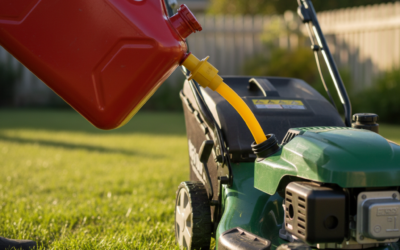
Handle fuel outdoors and away from sparks according to the manufacturer, and never add gasoline to a hot engine. For electric models, keep water, damaged cords, and damaged battery packs out of the work path, and charge only as the label directs. Those are use-and-storage cautions, not repair or wiring instructions.
Using the Drive System While You Mow
The drive system is most helpful when you treat it as a walking aid rather than a switch you leave clamped on from the first pass to the last.
Starting movement and choosing a pace
Clear the lawn of sticks, toys, and cords first. Confirm the cutting height, bag or side-discharge setup, and that the area is free of people and pets. Start the engine or motor using the sequence in the manual, including any blade-control and zone-control steps. Stand in a balanced stance with both hands on the handle before you engage drive. Ease into ground speed instead of jumping to the highest setting. If the mower surges ahead, you chose too much speed or engaged before you were ready to walk.
Turning, stopping, and backing up
For a wide, gentle turn you can often keep light drive engaged and guide the handle. For a tight end-of-row turn, slow down or release the drive control so you are not wrestling a machine that still wants to go forward. Some walk-behind mowers are awkward or unsafe to drive backward under power; others have a specific reverse behavior. Do not assume the wheels will pull you backward in a controlled way. If you need to back up, disengage drive unless the manual describes a reverse mode, and pull the machine only when the blade situation is safe and you have firm footing.
To stop, release the drive control and be ready to hold the mower if it continues to roll. Then deal with the blade according to that model’s controls. Never leave a running mower unattended, even if drive is off. A spinning blade under an idling deck is still a hazard, and a parked machine on a grade can roll.
Checks before you engage the wheels
Look at the tires or wheels for wrapped string, mud cakes, or debris that would keep a driven wheel from turning cleanly. Confirm the drive control moves freely and returns when released. If a cable is slack, a lever is bent, or the control does not spring back, do not force the issue—stop and consult the manual or a qualified technician. Check that children, bystanders, and pets are well away. On a slope, decide whether you should even be mowing there; a powered drive can make the machine move sooner than you expect once you squeeze the bail.
Starting sequences, zone controls, and reverse behavior vary. The technique above is operator habit, not a substitute for the plate on the deck or the book that came with the machine.
Safety Limits of a Powered Drive
A self-propelled mower combines two hazards that deserve separate attention: a cutting blade that can still be spinning when the wheels are quiet, and drive wheels that can move the whole machine as soon as you engage travel.
Unintended drive engagement is dangerous because the mower can lurch toward your feet, down a slope, or into a person or object. Keep both hands on the handle when drive is on. Do not squeeze the drive bail while you are beside the deck, reaching under the machine, or trying to free a clog. Do not defeat interlocks, tie a bail down, or modify a control so the wheels stay driven without your hand on the handle. Those shortcuts remove the very feature that is meant to stop powered travel when you let go.
Treat the blade and the wheels as separate. Disengage drive and stop the blade before you inspect the deck, clear grass from the chute, or approach the underside. Wait for the blade to stop completely. Keep feet and hands away from the deck whenever the machine is capable of running. If you must tilt or lift any part of the mower, follow the manual; many designs can leak fuel, spill battery electrolyte, or expose the blade if tipped the wrong way.
On slopes, stay in control of both direction and footing. A driven wheel can pull the mower downhill faster than you intended, or slip and then catch. There is no universal slope angle that makes every self-propelled mower safe. If you cannot hold the machine confidently with drive off, you should not be using drive on that grade. Mow across or along a slope only as the manufacturer allows, and keep bystanders far away. Around people, shut the machine down rather than trying to steer past them under power.
Fuel and electricity add ordinary but serious risks. Refuel outdoors, with the engine off and cool, and wipe spills before restarting. Store gasoline in approved containers away from living spaces. For electric models, inspect cords and packs, keep charging in a dry, ventilated place the manufacturer specifies, and do not operate with damaged insulation or a swollen battery. Mechanical and electrical repair—belts inside the housing, transaxle work, motor wiring, or safety-switch bypasses—belongs to a qualified service technician, not to a trial-and-error session on the driveway.
If the Mower Will Not Drive as Expected
When the wheels do not help, start with operator checks rather than assuming the transmission has failed. Confirm the engine or motor is actually running and that you are fully applying the drive control the way the manual describes. A half-squeezed bail, a speed lever left in a neutral-looking position, or a control that has not clicked into engagement can look like a broken drive. Look for obvious debris: a stick jammed in a wheel, a grass rope around an axle, or a clogged deck that makes the whole machine feel stuck. Clear only after the blade is stopped and the machine is safe to approach.
If the mower surges, slips, or keeps pulling after you release the control, treat that as a reason to shut down. A drive that will not release is not a quirk to work around by holding the handle harder. Grinding noises, burning smells, sudden loss of drive under load, or a control that no longer returns on its own are also stop-now signs. Do not open the housing to tension a belt, add fluid to a transaxle, or adjust a clutch unless you are a qualified technician working from the service information for that machine. There is no safe generic belt-tension spec or fluid type that applies to every walk-behind mower.
Stop using the mower and get help when you cannot restore predictable engagement and release, when a safety control feels wrong, or when something smells, smokes, or grinds. A self-propelled mower that moves when you did not ask, or refuses to move when you did, is not a puzzle to finish the lawn with. Park it, disable it as the manual directs, and use the manufacturer’s support channel or a qualified shop.
Frequently Asked Questions
Does self-propelled mean the mower is automatic?
No. On a walk-behind mower it only means the wheels can be driven by the engine or motor when you engage the drive system. You still walk behind the machine, steer, and remain responsible for the blade and for stopping.
Can I use a self-propelled mower like a push mower?
Often yes, by leaving the drive control released. The cutting blade can still run while you push, depending on the model. If the wheels feel hard to roll with drive off, or if the control will not stay released, stop and check the manual rather than forcing the handle.
Why does the mower still need some pushing on thick grass?
Powered wheels reduce the forward force you must supply; they do not erase grass resistance, bag weight, or poor traction. Wet, tall, or dense turf can make driven wheels slip or force you to help through a turn. That is normal variation, not proof the idea of a drive system has failed.
Is the drive system the same as the blade brake?
No. The drive system sends power to the wheels. Blade controls start, stop, or brake the cutting blade. Some handle bars combine functions, but you should still think of travel and cutting as separate hazards and learn both controls on your machine.