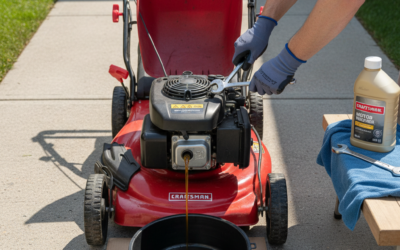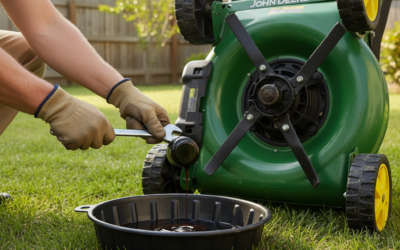
A mulch lawn mower, also called a mulching lawn mower, is a lawn mower designed or set up to recut grass clippings into small pieces and drop them back onto the turf instead of bagging them or throwing them out a discharge chute. Those chopped clippings act as a light mulch that can break down in place. The term can mean a dedicated mulching design or a standard walk-behind or riding mower used in mulch mode with a plug, kit, deck, or blade.
What a Mulch Lawn Mower Is
People use “mulch lawn mower” and “mulching lawn mower” for the same idea: a mower that handles clippings by chopping them finely and leaving them on the lawn. The phrase describes how the machine treats cut grass, not one exclusive product type. Some mowers are built mainly for mulching. Many walk-behind and riding mowers can mulch, bag, or discharge, depending on the deck setup, a plug or cover, a bag or chute, and sometimes a different blade.
That flexibility is why the term can feel ambiguous. A reader may mean a dedicated mulching machine, a regular mower switched into mulch mode, or a mulch kit added later. In everyday use, all three point to the same practice: keep clippings under the deck long enough to recut them, then drop them into the turf rather than collect or fling them aside.
Lawn-mower mulching is also easy to confuse with garden mulch. Bark, wood chips, shredded leaves, and similar materials are spread in beds to cover soil. Grass-clipping mulch from a mower is different. It is a thin layer of finely cut turf left where the grass already grows. It is not decorative bed mulch, and it is not a substitute for covering bare soil around shrubs or trees.
This article answers a definitional question: what a mulch or mulching lawn mower is, what it does with clippings, and how that method compares with bagging or side or rear discharge. It stays practical. It does not rank machines or treat mulching as a complete lawn-care system.
How a Mulching Mower Treats Grass Clippings
After the blade cuts the grass, a mulching setup is meant to keep those pieces under the deck instead of sending them out a chute or into a bag. The clippings stay in that enclosed space long enough to be struck again. Each extra pass of the blade shortens them. When they are small enough, they fall back into the canopy and onto the soil surface.
The usual idea is a closed or recirculating path under the deck. A discharge opening is blocked or unused, so air and clippings circulate rather than exit in a stream. Some decks and blades are shaped to encourage that recirculation. The exact airflow and cutting geometry vary by machine, and those details belong in the owner’s manual rather than in a general definition.
Mulched clippings are usually smaller than bagged or discharged clippings because they are recut. Size is not a fixed measurement. It depends on how long the grass was, how wet it is, how sharp the blade is, how fast you walk or drive, and whether the deck is actually closed for mulching. Dry, short clippings tend to look like a light scatter. Long, wet pieces may still look like clumps even if the mower is in mulch mode.
What you see after a pass is therefore not guaranteed. A well-set-up mower on turf that is mowed often can leave little obvious residue. The same mower on soaked, overgrown grass can leave rows or mats. Mulching describes the intended handling of clippings, not a promised leftover appearance.
Mulching Compared With Bagging and Side Discharge
Consumer mowers commonly handle clippings in three ways: mulching, bagging, and side or rear discharge. Many machines can do more than one of these if you change a plug, chute, bag, or kit.
Bagging
Bagging collects clippings in a bag, hopper, or similar container. The material leaves the lawn. You can compost it, dispose of it according to local rules, or use it elsewhere if that is appropriate. Bagging is often chosen when the grass is very long, when you want a very clean surface, or when you do not want extra organic material left on the turf. It also removes that material from the lawn, so you haul it instead of recycling it in place.
Side or rear discharge
Discharge ejects clippings through an opening in a stream or windrow. Side discharge throws them to the side of the deck. Rear discharge sends them out behind the mower. The pieces are usually larger than well-mulched clippings because they leave the deck after fewer cuts. In short, dry grass the scatter may be modest. In long or wet grass, discharge can leave visible clumps or rows that sit on top of the turf.
Mulching
Mulching returns finely cut pieces to the lawn. Nothing is collected for disposal, and there is no ejected stream if the discharge path is closed as designed. The goal is a thin layer that can sift down and decompose.
None of these methods is universally better, faster, or healthier. The useful comparison is functional. Bagging removes clippings. Discharge relocates them in a visible stream. Mulching recycles them on the spot. People often choose mulching when they mow frequently, want to skip bag handling, and can keep clippings short and dry enough to disappear into the grass. They often switch to bagging or discharge when the lawn is too tall, too wet, or too leafy for clean recutting, or when they specifically want the clippings off the turf.
What Mulching Is Intended to Do for a Lawn
The practical purpose of mulching is to return clippings instead of removing them. Fine pieces can decompose at the soil surface and add organic matter. As they break down, they can also return some nutrients that the grass took up while it was growing. That recycling is the usual reason people describe clippings as a light mulch.
Mulching also avoids filling bags and hauling grass. For many households that is the everyday benefit: fewer trips to a compost pile, bin, or disposal site, and less time attaching and emptying a bag.
Those points should stay modest. Nutrient return, moisture holding, and any reduction in fertilizer use are possible or typical intentions, not guaranteed outcomes. How much a lawn gains depends on how much grass you cut, how often you mow, soil conditions, climate, and the rest of your care routine. Exact nutrient percentages, fertilizer-cut amounts, water savings, and carbon comparisons are not something a general article can state as facts.
Mulching does not replace fertilizer, watering, aeration, overseeding, or pest and disease management. A lawn that is thin, compacted, shaded, or poorly fed will not become dense or drought-resistant just because clippings stay on the surface. Color, density, and disease resistance have many causes. Returning clippings is one cultural practice, not a complete program.
Quality of the leftover layer matters. A thin scatter of fine, dry clippings is the form most likely to settle into the turf and break down. Heavy, wet clumps sit on the surface, shade the grass beneath, and can smother patches or look messy. If the mower is leaving mats, the intended benefit is not really happening, and bagging or a second pass after the grass dries is often the more practical choice.
Thatch is a related concern and an easy source of confusion. Thatch is a layer of living and dead stems and roots that accumulates above the soil. Fine grass clippings are not the same material as thatch. Persistent thatch or a lawn that is declining has multiple possible causes, including grass type, soil, watering, fertility, and mowing habits. Mulching neither proves nor disproves a thatch problem by itself. If the lawn feels spongy or looks stressed, local extension advice or a turf professional is a better next step than assuming the clippings are the whole story.
Mulch Plugs, Decks, and Blades
Hardware is what turns the idea into a setting on a real mower. The parts you are most likely to see are a mulch plug or cover, a mulch kit, a mulching blade, and a deck designed to keep clippings circulating.
Mulch plug or mulch kit
A mulch plug, plate, or similar cover typically blocks the discharge opening so clippings stay under the deck. Some machines use a dedicated kit that may include a plug or tunnel cover and, in some cases, a different blade. The exact parts and the order of installation belong in the manufacturer’s instructions. The general function is the same: close the exit path so the deck can recut rather than eject.
Many mowers switch among mulch, bag, and discharge by changing that plug, the chute, the bag, or the blade. If a discharge chute is open, the mower is not really mulching even if you hope the clippings will vanish. If a bag is attached, the machine is collecting, not returning a full mulch layer.
Mulching blade and mulching deck
Some blades are shaped with extra cutting edges or a different profile meant to recut clippings more than a basic discharge blade. Some decks are designed to keep material circulating before it drops. Those features can help, but they are not magic, and they are not identical across machines. A “mulching deck” still needs the discharge path closed as designed, a blade in good condition, and grass that is not far beyond what the deck can process in one pass.
Can a regular mower mulch?
Often, yes, if the manufacturer provides a mulch mode, plug, or kit, or if the deck can be closed and fitted as the manual describes. Not every mower mulches well after an improvised blockage. Homemade chute covers can change airflow in ways the deck was not designed for, leave uncut strips, or create unsafe openings. Follow the mower manual for conversion, blade changes, fasteners, and whether a kit is required. If the manual does not support a change, do not invent one.
Before any blade work or deck conversion, disable the engine or power source and wait until the blade has fully stopped, using the procedure in the machine manual. Blade changes involve sharp edges and stored energy in fasteners. If you are not comfortable with that task, a dealer or qualified service technician should do it.
When Mulching Works Well
Mulching is usually easier on dry turf that is mowed often enough for clippings to stay short and scattered. The pieces then have space to fall between the remaining blades instead of forming a mat on top.
A widely taught lawn-care guideline is to avoid removing much more than about one-third of the grass blade in a single mowing. That is a rule of thumb, not a measured guarantee for every species or season. The point is practical: a modest cut produces shorter clippings that a mulching deck can recut. Taking off half a tall, neglected lawn in one pass overloads the deck and leaves long, wet pieces that will not behave like mulch.
Moisture matters as much as height. Wet grass packs under the deck, smears on the blade, and clumps on the surface. Early morning dew, recent rain, or irrigation that has not dried can all make mulching look worse. Waiting until the surface is dry is often more effective than changing hardware.
Grass type and season change the decision in a general way, not as a universal chart. Fast spring growth may outrun a weekly schedule, so you may need more frequent mowing, a higher deck, or a temporary switch to bagging. Leafy or stemmy growth, seed heads, and autumn leaves mixed into the turf can also overwhelm a mulch setting. Very tall, soaked, or coarse growth is more likely to leave clumps no matter what the decal on the mower says.
Mulching is not automatically suitable in every climate or for every turf species. Some lawns are managed as low-input turf where returning clippings fits the routine. Others are sports surfaces, newly seeded areas, or lawns with disease or thatch issues where a local recommendation may favor collection for a time. Treat conditions on your own lawn as the guide, not a single seasonal slogan.
How to Use a Mower in Mulch Mode
Using a mower as a mulch lawn mower is mostly setup plus habit. The goal is a sharp, closed deck and a cut light enough that recut pieces can fall into the turf.
- Confirm mulch mode. Install the plug, cover, or kit the way the manual directs, or select the mulch setting if the machine has one. Remove the bag if you intend to return clippings. Check that the discharge path is actually closed and that guards are in place.
- Inspect the underside of the deck only after the blade has stopped and the power source is disabled according to the manufacturer’s procedure. Packed, dried grass under the deck reduces recirculation. Clean buildup with a tool, not your hands, and never reach under a deck that can start or is still spinning.
- Use a sharp blade. Dull blades tear grass and leave a ragged cut. Torn tips brown quickly, and the leftover pieces are more likely to look messy. Sharpen or replace blades on the schedule and by the method in the manual, or have the work done by a qualified shop.
- Mow when the grass is dry if you can. Dry clippings separate and recut more readily than wet ones.
- Keep a steady pace and a modest overlap between passes. Rushing can leave strips that were not recut. Overlapping a little helps the blade process the edge of the previous pass.
- If the lawn is long, raise the deck and take less off, or make two passes rather than forcing one low cut. The second pass, after the first clippings have had a chance to settle or dry, often looks cleaner than a single severe cut.
- Watch the pattern behind you. A light, even scatter is what mulching is meant to leave. Rows, lumps, or uncut ribbons mean the setup, the height, the moisture, or the blade needs attention before you continue across the whole yard.
These habits apply to typical walk-behind and riding mowers. They are process notes, not a timed recipe. Mowing duration, fuel use, and battery life vary too much by machine, lawn size, and grass condition to state as general figures.
For powered equipment, treat the blade area as a serious hazard the entire time you are converting modes or clearing the deck. Wait for a full stop. Disable the engine or electric power as the manual specifies. Keep children and pets away from the mowing area. Wear sturdy shoes and eye protection, which is commonly recommended for mowing because debris can be thrown from under the deck.
Limits, Safety, and Common Problems
Mulching has clear limits. It is the wrong mode when clippings cannot be recut into a thin layer. Very wet grass, a lawn left far too long, thick leaf drop mixed with turf, and a deck already packed with residue are common reasons to bag or discharge instead. Newly seeded or sodded areas may also need a different approach until the surface is established; follow the seeding or sod guidance you were given rather than forcing mulch mode.
Leftover rows, clumps, or a clogged deck usually mean the mower is being asked to process more material than it can recut in that pass. Typical contributing factors include an open discharge when you thought you were mulching, a missing or poorly seated plug, a dull or damaged blade, wet grass, too low a cut, or walking or driving too fast. Clearing a clog is a safety task, not a quick reach-under. Stop the blade, disable power, and follow the manual. Do not remove guards or defeat interlocks to make clearing easier.
Unmulched strips can also come from a bent blade, an uneven deck, or overlapping too little. Those are mechanical or technique issues, not proof that mulching “does not work.” If the cut quality stays poor after a sharp blade, correct setup, and drier conditions, a service technician can check blade balance, deck attitude, and whether the machine’s mulch parts are complete.
Safety around any lawn mower is not optional. Blades can cause severe injury. Stones, sticks, and toys can become projectiles. Never reach under a deck that can start or is still spinning. Keep discharge areas pointed away from people, windows, and streets when you are not in a closed mulch setup. Do not operate a mower with missing shields. If a repair goes beyond cleaning, a plug change, or a manual-directed blade replacement, use a qualified professional. This article does not provide electrical diagnostics, engine tear-downs, or homemade conversions.
Legal rules about dumping or composting collected clippings vary by locality. If you bag instead of mulching, follow local disposal or composting guidance. There is no single nationwide rule to quote here.
Used within those limits, a mulch lawn mower is simply a clipping-handling choice: recut the grass and leave it as a light mulch, or switch to bagging or discharge when the lawn will not cooperate. The machine does not have to be a special category of product. It has to be set up so the deck can do that recutting job, and the lawn has to be mowed in a way that gives the clippings a chance to disappear into the turf.