The best self-propelled lawn mower is the walk-behind model whose drive type, power source, cutting width, height range, and speed control match your lawn size, slope, and grass—not a single universal winner. Powered wheels reduce pushing effort; rear- or all-wheel drive usually helps on hills, while gas, battery, and corded options trade runtime, noise, fuel or charging needs, and cord limits. Choose the combination that you can safely handle, maintain, and store.
What a self-propelled walk-behind mower does
A self-propelled lawn mower is still a walk-behind mower: you stay on your feet, steer the handle, and walk behind the cutting deck. The difference is that the engine or motor does more than spin the blade. It also turns one or more wheels, so you spend less energy shoving the full weight of the machine through grass.
What self-propelled means on a walk-behind mower
On a typical self-propelled design, a drive system connects power to the wheels when you engage a control on the handle. You still decide direction, when to start and stop, and usually how fast the machine walks. The deck and blade do the cutting; the drive system mainly reduces the pushing load. That load is what makes a heavy walk-behind mower tiring on long runs, thick turf, or even a mild lawn slope.
Self-propulsion is a feature, not a guarantee of an easier day. If the drive speed is poorly matched to your walking pace, or if traction is weak, you may still fight the machine. The useful test is whether the powered wheels let you keep a steady line without constantly leaning into the handle.
How it differs from a push mower and from a riding or zero-turn mower
A push mower uses engine or motor power only for the blade. Every bit of forward motion comes from you. That can be fine on a small, flat yard with light grass. It becomes harder as the cutting deck gets wider, the turf gets thicker, or the ground rises.
A riding mower or zero-turn mower puts you on a seat and is built for covering much more ground. Those machines change storage needs, cost, and how you work around beds, trees, and fences. A self-propelled walk-behind mower sits between the two: more assistance than a push mower, more compact and usually more nimble than a sit-down machine. It is not a substitute for a rider on a very large property, and it is often more machine than a tiny patio lawn needs.
Why drive assistance matters for fatigue, pace, and cut consistency
When you are not straining to keep the deck moving, it is easier to hold a straight pass, overlap just enough, and keep a consistent walking speed. Uneven pace is one reason lawns look striped in a bad way: slow patches get a different cut than rushed ones, and scalping is more likely when you lean hard and the deck tips.
Drive assistance matters most when the job is long enough for fatigue to show up, when the grass is dense, or when you are working slightly uphill. On a very small, flat plot, a lighter push mower can be simpler. Self-propulsion is optional there; it is more valuable as yard size, slope, or grass thickness increase.
Drive type: front-wheel, rear-wheel, and all-wheel
Where the driven wheels sit changes turning, hill behavior, and how the mower feels when the deck is heavy with clippings. No drive layout is automatically best. Traction also depends on tire tread, weight distribution, moisture, and how you handle the machine.
How front-wheel, rear-wheel, and all-wheel drive typically behave
Front-wheel drive sends power to the front wheels. Many people find it easier to pivot in tight spots because lifting the front of the deck unweights the driven wheels and lets the mower swing. That same trait can work against you on a climb: as you push uphill, weight shifts rearward, so the front wheels may have less bite. Front-wheel drive is often a reasonable match for flatter lawns with lots of trees, beds, and corners.
Rear-wheel drive powers the back wheels. When you walk uphill, more of the machine’s weight typically sits over those wheels, which can improve traction. Turning can take a bit more planning because the driven wheels stay planted unless you change technique. Rear-wheel drive is often the layout people look at first when the yard has noticeable slope or when they want the drive wheels loaded during normal walking.
All-wheel drive can send power to both ends. That extra contact can help on mixed ground, damp turf, or steeper sections where one pair of wheels would slip. It can also make the mower feel more planted, which is useful until you need a tight spin. All-wheel drive is not a license to mow unsafe hills; it only changes how the machine uses the grip it has.
When variable or multiple speed control is more useful than a single drive speed
A single drive speed forces you to walk at the machine’s pace. If that pace is too fast, cut quality and control suffer. If it is too slow, the job drags and you may start shoving anyway. Variable speed or several fixed speeds let you slow down in thick grass, around obstacles, or on uneven ground, then pick up the pace on open, even turf.
Speed control is especially useful when more than one person will mow, or when conditions change through the season. Spring growth, wet spots, and late-season thatch do not all want the same walking speed. Look for a control you can adjust without taking both hands off a safe grip, and practice starting and stopping on level ground before you work a slope.
What happens to traction on wet grass, loose soil, or uneven ground
Wet grass is slick. Driven wheels can spin, smear clippings, or leave ruts if you force the pace. Loose soil and newly seeded areas have the same problem: the tire wants to dig rather than roll. Uneven ground constantly changes how much weight sits on each wheel, so a drive type that works on a smooth lawn can slip on a hump or in a dip.
Tread pattern, tire width, and how you enter a slope matter as much as the label on the transmission. Walking across a wet hillside, turning sharply with the drive engaged, or letting the bag fill until the balance shifts can all reduce grip. If your lawn is often damp or lumpy, prioritize a drive layout that keeps weight on the driven wheels, tires with a usable tread, and a speed control that lets you ease off instead of spinning.
Gas, battery, and corded power compared
Power source does not decide whether a mower is self-propelled. Gas, battery, and corded electric lawn mowers can all drive their wheels. They differ in how long you can work, how you start and store the machine, how much noise and exhaust you live with, and which hazards you have to manage.
How gasoline, battery, and corded electric mowers differ
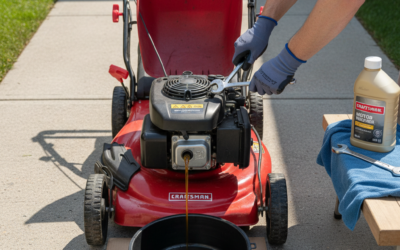
A gas lawn mower typically supports long, continuous cutting without waiting on a charger or dragging a cord. That is why gasoline remains common on larger walk-behind jobs and in thicker grass that asks more of the blade. The tradeoff is fuel, more mechanical upkeep, exhaust, and the need to store a flammable liquid correctly. Starting usually involves a primer, choke, or recoil handle, though some gas models add electric start. Spark plugs, air filters, oil, and stale fuel are part of ownership.
A battery lawn mower typically starts with a key or button and runs more quietly, without mixing or storing gasoline in the shed. Work is limited by charge, and output can drop in cold weather or when the pack is near empty. Heavy, wet grass can drain a pack faster than a light weekly trim. You need a charging routine and a spare pack if one charge will not finish the yard. Battery care and eventual disposal follow the manufacturer and local rules; do not treat packs like ordinary household trash.
A corded electric lawn mower can run as long as it stays plugged into a suitable outdoor outlet. There is no fuel can and no wait for a charge. The limit is the cord: length, where the outlet sits, and the constant risk of running over or tripping on the cable. Corded machines can be a simple fit for a compact, open yard near power. They become awkward as soon as the lawn wraps around buildings, beds, or long distances from the receptacle.
Noise, starting effort, and weekly upkeep usually favor battery or corded electric for people who want a short session and easy storage. Continuous work and independence from outlets and chargers usually favor gas. None of those patterns is a promise about lawn health or long-term cost; those depend on how you mow, local energy and fuel prices, and how well you maintain the machine.
Who is a poor fit for a cord
Skip a corded electric lawn mower if the outlet is far from the far corner of the lawn, if you must cross walks, driveways, or play areas with a live cable, or if the yard is broken into many small rooms by fences and plantings. A cord also fights you on slopes, where managing both the mower and the cable divides your attention. If children, pets, or frequent guests use the yard while you mow, the trip and cut hazard is harder to justify.
Extension-cord choice is not a casual detail. Use only outdoor-rated cords that match the mower maker’s guidance, keep connections off wet ground when possible, and never splice or repair a damaged cord as a shortcut. If you cannot keep the cord behind you and in sight, another power source is the safer fit.
Storage and fuel or battery-care issues that should influence the choice
Gasoline should be stored in an approved container, outdoors or in a well-ventilated area away from living spaces and ignition sources, and handled according to the mower manual and local rules. Do not refuel a hot engine indoors. Stale fuel is a common reason gas mowers become hard to start after winter, so off-season storage is part of the buying decision, not an afterthought.
Batteries prefer moderate temperatures and the charge habits the manufacturer specifies. Leaving packs fully depleted, storing them in a hot vehicle, or charging on a damp bench can shorten useful life. Plan shelf space for the charger and a way to keep packs dry.
Corded machines need less fuel logistics but still need dry storage for the motor, a sound cord, and a working ground-fault-protected outdoor outlet if that is what your electrical setup requires. Local electrical rules vary; when in doubt about outdoor receptacles, ask a qualified electrician rather than improvising.
Cutting width, height, and discharge mode
The cutting deck is the housing around the blade. Its width, how high you can set it, and where clippings go change how many passes you make, how the lawn looks, and how much cleanup you do afterward.
How deck width affects time, weight, and maneuvering
A wider deck covers more ground on each pass, so an open rectangle finishes sooner. The same width is bulkier between fences, around trees, and along curved beds. Wider decks also tend to make the walk-behind mower heavier, which is exactly when self-propulsion earns its keep—and when storage and lifting into a shed get harder.
There is no universal “best” width for a given yard size. A medium deck that fits your gates and turns can beat a wider deck that forces extra back-and-forth in tight landscaping. Measure the narrowest gate, the space between beds, and how you will roll the mower into storage before you fall in love with a large deck on a specification sheet.
Why a useful height range matters more than a single best setting
Cutting height should be adjustable. Grass type, season, shade, and how uneven the ground is all change the right setting. A deck locked too low scalps high spots and stresses the turf. A deck that cannot go low enough for a tidy edge or a specific grass habit is equally frustrating.
Look for a range you can change without tools, with detents that stay put over bumps. On lumpy lawns, a slightly higher setting often protects the crown of the plant and hides minor unevenness. Change height with the season rather than hunting for one number that is always correct. Follow turf guidance for your grass species when you have it, and avoid cutting off so much leaf at once that the lawn yellows or weeds rush in.
When mulching, bagging, and side discharge each make sense
Mulching chops clippings finely and drops them back into the canopy. It reduces the pile of debris you haul away and can return some moisture and nutrients to the lawn when growth is moderate and you mow often enough that clippings are short. It is a poor fit when grass is soaked, badly overgrown, or already matted; clumps sit on top and smother the turf.
Bagging collects clippings, leaves, and debris in a catcher. It leaves a cleaner surface and is useful before a gathering, when you want to remove weeds that have gone to seed, or when you are clearing autumn leaves with the mower. Bags fill, change the balance of the machine, and create a disposal chore. Empty them before they overflow and before the extra weight lifts drive wheels off the ground.
Side discharge throws clippings out the side of the deck. It is the simplest high-volume option when grass is tall or wet and you need the deck to keep moving. The finish is less tidy, and you can plaster clippings onto walks, beds, and neighboring properties if you aim the chute poorly.
Many walk-behind mowers offer more than one of these modes with a plug, a bag, or a chute. None of the three is always healthier or faster. Choose based on how often you mow, whether you want to keep clippings on the lawn, and how much cleanup you will actually do.
Match the mower to lawn size, slope, and grass conditions
Features only become “best” when they match the yard you actually have. This article cannot name your acreage, slope, or discharge preference because those details were not specified. Use the patterns below as a fit test, then confirm limits in the owner’s manual for any machine you consider.
What yard size and layout make a self-propelled walk-behind a good fit
A small, flat lawn with few obstacles may not need powered wheels. A lighter push mower can be enough if you can finish without strain and store the machine easily. As the lawn grows into a regular weekly workout, or as landscaping forces you to start and stop often with a heavy deck, self-propulsion starts to pay off.
A walk-behind self-propelled lawn mower is often a good middle path for suburban lots that are too big to enjoy pushing but too broken up for a rider: trees, play equipment, fences, and garden beds. Very large, open properties can outgrow any walk-behind. If finishing the lawn in a reasonable session would require rushing, multiple battery swaps you do not want to manage, or more endurance than the operator has, a rider or a service may be the better class of tool.
Layout matters as much as size. Long, narrow side yards, steep driveway strips, and locked gates can make a compact walk-behind more practical than a wide machine that looks efficient on paper.
How slope, obstacles, and wet or thick grass change the choice
Lawn slope is a control problem first and a power problem second. Rear-wheel or all-wheel drive usually keeps traction better when you are walking uphill. Front-wheel drive can still work on gentle grades if you mow across the slope only when it is safe and the manual allows it, and if you accept more slip in the wet. Never assume a drive type is rated for a particular grade; manufacturers publish their own limits, and those limits are the ones that matter.
Obstacles favor a machine you can pivot, a deck that fits the gaps, and speed control you can drop instantly. Thick or wet grass favors enough power or battery capacity to finish without bogging, a discharge mode that will not choke the deck, and tires that will not polish the surface into a slide. If the lawn is often too wet to walk without leaving footprints, wait; no drive system makes ruts a good idea.
Unknowns to settle before you shop
Budget, storage space, and who will operate the mower change the shortlist as much as turf does. A heavier all-wheel machine may be wrong for someone who must lift it over a stoop. A gas lawn mower is a poor gift for a household that will not store fuel safely. A battery lawn mower fails if the only operator will not charge packs. Decide whether you need mulching, bagging, or side discharge before you compare drive types, because bagging changes weight and balance.
Also be honest about physical ability. Self-propulsion reduces pushing, not the need to steer, stop the blade, clear a clog the safe way, or walk the whole property. If walking the yard is the hard part, a different machine class or hired help is the more suitable answer.
A practical way to choose without picking a ranked winner
Shop with a checklist, not a hunt for a mythical overall winner. Two yards that look similar on a map can need different drive types and power sources. The goal is a shortlist of machines that you can verify in person and against the manual.
In what order to weigh drive type, power source, deck features, and handling
- Map the yard: approximate size, steepest slope you actually mow, narrowest gate, distance to an outlet, and where the machine will live.
- Choose drive type from that map. Flat and twisty often points toward front-wheel drive. Regular uphill work often points toward rear-wheel or all-wheel drive. Mixed or slick ground may justify all-wheel drive if you can still turn the machine in your space.
- Choose power source from runtime needs, noise tolerance, fuel or charging habits, and cord reality. Do not pick a corded electric lawn mower to save hassle if the cord cannot stay behind you.
- Choose cutting-deck width, cutting-height range, and discharge modes from your landscaping and cleanup habits.
- Only then compare handling: handle height, fold for storage, starting method, bag latch, and whether you can operate the blade safety control comfortably.
Reversing that order—falling for a deck feature or a power story first—is how people bring home a mower that slips on their one real hill or will not fit through the fence.
Which specifications are worth comparing, and which need the manual or in-person checks
Labels are useful for drive type, whether speed is variable, listed cutting-height range, discharge options, and the power category (gas, battery, or corded). Treat claimed runtimes, slope ratings, and cut-quality language as marketing until you read the owner’s manual and, if possible, walk the machine.
In person, check whether you can hold the handle at a neutral wrist angle, engage and release the blade safety control without stretching, and see the discharge area. Confirm how the height adjusters work with gloves on. If the mower is battery powered, ask how packs lock in and whether the same pack family is used on other tools you already own—without treating that as a reason to ignore capacity for your actual lawn.
Weight figures on a box omit a full bag of wet clippings and, on gas models, a tank of fuel. If you must lift the mower, test the real object. If you cannot, assume it will feel heavier than the page suggests.
How storage, starting method, and who will operate the mower affect the shortlist
Measure the shed, closet, or wall hook. Folding handles help only if you will actually fold them and if cables still move freely afterward. Stairs between the yard and storage can rule out a heavy walk-behind no matter how well it would cut.
Starting method should match the less confident operator in the household. A hard-pull gas engine that only one person can start is a household bottleneck. A battery system that one person never charges is the same problem in a different form.
Write down who mows, how they feel about fuel versus charging, and whether they will empty a bag. A shortlist that ignores the operator is not a shortlist; it is a wish.
Safety, maintenance, and when this mower is the wrong tool
A self-propelled walk-behind mower combines a spinning blade, moving wheels, and either fuel, stored electrical energy, or a live cord. Suitability includes whether you will use the machine the way its safety design expects.
Blade, slope, projectile, fuel, and cord hazards
The blade can cut far more than grass. It can throw stones, wire, and toys with serious force. Clear the lawn of debris before you start. Keep bystanders, children, and pets well away—not just behind you, but out of the discharge path. Wear eye protection. Hearing protection is wise around gas machines and still worth considering on louder electric models. Sturdy closed-toe shoes matter more than fashion; sandals have no place behind a deck.
Blade safety controls exist so the blade stops when you leave the handle. Never tie the control back, wedge it, or remove a blade-brake feature. If a control fails, stop using the mower and have it serviced. Do not pull a running mower toward your feet to clear a spot you missed. Do not reach under the deck unless the machine is fully shut down, the spark plug lead is disconnected on a gas model or the battery and key are removed on an electric model, and you have waited for the blade to stop.
Slopes multiply every other risk. Mow only within the limits in the owner’s manual. Avoid wet slopes. Keep both hands on the handle, walk—do not run—and do not let the mower pull you downhill faster than you can stay balanced. If you would not walk the slope comfortably without a machine, do not add a spinning blade to the situation. Very steep ground may need a different tool or a professional.
Gasoline is flammable. Refuel outdoors, with the engine off and cool, away from sparks, cigarettes, and appliances with pilot lights. Wipe spills before starting. Store fuel in approved containers and never in living space. If you are unsure about local storage rules, check them; this article is not legal advice.
On a corded electric lawn mower, keep the cord behind the machine, use outdoor-rated cords in good condition, and stop immediately if the cord is nicked. Water, damaged insulation, and improvised repairs are electrical hazards. If the outlet, cord, or plug looks wrong, do not mow until a qualified person has checked the setup.
Routine checks that keep a self-propelled mower usable
Before a session, glance at the blade area from a safe position after shutdown, look for loose wheels or controls, and confirm the handle hardware is snug. Keep the underside of the cutting deck from packing with mud and clippings; a clogged deck cuts poorly and can throw the machine off balance. Follow the manual for blade inspection and sharpening or replacement. A bent or badly worn blade is a safety problem, not just a cosmetic one.
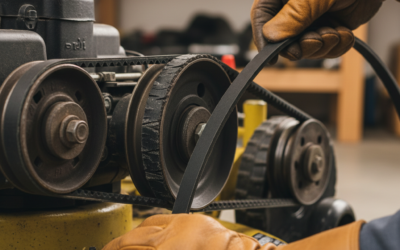
Drive systems need the maintenance the maker specifies: clean debris from belts or gear areas you are allowed to access, and do not ignore slipping that appears suddenly. On gas models, air filters, oil, and fresh fuel are the usual difference between a machine that starts and one that becomes a project. On battery models, inspect pack contacts and store packs as directed. On corded models, inspect the cord every time.
Do not disable guards, chute deflectors, or blade-stop systems to make cleaning easier. If a clog needs clearing, shut the mower down completely first. Anything beyond basic owner-manual care—fuel-system work, electrical faults, drive repairs—belongs with a qualified service technician.
When to choose a push mower, a rider, or a service instead
Choose a push mower when the lawn is small and flat, storage is tight, and you want the lightest possible machine. Choose a rider or another larger class when the property is so big or open that walking it is the bottleneck, and you have the storage and skill for that equipment. Hire a service when the ground is too steep, too rough, or too obstructed for safe walk-behind work, or when no one in the household can operate a mower without strain.
A walk-behind self-propelled lawn mower is the wrong tool for a tiny ornamental plot that a reel or light push mower could finish, and it is the wrong tool for a hillside that exceeds the machine’s published limits. It is also the wrong tool if you are unwilling to respect blade, fuel, battery, or cord safety. The best fit is the machine whose drive type, power source, cutting system, and safety design you will actually use on your ground—not the one that sounds most powerful on a shelf tag.