General liability insurance is the foundational coverage for any lawn mowing business, protecting you against third-party property damage and bodily injury claims. If you drive a truck or trailer for business purposes, commercial auto insurance is required. Workers’ compensation becomes legally mandatory in most states once you hire employees, while equipment insurance and a business owner’s policy (BOP) are strongly recommended to safeguard your mowers and tools. The exact coverage you need depends on whether you operate solo, own commercial vehicles, or employ a crew.
General Liability Insurance: The Core Coverage
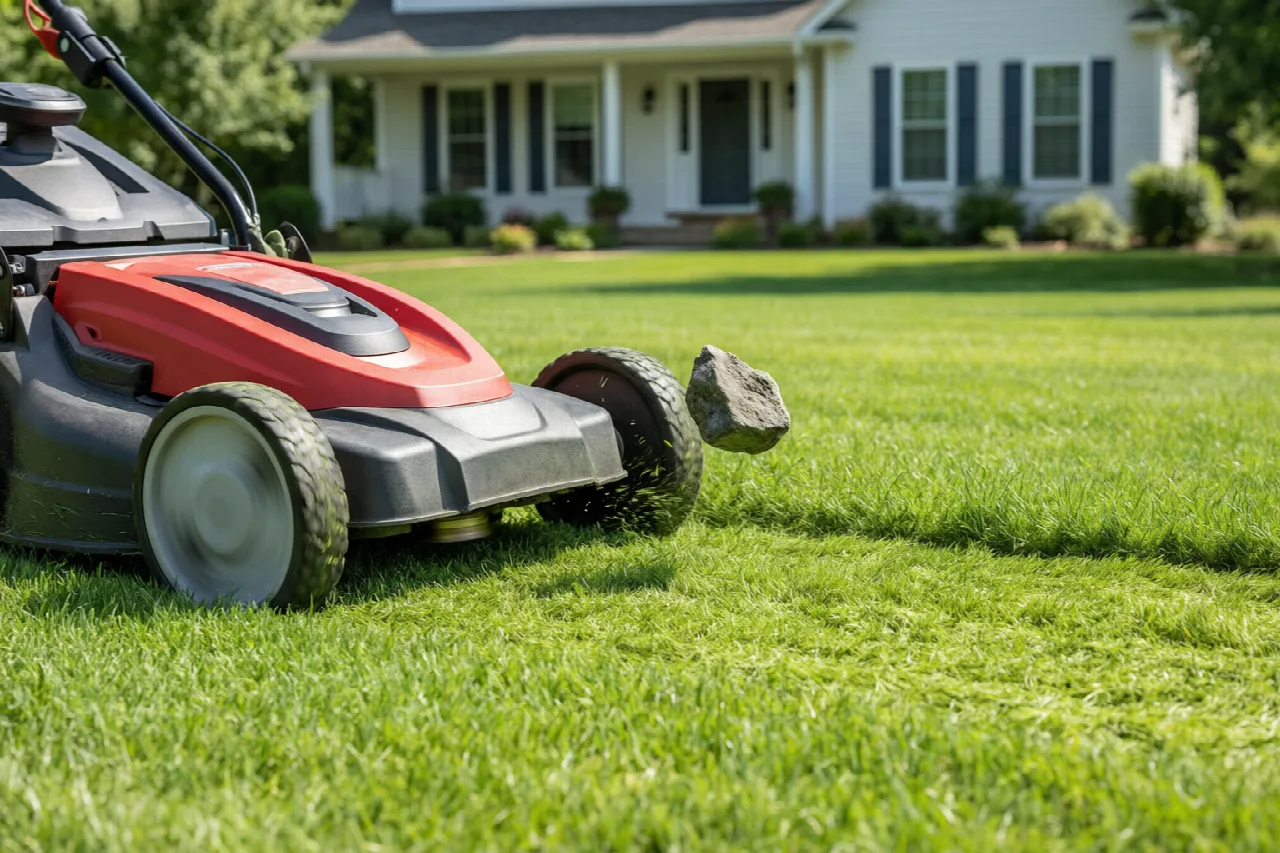
General liability insurance is the single most important policy for a lawn mowing business. It protects you financially if a third party—such as a client, a passerby, or a delivery person—suffers bodily injury or property damage because of your work. For example, if a rock kicked up by your mower cracks a client’s window or injures a neighbor, general liability covers the resulting medical bills or repair costs, along with legal defense fees if a lawsuit is filed.
This coverage is essential because lawn care inherently involves moving equipment, sharp blades, and flying debris. Accidents happen even with careful work, and without liability protection, you could be personally responsible for thousands of dollars in damages. Most lawn care professionals carry general liability policies with coverage limits of $1 million per occurrence and $2 million aggregate, though you can adjust these based on your risk tolerance and client contract requirements.
It is important to note that general liability does not cover damage to your own equipment or injuries to your own employees. Those risks require separate policies, which are covered below. For a solo operator, general liability is often the only insurance legally required, but it is rarely the only coverage worth having.
Commercial Auto Insurance: Vehicle Requirements
If you use a vehicle for business purposes—whether to haul a trailer, transport mowers, or drive between job sites—you likely need commercial auto insurance. Personal auto policies typically exclude business use, meaning a standard policy may deny coverage if you are involved in an accident while working. Relying on a personal policy for commercial activity is a common and costly mistake.
Commercial auto insurance covers liability for accidents involving your business vehicle, as well as damage to the vehicle itself if you add collision and comprehensive coverage. If you tow a trailer, you should confirm that your policy covers the trailer and the equipment loaded on it. Some policies include trailer coverage automatically, while others require an endorsement or separate inland marine policy.
The distinction between personal and commercial use is not always obvious. If you occasionally use your personal truck to move a mower, some insurers may still consider that business use. The safest approach is to disclose your work activity to your insurer and ask whether your current policy covers it. If not, a commercial auto policy is the appropriate solution, even for a small operation.
Workers’ Compensation: Legal Mandates for Employees
Workers’ compensation insurance is legally required in most states once you hire employees, including part-time or seasonal workers. This coverage pays for medical expenses, lost wages, and rehabilitation costs if an employee is injured on the job. Lawn mowing is physically demanding work with real injury risks, including slips, falls, and equipment accidents, making workers’ comp a critical protection for both your staff and your business.
The specific threshold at which workers’ comp becomes mandatory varies by state. Some states require coverage as soon as you hire your first employee, while others allow a small grace period or exempt very small payrolls. Because requirements differ so widely, you should check your state’s labor department or consult a local insurance agent to determine your exact obligations. Failing to carry required workers’ comp can result in fines, penalties, and personal liability for employee injuries.
Solo operators are generally not required to carry workers’ compensation for themselves, though some choose to add voluntary coverage to protect their own income if they are injured. If you hire independent contractors, they are typically responsible for their own coverage, but you should verify their status carefully to avoid misclassification issues. When in doubt, treat anyone doing regular work for you as an employee for insurance purposes.
Equipment and Tools Coverage
Your mowers, trimmers, blowers, and other tools represent a significant investment, and standard general liability policies do not cover damage or theft of your own equipment. Equipment insurance, often written as inland marine coverage, protects your tools against theft, vandalism, fire, and accidental damage—both at your place of business and on the job site.
Inland marine coverage is particularly valuable for lawn care because your equipment is mobile and frequently left in trucks or trailers overnight. If a mower is stolen from your trailer or damaged in a collision, inland marine insurance reimburses you for the replacement cost, subject to your policy deductible. Without this coverage, you would have to absorb the full cost of replacing expensive machinery out of pocket.
Equipment coverage can be purchased as a standalone policy or bundled into a business owner’s policy. For a small operation, bundling is often more cost-effective and simpler to manage. When purchasing equipment coverage, keep an updated inventory of your tools with serial numbers and receipts, as this documentation speeds up claims and ensures you are insured for the correct value.
Business Owner’s Policy (BOP): Bundled Protection
A business owner’s policy, or BOP, combines general liability insurance with commercial property coverage in a single package. This bundled approach typically includes liability protection for third-party injuries and property damage, plus coverage for your business property, such as equipment stored at a fixed location. Many BOPs also include business interruption coverage, which replaces lost income if a covered event forces you to stop working temporarily.
A BOP is often more cost-effective than purchasing separate policies, because insurers offer package discounts. It also simplifies administration, since you have one policy, one premium, and one renewal date. For a lawn mowing business, a BOP can serve as the backbone of your insurance program, with additional endorsements added for specific risks like trailer coverage or higher liability limits.
Solo operators can absolutely purchase a BOP, and many do. The key is to ensure the property coverage in the BOP extends to your mobile equipment. Some BOPs include inland marine coverage as an add-on, while others require a separate policy. Review the policy details carefully or ask your agent to confirm that your mowers and tools are covered both at your base location and in transit.
How Coverage Scales: Solo Operator vs. Multi-Crew Operation
Insurance needs change significantly as your lawn mowing business grows. A solo operator’s minimum viable coverage is general liability insurance, plus commercial auto insurance if a vehicle is used for business. This combination protects against the most common third-party risks and is relatively affordable, making it an accessible starting point for part-time or new businesses.
Once you hire your first employee, workers’ compensation becomes a mandatory addition in most states. This requirement is not optional, and the cost scales with your payroll and your claims history. As you add more crew members, your workers’ comp premium increases, and you may also want to raise your general liability limits to reflect the larger scope of your operations. Additional crew members also mean more equipment, which increases your inland marine coverage needs.
Insurance costs generally rise with crew size, but the increase is manageable if you plan ahead. A multi-crew operation may also need higher auto coverage limits, especially if you operate multiple trucks or trailers. Some growing businesses add umbrella liability policies, which provide extra coverage above the limits of your underlying policies. The key is to review your coverage annually and adjust it as your payroll, vehicle count, and equipment value change.
Frequently Asked Questions
Is homeowners or renters insurance sufficient for a lawn mowing business?
Homeowners and renters insurance policies are designed for personal use and typically exclude business liability. If you are injured on a client’s property or damage their lawn, your personal policy will likely not cover the claim. For this reason, you need a dedicated business policy, even if you operate part-time.
Do I need liability coverage if I’m just starting part-time?
Yes. Even part-time lawn mowing involves real risks of property damage or injury, and a single claim could exceed your savings. General liability insurance is relatively inexpensive and provides essential protection regardless of how many hours you work each week.
What should I do if a client is injured on their property during my work?
First, ensure the injured person receives appropriate medical attention. Then, document the incident with photos and written notes, and report it to your insurance carrier as soon as possible. Do not admit fault or agree to pay for damages without consulting your insurer, as your general liability policy is designed to handle these claims on your behalf.