Most Craftsman lawn mowers use SAE 30 or 10W‑30 motor oil for 4‑stroke engines. The exact viscosity grade and oil type depend on your specific engine model and the ambient temperature in which you operate the mower. Always check your owner’s manual for the manufacturer’s precise recommendation. Some Craftsman mowers with 2‑stroke engines require a pre‑mixed fuel‑and‑oil blend rather than separate crankcase oil. This guide walks you through the oil requirements for common Craftsman models, how to determine which oil is right for your machine, and best practices for oil maintenance.
Oil Types for 4‑Stroke Craftsman Engines
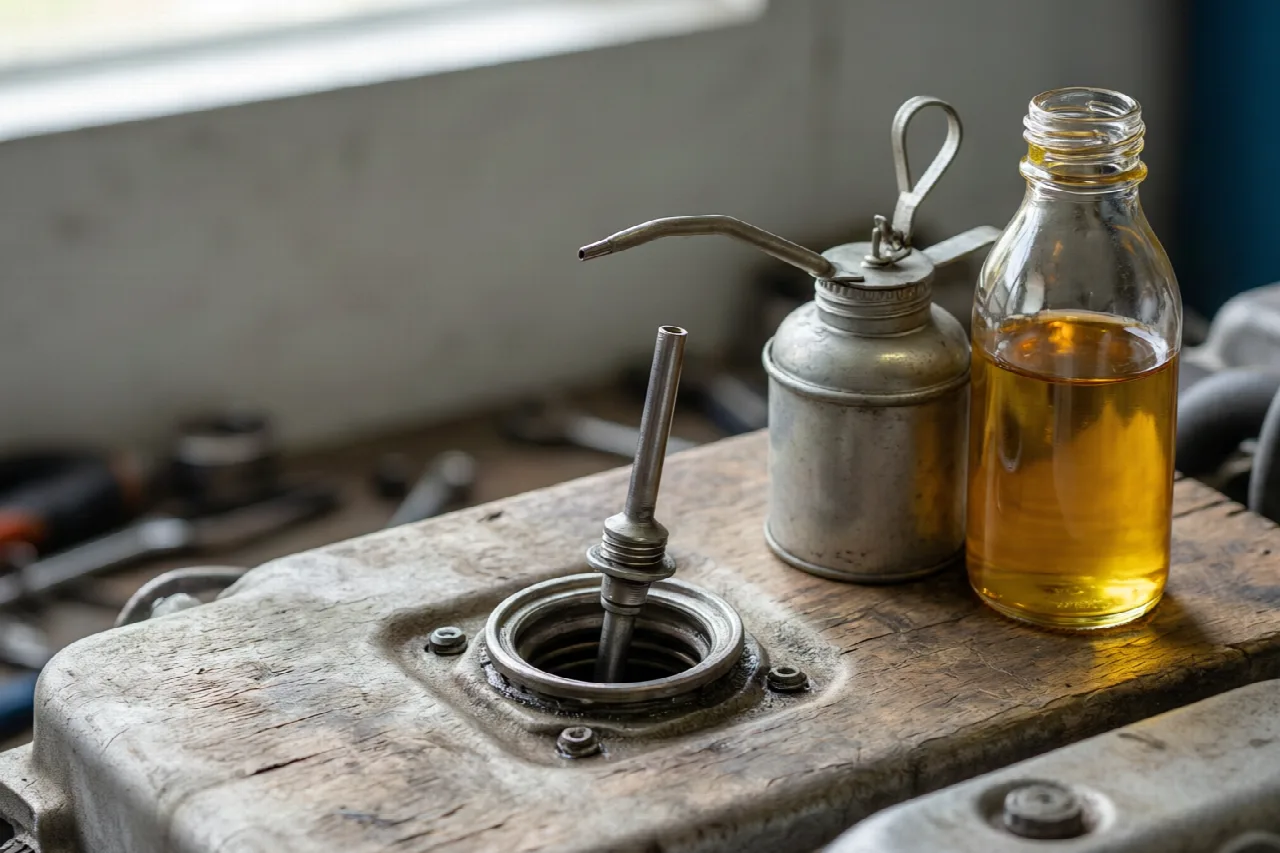
The majority of Craftsman lawn mowers are equipped with 4‑stroke engines, which have a separate oil reservoir in the crankcase. For these engines, two viscosity grades are most frequently recommended: SAE 30 and 10W‑30. Understanding the difference between these grades, and when to use each, is essential for engine longevity and reliable performance.
SAE 30 Oil
SAE 30 is a single‑grade (monograde) oil that remains a staple for many small air‑cooled engines, including those found in Craftsman push mowers and some riding mowers. It is designed to provide consistent lubrication at higher operating temperatures while maintaining sufficient film strength to protect engine components like the piston, cylinder, and valve train. Because it is a straight‑weight oil, SAE 30 does not change viscosity with temperature as dramatically as multi‑grade oils; however, it performs best when the ambient temperature is relatively warm—typically above 40°F (4°C). Many Craftsman owner’s manuals specify SAE 30 for general use in climates that do not experience extreme cold. It is also the oil most commonly used for initial break‑in periods in new engines.
10W‑30 Oil
10W‑30 is a multi‑grade oil that offers a broader operating temperature range than SAE 30. The “10W” indicates that the oil flows like a 10‑weight oil at cold temperatures, providing easier cold‑starting and faster lubrication during startup. The “30” means that at operating temperature, it behaves like a 30‑weight oil, offering the same high‑temperature protection as SAE 30. This makes 10W‑30 a more versatile choice for areas where temperatures vary between seasons. Craftsman often recommends 10W‑30 for use in colder climates or when the mower is operated in temperatures below 40°F. Some manuals even suggest 10W‑30 as an acceptable alternative to SAE 30 for all‑season operation. However, always defer to the specific recommendation in your engine manual—some engines may not tolerate multi‑grade oils as well as others, particularly older designs.
Synthetic vs. Conventional Oil
Craftsman does not exclusively mandate conventional or synthetic oil for its engines, but synthetic oils are becoming increasingly popular due to their superior resistance to thermal breakdown, better flow at low temperatures, and extended drain intervals. If your owner’s manual permits the use of synthetic oil, you can switch to a synthetic SAE 30 or 10W‑30 without any special procedure. Synthetic oil may be particularly beneficial if you operate your mower in extreme heat or heavy‑duty conditions, such as mowing thick, tall grass for extended periods. That said, many Craftsman engines are designed to run perfectly well on conventional oil, and using a high‑quality conventional oil that meets the API service classification specified in your manual (e.g., SJ, SL, or higher) is entirely acceptable. The most important factor is choosing the correct viscosity grade and change interval.
Understanding SAE Viscosity Ratings
The Society of Automotive Engineers (SAE) rating system classifies oil by its viscosity—essentially the oil’s resistance to flow. Lower numbers indicate thinner oil that flows more easily, while higher numbers indicate thicker oil that provides more resistance to flow. For small engines, the correct viscosity ensures that oil circulates quickly to all moving parts on start‑up and maintains a protective film under high heat and load. Using an oil that is too thin can lead to inadequate protection and increased wear, while an oil that is too thick may cause sluggish starting, poor circulation, and excess fuel consumption. This is why following the manufacturer’s viscosity recommendation is critical.
2‑Stroke vs. 4‑Stroke Oil Requirements
Before you purchase oil for your Craftsman lawn mower, you must first determine whether your mower has a 2‑stroke engine or a 4‑stroke engine. The oil requirements for these two engine types are fundamentally different, and using the wrong type can lead to immediate engine damage.
Identifying Your Engine Type
The simplest way to identify your Craftsman engine is to look for an oil fill cap or dipstick on the engine housing. A 4‑stroke engine will have a separate oil fill port (often with a dipstick) and a fuel tank that is filled with straight gasoline. A 2‑stroke engine, on the other hand, does not have a separate oil reservoir; instead, oil is mixed directly into the fuel. Most modern Craftsman mowers are 4‑stroke, but some older or specialized models (especially small trimmers or edgers) may be 2‑stroke. If you are unsure, check the owner’s manual or look for a label on the engine that indicates “4‑cycle” or “2‑cycle.” Also, 2‑stroke engines typically require a fuel‑oil mixture, so the fuel cap may be labelled with a mix ratio.
Oil Requirements for 2‑Stroke Craftsman Engines
If you own a 2‑stroke Craftsman mower, you do not add oil to a crankcase; instead, you mix a specific amount of 2‑stroke engine oil with unleaded gasoline in the fuel tank. The required fuel‑to‑oil ratio varies by engine model, but common ratios for Craftsman 2‑stroke equipment are 40:1 or 50:1 (e.g., 40 parts gasoline to 1 part oil). For example, a 50:1 ratio typically calls for 2.6 ounces of 2‑stroke oil per gallon of gasoline. Always use a high‑quality 2‑stroke oil that is rated for air‑cooled engines (often labelled “TC‑W3” or similar) and is designed to minimise smoke and deposits. Never use automotive motor oil in a 2‑stroke fuel mixture; it is not formulated to burn cleanly and will cause severe carbon buildup. The safest approach is to consult your owner’s manual for the exact ratio; if you no longer have the manual, you can often find this information by searching your mower’s model number on the Craftsman website or contacting customer support. Using too much oil can cause fouled spark plugs and excessive smoke; using too little oil will result in inadequate lubrication and catastrophic engine failure.
Why the Distinction Matters
Confusing 2‑stroke and 4‑stroke oil is one of the most common and costly mistakes among lawn mower owners. Adding 4‑stroke oil to a 2‑stroke fuel tank will not provide the proper lubrication because the oil is not designed to be burned with the fuel. Conversely, using 2‑stroke oil in a 4‑stroke crankcase will leave the engine without sufficient lubrication because 2‑stroke oil is not formulated to maintain viscosity in a separate sump. Therefore, always double‑check your engine type before purchasing any oil product.
Finding Your Specific Oil Recommendation
While general guidelines are helpful, the only authoritative source for the correct oil type for your Craftsman mower is your engine’s owner’s manual. Craftsman mowers use engines from various manufacturers—such as Briggs & Stratton, Kohler, Honda, or Tecumseh—and each may have its own specific oil preferences. Here’s how to locate the right recommendation for your particular model.
Locating Your Model Number
Every Craftsman mower has a model number, typically found on a sticker or plate affixed to the frame, deck, or engine housing. The model number is usually a series of digits (e.g., 917.XXXXX) and may include a suffix. You will need this number to look up the correct manual or parts diagram. On riding mowers, the model plate is often located under the seat or on the frame near the rear wheels; on push mowers, it is commonly found on the rear of the deck or above the rear wheels. Write down the complete model number and also look for the engine manufacturer and engine model number, which are often printed on the engine itself (e.g., on a metal tag near the spark plug).
Using the Owner’s Manual
If you still have the original owner’s manual, the oil specification is usually listed in the “Maintenance” or “Specifications” section. The manual will tell you not only the recommended SAE viscosity grade but also the oil capacity and the recommended API service rating. If you have misplaced the printed manual, you can often download a free PDF from the Craftsman website or from the engine manufacturer’s site. Enter your model number in the search field, and you should be able to access the manual and other support documents. Additionally, many third‑party websites host collections of lawn mower manuals, but always prefer official sources to avoid errors.
What to Look for in the Specification
When you find the oil specification, pay attention to three key elements: viscosity grade (e.g., SAE 30, 10W‑30, 5W‑30), service classification (e.g., API SJ, SL, SN—usually you need at least the classification listed), and any additional notes about temperature ranges. The manual may provide a chart showing which viscosity to use based on the expected outdoor temperature during mowing. For example, it might recommend SAE 30 for temperatures above 40°F and 10W‑30 for a wider range. If the manual offers a choice, you can select the one that best matches your climate, but it is always safer to follow the primary recommendation for your region.
When in Doubt, Contact Support
If you cannot locate your manual or model number, you can contact Craftsman customer service or consult a local authorised service centre. Provide them with as much information as possible—the engine make and type, the mower’s age, and any markings you can find. They can often tell you the correct oil type and capacity over the phone or via email. Many online forums also have knowledgeable users, but be cautious about unverified advice; always cross‑reference with official sources.
Oil Capacity and Maintenance
Knowing the correct oil type is only half the equation; you also need to know how much oil to add and when to change it. Proper oil level and regular oil changes are essential for keeping your Craftsman mower’s engine in top condition.
Determining Oil Capacity
The oil capacity of a Craftsman lawn mower varies significantly depending on the engine size and design. For a typical push mower with a 140–190 cc engine, the oil capacity is usually between 15 and 20 ounces (0.45–0.6 litres). Some larger push mowers may hold up to 24 ounces. Riding mowers and garden tractors have larger engines (e.g., 400–700 cc or more) and may require anywhere from 1.5 to 2.5 quarts (1.4–2.4 litres) of oil. The exact capacity is always listed in the owner’s manual. If you are changing the oil, the capacity is typically the amount needed to fill the crankcase to the “Full” mark on the dipstick after draining the old oil. Never overfill the crankcase, as excess oil can cause foaming, loss of lubrication, and seal damage. Always check the oil level with the dipstick (screwed in or not, depending on the manual’s instructions) and add oil slowly until the level reaches the full mark.
Recommended Oil Change Intervals
Regular oil changes are the single most important maintenance task for extending the life of your Craftsman mower’s engine. Most manufacturers recommend changing the oil after the first 5 hours of operation (for new engines) and then every 25 hours of use or at least once per season, whichever comes first. If you mow in particularly dusty conditions, operate on steep slopes, or frequently run the mower at full throttle in heavy grass, you may want to change the oil more often—every 15–20 hours. Always change the oil when the engine is warm (but not hot) because warm oil flows out more easily and carries away more suspended contaminants. Use a proper oil drain pan and dispose of used oil at a recycling centre.
Checking the Oil Level Regularly
In addition to regular oil changes, you should check the oil level before every use. Most Craftsman mowers have a dipstick that is also the oil fill cap. Simply remove it, wipe it clean, reinsert it fully (without screwing it in, if so designed), and then pull it out to read the level. The oil should be between the “Low” and “Full” marks. Add oil if it is low, but never exceed the full mark. If you notice that the oil level drops significantly between uses, check for leaks or excessive oil consumption, which may indicate worn piston rings or valve seals—issues that may require professional attention.
Consequences of Using the Wrong Oil Type
Using an incorrect oil viscosity or type can have immediate and long‑term negative effects. If you use an oil that is too thick (e.g., SAE 40 in cold weather), the engine may struggle to start, and the oil may not circulate properly, leading to inadequate lubrication of critical bearings and camshaft lobes. Over time, this can cause scoring on cylinder walls and premature bearing failure. Conversely, if you use an oil that is too thin (e.g., 5W‑20 in a hot climate), the oil film may break down at high temperatures, resulting in metal‑to‑metal contact and accelerated wear. Using a non‑detergent oil or a product not rated for air‑cooled engines can cause sludge buildup and varnish deposits on internal parts, which can lead to sticking valves and overheating. In the worst case, using the wrong oil—especially in a 2‑stroke engine—can cause the engine to seize within minutes. Therefore, always adhere to the manufacturer’s recommendation, and when in doubt, choose an oil that meets or exceeds the specified API classification and viscosity grade.
Frequently Asked Questions About Craftsman Lawn Mower Oil
Can I use car motor oil in my Craftsman lawn mower?
Yes, in many cases, you can use automotive motor oil as long as it matches the viscosity and API service classification specified in your manual. For example, a 10W‑30 that is API SN or SL is generally acceptable for 4‑stroke engines. However, avoid using energy‑conserving or “resource‑conserving” oils that contain friction modifiers intended for car engines, as they may cause clutch slippage in some riding mower transmissions. It is safest to use oil specifically labelled for small air‑cooled engines.
How do I know if my Craftsman mower is 2‑stroke or 4‑stroke?
Look for an oil fill cap or dipstick. If you find one, it is a 4‑stroke. If you only see a fuel cap and no separate oil reservoir, and the engine requires a pre‑mixed fuel, it is a 2‑stroke. Also, 4‑stroke engines usually have a larger crankcase area and a distinct oil drain plug. Check your manual or the engine labels for confirmation.
What happens if I put too much oil in my Craftsman mower?
Overfilling the crankcase can cause the oil to foam, which reduces its lubricating ability, and it may force oil past the piston rings or out of the breather tube, leading to excessive smoke, oil leaks, and potential engine damage. If you overfill, drain the excess oil immediately until the level is correct.
Is synthetic oil better for my Craftsman mower?
Synthetic oil generally provides better protection at extreme temperatures and may extend drain intervals, but it is not strictly required for most Craftsman engines. If your manual permits synthetic, you can use it confidently. However, switching to synthetic does not eliminate the need for regular oil changes.
Where can I find the oil capacity for my specific model?
The exact oil capacity is listed in your owner’s manual. If you no longer have the manual, you can look up your model number on the Craftsman support website or contact customer service. Many manuals are also available online as free PDF downloads.
Choosing the correct oil for your Craftsman lawn mower is a straightforward process once you understand the basics: identify your engine type (2‑stroke or 4‑stroke), consult your owner’s manual for the recommended viscosity and capacity, and follow proper maintenance intervals. While general recommendations like SAE 30 or 10W‑30 apply to many models, your specific engine may have unique requirements. By taking the time to verify the correct oil, checking the level regularly, and changing it at the recommended intervals, you can ensure that your Craftsman mower delivers reliable, powerful performance season after season.