Briggs and Stratton recommends using SAE 30 oil for most of their lawn mower engines in temperatures above 40°F (4°C). For colder conditions or wider temperature ranges, 10W-30 or synthetic SAE 5W-30 can be used. Always consult your specific engine’s owner’s manual for the exact recommendation.
Choosing the correct oil for your Briggs and Stratton lawn mower is essential for reliable starting, smooth operation, and long engine life. Using the wrong viscosity or type can lead to increased wear, poor performance in cold weather, or even costly damage. This guide explains the manufacturer’s official oil recommendations, how temperature affects your choice, where to find the precise specification for your model, and common pitfalls to avoid.
Briggs and Stratton Recommended Oil Viscosity Grades
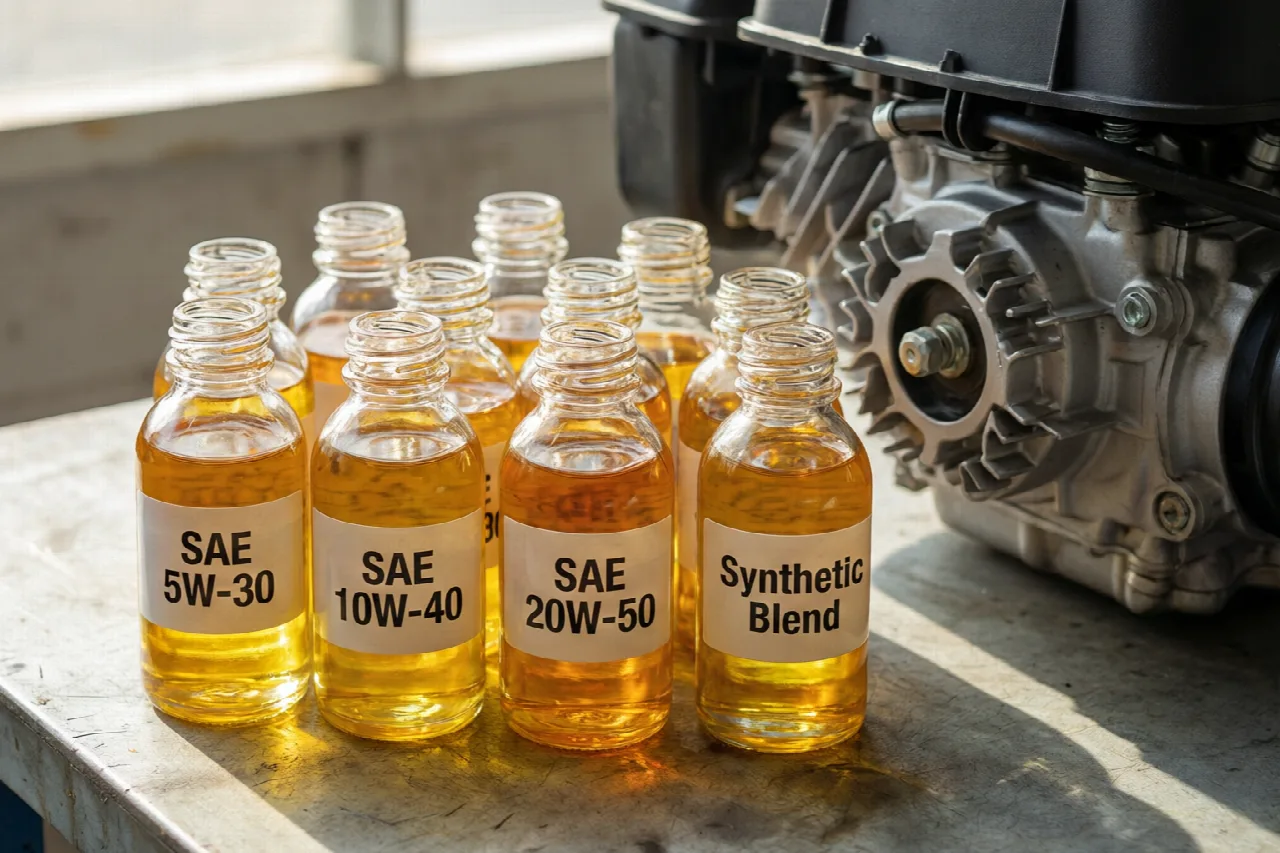
Briggs and Stratton engineers have designed their engines to run optimally with specific oil viscosities. The most common recommendation is SAE 30, a straight‑weight oil that provides excellent protection in warm conditions. For many years, SAE 30 has been the default choice for small four‑cycle engines used in lawn mowers, and Briggs and Stratton continues to endorse it for temperatures consistently above freezing.
However, the company also approves multi‑grade oils like 10W‑30 and synthetic SAE 5W‑30 for broader operating ranges. These oils flow more easily at low temperatures while maintaining adequate viscosity at high operating temperatures, making them versatile options for owners who mow in varying climates or store their equipment in unheated sheds.
When selecting oil, you should always look for a product that meets the API (American Petroleum Institute) service classification of at least SJ or higher. Briggs and Stratton also offers its own branded oils, which are specially formulated for its engines, but any reputable brand that meets the proper viscosity and API rating will work well.
It is important to note that synthetic oils are fully acceptable and often preferred for their superior resistance to thermal breakdown and better cold‑flow properties. Synthetics can extend oil change intervals and provide extra protection in extreme temperatures, though you should still follow the change frequency recommended in your owner’s manual.
For most residential mowers, SAE 30 remains the simplest and most reliable choice if you operate only in warm weather. But if you live in a region with cool springs or autumns, a multi‑grade like 10W‑30 will give you more flexibility without compromising protection.
How Temperature Affects Oil Choice for Your Briggs and Stratton Engine
Temperature is the single most important factor in selecting the right oil viscosity for your Briggs and Stratton mower. Oil thickens in cold weather and thins in hot weather, so the viscosity grade must match the ambient temperatures you expect during operation.
According to Briggs and Stratton’s guidelines, SAE 30 is ideal for temperatures above 40°F (4°C). If you typically mow during the summer months and store your mower in a garage that stays above freezing, SAE 30 will provide dependable lubrication and is the recommended choice.
For temperatures between 0°F and 100°F (-18°C to 38°C), 10W‑30 is a suitable alternative. The “10W” indicates that the oil has a winter (cold) viscosity of 10, meaning it will still flow sufficiently at low temperatures to reach engine components quickly during start‑up. The “30” indicates it performs like a SAE 30 oil at operating temperature, so you do not lose high‑temperature protection.
For cold weather operation below 40°F (4°C), Briggs and Stratton recommends using synthetic SAE 5W‑30. This oil is much thinner when cold, enabling easier starts and faster lubrication circulation. If you mow in early spring or late autumn, or if you use your mower in cooler climates, synthetic 5W‑30 can prevent excessive wear caused by dry starts.
Do not use SAE 10W‑40 or heavier oils, as they can cause inadequate lubrication at start‑up and reduce oil flow to critical components. Also avoid non‑detergent oils, which are not designed for modern engines and can lead to sludge buildup.
A helpful rule of thumb is to check the temperature range in your area during the mowing season and select the oil that covers that range. If you are still unsure, 10W‑30 is a safe middle‑ground choice for most users, as it performs well across a wide spectrum while still meeting Briggs and Stratton’s approval.
Finding the Exact Oil Specification for Your Engine Model
While the general recommendations above apply to the majority of Briggs and Stratton lawn mower engines, there is no substitute for the specific instructions provided in your engine’s owner’s manual. The manual contains the definitive oil viscosity chart, capacity (oil sump volume), and change interval for your particular model.
To locate the manual, first find your engine’s model, type, and code numbers. These are typically stamped or printed on a metal tag attached to the engine housing, often near the spark plug or on the blower housing. The numbers look like “XXXXXX-YYYY-ZZ” (model-type-code). Once you have these, you can visit the Briggs and Stratton website and enter them into the “Owner’s Manual” lookup tool to download a PDF copy.
If you cannot find the original manual, you can also search online using your engine’s model number. Many third‑party sites host manuals, but be sure to cross‑reference with the official Briggs and Stratton resources to ensure accuracy. The manual will tell you not only the recommended viscosity but also whether your engine requires oil with special additives or has any unique capacity requirements.
Some Briggs and Stratton engines have oil fill tubes with a dipstick that indicates the proper oil level, while others have a filler cap on the side of the crankcase. The manual will clarify the exact procedure for checking and adding oil, as well as the correct oil capacity in quarts or liters. Overfilling or underfilling can cause performance issues, so follow the guidelines precisely.
Remember that the manual also specifies the oil change interval, typically every 50 hours of operation or annually, whichever comes first. Following this schedule with the correct oil type will keep your engine running smoothly for years. If you have misplaced your manual, always err on the side of caution and use the temperature‑based recommendations above, but make it a priority to obtain the official documentation for your specific engine.
Common Mistakes When Choosing Oil for Briggs and Stratton Mowers
Even experienced owners can make errors when selecting oil for their Briggs and Stratton lawn mower. One of the most frequent mistakes is using automotive motor oil that contains friction modifiers or “Energy Conserving” additives. These additives can cause clutch slippage in mowers with a mechanical blade engagement system, leading to poor cutting performance and potential damage. Always check the API service label on the bottle; if it says “Energy Conserving” or “Resource Conserving,” do not use it in your mower.
Another common error is choosing the wrong viscosity for the season. Using SAE 30 in freezing temperatures can make starting difficult and cause excessive wear because the oil is too thick to circulate properly. Conversely, using a very thin oil like 5W‑30 in extreme heat may not provide enough film strength to protect against metal‑to‑metal contact. Always consider your local climate and the time of year.
Some people mistakenly use two‑stroke (2‑cycle) oil in their four‑stroke Briggs and Stratton engine. These oils are designed to be mixed with gasoline and lack the necessary additives for a separate sump system. Using them can lead to poor lubrication, overheating, and catastrophic engine failure. Always purchase oil specifically labeled for four‑cycle small engines.
There is also a misconception that any brand of oil will do as long as the viscosity matches. While many brands are acceptable, using a low‑quality or off‑brand oil that does not meet API service standards can accelerate sludge formation and reduce engine life. Stick with reputable brands that clearly display their API rating.
Finally, skipping oil changes is perhaps the most damaging mistake. Even with synthetic oil, contaminants accumulate over time, and the oil’s additives deplete. Regularly draining and refilling with fresh oil—following the manual’s interval—is the simplest way to ensure longevity. Neglecting this can void your warranty if damage occurs, as Briggs and Stratton requires proof of proper maintenance for warranty claims.
Frequently Asked Questions About Briggs and Stratton Lawn Mower Oil
Can I use car oil in my Briggs and Stratton mower?
You can use automotive oil if it meets the correct viscosity (e.g., SAE 30, 10W‑30) and carries an API service classification of SJ or higher. However, avoid oils with “Energy Conserving” additives, as they can cause clutch slippage in many Briggs and Stratton engines.
How often should I change the oil?
Briggs and Stratton recommends changing the oil after the first 5 hours of operation on a new engine, then every 50 hours or annually thereafter. Check your owner’s manual for the exact interval for your model.
Is synthetic oil better for my mower?
Synthetic oil offers superior protection in extreme temperatures and can extend drain intervals. It is especially beneficial for cold starts. Briggs and Stratton approves synthetic SAE 5W‑30 for all‑season use and synthetic SAE 10W‑30 as well. Many owners prefer synthetics for their added peace of mind.
What happens if I use the wrong oil?
Using the wrong viscosity can cause hard starting, poor lubrication, increased wear, and potential engine seizure. Using oil with incompatible additives can damage clutches or seals. In severe cases, engine damage may not be covered under warranty if the wrong oil was used.
Can I mix different brands or types of oil?
Mixing oils is generally not recommended. While it is unlikely to cause immediate harm, different additive packages can interact unpredictably. If you need to top up, use the same viscosity and type (e.g., conventional or synthetic) as what is already in the sump.
Choosing the correct oil for your Briggs and Stratton lawn mower is straightforward once you understand the temperature guidelines and consult your manual. Whether you opt for SAE 30 in warm climates, 10W‑30 for versatility, or synthetic 5W‑30 for cold weather, the key is to match the viscosity to your operating conditions and maintain a regular oil‑change schedule. By following these recommendations, you will ensure reliable starts, consistent power, and a long service life for your mower’s engine.