Lawn mowing season typically starts in early to mid-spring, when grass begins actively growing again—generally when soil temperatures reach 50–55°F (10–13°C) consistently. In most temperate northern hemisphere regions, this falls between late March and mid-April, but varies significantly by climate zone: as early as February in warm southern states, and as late as May in northern cool-season areas.
What Triggers the Start of Mowing Season?
Understanding what signals the beginning of mowing season is more reliable than simply watching the calendar. Grass growth is driven by a combination of soil temperature, air temperature, and daylight hours. When these conditions align, your lawn begins its spring green-up and requires its first cut of the year.
What Temperature Triggers Grass Growth?
Soil temperature is the most important trigger for grass growth. Most cool-season grasses begin actively growing when soil temperatures consistently reach 50–55°F (10–13°C). Warm-season grasses, by contrast, typically wait until soil temperatures climb to around 65°F (18°C). Because soil warms more slowly than air, checking soil temperature rather than air temperature gives you a far more accurate picture of when your lawn is ready.
How Do I Know When My Grass Is Ready for the First Cut?
Beyond temperature, the clearest sign that your grass is ready for its first mow is visible growth. When your lawn shows a consistent green-up and the grass reaches roughly 3 inches in height, it is ready for a cut. You should also look for steady, ongoing growth rather than a single warm day followed by a return to cold weather.
Does the Start Date Change Each Year?
Yes. Because the start of mowing season depends on environmental conditions rather than a fixed date, it can shift by several weeks from one year to the next. A mild winter and early warm spell can push the season forward, while a late frost or prolonged cold snap can delay it. This is why condition-based cues are more reliable than calendar dates.
How Does Your Climate Zone Affect the Start Date?
Where you live plays a major role in when your mowing season begins. The United States and other temperate regions are broadly divided into cool-season, warm-season, and transition zones, each with its own growth patterns and timing.
When Does Mowing Season Start in the Northern US?
In northern states with cool-season grasses such as Kentucky bluegrass, fescue, and ryegrass, mowing season typically begins between late March and mid-April. These grasses thrive in cooler temperatures and respond quickly to the first sustained warm spell of spring. In colder northern areas, such as the upper Midwest and New England, the season may not begin until late April or even early May.
When Does It Start in the Southern US?
Southern states with warm-season grasses such as Bermuda, Zoysia, and St. Augustine generally see their mowing season begin earlier, often in February or early March. These grasses grow best in warm weather and may remain green through much of the year. In the deepest southern regions, mowing can continue nearly year-round with only a brief winter slowdown.
What About Transition Zones?
Transition zones, which include parts of the mid-Atlantic, upper South, and lower Midwest, sit between cool-season and warm-season territories. Lawns here often contain a mix of grass types, so the start of mowing season typically falls somewhere between the northern and southern timelines—usually in March or early April. Homeowners in these areas may need to adjust their timing based on which grass types dominate their lawn.
What Are the Risks of Mowing Too Early or Too Late?
Timing your first mow correctly matters for the long-term health of your lawn. Both mowing too early and waiting too long can create problems that take weeks to correct.
Can Mowing Too Early Damage My Lawn?
Yes. Mowing too early, especially when the ground is still wet or the grass is not yet actively growing, can damage turf in several ways. The mower can pull up shallow roots, compact wet soil, and tear grass blades rather than cutting them cleanly. Mowing dormant grass also offers no benefit and can stress the lawn before it has a chance to grow.
What Happens If I Wait Too Long for the First Cut?
Waiting too long allows grass to grow excessively tall before the first cut. Removing too much growth at once can shock the lawn, leaving it brown and stressed. It can also create a thick layer of clippings that smothers the grass beneath. As a general rule, you should never remove more than one-third of the blade height in a single mowing.
How Should You Prepare for the First Mow of the Season?
Before you make that first cut, a little preparation goes a long way. Taking care of your mower and setting the right height will help ensure a clean, healthy cut.
What Mower Maintenance Is Needed Before the First Cut?
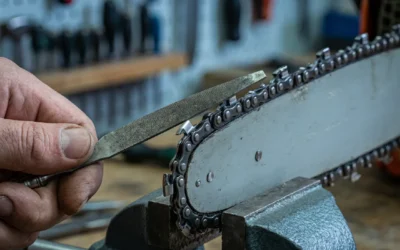
Start by checking your mower blade. A sharp blade makes a clean cut, while a dull blade tears grass and leaves it vulnerable to disease. Sharpen or replace the blade if needed. Check the oil, air filter, and spark plug if you use a gas mower, and ensure the battery is charged if you use an electric model. Clean any built-up grass and debris from the underside of the deck.
What Height Should I Set My Mower for the First Mowing?
For the first mow of the season, set your mower to a higher cutting height than you might use later in the year. Cool-season grasses generally do well at 2.5 to 3.5 inches, while warm-season grasses are often cut shorter, around 1.5 to 2.5 inches. A higher first cut reduces stress on the lawn and helps it recover from winter dormancy. Remember to follow the one-third rule: never remove more than one-third of the grass blade in a single pass.
Frequently Asked Questions
What is spring green-up?
Spring green-up is the period when grass emerges from winter dormancy and begins actively growing again. It is triggered by rising soil temperatures and increasing daylight, and it marks the point when your lawn needs its first mow of the season.
What does dormancy mean for my lawn?
Dormancy is a protective state that grass enters during extreme cold or heat. During dormancy, growth slows dramatically or stops entirely, and the grass may turn brown. Mowing dormant grass is generally unnecessary and can cause damage, so it is best to wait until active growth resumes.
How do I check soil temperature?
You can use a soil thermometer, available at most garden centers, to check the temperature at a depth of about 2 to 3 inches. Take readings in the morning over several consecutive days to get an accurate sense of whether soil temperatures are consistently above the growth threshold.