

Quick Answer
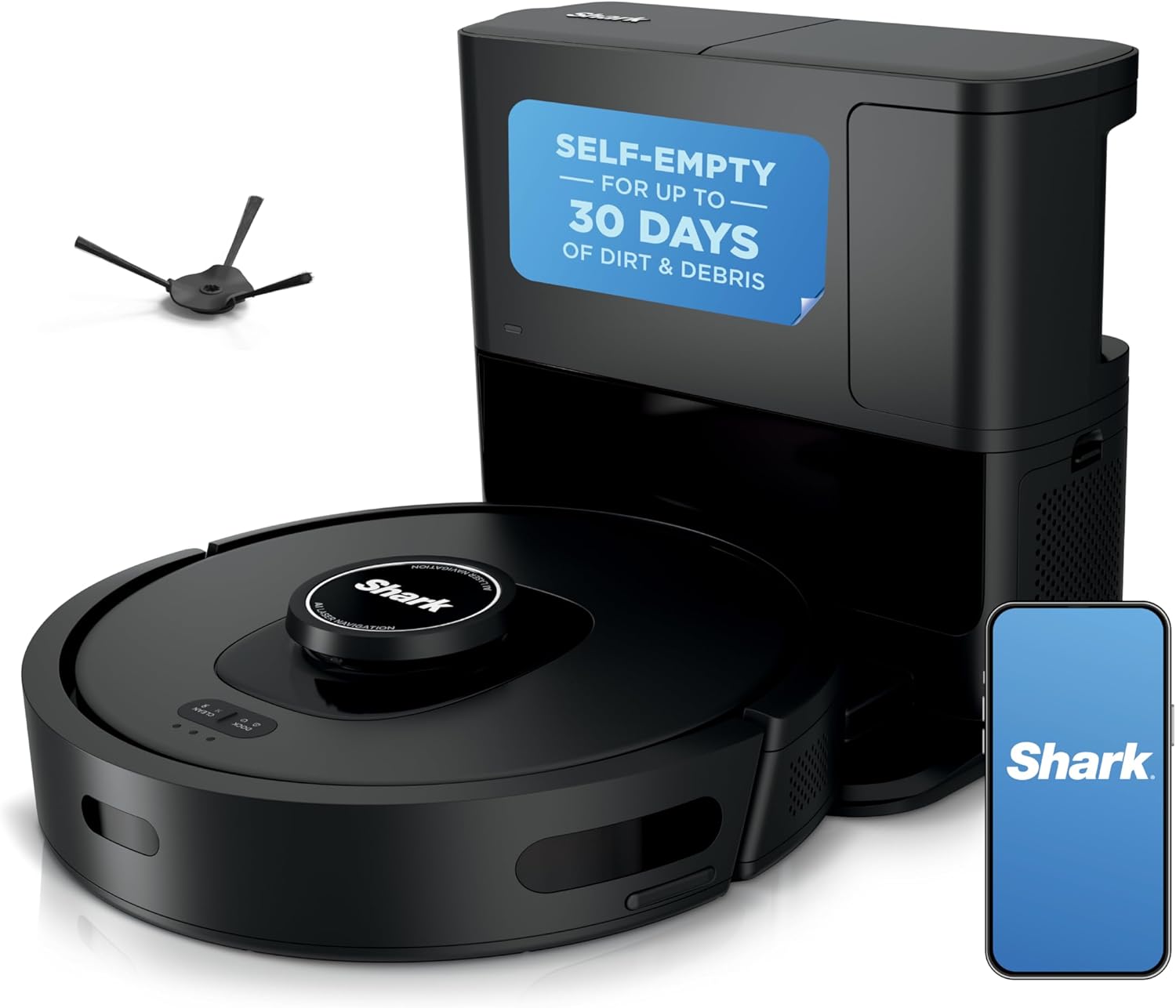
Choose the Shark AV2501AE AI Ultra if you want a lower purchase price, a bagless collection system, LIDAR navigation with Matrix Clean coverage, and pet-hair cleaning. Choose the Roomba j7+ if you want PrecisionVision object avoidance, room-aware scheduling, and multi-level map storage.
Pros
- Bagless self-empty base eliminates the recurring cost of replacement bags.
- Excellent pet hair pickup with anti-hair wrap brushroll.
- Highly accurate LiDAR mapping works well in dark or low-light rooms.
- Convenient voice control integration with Alexa and Google Assistant.
Cons
- App setup and initial mapping can sometimes require a few attempts to perfect.
- The self-emptying process is quite loud, though it only lasts for a few seconds.
An Honest Look at Automated Home Cleaning
The Shark AV2501S Robot Vacuum represents a major step forward in hands-free home maintenance, combining powerful suction with intelligent navigation. Designed for busy households, this smart vacuum takes the chore out of daily cleaning by automatically mapping your home and emptying its own bin. It is particularly well-suited for pet owners and families who want to keep their floors pristine with minimal manual intervention.
Standout Performance and Matrix Navigation
What sets this model apart is its Matrix Clean Navigation system. Instead of random bumping, the vacuum cleans in a precise grid pattern, taking multiple passes over high-traffic areas to ensure no spots are missed. Combined with a self-cleaning brushroll that actively prevents long pet hair from wrapping around the roller, it delivers deep-cleaning performance on both low-pile carpets and hard floors.
Smart Mapping and Everyday Convenience
Equipped with 360-degree LiDAR vision, the vacuum quickly learns the layout of your home. It creates an accurate map that allows you to set specific cleaning zones or no-go boundaries directly in the SharkClean app. The self-emptying base is a standout convenience feature, holding up to 30 days of debris. Plus, the integrated HEPA filtration traps 99.97% of dust and allergens, making it a great choice for allergy sufferers.
Verdict: A Reliable Smart Vacuum Investment
While the self-emptying cycle can be quite loud for a few seconds, the sheer convenience of a bagless, self-cleaning system outweighs this minor drawback. With up to 120 minutes of runtime and smart recharge-and-resume capabilities, it offers an efficient and highly automated solution for modern homes.

Pros
- Self-emptying feature listed in the product name
- Roomba j7+ model from iRobot
Cons
- Renewed condition; verify grade and warranty terms
Specifications Side-by-Side
The basic specifications show two self-emptying robot vacuums with different priorities. Shark emphasizes a lower purchase price, bagless collection, LIDAR, Matrix Clean coverage, and pet-hair cleaning. Roomba emphasizes PrecisionVision object avoidance, room-aware scheduling, and multi-level map storage. Several specifications that shoppers often compare, such as battery runtime, robot height, suction pressure, dustbin size, and noise, are not included in manufacturer specifications.
| Specification | Shark AV2501AE AI Ultra | Roomba j7+ (7550) |
|---|---|---|
| Product type | AI robot vacuum with XL HEPA self-empty base | Self-emptying robot vacuum |
| Brand | Shark | iRobot |
| Model | AV2501AE | j7+ (7550) |
| Amazon ASIN | B08QZVSC8D | B094NYHTMF |
| Listed price | $269.99 | $764.86 |
| Customer rating | 4.1/5 | 4.2/5 |
| Navigation | LIDAR navigation with Matrix Clean Navigation | PrecisionVision Navigation |
| Cleaning coverage | Precise matrix grid with multiple passes over dirt and debris | Room and schedule control through Imprint Smart Mapping |
| Floor compatibility | Carpet and hard floor | Not specified in manufacturer specifications |
| Self-emptying | Yes | Yes |
| Dock dirt capacity | Up to 60 days | Up to 60 days |
| Dock collection system | Bagless | Not specified |
| Dock filtration | True HEPA filtration that captures and traps 99.97% of dust and allergens | Not specified |
| Mopping | Not listed | Not listed |
| Smart-home compatibility | Wi-Fi connected and compatible with Alexa | Not specified beyond iRobot smart mapping and app-based controls |
| Pet-related features | Designed for pet hair; powerful suction claim | Object avoidance includes pet waste; P.O.O.P. promise described in manufacturer specifications |
| Noise rating | Not specified | Not specified |
Performance
Cleaning & Suction
Shark has the clearer vacuum-cleaning claim. Its supplied feature description says that its suction picks up dirt and debris on all floor types and tackles tough messes. The product is listed for carpet and hard floors, which makes it the more straightforward choice for a home with mixed flooring. Shark also uses Matrix Clean Navigation: rather than relying on a single pass, the robot cleans in a precise matrix grid and takes multiple passes over dirt and debris. For troubleshooting and reliability insights, consult our in-depth why robot vacuum keeps getting lost lidar fix report.
That description does not provide a suction-pressure number, and it should not be converted into a Pa comparison. The research also does not provide a measured pickup percentage, test score, airflow result, or carpet-deep-cleaning result for either model. Consequently, Shark wins this section because it has the more explicit supplied suction and floor-coverage claims, not because a numerical laboratory result establishes a particular performance gap.
The Roomba j7+ is still a dedicated self-emptying robot vacuum, but the manufacturer information focuses more heavily on navigation and smart mapping than on a quantified suction specification. If your main requirement is routine dirt and debris removal at the lowest price, Shark’s stated all-floor suction claim makes the decision easier. If your home has objects that frequently end up on the floor, Roomba’s cleaning advantage may come from avoiding interruptions and hazards rather than from a stated suction number. Readers comparing setup options can review our technical analysis on roborock qrevo s pro vs dreame l10s pro ultra heat.
Mopping
This is a simple tie. manufacturer specifications does not list a mop system for the Shark AV2501AE AI Ultra or the Roomba j7+. There is no stated water tank, mop pad, water control, scrubbing pattern, mop lifting, mop washing, or drying feature for either product. Treat both as vacuum-focused purchases and plan to use a separate mop for wet cleaning.
That distinction matters because a self-emptying dock does not automatically mean a robot can wash or dry a mop. Shark’s XL base handles dirt and debris, while the product information does not describe wet-floor maintenance. Roomba’s manufacturer listing likewise describes self-emptying and smart navigation, not mopping. Shoppers looking for one appliance to vacuum and mop should compare a different product category. For complementary field maintenance guidelines, examine our breakdown of why is my robot vacuum not dispensing water.
Navigation & Obstacle Avoidance
Roomba is the stronger choice for object avoidance. Its PrecisionVision Navigation is specifically described as identifying and avoiding socks, shoes, and pet waste. The product information also highlights the iRobot P.O.O.P. Pet Owner Official Promise: the supplied description says that iRobot will replace the robot if it fails to avoid pet waste, subject to additional terms and conditions on iRobot’s website.
Shark takes a different approach. Its LIDAR navigation and Matrix Clean system are designed around systematic coverage, with the robot moving through a precise matrix grid and making multiple passes over dirt and debris. That is useful when your priority is repeatable whole-home coverage. However, manufacturer specifications does not state that Shark identifies socks, shoes, pet waste, or other small objects, so it cannot match Roomba’s specific avoidance claim in this comparison. To evaluate matched hardware tolerances, consult our detailed overview of can robot vacuums cross high thresholds.
There is no supplied navigation speed, mapping time, obstacle-clearance result, or collision-rate measurement. The practical split is therefore clear but limited: Shark provides the stronger stated coverage method, while Roomba provides the stronger stated object-recognition and avoidance feature.
Pet Hair
Shark is the better fit when “pet hair” means routine fur and debris pickup. Its product title calls it suitable for pet hair, and its feature list highlights powerful suction on all floor types. It is also listed for carpets and hard floors, giving it the more direct pet-cleaning positioning in manufacturer specifications.
Roomba’s pet advantage is different and potentially more valuable in a specific household. PrecisionVision Navigation is described as avoiding pet waste, and the P.O.O.P. promise is intended to address that risk. Avoiding an accident can protect the robot and prevent a major cleanup, but it is not the same as a supplied claim about collecting loose fur. The available research does not include a hair-pickup test, tangle result, brush design, or carpet score for either model.
Dock & Maintenance
Both robots reduce daily emptying because their docks are described as holding up to 60 days of dirt and debris. That capacity is a stated maximum-style interval, not a guarantee for every home: how long the dock lasts will depend on how much dirt, dust, and pet debris the robot collects. Neither listing supplies a measured number of cleaning runs or a household-specific replacement schedule.
Shark’s dock is the more clearly documented system. It is an XL, bagless, self-emptying base, so manufacturer specifications does not describe a recurring bag purchase. Its true HEPA filtration is stated to capture and trap 99.97% of dust and allergens. The provided feature text is truncated after the filtration claim, so it does not supply further maintenance instructions or a replacement-filter interval.
The Roomba j7+ listing confirms a self-empty base with up to 60 days of capacity, but it does not specify whether the collection system is bagged or bagless, identify a HEPA rating, or give a replacement-bag price. manufacturer specifications also provides no consumables pricing for brushes, filters, bags, or other parts for either model. For that reason, Shark has the clearer ownership story, but a complete annual maintenance-cost calculation cannot be made from the available information.
Neither dock is described as washing or drying a mop. This is not a meaningful omission for these vacuum-focused configurations, but it does mean owners should not expect automatic wet-cleaning maintenance. The main routine tasks remain checking the robot, cleaning its components as needed, and servicing the dock or filtration system according to the manufacturer’s instructions.
App & Smart Features
Roomba has the more detailed smart-home and mapping feature set in the supplied research. Imprint Smart Mapping lets you control and schedule which rooms are cleaned and when. It can store multiple maps, which is intended to make cleaning on each level of a home easier. This gives the j7+ a strong advantage for households that want room-specific routines rather than only starting a general cleaning cycle.
Shark is Wi-Fi connected and compatible with Alexa. That provides a useful voice-control path for households already using Alexa, while its Matrix Clean Navigation handles the robot’s systematic coverage. manufacturer specifications does not describe Shark’s room-selection controls, map storage, multi-floor support, scheduling depth, or app interface, so those features should not be assumed from the Wi-Fi label alone.
The choice is therefore less about which robot has an app and more about how much control you need. Select Roomba if room-level scheduling and multiple maps are central to your routine. Select Shark if Alexa compatibility and a simpler Wi-Fi-connected setup meet your expectations. The available research does not provide details about subscription fees, app compatibility requirements, firmware support, or privacy settings.
Price & Value Analysis
The price difference is the defining part of this comparison. The Shark AV2501AE AI Ultra is listed at $269.99, while the Roomba j7+ is listed at $764.86. Roomba therefore costs $494.87 more based on manufacturer specifications. Both products have self-emptying docks described as supporting up to 60 days, so the more expensive Roomba is not buying a longer stated dock interval.
Shark is worth it for shoppers who want the most capability per dollar: a dedicated robot vacuum, stated powerful suction for all floor types, carpet and hard-floor compatibility, LIDAR navigation, Matrix Clean multiple-pass coverage, a bagless self-empty dock, true HEPA filtration, Wi-Fi, and Alexa compatibility. At $269.99, it is the practical value choice unless you specifically need a feature that only Roomba supplies in this comparison.
Roomba is worth the premium when avoiding floor objects is a high priority. Its PrecisionVision system is explicitly intended to identify and avoid socks, shoes, and pet waste. Imprint Smart Mapping also adds room-level cleaning control, scheduling, and multiple stored maps. Those features can be meaningful in a busy home, particularly for pet owners concerned about accidents, but the available information does not establish that Roomba cleans more dirt or pet hair than Shark.
The customer ratings are close: Shark is listed at 4.1/5 and Roomba at 4.2/5. That 0.1-point difference does not, by itself, explain a $494.87 price gap. Value depends on whether Roomba’s object avoidance and mapping controls prevent enough inconvenience to justify the additional purchase cost.
Which Should You Buy?
Choose Shark AV2501AE AI Ultra if…
- You want a self-emptying robot vacuum for $269.99 rather than spending $764.86.
- You want the lower-priced option with a stated $494.87 saving compared with Roomba.
- Your home has carpet and hard floors and you want a product explicitly listed for both.
- You prioritize a stated powerful-suction claim and pet-hair positioning.
- You prefer a bagless self-empty base with up to 60 days of dirt and debris capacity.
- You value true HEPA filtration with a stated 99.97% dust-and-allergen capture claim.
- You want LIDAR navigation with Matrix Clean’s systematic, multiple-pass coverage.
- You use Alexa and want a Wi-Fi-connected robot compatible with it.
Choose Roomba j7+ if…
- You are willing to pay $764.86 for more advanced stated object avoidance.
- Your floors commonly contain socks, shoes, or other objects that could interrupt a cleaning run.
- You have pets and want the supplied P.O.O.P. promise associated with avoiding pet waste, subject to its terms.
- You want PrecisionVision Navigation to identify and avoid listed objects.
- You want Imprint Smart Mapping for room-by-room cleaning control and scheduling.
- You need multiple stored maps for cleaning different levels of your home.
- You consider a 4.2/5 listed rating meaningful, while recognizing that Shark is close at 4.1/5.
Consider a different model if…
- You need the robot itself to mop, scrub, lift a mop over carpet, or wash and dry a mop pad.
- You require a published suction-pressure number, noise rating, battery runtime, or independent pickup test before buying.
- You want a complete annual consumables budget and the manufacturer listing does not provide prices for replacement parts.
- You want automatic water refilling, dirty-water removal, mop washing, or mop drying from the dock.
- You need a feature comparison based on detailed obstacle-clearance tests, because no such measurements are supplied here.
- For more options at every price point, see our full guide to Best Robot Vacuums.
Everything You Need to Know: Shark Av2501ae Ai Ultra Vs Roomba J7 Plus FAQ
Is the Shark AV2501AE AI Ultra better than the Roomba j7+?
It is better for value and for the supplied pet-hair, suction, floor-coverage, and bagless-dock claims. The Roomba j7+ is better for the specifically documented ability to identify and avoid socks, shoes, and pet waste, as well as for room-level scheduling and multiple stored maps. The right winner depends on whether low price and vacuum-focused cleaning or advanced avoidance and mapping matters more.
Do both the Shark AV2501AE AI Ultra and Roomba j7+ empty themselves?
Yes. Both are described as self-emptying robot vacuums with docks that can hold up to 60 days of dirt and debris. Shark’s base is specifically described as bagless and equipped with true HEPA filtration. The supplied Roomba data confirms self-emptying and the up-to-60-day claim but does not specify its collection format or filtration rating.
Can either robot vacuum mop floors?
manufacturer specifications does not list mopping for either model. There is no stated mop pad, water tank, wet-cleaning mode, or mop-maintenance system for the Shark AV2501AE AI Ultra or Roomba j7+. Buy based on their vacuuming features and plan on a separate wet-cleaning method if you need mopping.
Which is better for homes with pets?
Choose Shark for the more direct pet-hair positioning: its product information calls it suitable for pet hair and highlights powerful suction on all floor types. Choose Roomba if avoiding pet waste is the bigger concern, because its PrecisionVision Navigation is described as identifying and avoiding pet waste and its listing includes the P.O.O.P. promise, subject to additional terms. No independent pet-hair test is supplied for either model.
Related Maintenance and Operating Guides
To keep your equipment running at peak operating efficiency, explore our related technical walkthroughs and maintenance tutorials:
- Consult our detailed breakdown on Suction.
Related Comparisons
- Robot Vacuum Comparisons
- Robot Vacuum Reviews
- Home Appliance Buying Guides
General Reading on Home Robots
Home robots with cameras and onboard sensors raise practical questions about how their electronics are built. The International Electrotechnical Commission (IEC) offers general background on electrotechnical topics. It does not assess these products, so treat it as orientation before comparing features.









