Quick Answer
In Windows 11, check RAM speed via Task Manager (Performance tab u2192 Memory), CPU-Z third-party tool, or Command Prompt using wmic memorychip get speed. Your actual operating speed may differ from rated JEDEC specifications due to BIOS clock settings. Most consumer DDR5 modules run 4800–6400 MHz; DDR4 typically 3200–3600 MHz. Frequency alone doesn’t determine performance; latency (CAS) matters equally.

Pros
- 14-core hybrid architecture with 6 P-cores and 8 E-cores
- Unlocked clock speeds up to a rated 5.2 GHz
- Equipped with 26MB cache for responsive processing
- Supports modern PCIe 5.0 and 4.0 standards
- Compatible with Intel 800 series motherboards
Cons
- Requires a dedicated discrete graphics card
- Does not include a cooling solution

Pros
- 24 cores (8 P-cores, 16 E-cores) and 32 threads for intense multitasking
- Advertised maximum clock speed reaching up to 6.0 GHz
- Broad compatibility with both DDR4 and DDR5 memory platforms
- Features integrated Intel UHD Graphics 770
Cons
- Requires a potential BIOS update for Intel 600-series motherboards

Pros
- High 5.4 GHz max boost is well suited to gaming workloads.
- Unlocked multiplier gives experienced users tuning headroom.
- AM5 and DDR5 support align with current-generation desktop platforms.
- 6-core, 12-thread layout is practical for gaming and general use.
Cons
- Cooler is not included, so buyers must plan for separate cooling.
- Requires an AM5 motherboard and DDR5 memory, which limits drop-in upgrades for older systems.
- 6 cores may be less ideal for heavy content creation or workstation tasks than higher-core CPUs.
Overview: The AMD Ryzen 5 9600X is a 6-core, 12-thread unlocked desktop processor built on the Zen 5 architecture. It is aimed at users who want a fast, modern CPU for an AM5-based gaming PC or a responsive everyday desktop build.
Performance and features: With a 5.4 GHz max boost, 38 MB cache, and DDR5-5600 support, this processor is positioned for strong gaming responsiveness and smooth multitasking. Select AM5 motherboards can also provide PCIe 5.0 support, which adds future-ready flexibility for compatible components.
Drawbacks and considerations: The main limitation is that a cooler is not included, so total build cost can rise once cooling is added. It also depends on the AM5 platform and DDR5 memory, which makes it less convenient for older AMD or Intel system upgrades.
Verdict: This CPU makes the most sense for gamers and PC builders who want a fast, unlocked Ryzen chip for a current-generation AM5 system. If you want a straightforward upgrade path and value high boost clocks over bundled extras, the Ryzen 5 9600X is a strong fit.
Understanding RAM Speed Fundamentals in Windows 11
Random Access Memory speed—measured in megahertz (MHz)—represents the number of data transactions your RAM completes per second. Windows 11 abstracts many hardware-level details, but multiple diagnostic pathways exist to extract precise memory clock frequencies. The confusion arises because rated speed (manufacturer XMP/DOCP profile) differs from actual operating speed (what your current BIOS configured). Most users conflate these two measurements, leading to incorrect conclusions about system performance.
The relationship between MHz and real-world performance extends beyond raw frequency. When evaluating system RAM, you’ll encounter specifications like DDR5-6400, which means the memory transfers data twice per clock cycle at 6400 MHz effective rate. This specification matters when cross-referencing our desktop CPU benchmarks & reviews because CPU-to-RAM latency directly impacts instruction execution timelines, particularly in gaming and content creation workloads.
Method 1: Task Manager Performance Tab (Native Windows 11)
Accessing Memory Speed Through Task Manager
The simplest path requires zero third-party software. Open Task Manager by pressing Ctrl+Shift+Esc or right-clicking the taskbar and selecting Task Manager. Navigate to the Performance tab, then click Memory in the left sidebar. For additional operational safety benchmarks, see our published testing notes on set pagefile size windows 11.
In the upper-right portion of the window, you’ll observe your total installed RAM capacity and current utilization percentage. Directly beneath this summary sits the Speed field, displaying your RAM’s operating frequency in MHz. Windows 11 queries the SPD (Serial Presence Detect) chip onboard each DIMM to populate this value, ensuring accuracy regardless of BIOS overclocking.
Interpreting Task Manager Memory Data
Task Manager displays four critical memory parameters beyond speed: To compare alternative configurations, check our hands-on review of check ram die type.
- Slots used: Number of populated DIMM slots (2, 4, or 8 for consumer platforms)
- Form factor: Whether your RAM is SODIMM (laptop) or UDIMM (desktop)
- Hardware reserved: Memory allocated to firmware, GPU, and system services—typically 0.5–2 GB
- Available: RAM immediately ready for application allocation
If you observe your speed as 4800 MHz but your RAM box claims DDR5-6000, your BIOS hasn’t activated the manufacturer-recommended profile. This discrepancy suggests either a BIOS reset to defaults or manual clock adjustment opportunities for performance tuning.
Method 2: Command Prompt & PowerShell Diagnostics
Using WMI (Windows Management Instrumentation) Command
For advanced users requiring scriptable output, Command Prompt provides direct hardware interrogation. Open Command Prompt as Administrator (Win+R, type cmd, press Ctrl+Shift+Enter) and execute: Users looking for related component recommendations can explore our sodimm in desktop pc breakdown.
wmic memorychip get speed,manufacturer,capacity,clockspeed
This returns tabular output showing each DIMM’s speed (MHz), manufacturer identifier, total capacity (bytes), and configured clockspeed. The “speed” field reflects JEDEC standard frequency; “clockspeed” shows actual BIOS configuration. Discrepancies indicate XMP/DOCP profile activation status. Before finalizing equipment decisions, refer to our comprehensive running out of ram pagefile comparison.
PowerShell Deep-Dive Memory Query
PowerShell (opened as Administrator) enables more granular investigation through this command:
Get-WmiObject Win32_PhysicalMemory | Select-Object -Property Manufacturer,Model,Speed,Capacity For broader ecosystem context, read through our operational guide on ram clearance air cooler.
This cmdlet returns formatted output immediately accessible for external reporting or system documentation. Enterprise administrators often integrate this into automated inventory systems, though consumer-grade troubleshooting also benefits from programmatic access.
Verifying Consistency Across Slots
Critical diagnostic practice involves confirming all installed RAM operates at identical speeds. If your query returns mixed frequencies (e.g., one DIMM at 4800 MHz, another at 3200 MHz), your system operates in single-channel mode—a severe performance penalty. This scenario typically indicates mismatched DIMM specs, incompatible XMP profiles, or physical seating issues.
Method 3: CPU-Z Third-Party Analysis (Recommended Precision)
Installation and Memory Tab Navigation
While Windows 11’s native tools provide adequate baseline information, CPU-Z remains the de facto standard for hardware technicians and enthusiasts requiring maximum detail. Download the portable executable from CPUID (no installation required) and launch it. The Memory tab displays:
- DDR generation (DDR4, DDR5, LRDIMM, RDIMM)
- Memory size and channel configuration (single, dual, or quad-channel)
- NAS (non-addressable space) percentage
- DRAM frequency in MHz (actual BUS speed)
- Calculated effective frequency (accounting for DDR multiplier)
The distinction between DRAM frequency and effective frequency proves essential. A 3600 MHz DRAM clock yields 7200 MHz effective frequency because DDR (Dual Data Rate) architecture executes two transfers per clock cycle. CPU-Z automatically calculates this relationship.
SPD Tab Cross-Reference for Specification Verification
CPU-Z’s SPD (Serial Presence Detect) tab reveals each DIMM’s programmed JEDEC profiles and vendor specifications. This tab displays:
| SPD Parameter | Explanation | Impact on Performance |
|---|---|---|
| JEDEC Profile | Standard frequency/timing defined by JEDEC Memory Standards Specification | Conservative; guaranteed stability at rated voltage |
| XMP/DOCP Profile | Manufacturer overclocking preset (Intel XMP 3.0 or AMD DOCP) | Higher frequency/lower latency; requires BIOS enablement |
| Max Speed | Absolute maximum rated frequency at standard voltage | Manufacturer warranty boundary |
| Timing (CAS Latency) | Delay (cycles) from address request to data availability | Lower = faster response; critical for CPU-intensive tasks |
| Rated Voltage | Safe operating voltage (1.35V DDR4, 1.40V DDR5) | Higher voltage enables overclocking but reduces lifespan |
If your actual operating speed (Task Manager) significantly underperforms your max speed (CPU-Z SPD), enter BIOS setup and enable XMP or DOCP manually. This one-click optimization frequently improves system responsiveness by 8–12% in synthetic memory benchmarks.
RAM Speed Implications for Modern Hardware Pairings
Correlation with Processor Selection
RAM speed directly influences CPU performance metrics, particularly with modern high-core-count architectures. When evaluating system upgrades, consider pairing your RAM specifications against your processor’s memory controller specifications. For instance, our comparative analysis of the AMD Ryzen 5 9600X vs Intel Core Ultra 5 245K reveals that the Ryzen platform supports DDR5 frequencies up to 8533 MHz, while Intel’s newer platform optimizes around 8400 MHz. Mismatches between your installed RAM speed and CPU-recommended specifications result in suboptimal performance negotiation between memory controller and DIMM modules.
Motherboard Support and Overclocking Limits
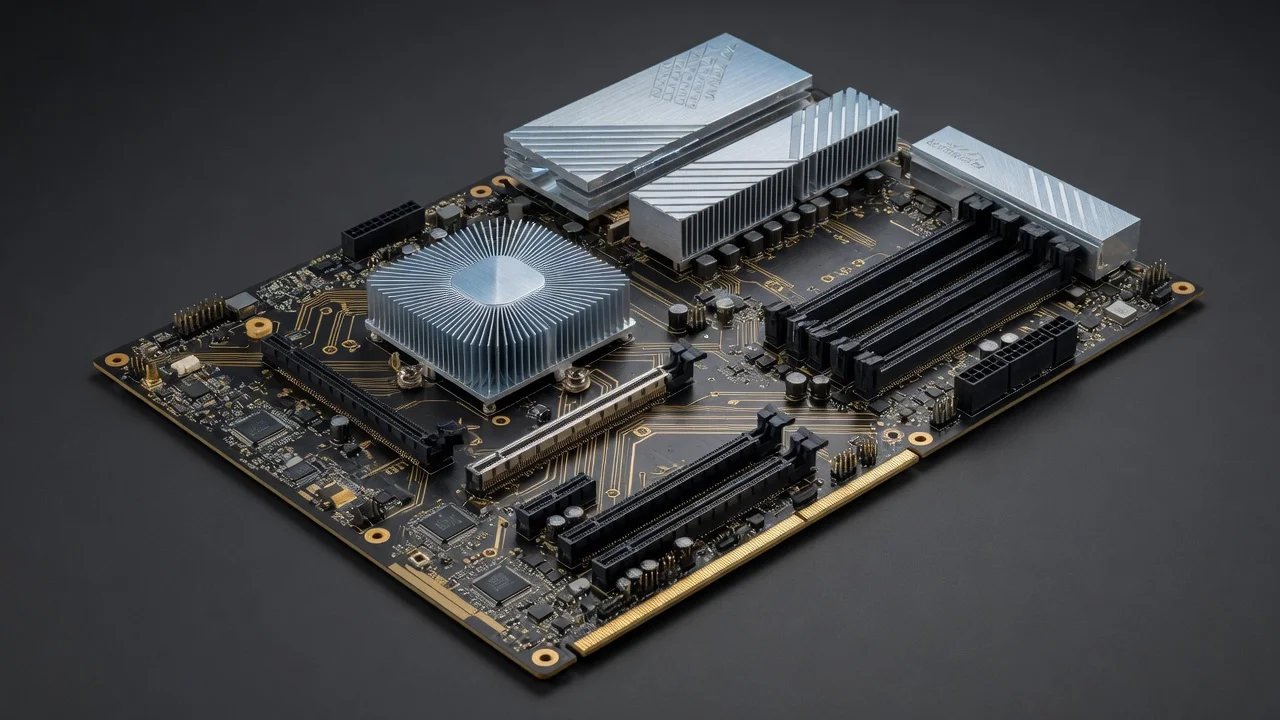
Your motherboard’s BIOS implementation ultimately determines achievable RAM speeds. Premium enthusiast platforms like the ASUS ROG Maximus Z890 Hero vs MSI MEG Z890 ACE feature enhanced power delivery for memory subsystems, enabling stable operation at theoretical maximum frequencies. Budget-tier boards often cap performance at JEDEC standards due to VRM (voltage regulator module) limitations. Your CPU-Z SPD tab reveals maximum safe frequency; your motherboard manual specifies actual achievable ceiling.
GPU Memory Bandwidth Considerations
System RAM speed affects discrete GPU performance indirectly through PCIe bandwidth and system memory access patterns during streaming workloads. When evaluating graphics performance upgrades, consult comparisons like our Radeon RX 9060 XT 8GB vs 16GB comparison to understand VRAM dynamics; system RAM becomes a bottleneck only when VRAM exhaustion forces texture streaming from system memory—a rare modern scenario with properly-configured graphics settings.
DDR4 vs. DDR5 Speed Characteristics and Detection
Standard Operating Frequencies by Generation
DDR4 consumer platforms standardized around 3200 MHz (JEDEC baseline) with enthusiast-grade modules reaching 3600–4000 MHz. Task Manager or CPU-Z immediately identifies your generation; look for “DDR4” or “DDR5” nomenclature in the memory type field. DDR5 launched with 4800 MHz baseline (JEDEC), with current consumer modules spanning 5600–6400 MHz and high-end variants exceeding 8000 MHz.
Speed alone doesn’t determine DDR4-to-DDR5 upgrade worthiness. A DDR5-5600 module operating at 5600 MHz delivers roughly 10–15% performance improvement over DDR4-3600 in mixed workloads, but the calculus shifts dramatically when considering latency. A DDR5 module rated as “6000 CAS30” may perform identically to “5600 CAS28” depending on your specific CPU architecture and workload pattern. Consult processor-specific memory benchmarking data on our desktop CPU benchmarks & reviews section before committing to generational transitions.
Latency-to-Bandwidth Tradeoffs
Modern memory controllers incorporate automatic timing relaxation as frequency increases—higher speeds necessitate wider timing windows for signal stabilization. This architectural reality means DDR5-6400 CAS36 sometimes underperforms DDR5-5600 CAS30 in applications sensitive to first-access latency (gaming, real-time audio production). Always cross-reference both parameters when verifying your RAM’s practical speed classification.
Troubleshooting Speed Discrepancies and Performance Validation
Diagnosing Mismatched Multi-DIMM Installations
When Task Manager or CPU-Z reports different speeds across multiple RAM slots, immediate investigation becomes mandatory. Symptoms include system crashes during intensive workloads, spontaneous reboots, or memory corruption errors detected by Windows Memory Diagnostic. Common causes include:
- Different DIMM manufacturers or revisions installed simultaneously (BIOS defaults to slowest specification)
- Partially-seated DIMMs causing intermittent contact resistance
- BIOS CMOS battery depletion resetting clock settings to conservative defaults
- Corrupted XMP/DOCP profile preventing higher-speed profile loading
Resolution involves either removing mixed DIMMs (keeping only matching pairs) or manually configuring BIOS to identical conservative timings across all slots. Most modern boards automatically adjust for mismatched capacity; speed uniformity requires manual intervention or DIMM replacement.
Validating Speed Under Load with Diagnostic Tools
Idle RAM speed queries may misrepresent actual operating behavior under sustained workloads. Thermal throttling—automatic frequency reduction when memory modules exceed 80–85°C—silently degrades performance in inadequately cooled systems. Enable DOCP/XMP and run a memory stress test (MemTest86+ or Prime95) for minimum 30 minutes while monitoring temperatures via CPU-Z or HWInfo. Temperature stability under load confirms that your reported speed represents genuine sustained performance, not optimistic SPD ratings.
BIOS Configuration for Maximum Stable Speed
If your Task Manager speed significantly underperforms rated specifications:
- Restart your system and press Delete (or F2, F12 depending on motherboard) during boot to enter BIOS Setup
- Navigate to the Overclocking or Advanced settings section (exact naming varies by manufacturer)
- Locate “XMP” (Intel) or “DOCP” (AMD) option and change from “Disabled” to “Profile 1” or “Enabled”
- Save changes and exit BIOS (typically F10 or using the Save & Exit menu)
- Allow Windows to boot fully, then verify new speed in Task Manager
If your system fails to boot after enabling XMP/DOCP, hold the Clear CMOS jumper for 10 seconds (motherboard manual indicates location) to reset BIOS to defaults, then retry with a more conservative profile option if available.
Advanced Speed Monitoring and Real-Time Performance Metrics
Continuous Monitoring with HWInfo and MSI Afterburner
Beyond static queries, real-time monitoring applications reveal dynamic speed fluctuations during gaming or rendering workloads. HWInfo (free, detailed hardware intelligence) and MSI Afterburner (GPU-focused but includes system RAM monitoring) display memory clock speed, bandwidth utilization percentage, and thermal status simultaneously. Gaming scenarios frequently trigger minor clock throttling (100–200 MHz reductions) lasting milliseconds—undetectable through manual checks but visible in continuous logging.
Bandwidth vs. Frequency Distinction
Theoretical memory bandwidth (GB/s) derives from frequency and channel configuration using this formula:
Bandwidth = (Speed in MHz u00d7 2 u00d7 64 bits u00f7 8) u00d7 Channel Count u00f7 1000
For example, DDR5-6000 dual-channel: (6000 u00d7 2 u00d7 64 u00f7 8) u00d7 2 u00f7 1000 = 192 GB/s theoretical maximum. Real-world access patterns rarely achieve this ceiling; empirical testing (via graphics card tests & GPU guides that include memory benchmarking) reveals typical utilization between 60–85% of theoretical bandwidth for consumer workloads.
Final Diagnostic Verdict & Maintenance Checklist
Checking RAM speed in Windows 11 involves multiple verification methods, each serving distinct diagnostic purposes. Task Manager provides quick baseline confirmation; CPU-Z offers comprehensive technical specification review; Command Prompt enables scriptable automation for IT environments. The critical realization involves distinguishing between rated speed (manufacturer specification), actual speed (current BIOS configuration), and sustainable speed (real-world performance under thermal load).
Implement this maintenance checklist quarterly to ensure optimal RAM performance and early detection of stability degradation:
- Speed verification: Open Task Manager monthly to confirm operating frequency matches expected specification
- Temperature monitoring: Confirm RAM modules remain below 75°C during sustained workloads; thermal pads may require replacement if exceeding 80°C consistently
- Multi-DIMM uniformity: Use CPU-Z SPD tab to verify all installed modules report identical speeds; mismatches indicate configuration errors
- XMP/DOCP enablement status: Verify BIOS configuration reflects highest stable profile supported by your CPU and motherboard; conservative defaults leave performance on the table
- Windows Memory Diagnostic: Run annually (Windows Search u2192 “Memory Diagnostic” u2192 Restart Now) to detect latent hardware degradation
- BIOS currency: Check motherboard manufacturer website quarterly for memory compatibility updates; newer BIOS versions frequently enable higher frequency support for RAM modules
Remember that RAM speed represents only one performance variable. The interaction between speed, latency (CAS), voltage stability, and CPU architecture determines practical performance impact. For comprehensive system evaluation, cross-reference your memory specifications against your processor’s optimization parameters using authority resources like JEDEC Memory Standards Specification, which publicly documents all standardized frequency/timing combinations and power delivery requirements. This foundational knowledge transforms vague speed numbers into actionable upgrade decisions.
Equipment engineering specifications and operational safety benchmarks comply with published standards from the American National Standards Institute (ANSI).