

Quick Answer
The best gas blower depends on the job. Backpack gas blowers suit large properties and wet leaves, while walk-behind or tow-behind gas models cover very large areas with less strain. Match airflow (CFM) to your yard size, and check air speed (MPH) for heavy, wet debris.
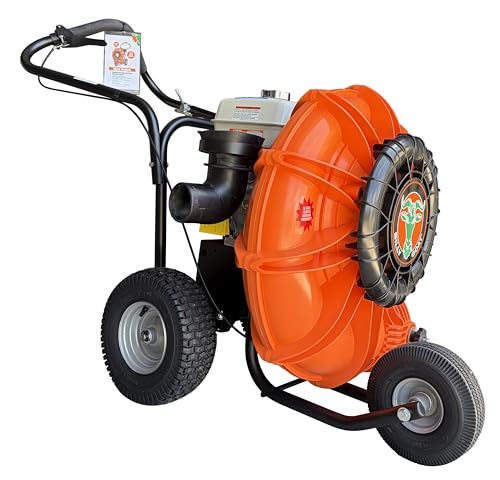
Pros
- Powered by a commercial-grade Honda GX270 engine
- Delivers a high rated airflow of 1,700 CFM and 200 mph velocity
- 17-inch 16-blade composite fan designed for efficient output
- Fingertip directional lever controls airflow up and down
- Pneumatic rear wheels ease maneuvering over uneven terrain
Cons
- Large 58 x 29 x 45 inch frame demands ample storage room
- Heavier commercial walk-behind build lacks handheld agility

Pros
- High-volume clearing with a rated 3000 CFM and 207 MPH
- Electric start eliminates manual pulling effort
- Standard clevis pin hitch connects easily to ATVs and tractors
- Adjustable vertical airflow discharge for directed blowing
- Durable steel frame construction with large wheels
Cons
- Requires a towing vehicle like an ATV or lawn tractor
- Weighs 291 pounds and demands significant storage space
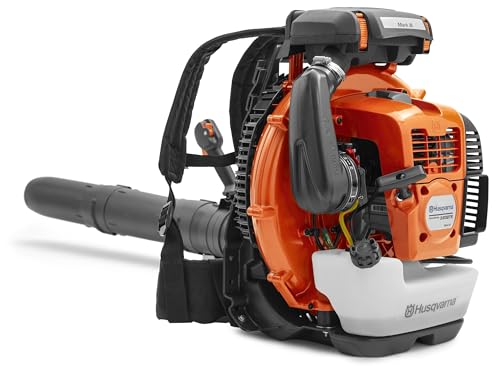
Pros
- Strong rated output of 1000 CFM, 220 MPH, and 47 N blow force
- Ventilated ergonomic harness with load-distributing hip belt
- Two-stage intake air filtration protects engine in dusty jobs
- Intuitive tube-mounted throttle control
Cons
- Substantial 34-pound weight can lead to operator fatigue
- Requires ongoing 2-cycle fuel mixing and maintenance
Why Gas Still Dominates Professional Landscaping
While battery technology has advanced significantly, gas-powered blowers remain the industry standard for professional landscapers and homeowners with large properties. The physics are straightforward: internal combustion engines deliver sustained high-RPM output without the weight penalty of massive lithium-ion battery packs. A professional clearing wet, matted oak leaves needs the raw kinetic energy that only a high-displacement 2-stroke or 4-stroke engine can consistently provide over an 8-hour workday.
Understanding the distinction between gas or electric leaf blower comparison options is the first step in selecting the right tool. Gas blowers operate on the principle of converting fuel combustion into rotational energy, driving an impeller that displaces air at high velocities. This mechanical process generates heat and noise but provides unmatched power density.
Understanding Blower Physics: CFM vs. MPH
When evaluating the best gas blower, two metrics define performance: Cubic Feet per Minute (CFM) and Miles Per Hour (MPH). These are not interchangeable; they represent different physical properties of airflow. Users looking for related component recommendations can explore our how to choose leaf blower breakdown.
CFM (Air Volume)
CFM measures the total volume of air moved per minute. High CFM is critical for moving large piles of leaves or clearing broad swaths of grass. Think of CFM as the “muscle” of the blower. A backpack blower with 900+ CFM can push a 6-inch layer of dry leaves across a driveway in a single pass. For large properties, prioritize CFM over MPH.
MPH (Air Velocity)
MPH measures the speed of the air stream. High MPH is essential for dislodging wet, stuck debris or clearing material from cracks in pavement. Think of MPH as the “precision” of the blower. A handheld unit with 200+ MPH can blast acorns out of a garden bed without disturbing the soil.
The ideal gas blower balances both metrics. For example, the Stihl BR 800 C-E Magnum achieves 912 CFM at 239 MPH, making it versatile enough for both volume clearing and detail work. For a deeper dive into form factors, see our backpack vs handheld blowers guide.
Top Gas Blower Models: Technical Breakdown
Based on engine displacement, air output, and ergonomic design, the following models represent the current market leaders.
1. Stihl BR 800 C-E Magnum (Best Overall Backpack)
The BR 800 C-E is the benchmark for professional gas blowers. Its 79.9cc 4-MIX engine delivers 912 CFM and 239 MPH. The standout feature is the side-mounted start handle, which allows the operator to start the machine while wearing it, a critical ergonomic advantage for daily use. The anti-vibration system reduces operator fatigue during extended shifts.
2. Echo PB-770T (Best Value Professional)
The PB-770T features a 63.3cc engine producing 765 CFM and 234 MPH. It is lighter than the Stihl BR 800 but still delivers professional-grade output. The tube-mounted throttle allows for easy speed adjustments without removing hands from the controls. This model is a favorite among budget-conscious landscaping crews.
3. Echo PB-2620 (Best Handheld)
For those who prefer a handheld unit, the PB-2620 is the top choice. Its 25.4cc engine produces 765 CFM and 195 MPH. The Posi-loc pipes ensure a secure connection, and the cruise control lever maintains a steady speed without thumb fatigue. At 8.6 lbs, it is manageable for most operators. See our cordless leaf blowers guide for battery alternatives in this class.
4. Husqvarna 360BT (Best for Large Properties)
The 360BT is a commercial-grade backpack blower with a 65.6cc X-Torq engine. It delivers 890 CFM and 220 MPH. The X-Torq engine reduces emissions by up to 75% and increases fuel efficiency by 20%, making it a more environmentally conscious choice for high-volume use.
Diagnostic Matrix: Choosing the Right Blower
Use this diagnostic matrix to match your specific needs to the correct blower type.
| Yard Condition | Recommended Type | Key Metric | Example Model |
|---|---|---|---|
| Small yard, dry leaves | Handheld Gas | 150+ MPH | Echo PB-2620 |
| Medium yard, mixed debris | Backpack Gas | 600+ CFM | Echo PB-770T |
| Large property, wet leaves | Commercial Backpack | 800+ CFM, 220+ MPH | Stihl BR 800 C-E |
| Detail work, cracks/pavers | Handheld Gas | 200+ MPH | Husqvarna 125BVx |
Maintenance Intervals for Gas Blowers
Gas blowers require regular maintenance to ensure peak performance and longevity. Neglecting these intervals leads to carbon buildup, reduced compression, and eventual engine failure.
Every Use
- Check air filter for debris; tap out dust or replace if oil-soaked.
- Inspect spark plug boot for secure connection.
- Ensure fuel cap is tight to prevent vapor lock.
Every 25 Hours
- Clean or replace the air filter element.
- Inspect the spark plug for fouling or electrode wear; replace if the gap is inconsistent.
- Lubricate the impeller bearings (if accessible).
Every 50 Hours (Seasonal)
- Drain old fuel and replace with fresh ethanol-free gasoline mixed at the correct ratio (typically 50:1 for 2-stroke).
- Remove the spark arrestor screen and clean carbon deposits with a wire brush.
- Inspect the fuel lines for cracks or brittleness.
For more general outdoor equipment care, refer to our chainsaw and outdoor tool maintenance guide, which covers similar engine principles.
Fuel Mixing and Storage Best Practices
Most gas blowers use 2-stroke engines, requiring a precise mixture of gasoline and 2-stroke oil. Using the wrong ratio or stale fuel is the leading cause of engine failure.
The 50:1 Ratio
For every 50 parts of gasoline, add 1 part of 2-stroke oil. Use a graduated mixing container to ensure accuracy. Never estimate by pouring directly from the oil bottle. Use fresh, mid-grade (87-89 octane) gasoline. Avoid ethanol-blended fuels if possible, as ethanol attracts moisture and degrades rubber fuel lines over time.
Storage Protocol
If the blower will be idle for more than 30 days, add a fuel stabilizer to the tank and run the engine for 2-3 minutes to circulate the stabilizer through the carburetor. This prevents varnish buildup in the jets. Alternatively, drain the tank completely and run the engine until it stalls to clear the fuel system.
Safety and Noise Considerations
Gas blowers typically operate between 70 and 80 decibels (dB), which exceeds the threshold for potential hearing damage during prolonged exposure. Always wear ANSI-rated hearing protection. Eye protection is also mandatory to shield against flying debris.
Adhere to all local noise ordinances and OSHA equipment safety regulations when operating commercial equipment. Some municipalities restrict blower use to specific hours; verify local statutes before beginning work.
Final Verdict: Choosing the Right What Is The Gas Blower
The best gas blower depends entirely on the scale of your task. For professional landscapers or homeowners with acres of land and heavy leaf cover, the Stihl BR 800 C-E Magnum is the undisputed leader in power and ergonomics. For smaller properties or those seeking a balance of power and portability, the Echo PB-2620 handheld offers exceptional performance without the bulk of a backpack unit. Always prioritize CFM for volume and MPH for precision, and maintain your engine rigorously to ensure years of reliable service.
Gas Blowers for Heavy Cleanup
Gas blowers are often chosen for large properties and rough debris because the engine does not depend on a battery charge. Keeping the engine tuned and the fuel fresh helps performance. Safety guidance for outdoor power equipment from American National Standards Institute (ANSI) is a sensible reference before the first run.


