Quick Answer: Blower Cfm
CFM (Cubic Feet per Minute) measures the total volume of air a blower moves, determining its ability to clear large piles of leaves. For residential yards, 400 to 500 CFM is sufficient, while heavy-duty tasks require 600 to 800+ CFM. Always pair CFM with MPH for optimal debris displacement.
Pros
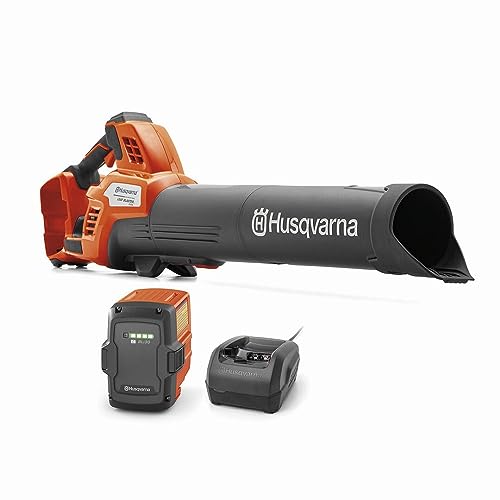
- Produces up to a rated 765 CFM of blowing power
- Variable-speed trigger offers customizable air delivery
- Includes a 56V 5.0Ah battery and matching charger
Cons
- High-output operation can significantly reduce runtime per charge
- 5.0Ah battery adds noticeable weight for single-handed work
Pros
- M18 FUEL system utilizes dual battery power for high output
- Cordless design offers unrestricted portability across large areas
- Integrates with the Milwaukee M18 tool ecosystem
Cons
- Tool only; requires two M18 batteries and a charger sold separately
- Dual batteries increase overall handheld carrying weight
Pros
- Offers up to a manufacturer-rated 700 CFM air volume
- Brushless motor ensures efficient power delivery
- Includes a 4.0Ah battery and rapid charger
Cons
- The 60V battery pack adds weight during extended handheld use
Understanding Blower CFM: The Physics of Air Volume
When evaluating outdoor power equipment, CFM (Cubic Feet per Minute) is the definitive metric for air volume capacity. While many users focus on air speed, CFM dictates the actual mass of air being displaced, which is the primary factor in moving heavy debris like wet leaves, acorns, or small stones.
The Physics of Air Displacement
CFM measures the volume of air passing through the blower nozzle in one minute. Mathematically, it is calculated by multiplying the cross-sectional area of the nozzle (in square feet) by the air velocity (in feet per minute). A high CFM rating ensures that the blower can sustain a “wall of air” rather than a narrow, high-velocity stream. This volume is critical for overcoming the static friction of debris on turf. For broader ecosystem context, read through our operational guide on how to choose leaf blower.
CFM vs. MPH: The Critical Distinction
A common misconception is that MPH (Miles Per Hour) is the superior metric. In reality, MPH measures the velocity of the air, while CFM measures the volume. Think of it this way: MPH is how hard you hit the leaves, but CFM is how many “punches” you throw at once. A blower with high MPH but low CFM might scatter a few leaves but will struggle to move a dense pile. Conversely, high CFM moves the entire pile efficiently.
For a deeper dive into how these metrics compare across different power sources, see our gas or electric leaf blower comparison.
CFM Sizing Guide: Matching Power to Your Yard
Selecting the correct CFM depends on your specific environment. Using a blower with insufficient CFM results in wasted time, while excessive CFM can be difficult to control and may damage delicate landscaping.
Residential vs. Commercial Requirements
For standard residential maintenance, such as clearing dry grass clippings or light leaf scatter, a blower in the 300 to 450 CFM range is ideal. For larger properties with mature trees or wet autumn conditions, you should look for units rated between 500 to 700 CFM. Commercial operators clearing sidewalks or parking lots typically require backpack units exceeding 750 to 1000+ CFM.
CFM Sizing Table
| Yard Size / Task | Recommended CFM | Typical Application |
|---|---|---|
| Small / Light Duty | 200 to 400 CFM | Driveways, flower beds, garage floors |
| Medium / Standard | 400 to 600 CFM | Suburban lawns, dry leaves, grass clippings |
| Large / Heavy Duty | 600 to 800+ CFM | Wet leaves, acorns, small stones, large properties |
| Commercial / Pro | 800 to 1100+ CFM | Parking lots, parks, heavy debris removal |
Diagnostic Matrix: Troubleshooting Low Blower Performance
If your blower is rated for a specific CFM but fails to move debris effectively, the issue is likely mechanical or environmental. Use this diagnostic matrix to identify the root cause.
Step-by-Step Diagnostic
- Check Intake Vents: A clogged intake screen is the most common cause of reduced air volume. Debris restricts the fan’s ability to draw in air, drastically lowering CFM output.
- Inspect the Impeller: Cracked or missing impeller fins reduce the fan’s efficiency. This often happens after vacuuming rocks or hard debris.
- Verify Battery/Engine Health: For cordless units, a degraded battery cannot sustain the voltage required for maximum RPM. For gas units, a dirty carburetor or old spark plug limits engine power.
- Nozzle Attachment: Ensure the concentrator nozzle is seated correctly. A loose fit causes air leaks, reducing the effective pressure and volume at the tip.
For comprehensive maintenance tips on keeping your outdoor power tools in peak condition, visit our guide on chainsaw and outdoor tool maintenance.
Advanced Metrics: Newton Force and Real-World Efficiency While CFM and MPH are the standard consumer metrics, professional evaluations often look at Newton Force. This metric combines air volume and velocity to measure the actual thrust produced by the blower. It is the most accurate representation of “blowing power” because it accounts for the total work performed on the debris. When comparing units, look for the Newton (N) rating if available. A higher Newton rating indicates a more capable machine, regardless of the specific CFM/MPH balance. For example, a backpack blower might have a lower MPH than a handheld unit but a significantly higher Newton rating due to its massive air volume. Handheld vs. Backpack: CFM Considerations
The form factor of the blower significantly impacts its CFM potential and ergonomic application. Handheld units are limited by the weight the user can support, typically capping out around 600 to 800 CFM for high-end models. Backpack units shift the weight to the user’s shoulders, allowing for larger motors and fans that can generate 800 to 1100+ CFM.
To determine which form factor suits your physical requirements and yard size, consult our backpack vs handheld blowers comparison.
Safety and Operational Best Practices
High-CFM blowers generate significant force and noise. Always adhere to safety protocols to prevent injury or property damage.
- Hearing Protection: Blowers exceeding 85 decibels require earplugs or muffs.
- Debris Trajectory: Be aware of what lies in the path of the air stream. High CFM can turn small stones into dangerous projectiles.
- Operational Hours: Respect local noise ordinances and OSHA equipment safety regulations if operating commercially.
Buyer FAQs: Blower Cfm Solved
Is higher CFM always better?
Not necessarily. For small, enclosed areas like a garage or a patio with flower beds, high CFM can be overkill and difficult to control. It may blow mulch out of beds or scatter debris into unwanted areas. Match the CFM to the scale of the task.
Can I convert CFM to MPH?
No, you cannot directly convert CFM to MPH because they measure different physical properties (volume vs. velocity). However, you can calculate the air velocity if you know the CFM and the diameter of the nozzle. A smaller nozzle increases MPH but does not change the CFM.
How does nozzle size affect CFM?
The nozzle size does not change the total CFM produced by the blower’s motor; however, it changes the velocity. A narrower nozzle constricts the air, increasing MPH but reducing the area of effect. A wider nozzle distributes the CFM over a larger area, which is better for moving piles of leaves.
What is the best CFM for wet leaves?
Wet leaves are significantly heavier and stickier than dry leaves. To move them effectively, you need both high CFM (to move the mass) and high MPH (to break the surface tension/adhesion). Look for a blower with at least 500+ CFM and 150+ MPH for wet conditions.
For the latest high-performance models that meet these specifications, check our updated list of the best cordless leaf blowers.
CFM Ratings Across Blower Types
Electric and gas blowers can post similar CFM figures yet feel quite different in use, since engine output, weight and nozzle shape all vary. Compare models in person when you can. For general safety information about outdoor power tools, see American National Standards Institute (ANSI).