Quick Answer: CFM In Leaf Blowers
CFM (Cubic Feet per Minute) measures the volume of air a leaf blower moves per minute. Residential models range 150 to 400 CFM; commercial units reach 600+ CFM. Higher CFM clears large debris piles faster. CFM determines clearing capacity; MPH determines force. Most yards require 200 to 300 CFM for efficient leaf removal.
Pros
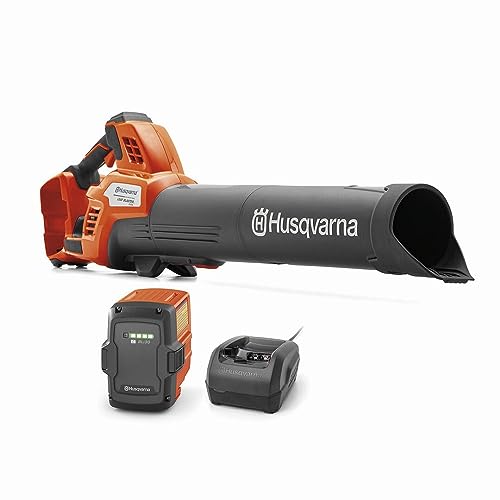
- Produces up to a rated 765 CFM of blowing power
- Variable-speed trigger offers customizable air delivery
- Includes a 56V 5.0Ah battery and matching charger
Cons
- High-output operation can significantly reduce runtime per charge
- 5.0Ah battery adds noticeable weight for single-handed work
Pros
- M18 FUEL system utilizes dual battery power for high output
- Cordless design offers unrestricted portability across large areas
- Integrates with the Milwaukee M18 tool ecosystem
Cons
- Tool only; requires two M18 batteries and a charger sold separately
- Dual batteries increase overall handheld carrying weight
Pros
- Offers up to a manufacturer-rated 700 CFM air volume
- Brushless motor ensures efficient power delivery
- Includes a 4.0Ah battery and rapid charger
Cons
- The 60V battery pack adds weight during extended handheld use
What Does CFM Mean on a Leaf Blower?
CFM stands for Cubic Feet per Minute, a volumetric measurement that quantifies the total amount of air a leaf blower can displace in sixty seconds. Think of it as the blower’s total throughput capacity. A blower rated at 250 CFM pushes 250 cubic feet of air through its discharge nozzle every minute, regardless of the speed or force behind that air stream.
CFM directly correlates to clearing efficiency. Higher CFM ratings enable operators to move larger volumes of leaves, grass clippings, and light debris simultaneously. This metric is independent of air velocity (MPH). A blower can have modest CFM with high MPH, or high CFM with lower MPH, they measure entirely different performance characteristics. To evaluate matched hardware tolerances, consult our detailed overview of how to choose leaf blower.
CFM vs. MPH: The Critical Distinction
CFM and MPH serve complementary but distinct functions in leaf blower performance. Understanding both is essential for selecting the right tool.
CFM: Volume of Air Movement
CFM measures how much air the blower moves, the total quantity. This determines how many leaves you can move at once and how effectively you clear large debris piles. A high-CFM blower can tackle accumulated leaves across wide yards efficiently.
MPH: Velocity of Air Stream
MPH (Miles Per Hour) indicates the speed at which air exits the nozzle. This determines the force applied to individual debris pieces. High MPH excels at dislodging wet, compacted, or heavy debris stuck to surfaces. MPH ranges typically from 90 to 200+ on consumer models.
Practical Example: The Boxing Analogy
CFM is the number of punches you throw; MPH is how hard each punch hits. A boxer throwing many moderate-force punches (high CFM, moderate MPH) outperforms one throwing fewer but harder strikes (low CFM, high MPH) when clearing widespread leaf coverage. Conversely, for stubborn, wet debris, you need harder strikes (higher MPH).
CFM Rating Guide by Blower Type
Different blower categories serve different yard sizes and debris types. CFM requirements vary significantly based on intended application.
| Blower Type | Typical CFM Range | Best For | Yard Size |
|---|---|---|---|
| Handheld Electric (Corded) | 90 to 180 CFM | Light cleanup, gutters, small patios | Under 0.25 acres |
| Handheld Cordless | 150 to 350 CFM | Residential light to moderate leaf work | 0.25 to 0.75 acres |
| Handheld Gas | 200 to 400 CFM | Mixed debris, moderate-to-large yards | 0.5 to 1.5 acres |
| Backpack Cordless | 300 to 450 CFM | Extended runtime, moderate-to-large properties | 0.75 to 2 acres |
| Backpack Gas | 350 to 600 CFM | Heavy debris, commercial properties, large yards | 1.5 to 4 acres |
| Wheeled Blower | 500 to 800+ CFM | Heavy commercial use, driveway clearing | 2+ acres or commercial |
CFM Physics and Performance Impact
Air Velocity vs. Volumetric Flow Rate
CFM is a volumetric measure, not a velocity measure. A blower with a wide nozzle opening can achieve high CFM at lower velocities. A blower with a narrow nozzle concentrates the same or lower CFM into higher velocities (higher MPH). This is why CFM and MPH are independent metrics.
Energy Output and Engine Power
CFM output correlates directly to engine displacement (on gas models) and motor wattage (on electric models). A 25cc gas engine typically produces 350 to 450 CFM, while a 30cc engine delivers 450 to 600 CFM. Cordless blowers with higher-wattage motors (58V, 80V systems) generate proportionally higher CFM ratings.
Nozzle Design and CFM Delivery
Nozzle geometry affects how CFM translates to practical performance. A flat or wide discharge nozzle spreads CFM across a larger area, moving more total leaves but with less concentrated force. A narrow nozzle concentrates CFM into a tight stream, maximizing MPH for deep pile penetration or wet debris.
Selecting CFM for Your Yard: Decision Matrix
Small Residential Yards (Under 0.25 Acres)
Required CFM: 150 to 200 CFM. Light handheld cordless models suffice. Primary tasks include spot cleanup, patio clearing, and light leaf fall. A 180 CFM corded or entry-level cordless blower handles occasional debris efficiently without oversizing.
Moderate Residential Yards (0.25 to 1 Acre)
Required CFM: 200 to 350 CFM. Most homeowners land here. Handheld cordless (250 to 300 CFM) or entry-level gas models (280 to 350 CFM) provide ideal balance. Sufficient to clear distributed leaves, moderate pile consolidation, and light debris work without excessive runtime strain on battery systems.
Large Residential Yards (1 to 2 Acres)
Required CFM: 350 to 500 CFM. Backpack models (cordless or gas) become practical. High CFM enables sustained pile-clearing operations and efficient debris transport across longer distances. Gas backpack blowers (400 to 500 CFM) excel here; premium cordless backpacks (350 to 450 CFM) offer quieter, emission-free alternatives with adequate runtime.
Commercial or Heavy-Use Properties (2+ Acres)
Required CFM: 500+ CFM. Wheeled blowers (600 to 800 CFM) or professional-grade backpack units deliver sustained clearing capacity. Extended runtime, high CFM, and durability justify investment. Ability to consolidate debris across large areas and maintain operator efficiency over full workdays.
Common CFM Misconceptions
Myth: High CFM Always Means Better Performance
Oversizing CFM for your yard wastes money, adds weight, and reduces runtime (battery models). A 600 CFM professional blower is overkill and exhausting for a 0.5-acre suburban lot. Match CFM to your actual yard size and debris type, not just chase higher numbers.
Myth: CFM and MPH Are Interchangeable
They are not. A blower with 200 CFM at 150 MPH differs fundamentally from one with 200 CFM at 100 MPH. The first concentrates force; the second spreads it. You need both metrics to evaluate blower capability accurately.
Myth: You Can Convert CFM to MPH or Vice Versa
No mathematical conversion exists between CFM and MPH. They measure entirely different properties: volume versus velocity. Nozzle diameter, discharge design, and motor power all factor into the relationship between these metrics independently.
Myth: Higher CFM Means Longer Throwing Distance
Partly true, but CFM alone doesn’t determine distance. High MPH with moderate CFM throws leaves farther than high CFM with low MPH. Distance depends on the combination of air volume and velocity, plus debris weight and aerodynamic factors.
CFM Performance Diagnostics and Troubleshooting
Blower Feels Weak Despite High CFM Rating
Cause 1: Clogged Air Filter – A dirty intake filter restricts airflow, reducing effective CFM output by 20 to 40%. Check and clean or replace the air filter. Most cordless units require filter checks every 50 hours of operation; gas blowers every 10 to 25 hours depending on conditions.
Cause 2: Deteriorating Battery (Cordless Models) – Older or damaged lithium-ion batteries deliver reduced voltage, cutting motor power and CFM output. Test with a fresh, fully charged battery. If performance returns to normal, battery replacement is needed.
Cause 3: Fuel Quality or Carburetor Buildup (Gas Models) – Old fuel or carburetor deposits reduce engine efficiency and CFM delivery. Drain the tank, add fresh fuel with fuel stabilizer, and run the engine for 5 to 10 minutes at full throttle. If symptoms persist, carburetor cleaning is required.
Cause 4: Incorrect Nozzle Attachment – Using a narrow nozzle designed for high-velocity work reduces apparent CFM performance on volume tasks. Switch to a flat or wide nozzle for pile clearing, or use the turbo nozzle for dense debris.
CFM Output Drops Over Time
Gas Models: Check spark plug condition and air filter for carbon buildup. Replace spark plugs annually; clean or replace air filters every 25 to 50 operating hours. Inspect fuel lines for cracks or deterioration that reduce fuel flow and engine output.
Cordless Models: Battery performance degrades naturally after 300 to 500 charge cycles. Monitor runtime; if operational time falls below 50% of original capacity, battery replacement restores CFM performance.
Comparing Advertised vs. Actual CFM
Manufacturers measure CFM under controlled lab conditions: new equipment, clean filters, optimal throttle position, and often with a narrow nozzle attachment that concentrates output. Real-world CFM is typically 10 to 20% lower due to filter restrictions, nozzle selection, and equipment wear. Use advertised CFM as a relative comparison metric, not an absolute specification.
Maintenance Impact on CFM Retention
Air Filter Cleaning Schedule
Clean the intake air filter every 5 to 10 operating hours for moderate use, or every 10 to 25 hours for light use. A clogged filter reduces CFM output by 25 to 40% and forces the engine to work harder, reducing efficiency. For cordless blowers, check filters monthly during peak season.
Spark Plug Replacement (Gas Models)
Replace spark plugs annually or every 50 operating hours. A worn or fouled spark plug weakens combustion, reducing engine power and CFM output by 15 to 30%. New spark plugs restore full power delivery and fuel efficiency.
Fuel System Care (Gas Models)
Use fuel with ethanol stabilizer (10% ethanol maximum) or pure gasoline. Stale fuel (over 30 days) causes carburetor varnish buildup, restricting fuel flow and reducing CFM. At end of season, run the blower with fuel stabilizer added, then drain the tank completely to prevent off-season degradation.
Battery Management (Cordless Models)
Store batteries at 50% charge in cool, dry conditions (60 to 70°F). Deep discharge and overcharging accelerate battery degradation. After 300 cycles, expect 15 to 20% CFM performance loss. Replace batteries every 3 to 5 years depending on use intensity.
CFM for Specialized Debris Types
Dry Leaves
CFM Requirements: 150 to 250 CFM. Dry leaves are lightweight and require moderate air volume. A basic handheld or entry-level cordless blower suffices. Focus shifts toward nozzle design; a concentrating nozzle improves pile consolidation despite moderate CFM.
Wet or Compacted Leaves
CFM Requirements: 250 to 400 CFM + high MPH (140+ MPH). Wet leaves are heavier and stick together. Higher CFM combined with velocity is essential. Gas or high-power cordless backpack blowers (300+ CFM, 150+ MPH) provide necessary dislodging force. Narrow or turbo nozzles concentrate energy for pile penetration.
Grass Clippings and Fine Debris
CFM Requirements: 180 to 300 CFM. Light, dispersed debris needs adequate volume to move material without spreading it excessively. Mid-range CFM balances clearing speed with operator control. Wide nozzles prevent debris from scattering uncontrollably.
Heavy Pine Needles or Twigs
CFM Requirements: 300 to 500 CFM. Dense, consolidated debris requires high volume. Heavier material demands greater CFM to move efficiently. Backpack blowers (gas or cordless) with 350+ CFM recommended. Lower MPH acceptable if CFM is sufficient.
CFM and Yard Size Correlation Table
| Yard Size | Debris Load | Recommended CFM | Blower Type | Estimated Clearing Time |
|---|---|---|---|---|
| Under 0.1 acres | Light (scattered) | 100 to 150 CFM | Handheld electric (corded) | 15 to 20 minutes |
| 0.1 to 0.25 acres | Moderate | 150 to 200 CFM | Handheld cordless | 20 to 35 minutes |
| 0.25 to 0.5 acres | Moderate-to-heavy | 200 to 300 CFM | Handheld gas or cordless | 35 to 50 minutes |
| 0.5 to 1 acre | Heavy | 300 to 400 CFM | Backpack cordless or gas | 50 to 75 minutes |
| 1 to 2 acres | Very heavy | 400 to 500 CFM | Backpack gas (30cc+) | 75 to 120 minutes |
| 2+ acres | Extreme | 500+ CFM | Wheeled or professional backpack | 120+ minutes (multiple passes) |
CFM Ratings by Brand and Model Class (2026)
Budget Cordless Entry-Level
Typical Range: 150 to 220 CFM. Models in the $150 to 300 range. Suitable for small yards and light cleanup. Battery runtime 20 to 40 minutes at full throttle. Adequate for homeowners who blow leaves 2 to 3 times per year.
Mid-Range Cordless
Typical Range: 250 to 350 CFM. Invest $300 to 600. Extended battery systems (40 to 60V) deliver higher CFM. Runtime 30 to 60 minutes per charge. Ideal for moderate yards and regular seasonal use. Most popular segment for residential homeowners.
Premium Cordless Backpack
Typical Range: 350 to 450 CFM. Premium systems ($600 to 1000+) with 80V batteries. Extended runtimes 45 to 90 minutes. Rivals lower-end gas blowers in CFM with zero emissions and minimal noise. Professional-grade build quality.
Entry-Level Gas Handheld
Typical Range: 200 to 300 CFM (18 to 25cc engines). Cost $200 to 400. Unlimited runtime (refuel as needed). More power than equivalent cordless models. Vibration and maintenance trade-offs common at this level.
Mid-Range Gas Backpack
Typical Range: 350 to 500 CFM (25 to 30cc engines). Invest $400 to 700. Professional durability, robust power delivery. Industry standard for landscaping contractors. Excellent for large residential properties and commercial use.
Professional Gas Backpack
Typical Range: 500 to 700 CFM (30 to 45cc engines). Premium equipment $700 to 1500+. Commercial-grade reliability, extended service life. Designed for 40+ hour/week professional use. Maximum CFM and sustained power output.
CFM Testing and Real-World Measurement
Laboratory CFM Measurement Standards
Industry standard testing (ANSI B58.1) measures CFM in a controlled environment: brand-new equipment, clean filters, specific nozzle configuration, and maximum throttle position. Results represent optimal performance, not typical operating conditions. Most manufacturers conduct independent lab testing; results are audited for accuracy.
Field Performance vs. Lab Ratings
Real-world CFM output typically runs 10 to 25% below lab ratings due to: partially clogged filters (10 to 15% loss), non-optimal nozzle selection (5 to 10% loss), equipment wear (5 to 15% loss over time), and operator throttle technique (0 to 10% loss). Budget 15 to 20% performance variance when comparing blower specifications to actual field work.
DIY CFM Verification Methods
Precise CFM measurement requires specialized equipment (airflow meters, ductwork setups). For practical field comparison: test blowers on identical debris piles under similar conditions and measure clearing time. The blower that consolidates and moves leaves fastest relative to runtime provides best CFM-to-weight efficiency.
CFM and Noise Correlation
Higher CFM generally correlates to higher noise output. A 150 CFM handheld runs 75 to 80 dB; a 400 CFM backpack reaches 85 to 90 dB. Difference of 15 CFM ≈ 1 to 2 dB increase. Quieter operation matters in noise-restricted areas. Cordless models are 3 to 5 dB quieter than gas equivalents due to electric motor characteristics, despite matching CFM output. Important consideration for early-morning or evening yard work and residential community guidelines.
Seasonal CFM Requirements
Spring: Light cleanup, pollen, and dispersed debris. 150 to 250 CFM adequate. Frequency: 1 to 2 blowings per month.
Summer: Grass clippings, light pruning debris. 180 to 280 CFM. Frequency: 1 to 2 per month, lower priority.
Fall: Peak demand. Heavy leaf accumulation, compacted piles. 250 to 400 CFM necessary. Frequency: 2 to 4 per month. Plan for extended runtimes and consider second battery (cordless) or professional service if yard exceeds 1 acre.
Winter: Light cleanup, occasional snow clearing (where applicable). 150 to 200 CFM. Frequency: 1 to 2 times per month, minimal demand.
Related Resources and Further Reading
For comprehensive comparisons of blower types and applications, explore our guides on cordless leaf blowers, gas or electric leaf blower comparison, and backpack vs handheld blowers. For equipment maintenance beyond leaf blowers, see our article on chainsaw and outdoor tool maintenance.
Safety considerations for outdoor power equipment are outlined in OSHA equipment safety regulations. Always follow manufacturer guidelines for proper operation, protective equipment (hearing protection, eye wear), and fuel handling on gas models.
Summary: Making Your CFM Decision
CFM directly determines a leaf blower’s ability to move volume. Match CFM to your yard size: 150 to 200 CFM for small properties under 0.25 acres; 250 to 350 CFM for moderate yards 0.25 to 1 acre; 350 to 500 CFM for large residential 1 to 2 acres; 500+ CFM for commercial or 2+ acre properties. Remember that CFM and MPH are independent metrics, both matter, but for different debris challenges. Higher CFM alone doesn’t guarantee better performance if MPH is inadequate for your debris type. Maintain equipment regularly (clean filters, fresh fuel, battery care) to retain advertised CFM performance over time. When comparing models, account for 15 to 20% real-world variance below lab ratings due to field conditions and equipment wear.
Where CFM Fits in Specs
CFM appears on most blower spec sheets, yet it is only one part of performance. Look also at air speed, weight and runtime to see the full picture. A broader reference on outdoor power equipment safety is available from American National Standards Institute (ANSI).