Quick Answer
Gas-powered leaf blowers are not banned under federal law, but many cities and some states limit their use or sales. Rules differ by location, so check local ordinances before you buy or run one. Where gas use is restricted, electric or battery models are a common alternative.
Pros
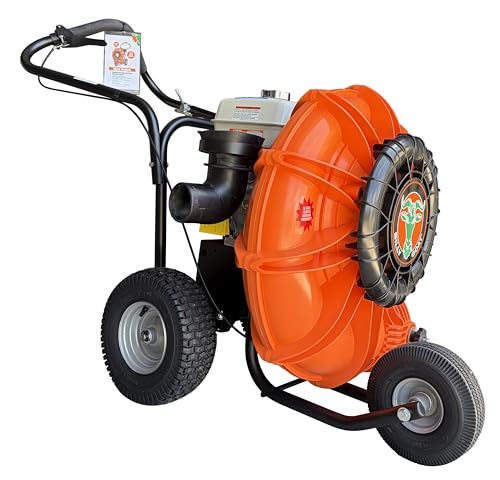
- Powered by a commercial-grade Honda GX270 engine
- Delivers a high rated airflow of 1,700 CFM and 200 mph velocity
- 17-inch 16-blade composite fan designed for efficient output
- Fingertip directional lever controls airflow up and down
- Pneumatic rear wheels ease maneuvering over uneven terrain
Cons
- Large 58 x 29 x 45 inch frame demands ample storage room
- Heavier commercial walk-behind build lacks handheld agility

Pros
- High-volume clearing with a rated 3000 CFM and 207 MPH
- Electric start eliminates manual pulling effort
- Standard clevis pin hitch connects easily to ATVs and tractors
- Adjustable vertical airflow discharge for directed blowing
- Durable steel frame construction with large wheels
Cons
- Requires a towing vehicle like an ATV or lawn tractor
- Weighs 291 pounds and demands significant storage space
Pros
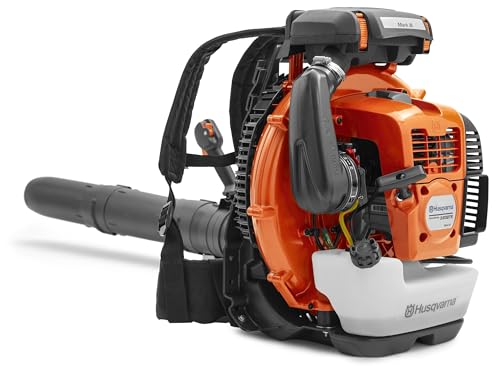
- Strong rated output of 1000 CFM, 220 MPH, and 47 N blow force
- Ventilated ergonomic harness with load-distributing hip belt
- Two-stage intake air filtration protects engine in dusty jobs
- Intuitive tube-mounted throttle control
Cons
- Substantial 34-pound weight can lead to operator fatigue
- Requires ongoing 2-cycle fuel mixing and maintenance
The Legal Landscape: Federal vs. State vs. Municipal Authority
The question “are gas powered leaf blowers illegal” does not have a single binary answer because regulatory authority is layered across three distinct jurisdictions. Understanding this hierarchy is critical for homeowners, landscaping professionals, and property managers who need to determine their specific compliance obligations.
Federal Regulatory Framework
There is no federal ban on the manufacture, sale, or use of gas-powered leaf blowers. The U.S. Environmental Protection Agency (EPA) regulates small off-road engines (SOREs) under the Clean Air Act, but these regulations target emissions standards, not outright prohibition. The EPA’s Phase 3 emissions standards, which took effect for certain equipment categories in 2024, require manufacturers to meet stricter hydrocarbon and particulate emission thresholds. However, these standards regulate what can be sold, not what can be used. A gas-powered leaf blower manufactured before the compliance date remains legal to operate under federal law. Users looking for related component recommendations can explore our how to choose leaf blower breakdown.
The Consumer Product Safety Commission (CPSC) has not issued any recalls or safety advisories specific to gas-powered leaf blowers that would constitute a de facto ban. Occupational safety considerations fall under OSHA equipment safety regulations, which address workplace exposure limits for noise and particulate matter but do not prohibit the equipment itself.
State-Level Bans and Restrictions
State-level action has accelerated significantly since 2021. The regulatory approaches fall into three categories:
Category 1: Sales Bans (California Model), California’s AB 1346, which took effect January 1, 2024, prohibits the sale of new gas-powered small off-road engines, including handheld and backpack leaf blowers. This does not make it illegal to use an existing gas blower, but it eliminates the supply pipeline for new purchases. Vermont and Washington have enacted similar sales restrictions with phase-in timelines extending through 2026-2027.
Category 2: Use Restrictions (District of Columbia Model), Washington D.C. enacted a complete ban on the use of gas-powered leaf blowers, with fines of up to $500 per offense. Unlike sales bans, this makes it illegal to operate the equipment regardless of when it was purchased. Enforcement relies on citizen complaints submitted through the Consumer Complaint Form, with violations requiring photographic or video evidence.
Category 3: Counter-Legislation (Texas/Florida Model), Several states, including Texas and Florida, have passed laws that explicitly prohibit municipalities from banning gas-powered lawn equipment. These laws protect the oil and gas industry and preempt local regulatory authority, creating a patchwork where adjacent jurisdictions may have diametrically opposed rules.
Complete State-by-State Regulatory Matrix
Based on data from PIRG’s interactive policy map and legislative tracking through early 2026, here is the current regulatory status organized by enforcement mechanism:
States with Statewide Sales Bans or Restrictions
| State | Law/Code | Effective Date | Scope |
|---|---|---|---|
| California | AB 1346 / CARB regulations | January 1, 2024 | Sale of new gas SOREs prohibited; use of existing equipment permitted |
| Vermont | Act 152 (2022) | Phased 2024-2026 | Sale restrictions on new gas-powered lawn equipment |
| Washington | HB 1799 | January 1, 2026 | Sale ban on new gas-powered small engines |
| New York | Senate bill pending (2025 session) | TBD | Rebate program passed Senate; Assembly action stalled |
States with Significant Municipal-Level Activity
The following states have no statewide ban but contain multiple municipalities with active restrictions. The regulatory density varies significantly:
High-Activity States (10+ regulated municipalities): California (pre-statewide ban legacy ordinances in Palo Alto, Burlingame, Los Angeles, Marin County, and dozens more), Massachusetts, Connecticut, Maryland, Virginia, Illinois, and Oregon.
Moderate-Activity States (3-9 regulated municipalities): New Jersey, Pennsylvania, Colorado, Minnesota, Michigan, and Maine.
Preemption States (local bans prohibited): Texas, Florida, Tennessee, Iowa, and several others have enacted laws preventing municipalities from enacting their own restrictions.
How Gas-Powered Leaf Blower Bans Are Enforced
Enforcement mechanisms vary by jurisdiction and directly affect the practical risk of non-compliance. Understanding these mechanisms is essential for landscaping businesses operating across municipal boundaries.
Complaint-Based Enforcement (Most Common)
The majority of municipal bans, including Washington D.C., Los Angeles, and most California cities, rely on citizen complaints rather than proactive inspection. Under this model:
- A resident observes gas-powered leaf blower use in a restricted area
- The resident submits a complaint with supporting evidence (photograph, video, or detailed written account)
- The code enforcement agency investigates and issues a warning or citation
- Repeat offenders face escalating fines ($100-$500 per offense depending on jurisdiction)
In Washington D.C., the Department of Licensing and Consumer Protection (DLCP) specifically notes that “potential violations may be reported by any person who observes a gas-powered leaf blower in use in the District with appropriate evidence being provided to support the claim.” This is a significant departure from the prior law, which required noise-level readings at the point of violation.
Proactive Enforcement (Rare)
Only a handful of jurisdictions employ proactive enforcement, typically through code enforcement officers who patrol during peak landscaping hours. Palo Alto, California, is notable for its active enforcement program, where city staff conduct regular inspections in residential neighborhoods during permitted landscaping hours.
Penalty Structures by Jurisdiction
| Jurisdiction | First Offense | Repeat Offense | Who Is Liable |
|---|---|---|---|
| Washington D.C. | Warning or $250 fine | Up to $500 | Operator and/or property owner |
| Los Angeles, CA | $250 fine | Up to $1,000 | Property owner |
| Palo Alto, CA | $100-$250 | Escalating to $500 | Property owner |
| Burlingame, CA | $100-$500 | Up to $1,000 | Operator |
| Connecticut (proposed SB 319) | N/A – ban removed from bill | N/A | Would have targeted property owners |
The Physics and Engineering Behind the Bans
Understanding why gas-powered leaf blowers are being targeted requires examining the specific engineering characteristics that distinguish them from electric alternatives. These are not arbitrary regulatory preferences, they are rooted in measurable physical properties.
Noise Generation: Decibel Levels and Frequency Profiles
Gas-powered leaf blowers typically produce 65-75 decibels (dB) at 50 feet, with some models exceeding 80 dB at the operator’s ear. The critical factor is not just the amplitude but the frequency profile. Gas engines produce significant energy in the 1-4 kHz range, which is the frequency band where human hearing is most sensitive and where noise-induced hearing damage occurs most readily.
The physics of noise generation in gas blowers involves three primary mechanisms:
- Combustion noise: Each firing cycle in the two-stroke or four-stroke engine produces a pressure pulse that radiates as sound. A two-stroke engine firing at 7,000 RPM produces approximately 117 combustion events per second.
- Exhaust noise: The expansion of combustion gases through the exhaust port creates broadband noise. Gas blowers typically lack the sophisticated muffling systems found on larger engines.
- Aerodynamic noise: The impeller moving air at velocities of 150-200+ mph generates turbulence noise at the blower tube outlet and where the air stream interacts with surfaces.
Electric blowers produce 55-65 dB at the same distance, with a fundamentally different frequency profile dominated by motor whine and aerodynamic noise rather than combustion pulses. The practical difference: a gas blower at 75 dB is perceived as approximately four times louder than an electric blower at 65 dB due to the logarithmic nature of the decibel scale.
Emissions: The 1,100-Mile Comparison
The frequently cited statistic that one hour of gas leaf blower operation produces as much pollution as driving a car 1,100 miles is derived from EPA testing of unregulated small engines. The physics behind this comparison involves several factors:
- No catalytic converter: Most gas leaf blowers lack the three-way catalytic converters mandatory on automobiles since 1975. This means hydrocarbons (HC), carbon monoxide (CO), and nitrogen oxides (NOx) exit the exhaust untreated.
- Two-stroke oil combustion: Many gas blowers use two-stroke engines where oil is mixed with fuel. The combustion of this oil-air mixture produces fine particulate matter (PM2.5) that is directly linked to respiratory and cardiovascular disease.
- Evaporative emissions: Fuel storage, refueling, and crankcase ventilation release volatile organic compounds (VOCs) that contribute to ground-level ozone formation.
According to 2020 EPA data, fossil fuel-powered lawn equipment collectively emitted nearly 22,000 tons of fine particulates annually. While leaf blowers represent a subset of this category, their high usage frequency in residential areas concentrates exposure in densely populated zones.
Air Velocity and Particulate Resuspension
A secondary but significant concern involves the physics of how gas blowers move debris. Gas-powered models typically produce air velocities of 150-250 mph at the nozzle, compared to 100-180 mph for most electric models. While higher velocity improves debris movement efficiency, it also:
- Resuspends settled particulate matter (dust, pollen, mold spores, animal waste particles) from surfaces
- Disperses these particles into the breathing zone of the operator and nearby residents
- Carries lighter particles over greater distances, expanding the affected area beyond the immediate work zone
This is particularly relevant for backpack vs handheld blowers, as backpack models typically produce higher CFM (cubic feet per minute) ratings and are more likely to generate significant particulate resuspension.
Diagnostic Matrix: Is Your Gas Blower Affected by a Ban?
Use this step-by-step diagnostic process to determine your specific compliance obligations:
Step 1: Identify Your Jurisdiction
Determine the exact city, county, and state where you plan to operate the leaf blower. Regulatory authority is hyperlocal, a gas blower may be legal in one city and illegal in the adjacent municipality. Check your city or county government website for “leaf blower ordinance” or “small engine regulations.”
Step 2: Check for State Preemption
If your state has preemption legislation (Texas, Florida, Tennessee, Iowa, and others), local municipalities cannot enact their own bans. In these states, state law is the ceiling, local governments can be less restrictive than the state but cannot be more restrictive.
Step 3: Determine the Type of Restriction
Identify whether your jurisdiction has enacted a:
- Sales ban: You cannot purchase new gas blowers, but existing ones may be legal to use
- Use ban: You cannot operate gas blowers regardless of purchase date
- Time-of-day restriction: Gas blowers may only be used during specific hours (typically 8 AM – 6 PM on weekdays)
- Seasonal restriction: Gas blowers may only be used during certain months (common in resort communities)
- Decibel limit: Gas blowers below a certain dB rating at a specified distance may be permitted
Step 4: Assess Enforcement Risk
Even in jurisdictions with active bans, enforcement varies dramatically. Consider:
- Does the jurisdiction have dedicated code enforcement staff?
- Is enforcement complaint-driven or proactive?
- What is the fine structure for first vs. repeat offenses?
- Are there exemptions for commercial landscapers vs. homeowners?
Practical Yard Applications: Compliance Without Compromise
For homeowners and landscaping professionals facing gas blower restrictions, the transition to compliant alternatives requires understanding the performance characteristics of available equipment. The goal is not merely legal compliance but maintaining operational effectiveness.
Performance Equivalency: Gas vs. Electric
Modern battery-powered blowers have closed the performance gap significantly. Here is what to look for when selecting a replacement:
| Specification | Typical Gas Blower | Equivalent Electric (Cordless) | Notes |
|---|---|---|---|
| Air Volume (CFM) | 450-750 CFM | 400-650 CFM | Top-tier electric models now match mid-range gas |
| Air Speed (MPH) | 150-250 mph | 120-200 mph | Gas still leads in raw velocity |
| Runtime | 30-60 min (fuel tank) | 20-60 min (battery) | Runtime depends on battery Ah rating and speed setting |
| Weight | 8-15 lbs | 5-12 lbs | Electric models are generally lighter |
| Noise Level | 65-75 dB | 55-65 dB | Electric is 4-10x quieter in perceived loudness |
| Maintenance | Spark plugs, filters, fuel stabilizer, oil mix | None (battery charging only) | Significant long-term cost savings with electric |
For a comprehensive evaluation of available models, see our guide to the best cordless leaf blowers tested across multiple yard conditions.
Yard Size Matching Guide
Select the right electric blower based on your specific yard characteristics:
- Small yard (under 5,000 sq ft): A 20V or 40V handheld blower with 300-400 CFM is sufficient. Single battery charge covers the entire job. Look for models under 7 lbs for comfortable one-handed operation.
- Medium yard (5,000-15,000 sq ft): A 40V or 56V handheld or compact backpack blower with 450-550 CFM. Carry a second battery for uninterrupted operation. Consider models with variable speed triggers for precision work near flower beds.
- Large yard (15,000+ sq ft): A 56V or 80V backpack blower with 550-650+ CFM. Multiple batteries required. Backpack distribution is essential for operator comfort during extended use. This is where the gas or electric leaf blower comparison becomes most critical, high-voltage electric backpacks are the only viable compliance option for large properties.
Seasonal Maintenance for Electric Blowers
While electric blowers eliminate most maintenance associated with gas engines, proper care extends equipment life and maintains performance. For comprehensive outdoor equipment maintenance protocols, reference our chainsaw and outdoor tool maintenance guide, which covers battery care and motor maintenance applicable to all electric outdoor power equipment.
The Political and Economic Forces Shaping Future Bans
The regulatory trajectory is clearly moving toward broader restrictions, but the pace and scope vary dramatically based on regional political dynamics and economic interests.
Momentum Toward Restriction
Several factors are accelerating the ban movement:
- Health research: Studies linking landscaper exposure to gas blower emissions with respiratory disease, hearing loss, and cardiovascular effects provide scientific justification for regulatory action
- Political viability: The bipartisan support for New York’s Senate rebate bill (11 Democrats, 22 Republicans voted yes) demonstrates that equipment transition policies can transcend partisan divides when framed as economic incentives rather than mandates
- Technology maturation: As battery technology improves and prices decrease, the performance argument for gas equipment weakens, removing a key objection from opponents
- Municipal precedent: The growing number of successful local bans creates a template that other jurisdictions can replicate, reducing the political risk for early adopters
Forces Resisting Restriction
Opposition remains significant and well-organized:
- Industry lobbying: The Outdoor Power Equipment Institute (OPEI) and related trade groups actively oppose bans, arguing that electric alternatives are insufficient for professional use
- State preemption: Industry-backed preemption laws in Texas, Florida, and other states prevent local action even where community support exists
- Professional landscaper concerns: Small landscaping businesses face significant capital costs in transitioning entire fleets to electric, and some operators report that current electric models cannot match gas performance for large commercial jobs
- Connecticut’s legislative retreat: The March 2026 removal of the gas blower ban from Connecticut’s Senate Bill 319, despite advancing the bill 26-8, demonstrates that even in sympathetic legislatures, outright bans face practical objections. State Representative Patrick Callahan noted that “electric leaf blowers simply aren’t as good as gas-powered ones” based on public testimony.
Common Questions on Are Gas Powered Leaf Blowers Illegal Answered
Can I still use my existing gas leaf blower if my state banned the sale of new ones?
In most cases, yes. Sales bans (like California’s AB 1346) prohibit the sale of new gas-powered equipment but do not retroactively ban the use of existing equipment. However, some municipalities have layered use restrictions on top of state sales bans. Always check your local ordinance in addition to state law.
What happens if I’m caught using a gas leaf blower in a banned area?
Penalties range from warnings to fines of $100-$500 for first offenses, with repeat violations potentially reaching $1,000 in some jurisdictions. In Washington D.C., fines are up to $500 per offense. Most enforcement is complaint-driven, meaning you are unlikely to be cited unless a neighbor reports the violation with supporting evidence.
Are commercial landscapers exempt from gas blower bans?
Some jurisdictions provide extended compliance timelines for commercial operators, but outright exemptions are rare. Los Angeles, for example, has considered but not implemented exemptions for professional landscapers. The trend is toward universal compliance, with transition assistance programs (rebates, trade-in incentives) provided to help businesses convert their equipment fleets.
Do gas blower bans apply to other gas-powered lawn equipment?
It depends on the specific ordinance. Some bans are narrowly tailored to leaf blowers only, while others cover all handheld or backpack gas-powered equipment (including trimmers and edgers). California’s statewide ban covers all small off-road engines, including lawn mowers, chainsaws, and generators. Always read the specific language of your local regulation.
Will there be a federal ban on gas leaf blowers?
As of early 2026, no federal ban has been proposed. The regulatory approach at the federal level has been to tighten emissions standards through the EPA rather than prohibit equipment outright. A federal ban would face significant constitutional challenges related to interstate commerce and would require Congressional action that currently lacks sufficient political support. The regulatory trend will continue to be state and municipal for the foreseeable future.
Legal Status of Gas Blowers
Gas powered blowers are not illegal everywhere, but some local areas restrict their use or set limits on noise hours. Rules differ between cities, counties and states, so search for the current ordinance before buying. For broader background on outdoor equipment safety, check American National Standards Institute (ANSI).