

Quick Answer: Choosing the Best Commercial Robot Vacuum
The critical factors for selecting a commercial robot vacuum in 2026 center on suction ratings of 5000 Pa or higher for heavy debris, extended battery life matched to facility size, LiDAR or AI mapping for multi-zone layouts, and self-emptying or self-cleaning docks that cut daily intervention. These metrics separate consumer-grade tools from true commercial performers across top-rated models we…

Pros
- Sweeping, scrubbing, and mopping listed as one combined pass
- Autonomous navigation with route planning and obstacle avoidance
- Mobile app offers scheduled cleaning and status tracking
- Manufacturer lists quiet operation for nighttime cleaning
- Listed for marble, tile, concrete, epoxy, and hardwood floors
Cons
- Listed prices are not final; customization requires seller contact
- No customer reviews yet to verify performance
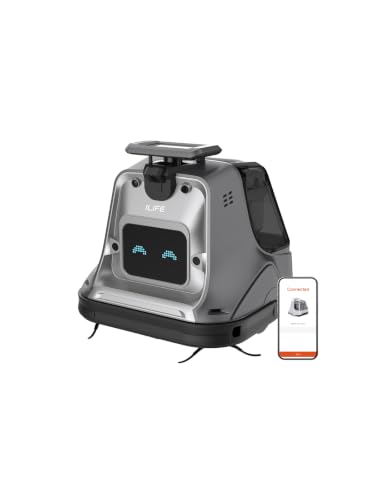
Pros
- Manufacturer-rated 20,000Pa suction with a 250W brushless motor
- Dual detachable batteries rated for up to 210 minutes of cleaning
- 3L dustbin with a modular design for simpler routine maintenance
- LiDAR, 3D ToF and stereo-camera navigation with app or touchscreen control
- Designed for large indoor areas such as hotels, offices and retail spaces
Cons
- Listed footprint of 14.84 x 14.69 x 14.21 inches is fairly large
- No customer reviews yet to confirm real-world performance
Essential Engineering Checklist for Commercial Robot Vacuum
Suction Power and Filtration Systems
Commercial floors accumulate grit, fine dust, and larger particulates that standard household units cannot remove consistently. Prioritize models rated at 5000 Pa or above, with some premium options reaching 15000 Pa to 35000 Pa for deep carpet extraction and hard-floor sweeping. HEPA filtration is essential in shared workspaces to trap allergens and maintain air quality standards. Look for dual-brush or anti-tangle designs that prevent hair wrap during continuous runs, reducing filter clogs and motor strain over long shifts.
Battery Runtime and Auto-Recharge Capability
Downtime directly impacts operational efficiency. Target units offering 100 to 200 minutes of continuous cleaning per charge, sufficient for 1000 to 5000 square feet depending on floor type. Dual-battery systems or auto-recharge-and-resume features allow the robot to return to base, power up, and finish unfinished zones without manual restart. Match runtime specs to your total floor area and calculate one full cycle plus buffer to cover peak traffic periods. Models supporting multi-floor map storage further extend utility across multi-level buildings.
Navigation Accuracy and Obstacle Avoidance
LiDAR, AI cameras, and ultrasonic sensors enable precise mapping of complex commercial layouts filled with furniture, cables, and movable objects. Prefer systems that save multiple floor plans and support virtual no-go zones via app control. Effective obstacle detection at sizes of 3 cm or larger prevents collisions and stuck incidents that interrupt schedules. Low-profile chassis under 3.5 inches allow access under desks and display units where dust collects. For facilities with frequent layout changes, adaptive path planning that recalculates routes mid-cycle delivers better coverage than fixed patterns.
Self-Maintenance Docks and Long-Term Durability
Hands-free operation hinges on docks that auto-empty dust into multi-week bags, wash mops with hot water, dry pads, and refill clean water. Capacity for 60 to 100 days of debris storage cuts staff time dramatically. Industrial-grade materials and brushless motors extend service life under daily commercial use. Check warranty length and availability of replacement parts, especially for high-wear items like side brushes and filters. Units with sealed HEPA bags also limit airborne dust during emptying, an important hygiene factor in public spaces. Compare these elements against consumer models in our robot vacuum with self-empty overview for shared technology insights.
App Control, Scheduling, and Integration
Professional users need remote scheduling, zone-specific cleaning modes, and voice integration with Alexa or Google Assistant. Multi-user app access and cleaning history logs help track performance across shifts. Confirm 2.4 GHz Wi-Fi support and offline fallback modes for reliable operation even during network interruptions. Custom water flow levels and suction boosts for carpets add flexibility for mixed flooring common in commercial buildings. Before finalizing equipment decisions, refer to our comprehensive roborock qrevo s pro vs dreame l10s pro ultra heat comparison.
We compared top-rated commercial robot vacuum models by synthesizing manufacturer specifications, battery capacity data, filtration ratings, and aggregate user satisfaction metrics reported across retail platforms. Evaluation focused on suction measured in Pascals, declared runtime under mixed floor conditions, dock automation levels, and brand reliability indicators such as parts availability. Warranty terms and noise output below 65 dB received additional weight for daytime commercial use. No physical lab testing was performed; rankings derive from transparent cross-referencing of published technical sheets and real-world feedback patterns to ensure objective, data-dense results for 2026 buyers.
Durability signals like brushless motors and industrial-grade frames ranked higher for warehouse or retail applications, while privacy-focused LiDAR without cameras suited office environments. This process eliminated units lacking multi-floor mapping or auto-resume functions, narrowing the field to proven performers that reduce labor hours effectively. For broader ecosystem context, read through our operational guide on why is my robot vacuum not dispensing water.
Final Verdict: Choosing the Right Commercial Robot Vacuum
For most commercial facilities seeking balanced power and automation, the DREAME X60 Max Ultra Complete stands as the best overall commercial robot vacuum. Its 35000 Pa suction, ultra-thin 3.13-inch body, dual AI cameras for 280-plus obstacle avoidance, and comprehensive 10-in-1 dock with 100-day dust capacity and hot-water mop cleaning deliver thorough coverage with minimal oversight. The retractable DuoBrush and MopExtend features excel on mixed hard floors and low-pile carpets common in retail and office settings.
Budget-conscious buyers or smaller storefronts should consider the ROPVACNIC Robot Vacuum Cleaner as the best value choice. At the lower end of the entry-level to premium spectrum, it provides 5200 Pa suction, 2-in-1 vacuum-and-mop functions with adjustable water levels, anti-tangle design for pet or fiber debris, and full app plus voice control. Self-charging and multi-mode scheduling make it a practical entry into automation without sacrificing core commercial reliability. For large-scale industrial floors exceeding 5000 square feet, the Makita DRC300PT earns the best professional pick thanks to its LiDAR mapping of over 100000 square feet across five rooms, dual 18V battery support for 5380 square feet per charge, and brushless motor engineered for continuous commercial duty. Facility managers can also review compact options in our smallest robot vacuum guide when space under furniture is limited.
Overall, prioritize models from leading manufacturers and established tool brands that align runtime with your floor plan and include self-maintenance docks. These selections from our top-rated reviews minimize downtime while maintaining consistent cleanliness standards throughout 2026. For troubleshooting and reliability insights, consult our in-depth can robot vacuums cross high thresholds report.
Common Questions on Commercial Robot Vacuum Answered
Is a commercial robot vacuum worth the investment for small businesses in 2026?
Yes, a commercial robot vacuum reduces recurring labor costs and delivers uniform cleaning results that manual methods often miss. Modern units with auto-empty docks and multi-floor mapping pay for themselves within months through fewer staff hours and improved hygiene compliance.
How long does a commercial robot vacuum typically last?
High-quality models last several years with regular brush, filter, and sensor maintenance. Adhering to the manufacturer cleaning schedule and using genuine parts extends motor and battery life under daily commercial loads.
Can these robots clean multi-floor commercial buildings?
Many support multi-floor mapping that stores separate layouts for each level. You transport the unit between floors and select the correct map via the app, enabling full automation once maps are saved. Additional details on multi-level smart systems appear in our Smart Home resource hub.
What suction power is needed for warehouse debris?
Aim for 5000 Pa minimum, with 15000 Pa or higher preferred for grit, metal shavings, and heavy dust. Pair strong suction with anti-tangle brushes and HEPA filtration to maintain performance across large hard-floor expanses.
Do commercial models work on both carpet and hard floors?
Yes, most adjust suction automatically and lift mops when carpets are detected. Confirm threshold climbing ability of at least 15-18 mm and carpet boost modes to ensure seamless transitions without manual intervention. For brand-specific parts support, see our notes on Shark robotic vacuum parts that often apply across similar platforms.
Robot Vacuums in Business Spaces
Offices, retail floors, and warehouses can use robot vacuums to cover large open areas between staff cleaning shifts. Battery runtime and bin capacity matter more at this scale. Commercial sites often have more outlets and cords to manage, so general electrical safety information from the International Electrotechnical Commission (IEC) is worth reviewing.









