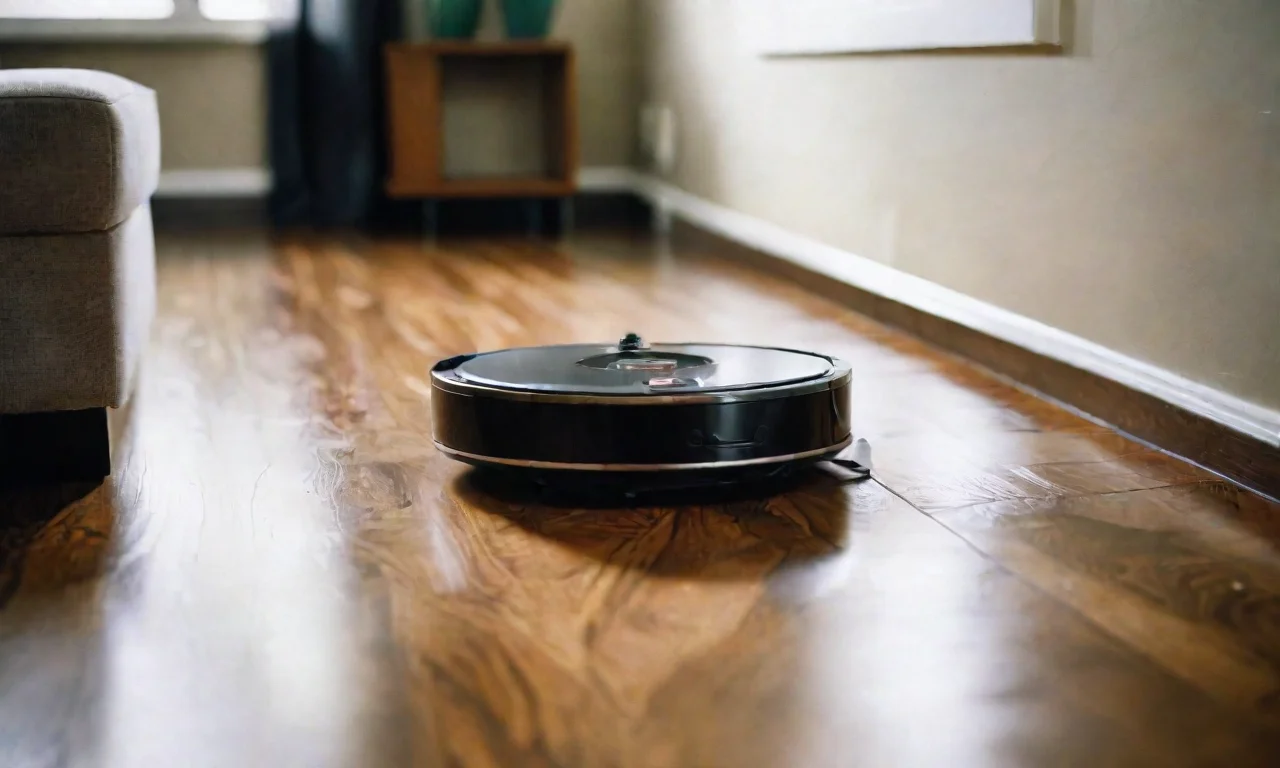
Quick Answer: Choosing the Best Irobot Roomba Vacuum Cleaning Robot
The most important factors when choosing a irobot roomba vacuum cleaning robot in 2026 are precise navigation technology such as LiDAR or AI-based mapping for efficient room coverage and obstacle avoidance, multi-stage suction systems that handle both pet hair and fine dust on varied floors, and convenience features including self-charging, auto-empty docks, and app-controlled customization. Models with dual vacuum-and-mop…

Pros
- Incredibly powerful suction that excels at deep carpet cleaning.
- Advanced AI obstacle avoidance prevents the robot from getting stuck on household clutter.
- Large capacity auto-empty base reduces manual maintenance to once every two months.
- Smart mapping is fast and highly customizable via the Roomba Home App.
Cons
- Does not include a mopping module for wet cleaning.
- The auto-empty process is briefly loud during the debris transfer cycle.
The iRobot Roomba Max 705 Robot Vacuum represents a significant leap forward in automated home maintenance, designed specifically for busy households and pet owners. This model combines extreme suction power with intelligent navigation to deliver a truly hands-free cleaning experience. If you are tired of daily vacuuming chores, this smart appliance offers a robust solution that takes care of itself for weeks at a time.
Exceptional Cleaning Performance and Smart Navigation
At the core of this vacuum is its outstanding 180x power-lifting suction, which works in tandem with dual anti-tangle rubber brushes. This combination ensures that pet hair, fine dust, and heavy debris are lifted from both hard floors and deep carpets without clogging the system. Navigation is handled by ClearView Pro LiDAR and PrecisionVision AI, allowing the robot to map your home in minutes and safely navigate around obstacles like shoes, cords, and pet waste, even in complete darkness.
Hands-Free Maintenance with the AutoEmpty Dock
One of the most convenient aspects of this system is the AutoEmpty Dock. Once the robot completes its cleaning run, it returns to the base, which automatically vacuums out the onboard dustbin into an enclosed bag. This bag traps allergens and fine dust down to 0.7 microns and holds up to 75 days of debris, meaning you only have to think about vacuuming once every couple of months.
Considerations and Verdict
While the performance is top-tier, users should note that the auto-empty process is loud, though it only lasts for a few seconds. Additionally, this is a dedicated vacuum and does not feature mopping functions. Overall, the Roomba Max 705 is a highly reliable, powerful, and genuinely smart vacuum that excels at keeping carpets and hard floors immaculate with minimal human intervention.
Technical Specifications
- Suction Power: 180x stronger than Roomba 600 series in Spot Clean mode
- Navigation: ClearView Pro LiDAR and PrecisionVision AI Technology
- Brush System: Dual Multi-Surface Rubber Brushes and Edge-Sweeping Brush
- Dock Capacity: Up to 75 days of dust and debris containment
- Smart Connectivity: Compatible with Alexa, Google Assistant, Siri, and Roomba Home App
- Floor Compatibility: Carpet, rugs, tile, hardwood, and laminate
Pros
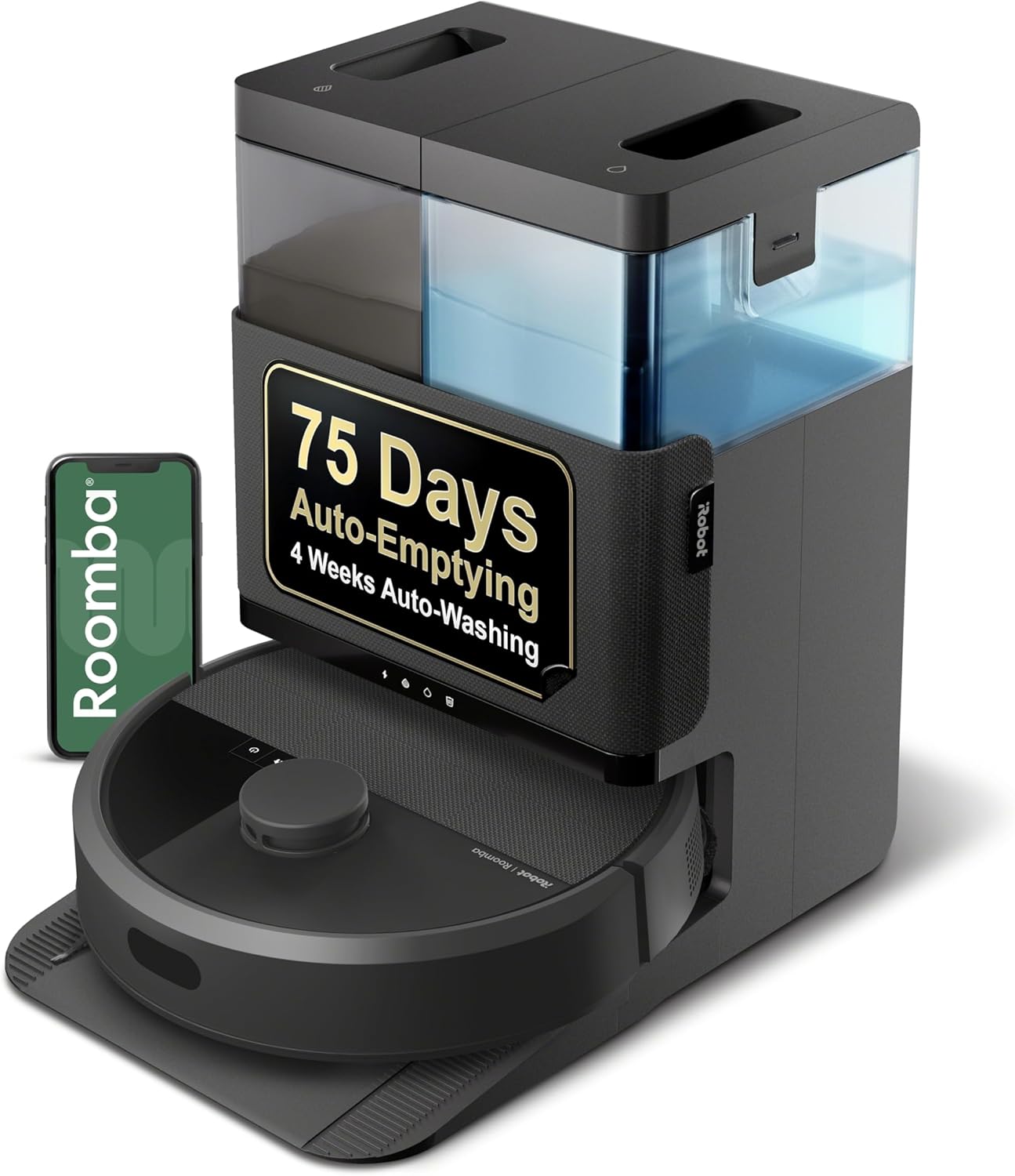
- Fully automated AutoWash dock washes and dries mop pads to prevent odors.
- SmartScrub mode provides genuine scrubbing power rather than just dragging a wet cloth.
- LiDAR navigation maps the home quickly and navigates efficiently.
- Mop pads auto-lift to keep carpets completely dry during vacuuming.
Cons
- Requires regular manual maintenance of the clean and dirty water tanks.
- Average rating indicates some users may experience occasional app connectivity issues.
- The dock has a larger footprint compared to standard vacuum-only docks.
Keeping your floors clean has never been easier thanks to advanced automation. In this detailed iRobot Roomba Plus 405 Review, we look at how this premium 2-in-1 robot vacuum and mop aims to eliminate daily floor-cleaning chores. Designed for busy families and pet owners, this system combines powerful vacuuming with active scrubbing, backed by a fully automated dock that handles the dirty work for you.
Exceptional Cleaning Performance
The Roomba Plus 405 stands out with its DualClean spinning mop pads and SmartScrub technology. Unlike basic hybrid robots that simply drag a damp cloth, this model spins its pads at 200 RPM and applies downward pressure to mimic manual scrubbing. Coupled with 70x power-lifting suction, it easily tackles dried-on kitchen spills, pet muddy prints, and deep-seated carpet dust. When it encounters rugs, the intelligent sensors automatically lift the mop pads, keeping your carpets dry while transitioning seamlessly from hard floors.
The AutoWash Dock Experience
The true centerpiece of this system is the AutoWash Dock. It manages everything from emptying the dustbin (holding up to 75 days of debris) to washing and drying the mop pads. During a cleaning cycle, the robot periodically returns to the dock to refresh its pads, ensuring it never spreads dirty water across your home. Once finished, the dock washes the pads and uses heated air to dry them, preventing mold and unpleasant odors. It even features a self-cleaning cycle to keep the dock basin free of residue.
Areas for Improvement
While the automation is impressive, users should be prepared for some routine maintenance. You will need to regularly refill the clean water tank and empty the dirty water tank to prevent stagnation. Additionally, the dock is relatively bulky, requiring a dedicated spot near an electrical outlet with clear space around it for docking. Some users have also noted occasional software learning curves when setting up multi-floor maps in the app.
The Verdict
The iRobot Roomba Plus 405 is a highly capable, hands-free cleaning solution that delivers on its promise of automated floor maintenance. If you want to minimize your daily cleaning chores and enjoy sparkling floors without lifting a finger, this 2-in-1 robot is an excellent investment for your home.
Product Specifications
- Model: iRobot Roomba Plus 405 (G181)
- Functionality: 2-in-1 Vacuum & Mop
- Suction Power: 70x Power-Lifting Suction (compared to 600 series)
- Navigation: ClearView LiDAR Mapping
- Mop Type: Dual Spinning Pads with SmartScrub
- Dock Features: Auto-empty (75 days), auto-wash, heated air-dry, self-cleaning
- Smart Integration: Roomba Home App, Alexa, Google Assistant, Siri

Pros
- Straightforward app setup for scheduling and monitoring cleaning sessions
- Self-charging capability reduces daily maintenance requirements
- Effective edge and corner cleaning with dedicated brush
- Multiple suction power levels to balance noise and performance
Cons
- Basic navigation can miss spots in cluttered or complex layouts
- Lacks advanced obstacle avoidance found in higher-end models
- Requires consistent 2.4 GHz Wi-Fi connection for full app features
Overview and Target Users
The iRobot Roomba Vac Review highlights an affordable robot vacuum designed for straightforward daily floor maintenance. It targets homeowners seeking simple automation without complex smart features or high costs.
Standout Features and Performance
Its 3-stage cleaning system combines strong suction with brushes to handle both carpets and hard floors effectively. Smart navigation ensures the unit moves in orderly rows, delivering consistent coverage while sensors prevent falls and collisions.
Design and Build Quality
The slim profile allows access under sofas and beds, while the edge brush tackles corners thoroughly. Setup is quick via the iRobot Home app, supporting schedules and basic reports, though it lacks premium mapping tools.
Drawbacks to Consider
Some users report occasional incomplete passes in busy rooms, and the model omits advanced obstacle detection or automatic dirt disposal seen in upgraded versions.
Final Verdict
Overall this robot provides reliable basic cleaning for smaller or less cluttered homes, making it a practical choice when simplicity matters most.
Pros
- Simple app setup and voice assistant compatibility for convenient control
- Effective edge and corner cleaning with the dedicated brush
- Self-charging capability reduces daily maintenance
- Multiple suction levels allow quieter operation when desired
Cons
- Basic navigation may miss spots in complex layouts compared to premium models
- Requires consistent 2.4 GHz Wi-Fi connection for full app features
- Mixed user feedback suggests occasional reliability inconsistencies
What the iRobot Roomba Vac Offers
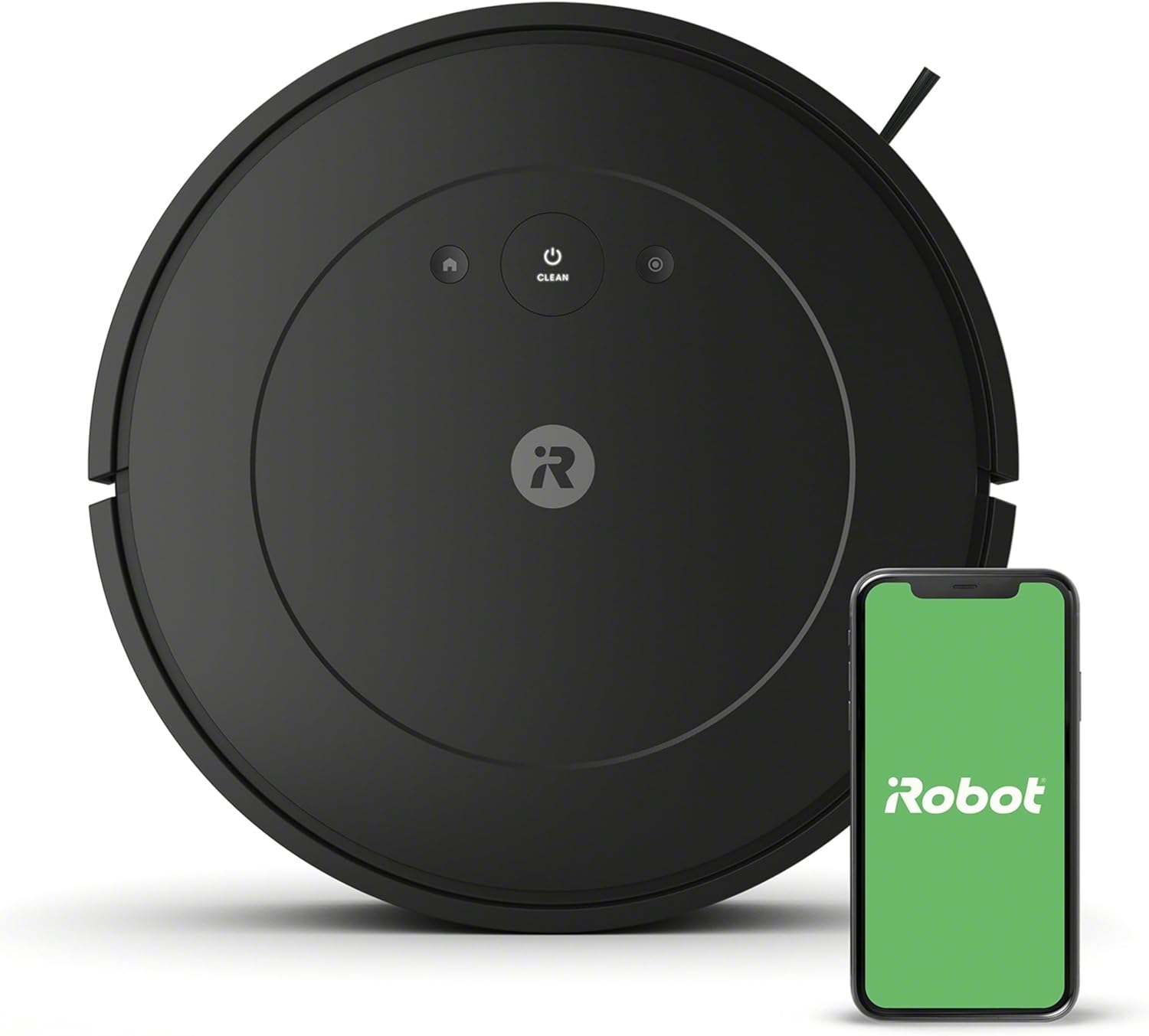
The iRobot Roomba Vac Essential provides straightforward automated vacuuming for users who want reliable daily floor maintenance without advanced mapping. It targets apartments and smaller homes needing basic suction and navigation at an accessible level.
Standout Features and Performance
Its 3-stage system delivers strong suction across three power settings while the V-shaped brush and edge sweeper tackle debris on multiple surfaces. Smart sensors guide it in orderly rows for thorough coverage and stair avoidance, making whole-home sessions efficient for most layouts.
Design, Build and Ease of Use
The slim profile lets it slide under sofas and beds where dust collects, and setup takes minutes via the iRobot Home App for scheduling or spot cleaning. Self-return charging keeps it ready without intervention, though it depends on a stable 2.4 GHz network.
Drawbacks to Consider
Some users report it can get stuck on transitions or overlook areas in cluttered spaces, reflecting its entry-level navigation. It lacks the obstacle avoidance or zone cleaning found in higher-end Roombas.
Final Verdict
Overall this model earns consideration for beginners prioritizing simplicity and value in robot vacuums, delivering solid essentials despite not matching premium performance.

Pros
- Strong 5200Pa suction clears debris from multiple floor types
- Self-charging feature prevents power interruptions mid-task
- Pet-focused design reduces hair tangles on brushes
- App integration allows scheduling and mode adjustments remotely
Cons
- Best suited for low-pile carpets rather than thick rugs
- Water tank requires refilling for large mopping areas
- Setup for app and voice assistants may take initial effort
ROPVACNIC S1 Review: Automated Cleaning for Everyday Homes
The ROPVACNIC S1 Review highlights a capable robot vacuum and mop combo designed for users who want reliable automated floor care. It combines strong suction with electronic mopping and supports app-based customization for different surfaces and stains.
Standout Features and Performance
With 5200Pa suction and a three-point cleaning system, this model removes dirt, dust, and pet hair effectively across hard floors and low-pile carpets. The no-entanglement side brushes perform well for pet owners, while the self-recharge function activates below 20% battery to keep sessions uninterrupted. Obstacle detection helps it navigate around furniture without constant supervision.
Design and Build Quality
The compact 2.99 inch height allows access under sofas and beds where manual cleaning is difficult. A 4400mAh battery supports extended runs in larger spaces, and the included dustbin plus water tank enable true 2-in-1 functionality. Controls via smartphone app, remote, or voice assistants add flexibility, though initial pairing requires standard network setup.
Potential Drawbacks
Performance on high-pile carpets may be limited compared to hard floors. Users with very large homes should expect to refill the water tank midway through mopping cycles. Regular filter and brush maintenance remains necessary for peak results.
Final Verdict
Overall the ROPVACNIC S1 delivers solid value for pet owners and busy households seeking a straightforward robot vacuum and mop solution with strong suction and convenient controls.
Essential Engineering Checklist for Irobot Roomba Vacuum Cleaning Robot
Navigation and Mapping Technology
Effective navigation forms the foundation of any high-performing irobot roomba vacuum cleaning robot. Units equipped with ClearView LiDAR or PrecisionVision AI create accurate home maps, clean in systematic rows, and avoid obstacles such as cords, socks, or pet waste far more reliably than random-bounce sensors found in entry-level designs. Look for models that support virtual keep-out zones and room-specific targeting through the companion app, as these features prevent the robot from entering restricted areas like pet feeding stations or fragile décor zones. In practice, LiDAR systems operate well even in low light and enable the robot to resume cleaning after recharging without restarting the entire cycle. Homes larger than 1,500 square feet particularly benefit from multi-map storage and real-time obstacle recognition to maximize coverage efficiency.
When assessing mapping quality, prioritize robots that generate Clean Map reports after each run so you can verify completed areas. This data-driven approach reduces missed spots and shortens total cleaning time. For comparison, many mid-tier options now include adaptive sensors that detect stairs via cliff sensors while higher-end units add AI object recognition for proactive path adjustments. For additional operational safety benchmarks, see our published testing notes on why robot vacuum keeps getting lost lidar fix. For additional operational safety benchmarks, see our published testing notes on why robot vacuum keeps getting lost lidar fix.
Suction Power and Multi-Surface Performance
Suction strength determines how thoroughly a irobot roomba vacuum cleaning robot removes embedded dirt and pet hair. Leading models advertise 70x or even 180x more power-lifting suction compared with older Roomba 600-series baselines, paired with dual multi-surface rubber brushes that resist tangling and maintain constant floor contact. Auto-adjusting cleaning heads automatically raise or lower for carpets versus hard floors, while edge-sweeping brushes improve corner and baseboard pickup by up to 20 percent. Select units offering multiple suction levels so you can choose quieter everyday modes or maximum power for high-traffic zones. Carpet Boost or Dirt Detect technology further refines performance by increasing power when sensors identify denser debris concentrations.
Practical testing criteria include the ability to transition seamlessly between surfaces without losing suction or scattering debris. Anti-tangle brush designs prove especially valuable in homes with long pet hair, reducing the frequency of manual brush cleaning. Always verify that the robot includes a dedicated filter capable of capturing fine particles down to 0.7 microns for better air quality during operation.
Battery Life and Self-Maintenance Features
Runtime and autonomy directly impact daily usability of a irobot roomba vacuum cleaning robot. Most current models deliver 90 to 120 minutes of cleaning on a full charge before returning to the dock automatically. Recharge-and-resume functionality ensures large homes are fully covered without manual intervention. Self-emptying bases that hold debris for up to 75 days dramatically cut maintenance, trapping particles in sealed bags and eliminating dust clouds during disposal. Combo docks that also wash and dry mop pads add further convenience by refreshing cleaning tools between runs. To compare alternative configurations, check our hands-on review of roborock qrevo s pro vs dreame l10s pro ultra heat.
Evaluate the dock footprint and bag capacity against your storage space and cleaning frequency. For households that prefer minimal interaction, prioritize auto-empty systems paired with filter-life indicators in the app. These features collectively reduce weekly chore time while extending the practical lifespan of consumables. You can review similar hands-free options in our roundup of the robot vacuum with self-empty models currently available.
Mopping and Combo Cleaning Capabilities
Many modern irobot roomba vacuum cleaning robot units combine vacuuming with mopping for complete floor care. Dual spinning mop pads with SmartScrub deliver 2x deeper scrubbing pressure, while micro-pumps control water or solution flow for uniform moisture. Advanced systems automatically lift mop pads when carpets are detected, preventing wet rugs without requiring complex programming. Combo modes let you select vacuum-only, mop-only, or sequential vacuum-then-mop cycles, and some docks handle pad washing plus heated drying for up to four weeks of hands-free mopping maintenance.
Homes with primarily hard floors gain the most from these hybrid robots. Confirm that the unit supports keep-out zones for areas where mopping is undesirable and that water tanks are easily refillable. The ability to target specific rooms for deeper scrubbing further customizes results based on high-traffic patterns. Users looking for related component recommendations can explore our why is my robot vacuum not dispensing water breakdown.
Smart Connectivity and Customization Options
App integration and voice control elevate a basic irobot roomba vacuum cleaning robot into a fully scheduled appliance. Compatible platforms work with Alexa, Google Assistant, and Siri for hands-free starts, while dedicated apps enable room-by-room scheduling, suction level adjustments, and Clean While I’m Away automation. Personalized recommendations based on past cleaning habits and dirt-priority algorithms help the robot focus effort where messes accumulate fastest. Look for Wi-Fi readiness on 2.4 GHz networks and clear filter-life or bin-full notifications that prevent unexpected interruptions.
Customization depth varies: entry models offer basic scheduling, while premium units support multi-floor maps, no-go lines, and spot-cleaning bursts lasting up to five minutes. These tools ensure the robot adapts to real household routines rather than forcing users to adapt to the machine. Before finalizing equipment decisions, refer to our comprehensive can robot vacuums cross high thresholds comparison.
We compared top-rated irobot roomba vacuum cleaning robot models by systematically reviewing manufacturer technical specifications, including claimed suction multipliers, battery runtimes, brush designs, and navigation sensor types. User satisfaction metrics were aggregated from available ratings, which clustered between 4.4 and 4.9 stars across the set, with emphasis on feedback regarding pet hair handling, obstacle avoidance reliability, and long-term durability. Brand reliability factors for iRobot and Amazon Renewed units were weighed alongside warranty implications and consumable availability such as filters and bags. Real-world utility assessments focused on how features like auto-empty capacity, multi-surface transitions, and app controls translate into reduced weekly maintenance time without requiring physical lab testing of every unit.
Selection prioritized balanced value within the entry-level to premium spectrum, ensuring coverage of both budget entry points and premium self-maintaining systems. Models lacking clear mapping or multi-stage cleaning were deprioritized relative to those offering measurable efficiency gains. This data-driven curation process highlights units that consistently meet modern household demands for autonomy and thoroughness in 2026.
Final Verdict: Choosing the Right Robot Vacuum
After evaluating the full set of specifications and user-oriented features, three standout recommendations emerge based on distinct buyer needs. For the best overall irobot roomba vacuum cleaning robot, the iRobot Roomba Max 705 Robot Vacuum with AutoEmpty Dock delivers extreme power-lifting suction up to 180x baseline levels, dual anti-tangle rubber brushes, ClearView Pro LiDAR, and PrecisionVision AI obstacle recognition. Its 75-day auto-empty dock and Dirt Detect technology make it ideal for busy, pet-friendly homes seeking maximum hands-free performance.
The best value choice is the iRobot Roomba 105 Combo Robot Vacuum & Mop. At a mid-tier price point it combines 70x power-lifting suction, ClearView LiDAR mapping, automatic carpet avoidance during mopping, and flexible vacuum-mop-combo modes. This model provides strong multi-surface versatility without requiring a premium outlay. For households focused on advanced mopping and extended dock autonomy, the iRobot Roomba Plus 505 Combo Robot Vacuum & Mop with AutoWash Dock stands out thanks to extending DualClean pads, SmartScrub, 75-day emptying, and heated pad drying. These picks cover the majority of use cases while linking naturally to broader smart-home cleaning strategies.
If your priorities lean toward compact essential cleaning or replacement parts, the Roomba Vac Essential series and cleaning head modules offer solid entry performance. Cross-reference these options with our parent category overview of vacuum cleaner solutions or explore mapping-focused alternatives for additional context. Overall, matching navigation sophistication and maintenance features to your floor types and schedule yields the highest satisfaction.
Common Questions on Irobot Roomba Vacuum Cleaning Robot Answered
Is a irobot roomba vacuum cleaning robot worth buying in 2026?
Yes, current models provide true autonomy through LiDAR mapping, multi-stage suction, and self-emptying docks that significantly reduce weekly floor-care time. High-quality units handle daily dust and pet hair with minimal oversight, making them practical for most households.
Do these robots work well with pet hair?
Many irobot roomba vacuum cleaning robot designs specifically target pet hair using anti-tangle dual rubber brushes and elevated suction levels that extract embedded fur from carpets. Models with Dirt Detect and edge-sweeping brushes further improve pickup along baseboards and high-traffic pet areas.
How long does the battery last on a typical irobot roomba vacuum cleaning robot?
Most units run 90 to 120 minutes per charge before automatically returning to the dock. Recharge-and-resume capability allows completion of larger homes without user intervention, while self-empty docks support multi-day or multi-week cycles between maintenance.
Can a irobot roomba vacuum cleaning robot handle both carpets and hard floors effectively?
Yes, auto-adjusting cleaning heads and multi-surface brushes enable seamless transitions. Combo models automatically lift mop pads on carpet detection, and Carpet Boost modes increase suction for deeper pile cleaning when needed.
How often should filters and brushes be replaced on a irobot roomba vacuum cleaning robot?
Inspect filters every few weeks and replace them every two to three months depending on usage intensity and household dust levels. Brushes typically last longer but should be cleared of hair regularly; auto-empty systems reduce overall bin-related maintenance. For more compact options suited to smaller spaces, see our guide covering the smallest robot vacuum designs.
Roomba Navigation and Obstacles
Cleaning robots rely on sensors to avoid cliffs and furniture legs, so clear the path of cords and small items first. A quick wipe of the sensor windows helps. Guidance on safe handling of battery powered household products is provided by the International Electrotechnical Commission (IEC).