Quick Answer: Choosing the Best Paint Edger Tool
When evaluating a paint edger tool in 2026, focus first on pad material and replaceability for consistent coverage, handle rotation or extension for access to elevated surfaces, and overall build durability to withstand repeated cleaning. Our comparison of top-rated models across the full spectrum of designs shows that balanced tools with multiple refill pads and adjustable components deliver the…

Pros
- Broad accessory set makes it suitable for edging, trimming, corners, and touch-up work.
- Extension rod increases reach for high or awkward areas.
- Rotating handle design offers more flexibility for controlled painting along edges.
Cons
- No customer review details are provided in the manufacturer listing, so long-term durability and ease-of-use feedback cannot be verified here.
- The kit is focused on edging and detail work, so it is not a full replacement for standard rollers or larger painting tools.
- Exact dimensions, material quality, and compatibility details are not listed in the manufacturer listing.
Overview & Design: The DIQQHI Paint Edger Tool Kit is a 10-piece painting accessory set built for trim, edges, corners, and touch-up work. It includes multiple pad types, a paint tray, and a 5-section threaded extension rod, giving it a practical, project-ready feel for home painting tasks.
Performance & Key Features: The standout features are the 360-degree rotating handle and the extendable rod, which should make it easier to paint higher walls, ceilings, and tight areas without frequent repositioning. The included flat pads, corner edger, and trim touch-up pads are designed to support more controlled paint application on different surfaces.
Drawbacks & Considerations: This is a specialized edging kit, so buyers looking for a complete wall-painting system may still need rollers, brushes, or additional supplies. The product data does not include detailed material specs or user feedback, so durability and long-term performance are harder to judge from the listing alone.
Verdict: This kit makes the most sense for DIY painters, homeowners, and detail-focused users who want better reach and cleaner edges on trim, corners, and ceilings. If your priority is precision rather than broad surface painting, the DIQQHI set offers a useful mix of tools in one package.

Pros
- Broad accessory set makes it suitable for multiple painting tasks without buying extra parts.
- 360° rotating handle adds flexibility for ceilings, trim, and awkward angles.
- Compatible with standard threaded extension poles for harder-to-reach areas.
Cons
- Extension poles are not included, so taller projects require separate purchase if needed.
- The kit is designed for precision hand painting rather than large-speed coverage on big open walls.
- Cleaning requirements depend on the paint type, since water-based and oil-based paints need different cleanup methods.
Overview: The Dekonmon Paint Edger Tool Kit is a 15-piece edging and detail painting set built for trim, corners, ceilings, and other narrow surfaces. It combines a rotating handle, multiple pad shapes, a compact tray, refill pads, and gloves into one practical kit.
Performance: Based on its design, the kit is focused on controlled paint application and cleaner edge work. The 360° rotating handle and threaded compatibility with standard extension poles make it useful for both close-up detail jobs and higher areas, while the spill-proof tray and corner-specific pads support more precise painting.
Drawbacks: This kit does not include extension poles, so users painting tall walls or ceilings may need to buy those separately. It is also more of a precision tool than a fast-coverage solution for large open surfaces, and cleanup will vary depending on whether water-based or oil-based paint is used.
Verdict: This set is a strong fit for DIY painters, homeowners, and pros who want a more organized edging workflow with multiple pad options in one package. It offers the most value for projects where neat lines, corner control, and reduced mess matter more than maximum speed.

Pros
- Multiple edger styles included in one kit for different painting tasks.
- 360° rotatable handle adds flexibility when working on walls and corners.
- Tray design helps spread paint evenly across the pad and scrape off excess paint.
- Works with several common paint types, increasing versatility.
Cons
- Extension poles are not included, so users needing extra reach must buy them separately.
- The kit is geared toward edging and trim work, not full-room roller painting.
- No customer review data was provided in the source, so long-term durability feedback is unavailable.
Overview & Design: The Voomey Paint Edger Tool Kit is a 9-inch paint pad set built for trim, edges, and corner work. It includes several pad shapes, a 360° rotating handle, a corner painter, a mini trim pad, a paint tray, and refill pads, giving it a flexible layout for DIY painting tasks.
Performance & Key Features: In use, the kit is designed to help distribute paint evenly and reduce mess around wall edges and corners. The rotating handle can make angle changes easier, while the tray helps control paint loading and excess removal. It is also listed as suitable for latex, water-based, and oil-based paints.
Drawbacks & Considerations: A notable limitation is that extension poles are not included, so larger or higher-area projects may require an additional purchase. The set is also focused on edging and detail painting rather than broad surface coverage, so it will not replace a roller for full walls.
Verdict: This kit is a solid option for homeowners and DIY users who want a dedicated edging tool set for cleaner lines and controlled paint application. It is best suited for trim, corners, and touch-up work where precision matters more than speed on large surfaces.

Pros
- Covers multiple edge-painting tasks, including doors, windows, ceilings, accent walls, baseboards, and chair rails.
- Handheld design offers flexibility for both detailed corner work and general cut-in painting.
- Accessory package includes 1 edger, 2 rollers, and 2 brushes.
- Aimed at improving speed and reducing cleanup compared with manual tape masking.
Cons
- No customer review feedback is available in the manufacturer listing, so long-term performance is harder to verify.
- No dimensions, material details, or compatibility limits for extension poles are provided.
- As a manual tool, results will still depend on user technique and the type of paint being used.
Overview & Design: The LIONICE Paint Edger Pro is a handheld paint edging tool made for cleaner cut-ins on walls, ceilings, trim, and corners. It is positioned as a practical option for DIY painters who want sharper edges without relying heavily on masking tape.
Performance & Key Features: The tool is designed to work by hand or with a telescopic extension pole, which can help when painting higher areas. According to the product data, it uses guide wheels, a 180° rotatable handle, and a shield to help control paint placement and reduce splatter onto trim or ceilings. The included rollers and brushes add versatility for edge work and corner painting.
Drawbacks & Considerations: There are no customer reviews in the manufacturer listing, so real-world durability and consistency cannot be confirmed here. The listing also does not include details such as dimensions, materials, or exact pole compatibility, which may matter to buyers comparing similar tools.
Verdict: This is a useful fit for homeowners, DIY renovators, and first-time painters who want a simpler way to cut in paint on common interior surfaces. It appears best suited for users prioritizing speed, cleaner edges, and basic versatility over professional-grade specifications.

Pros
- 360° handle rotation improves maneuverability in tight or angled painting situations.
- Secure wheel attachment adds stability during use.
- Suitable for both DIY painters and professionals needing crisp edge control.
Cons
- No product dimensions, weight, or extension rod details are provided in the manufacturer listing.
- The product listing is inconsistent about pad count, showing 5pcs in the title and 6 pads in the description.
- As a manual edging tool, results will still depend on user technique and careful setup.
Overview & Design: The VOOMEY 360° Rotation Handle Paint Edger Trimmer is a manual paint edging tool built for cleaner lines along walls, ceilings, corners, baseboards, and trim. Its secure wheel connection and rotating handle suggest a focus on stability and maneuverability rather than complex setup.
Performance & Key Features: The 360° rotating handle allows left, right, vertical, and diagonal adjustments, which can make it easier to follow edges and work around detailed surfaces. The dense 5 mm bristles are intended to hold paint evenly for smoother coverage, and the tool is compatible with any extension rod for added reach.
Drawbacks & Considerations: The listing does not provide dimensions, weight, or full accessory details, so buyers cannot evaluate portability or coverage area from the available data alone. There is also a mismatch in the pad count between the title and description, which may be confusing for shoppers.
Verdict: This paint edger is best suited to DIY users and painters who want more controlled edge work on trim, corners, and frames. It appears most valuable for projects where clean lines matter more than speed, especially when paired with careful technique and proper masking where needed.

Pros
- Adjustable angle design improves reach and comfort in hard-to-access spots.
- Compatible with standard extension poles for safer high-wall and ceiling work.
- Dense bristles and guide wheel are built for cleaner edge control.
- Suitable for both DIY users and professional painting tasks.
Cons
- Extension pole is not included, so reaching higher areas requires a separate purchase.
- Plastic housing may feel less premium than metal-bodied paint tools.
- No detailed dimensions or pad replacement lifespan are provided in the product data.
Overview: The BANCOO Adjustable Angle Paint Edger is a handheld paint pad applicator built for edging walls, corners, and ceilings. Its dense bristle head, smooth plastic housing, and adjustable red handle give it a practical, task-focused design for home improvement projects.
Performance: This tool stands out for its 90° adjustable handle and 180° rotating base, which help when working around trim lines, ceiling edges, and other tight spaces. The mini guide wheel is intended to keep the tool aligned for straighter edges, while the dense bristles are designed to spread paint more evenly with fewer streaks or drips.
Considerations: The product data does not include an extension pole, so taller jobs may require an extra accessory. The tool is made with plastic housing, which should be durable enough for routine use, but it may not feel as robust as some higher-end metal alternatives. There are also no listed dimensions or pad durability details.
Verdict: This is a solid option for DIY painters and professionals who want better control on edges and in awkward areas. It is most useful for users who value reach, angle adjustment, and cleaner cut lines over a more premium build or bundled accessories.

Pros
- Versatile edge-painting design for walls, ceilings, and trim.
- Adjustable handle improves control in different painting positions.
- Includes replacement pads, which is useful for ongoing projects.
Cons
- No extension pole is included, so higher-reach use depends on tools you already own.
- The handle must be locked tightly, especially when using an extension pole, to avoid unwanted rotation.
- Results may vary on tight corners, and protective tape may still be needed when only one side should be painted.
Overview & Design: The BANCOO RSL43 is a manual paint edge trimmer built for edging along ceilings, baseboards, windows, doors, and moldings. It uses guide wheels and a rotatable handle design, and the overall build is described as having a thicker shell and smooth wheel movement.
Performance & Key Features: The tool features 5 mm long, dense bristles with strong paint absorption, which should help deliver a cleaner paint film at the edges. It can be used by hand or attached to a threaded extension pole, and it includes two replacement pads for continued use on multiple projects.
Drawbacks & Considerations: The handle needs to be locked tightly before use, especially when an extension pole is attached, or the painting direction may shift. For corners where only one wall should be painted, protective tape may still be necessary, since edge tools can be less forgiving in delicate transitions.
Verdict: This is a practical option for DIY painters who want a reusable edge painting tool with adjustable handling and replacement pads. It is best suited for users who value control and cleaner trim lines, while still being willing to take care with setup and masking in difficult areas.
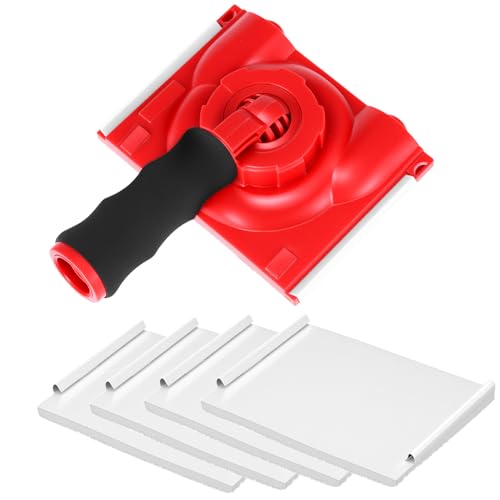
Pros
- Versatile for multiple surfaces, including walls, ceilings, trim, and corners
- Rotating handle adds flexibility for precise positioning
- Includes 4 replacement pads for continued use
- Extension-rod support improves reach on taller areas
Cons
- Best results may still require painter's tape in corner transitions, as noted in the product tips
- It is a manual edging tool, so it may be slower than some powered painting solutions
- No detailed dimensions or pad longevity information is provided in the raw product data
Overview: The QWORK Paint Edge Trimmer is a manual paint edger designed for cleaner lines along walls, ceilings, corners, baseboards, window frames, and cabinet edges. Its 360° rotating handle and slip-proof locking mechanism suggest a focus on control and flexibility rather than speed alone.
Performance: In practical use, the four included pads with dense 5 mm bristles should help hold paint evenly and lay down smoother edges with less streaking. The tool is also compatible with extension rods, which makes it more convenient for reaching higher surfaces or areas that are difficult to access.
Drawbacks: This is still a hand tool, so it may not be ideal for users looking for the fastest possible painting workflow. The product also does not provide detailed specs such as dimensions or pad life, and the included tip suggests that painter's tape may still be helpful for the cleanest corner work.
Verdict: The QWORK Paint Edge Trimmer is best suited to DIY painters and homeowners who want a practical edging tool for more controlled trim work and corner painting. It should appeal most to users who value precision, replacement pads, and reach flexibility over automated convenience.

Pros
- Includes a preloaded pad, so it is ready to use out of the box.
- Compatible with standard RSL43-size replacement pads.
- Extension pole compatibility adds reach for ceilings and tall walls.
- Designed to help reduce bleed and crooked edges when cutting in.
Cons
- Only one pad is included, so additional pads may be needed for larger or repeated jobs.
- Best results depend on keeping paint off the wheels, which adds some care during use.
- The product details do not specify extra accessories beyond the single tool and pad.
Overview & Design: The Novazzi RSL43 Paint Edger is a handheld trim painting tool with one preloaded pad, built for clean interior cut-in work on ceilings, baseboards, doors, and molding. Its red body, dual guide wheels, and foam grip give it a practical, job-focused feel for DIY and contractor use.
Performance & Key Features: In real-world use, the guide wheels are designed to ride along edges and help keep the pad aligned, which can reduce wobble and uneven lines. The 4.7 x 3.5 inch reusable pad is meant to hold and spread paint evenly, and the threaded socket adds flexibility if you want to attach an extension pole for higher areas.
Drawbacks & Considerations: This is a simple tool rather than a full kit, so only one pad is included. It also works best when the user avoids loading paint onto the wheels and wipes them clean if they get coated, which means technique matters for the cleanest finish.
Verdict: The Novazzi paint edger is a solid fit for homeowners, renters, and pros who want faster edging with less masking tape. It is most valuable for interior trim projects where control, reach, and repeatable straight lines matter more than having a large accessory bundle.

Pros
- Replacement pads are included, adding value and extending usable life.
- Suitable for several edge-painting tasks, not just walls.
- Nylon pad material helps hold paint for more consistent application.
- Easy to clean with water after use.
Cons
- No dimensions, handle grip details, or pad width are provided in the product data.
- The plastic frame may not feel as durable as metal alternatives for heavy-duty professional use.
- No customer review details were supplied, so long-term performance is harder to verify.
Overview: The NQEUEPN Paint Edger Trimmer is a manual edging tool made for painting clean lines along walls, ceilings, corners, windows, and other tight spaces. It uses a plastic frame with premium nylon replacement pads, and the package includes one trimmer plus two extra pads.
Performance & Features: In practical use, the nylon pads are designed to absorb more paint and help create a more even brushing effect. The replaceable pad design is convenient for repeat projects, and the tool is meant to handle common interior touch-up and trim-painting tasks in rooms, bathrooms, basements, and similar spaces.
Drawbacks & Considerations: The product data does not provide size, pad width, or ergonomic details, which makes it harder to judge comfort and coverage before buying. The frame is plastic, so buyers looking for a heavier-duty professional edging tool may want to compare build materials first.
Verdict: This is a practical budget-friendly paint edger for DIY users who want a simple tool for cleaner edges and corners. It offers the most value for home painters who need a reusable applicator with replacement pads included.
Comprehensive Paint Edger Tool Buyer’s Guide (2026)
Choosing the right paint edger tool depends on matching tool design to specific project demands such as corner work, high ceilings, or large wall areas. The following criteria summarize the most important technical and practical considerations drawn from specification analysis of top-rated current models. Applying these guidelines reduces the risk of purchasing an underperforming unit and ensures better paint finish quality. Before finalizing equipment decisions, refer to our comprehensive gas vs battery leaf blower cfm comparison. For complementary hardware performance, examine our breakdown on our comprehensive lawn edger guide.
Pad Material and Replaceability
The painting pad determines how evenly paint is transferred and how long the tool remains usable. High-density foam or microfiber pads hold more paint with less dripping and produce smoother edges on both smooth drywall and lightly textured surfaces. Models that include two or more replaceable pads extend service life significantly because the original pad wears after covering several rooms or after contact with dried paint residue. Tools without refill options force full replacement of the unit once the pad hardens or tears. In practice, plan for at least two spare pads if painting multiple rooms or switching between latex and oil-based paints. This single feature often separates short-term convenience tools from those suitable for repeated projects.
Handle Design, Rotation, and Ergonomics
Handle configuration directly affects comfort and precision during extended use. A 360-degree rotating head allows the pad to stay flat against walls while the user adjusts grip angle, reducing wrist strain in corners and along baseboards. Fixed handles work adequately for short vertical runs but become inefficient on ceilings or when working around door frames. Some designs incorporate threaded sockets for extension poles, which is essential for high ceilings without ladders. Weight distribution also matters: lighter composite handles minimize fatigue, while rubberized grips improve control when the tool is wet with paint. Evaluate whether the handle locks securely in position, because loose rotation leads to uneven pressure and visible paint lines.
Reach, Size, and Surface Compatibility
Pad width and overall tool length influence speed and accuracy. Wider pads covering roughly 7 to 9 inches complete long straight edges faster but may struggle in tight corners or around outlets. Narrower or specialized corner pads excel at precise work near trim yet require more passes on large walls. Stainless steel trim guards function as paint shields rather than applicators and excel as tape alternatives for cutting in clean lines. Consider the height of surfaces you paint most often: tools with optional extension rods or longer handles perform better above 8 feet. Compatibility with both flat and lightly textured walls is standard, but heavily popcorn ceilings usually need a different approach. Matching pad size to room layout prevents unnecessary rework.
Cleaning, Maintenance, and Durability
Paint residue hardens quickly, so tools that disassemble easily for rinsing under a faucet last longer. Removable pads and open-frame designs clean faster than sealed units that trap paint inside. Plastic frames resist corrosion from water-based paints, while stainless steel shields tolerate solvents better for oil-based applications. Check for solid welds or reinforced joints on metal components, because thin stampings bend under pressure. Storage is another practical factor: compact kits with base trays or cases keep wet pads from drying out between coats. Regular maintenance after each use, such as immediate rinsing and air drying, multiplies the usable life of even budget models. Durability differences become clear after the second or third project.
Accessories, Kits, and Overall Value
Many paint edger tool options arrive as multi-piece kits that include extra pads, gloves, trays, or extension rods. These bundled items increase immediate utility and lower the total cost of ownership compared with buying components separately. A basic single-pad tool may appear inexpensive yet requires later purchases for refills. Conversely, comprehensive kits covering 10 to 15 pieces support full-room painting without interruption. When comparing value, calculate the cost per pad plus any included accessories rather than looking only at the initial sticker. Models priced near the middle of entry-level to premium frequently offer the best balance of features and longevity for typical residential work. Review related edger options to see how accessory packages differ across the category.
| Product Name | Brand | Price Bracket | Key Design Element |
|---|---|---|---|
| BANCOO RSL43 Paint Edge Trimmer | BANCOO | Mid-range | Two replace pads, corner and ceiling focus |
| Paint Edger Pro | LIONICE | Mid-range | Handheld kit with splatter shield |
| 12 Inch Painter’s Trim Guard | SARDVISA | Budget | Stainless steel straight edge shield |
The table above illustrates how three representative models from our set of top-rated differ in price position and primary design focus. Use it as a quick reference when narrowing choices based on budget and intended surface type.
Paint Edger Design Considerations
Paint edgers in this guide are described from manufacturer specifications and product data on Amazon listings, with customer reviews included where they exist. The attributes compared are product name, brand, price bracket and the key design element that defines each tool.
The table puts these attributes in adjacent columns, so readers can see how design choices read against price across different tools. Each entry can be checked against its listing before a purchase is made.
The Bottom Line on Paint Edger in 2026
After systematic comparison of the full set, clear recommendations emerge according to primary buyer needs. The best overall paint edger tool is the Paint Edger Tool Kit 15 PCS from Dekonmon. It combines a 360-degree rotation handle, multiple refill pads, a 7-inch paint pad set, rubber gloves, and clear base trays in one package. This combination supports complete wall and ceiling cut-in work without requiring separate accessory purchases, making it the most versatile choice for typical home renovation sequences.
The best value or budget choice is the 12 Inch Painter’s Trim Guard from SARDVISA. Positioned at the low end of entry-level to premium, this stainless steel straight-edge shield functions as a precise paint cutting guide and effective painters tape alternative. Its simple construction delivers reliable results for trim work and straight walls while remaining easy to clean and store. For professional or high-ceiling applications, the Paint Edger Pro from LIONICE stands out with its dedicated splatter shield, bucket edge roller compatibility, and handheld kit design optimized for efficient corner and trim painting. These three options cover the majority of use cases within the top-rated models reviewed. Additional context appears in our dedicated edgers section.
In summary, prioritize replaceable pads and adjustable handles for most residential jobs, then select kit size according to project scale. Matching a paint edger tool to the specific surfaces and frequency of use produces cleaner edges and lower long-term cost than relying on tape alone.
Everything You Need to Know: Paint Edger Tool FAQ
What is a paint edger tool used for?
A paint edger tool applies paint cleanly along edges, corners, ceilings, and trim without extensive masking tape. It uses either a pad applicator or a metal shield to create straight lines and reduce overspray onto adjacent surfaces.
How do I load paint onto a paint edger tool pad correctly?
Dip the pad lightly into a paint tray or use a roller to transfer a moderate amount, then blot excess on the tray edge so the pad is damp rather than saturated. Overloading causes drips and uneven edges, while underloading produces patchy coverage. Readers comparing setup options can review our technical analysis on pressure washer nozzle color guide.
How long do replaceable pads typically last?
Replaceable pads on a paint edger tool usually cover several average-sized rooms before showing wear or hardening, depending on paint thickness and surface texture. Immediate cleaning after each session extends usable life substantially compared with leaving dried paint on the surface.
Can I use a paint edger tool with both latex and oil-based paints?
Most pad-style paint edger tool models work with latex paints without issue, and stainless steel shields handle both latex and oil-based formulas. Always clean thoroughly with the solvent recommended for the paint type to prevent residue buildup that can ruin subsequent coats. For complementary field maintenance guidelines, examine our breakdown of cleaning a wood deck with a pressure washer.
Do I still need painter’s tape when using a paint edger tool?
Many users reduce or eliminate painter’s tape for straight wall-to-ceiling or wall-to-trim lines when using a quality paint edger tool, although tape remains useful for intricate moldings or very high-contrast color changes. Combining both methods often yields the cleanest professional results. See more options in the full edgers category for complementary tools.
Paint Edger Background Reading
Paint edgers are built for crisp lines along trim and glass, which takes a steady hand. Anyone who also tackles yard edging might find the gas powered lawn edger page useful. Guidance on general safety for handheld tools is found in material from American National Standards Institute (ANSI).