Quick Answer: Choosing the Best Concrete Edgers Landscaping
Critical factors for choosing concrete edgers landscaping in 2026 center on high-carbon or blue steel blade construction, exact lip and radius dimensions for the intended edge profile, and ergonomic handles that maintain control under pressure. Our evaluation of top-rated models from leading manufacturers shows that tools assembled with sturdy steel mounting and soft grips consistently outperform basic options across…

Pros
- Stainless steel construction supports durability and corrosion resistance in wet, abrasive jobsite conditions.
- Performs two key finishing tasks with one tool: edging and grooving.
- Wooden handle offers a comfortable, secure grip for controlled hand finishing.
- Suitable for both DIY homeowners and professional contractors.
Cons
- No dimensions, weight, or handle length are listed, so it is hard to judge size and reach before buying.
- No interchangeable parts, accessories, or size options are mentioned.
- As a manual finishing tool, results depend on user technique and physical effort.
Overview: The HANLIMAN (A) Concrete Edger and Groover Tool is a manual 2-in-1 finishing tool made for shaping concrete edges and cutting control joints. Its stainless steel construction gives it a practical, jobsite-ready feel, while the wooden handle is designed for a comfortable grip.
Performance: In use, the edger is intended to glide along fresh concrete to create smooth, rounded edges, while the groover forms straight, consistent lines that help control where cracks may develop as the slab cures. That makes it useful for driveways, sidewalks, patios, and interior floors where a clean finish matters.
Drawbacks and considerations: The listing does not provide dimensions, weight, or blade size, so buyers cannot easily compare fit or reach before ordering. It also does not mention any interchangeable heads or extra accessories, which limits flexibility compared with more modular finishing systems.
Verdict: This tool makes the most sense for users who want a straightforward, durable hand tool for concrete edging and grooving. It is a strong fit for DIY finish work and smaller contractor jobs, especially when control and a clean final appearance are priorities.
Pros
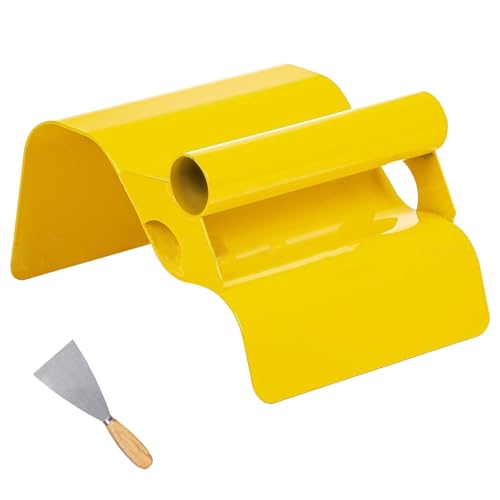
- Stainless steel build described as rust-resistant
- Putty knife included for smoothing and patching
- Ergonomic slant-style handle design
- Listed for use with concrete curb maker machines
Cons
- Durability and performance claims are manufacturer-stated
- Weight is not listed

Pros
- Stainless steel build offers better durability than many lower-cost curb tools
- Compact size supports precise control for edging and finishing work
- Includes a putty knife, adding value and versatility for prep and cleanup tasks
Cons
- Manual tool requires physical effort and is not a powered concrete finishing solution
- Compact size may be less efficient for larger curbing jobs that need broader coverage
- No detailed specification sheet or accessory bundle is provided in the raw product data
Overview & Design: The Xanadued Concrete Curb Trowel Edger is a compact stainless steel hand tool designed for concrete curbing, edging, and gutter shaping. Its 4" x 6" x 4" size and rigid ergonomic handle suggest a focus on control, comfort, and precise handling during finishing work.
Performance & Key Features: In practical use, the tool is intended to help you fill, tamp, and smooth concrete for neat landscape borders, curbs, and pavement edges. The included 3" putty knife adds extra usefulness for cleaning dirt, smoothing foundations, and refining surfaces where small imperfections need attention.
Drawbacks & Considerations: This is a manual tool, so it depends on user effort and technique rather than powered assistance. The compact format is helpful for precision, but it may be less efficient for larger-scale projects, and the product data does not include a full specification sheet or accessory list.
Verdict: This concrete curb tool is best suited for users who want a durable, straightforward hand tool for edging and finishing smaller to medium concrete projects. It should appeal most to landscapers, contractors, and DIY homeowners who value control, stainless steel durability, and a simple all-in-one curb forming solution.
- Best for curb edging, gutter shaping, and landscape borders
- Stainless steel build supports durability and repeated use
- Included putty knife increases versatility for prep and cleanup

Pros
- Designed specifically to form a radius at the edge of concrete slabs.
- DuraSoft handle improves grip comfort compared with harder bare handles.
- Welded steel mounting adds structural durability to the blade connection.
- Straightforward manual tool for precise edge finishing.
Cons
- No detailed dimensions or blade size are provided in the raw product data.
- Customer review volume is unavailable here, so long-term user feedback is limited.
- Manual edging requires physical effort and is slower than powered finishing methods.
Overview: The MARSHALLTOWN Curved Concrete Edger is a hand-finishing tool made for shaping the edges of concrete slabs. Its steel blade and welded mounting give it a practical, jobsite-ready feel, while the DuraSoft handle is designed for better comfort during use.
Performance: This edger is built to produce a rounded radius along slab edges, which can help reduce chipping and create a cleaner finished look. The curved or straight end hand-edger design gives it flexibility for common concrete edging tasks, and the sturdy steel construction supports repeated use.
Drawbacks: The product data does not include key measurements such as blade size or exact dimensions, so buyers may need to confirm fit for their specific project. It is also a manual tool, so it depends on user effort and may not be ideal for very large or time-sensitive finishing jobs.
Verdict: This is a solid choice for contractors and DIY users who want a reliable concrete edger with a comfortable grip and a simple, durable design. It is most valuable for anyone focused on clean slab edges and chip resistance rather than speed or powered convenience.

Pros
- High-grade stainless steel construction offers strong corrosion resistance and long-term durability.
- Wide base provides stable contact for more consistent edge formation.
- Comfort-focused handle design supports better control during longer concrete finishing jobs.
Cons
- The fixed 3/8 in radius is specialized, so it may not suit projects that require a different edge profile.
- At 6 x 7 in, the larger base may feel less convenient in tighter or more detailed areas.
- No included accessories or interchangeable parts are listed in the manufacturer listing.
Overview: The OX Concrete Edger Tool is a stainless steel finishing tool designed for creating a clean 3/8 in radius along slabs, sidewalks, driveways, patios, and other flatwork. The 6 x 7 in base gives it a sturdy feel and helps keep the tool steady on fresh concrete.
Performance: In use, the smooth radius edge is intended to leave a uniform margin that looks professional and can help reduce chipping and spalling. The stainless steel blade is corrosion resistant and built to glide over wet concrete with less risk of warping or pitting, while the cushioned grip and riveted support are meant to improve control during longer pours.
Drawbacks: This is a specialized edging tool, so it is best suited to projects that call for a 3/8 in radius profile. The larger 6 x 7 in format may also be less nimble in tight spaces, and the manufacturer listing does not list any accessories or interchangeable components.
Verdict: For contractors, masons, landscapers, and DIY users who want a durable, easy-clean edging tool for standard concrete finishing, the OX Concrete Edger Tool is a practical choice. It is especially appealing if you value stable control, corrosion resistance, and a consistent rounded edge.
What to Look for When Choosing Concrete Edgers Landscaping
Blade Material and Durability
Blade material determines how long a tool maintains a sharp, clean edge when finishing concrete or defining landscaping borders. High carbon steel and blue steel blades resist abrasion better than basic mild steel, reducing the frequency of sharpening and replacement during multi-day projects. Models featuring manganese steel or stainless components further improve corrosion resistance in outdoor storage conditions. Prioritize blades with documented thickness and heat treatment when comparing options from leading manufacturers to ensure consistent results on both fresh and cured surfaces. To evaluate matched hardware tolerances, consult our detailed overview of gas vs battery leaf blower cfm. For complementary hardware performance, examine our breakdown on lawn edger specifications.
Blade Size, Radius, and Lip Profile
Correct blade dimensions produce the exact edge radius required by building codes or design plans. Common sizes such as 6 x 6 or 6 x 3 inches allow efficient coverage, while radius options of 3/8 inch or 1/2 inch create smooth transitions that prevent chipping. Lip depth controls how deeply the tool seats into the concrete surface. Matching these specifications to project scale prevents under- or over-finishing and reduces labor time. For users evaluating technical differences, our category overview of edgers provides additional context on profile selection.
Handle Length, Adjustability, and Ergonomics
Handle design directly affects user fatigue and control accuracy. Adjustable lengths between 38 and 70 inches accommodate different operator heights and working positions, while cushion grips minimize vibration transfer during prolonged concrete edging. Fixed short handles suit detail work on small pads, whereas longer or wheeled designs improve leverage for linear sidewalk runs. Soft-grip mounting hardware that stays secure under torque is essential for safety and precision. To evaluate matched hardware tolerances, consult our detailed overview of gas vs battery leaf blower cfm. For complementary hardware performance, examine our breakdown on battery operated edger specifications.
Curved Versus Straight Configurations
Curved edgers excel at forming rounded borders around flower beds and irregular landscaping features, while straight models deliver clean linear edges on sidewalks and driveways. Many professional kits combine both styles for versatility. Choosing the correct geometry first avoids the need for secondary tools and ensures the finished concrete profile matches the surrounding landscape design. When projects require both, multi-tool sets offer practical efficiency without exceeding typical budgets in the entry-level to premium.
Brand Construction and Reliability
Brand reputation and assembly location provide useful indicators of long-term reliability. Tools assembled in the USA often feature tighter quality control on blade alignment and handle mounting. Soft-grip attachments and sturdy steel reinforcements reduce common failure points such as loose heads or bent shafts. Evaluating warranty language and user feedback patterns across leading manufacturers helps identify models that maintain performance after repeated seasonal use. Cross-checking these factors against our detailed edgers resources supports informed decisions. For complementary hardware performance, examine our breakdown on our comprehensive lawn edger guide.
Budget Alignment and Value Metrics
Effective budgeting begins by matching tool capability to project frequency. Occasional residential use can be served by entry-level models near $21.39, while frequent professional work justifies mid-to-upper options approaching $69.63. Calculate cost per project by estimating blade life and handle durability rather than focusing solely on purchase price. Sets that combine an edger with a groover deliver higher utility per dollar for users who also need control joints.
| Product | Brand | Blade Specs | Handle Style |
|---|---|---|---|
| MARSHALLTOWN QLT Curved Concrete Edger | MARSHALLTOWN | 6 x 2 3/4, 3/8 radius, 1/2 lip | Standard short |
| Goldblatt 6 x 6 Blue Steel Edger | Goldblatt | 6 x 6, 3/8R, 1/2L | Soft grip steel mount |
| Walensee Wheel Rotary Edger | Walensee | Rotary wheel design | 69.7 inch adjustable stainless |
Blade Specs and Handle Style
Landscaping concrete edgers come down to blade specs and handle style, with brand and product name adding context. Manufacturer details and Amazon product pages supply those points.
The table places product, brand, blade specs, and handle style side by side. Readers who also want a standard grass cutting option may find lawn edger a relevant read.
Our Final Editorial Take on Concrete Edger
After evaluating the full set of top-rated options, clear leaders emerge for different buyer needs. The Best Overall Concrete Edgers Landscaping is the MARSHALLTOWN Straight Concrete Edger with 6 x 6 blue steel blade. Its combination of proven steel quality, precise radius control, and USA assembly delivers consistent professional edges across varied landscaping and concrete projects. To compare alternative configurations, check our hands-on review of pressure washer nozzle color guide. For complementary hardware performance, examine our breakdown on lawn edger.
The Best Value / Budget Choice is the MARSHALLTOWN QLT Curved Concrete Edger. It provides essential curved finishing capability at the accessible end of entry-level to premium while retaining brand reliability, making it ideal for homeowners starting concrete edging work. For Best Professional Landscaping Use, the Walensee Wheel Rotary Edger stands out with its extended adjustable stainless handle and wheeled design that reduces fatigue on long driveway or sidewalk runs. Users seeking additional category context can explore our dedicated edgers collection for complementary tools.
These recommendations balance specification density, construction quality, and intended use so buyers can select with confidence for 2026 projects.
Buyer FAQs: Concrete Edgers Landscaping Solved
What size blade works best for most concrete edgers landscaping projects?
A 6 x 6 inch blade covers the majority of sidewalk and border tasks efficiently while remaining manageable by hand. Smaller 6 x 3 inch blades suit tighter curves and detail work around flower beds. Matching size to the primary surface type prevents unnecessary passes and improves finish quality.
How do I choose between curved and straight concrete edgers?
Select curved edgers for rounded landscaping features and flower bed borders; choose straight models for linear sidewalks and driveways. Many professionals keep both styles on hand. Sets that include both configurations provide the greatest flexibility without requiring separate purchases.
What radius should I look for in a concrete edger?
Common radii of 3/8 inch or 1/2 inch produce durable, chip-resistant edges suitable for most residential and light commercial work. Smaller radii create sharper profiles while larger ones offer softer transitions. Confirm local finishing standards before final selection.
Are adjustable handle edgers worth the extra cost?
Yes, adjustable handles between 38 and 70 inches improve posture and reduce back strain on longer jobs. Fixed short handles remain effective for short-duration detail work. For projects spanning multiple days, the ergonomic benefit typically justifies the modest price difference within entry-level to premium.
How should I maintain concrete edgers landscaping for longer service life?
Clean concrete residue immediately after each use, dry thoroughly, and apply a light oil film to prevent rust on steel blades. Store tools indoors and inspect mounting hardware periodically. Proper care extends usable life significantly and is especially important for models from established makers listed in our edgers resources.
Landscaping Concrete Edger Reading
Landscaping projects often pair concrete edging with soil and plant work, so planning the order of tasks helps. For a broad look at safety on outdoor construction and yard work, see American National Standards Institute (ANSI). Mark buried lines before digging and keep the tool stable on uneven ground.