Quick Answer: Choosing the Best Driveway Edger
When choosing the best Driveway Edger in 2026, focus first on power source suitability for your property size, precise depth adjustments for clean trenches, and ergonomic features that reduce fatigue across extended sessions. We evaluated top-rated models spanning manual, corded electric, and cordless options to isolate these priorities based on motor strength, blade construction, and real-world usability metrics. Readers…

Pros
- Highly versatile multi-head system with support for a wide range of EGO attachments.
- Brushless motor and carbon fiber shaft are built for durability and reduced vibration.
- Edger attachment offers adjustable depth control for more precise curb and driveway edging.
- Works with EGO 56V ARC Lithium batteries, which is convenient for current EGO users.
Cons
- Battery and charger are not listed in the kit details, so they may need to be purchased separately.
- As a multi-head system, it may not be the simplest choice if you only need a basic standalone edger.
- The product data does not provide weight or runtime, making it harder to compare with other cordless edging options.
EGO Power+ ME0820 is a cordless multi-head edging kit that pairs the PH1420 power head with the EA0820 8-inch edger attachment. It is designed for homeowners who want one power unit that can support multiple yard-care tasks over time.
The standout feature is flexibility. The power head works with EGO's Multi-Head System attachments, while the edger itself offers up to 3 inches of depth adjustment for crisp lawn borders. A brushless motor, digital two-speed control, and IPX4 weather-resistant construction add practical value for regular outdoor use.
There are a few limitations to consider. The kit details do not include a battery or charger, so some buyers may need to add those separately. It is also best suited to users already invested in the EGO 56V platform, since the system's value is strongest when paired with other compatible attachments.
Overall, this is a strong option for EGO owners who want a durable, expandable edging system rather than a single-purpose tool. It should appeal most to users who value modularity, cleaner edging control, and compatibility with a larger cordless yard-care lineup.
Pros
- Cordless operation eliminates gas, oil, and pull-start maintenance.
- Brushless design offers strong torque and quieter operation than comparable gas models.
- Tool-free depth adjustment is convenient for quick setup changes.
- Compatible with the Greenworks 80V battery platform.
- 4-year warranty provides solid support for a power tool in this category.
Cons
- Battery and charger are not included, so first-time buyers need to purchase them separately.
- It may not be ideal for users who prefer the unlimited runtime of a gas edger.
- Some of the performance claims are manufacturer-provided, so real-world results may vary by battery and terrain.
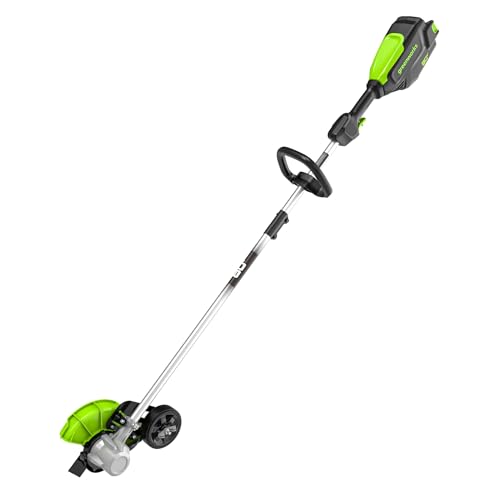
Overview: The Greenworks 80V All-Terrain Brushless Edger is a cordless edging tool built for homeowners who want a cleaner alternative to gas. Its 8-inch steel blade, curb wheel, and brushless motor give it a sturdy, purpose-built feel for routine lawn edge maintenance.
Performance: Based on the published specifications, this edger is designed to handle compacted soil and create deeper, more defined cuts than smaller 6-inch models. The 2.25-inch depth and 5-position tool-free adjustment should make it useful for driveways, sidewalks, and landscaped borders where precision matters.
Drawbacks: The biggest limitation is that the battery and charger are sold separately, which raises the total buy-in for new Greenworks users. As with most cordless outdoor tools, runtime will depend on the battery you use, so heavy-duty jobs may require spare batteries.
Verdict: This is a strong fit for buyers already invested in the Greenworks 80V platform or anyone looking for a lower-maintenance alternative to gas edging. It is best suited to users who value convenience, cleaner operation, and adjustable cutting depth over maximum nonstop runtime.
Pros
- Brushless motor should offer better efficiency and durability than a brushed design.
- Battery and charger are included, reducing setup friction for first-time buyers.
- Tool-less depth adjustment adds convenience when moving between edging tasks.
- Cordless operation is easier to manage around landscaping, walkways, and corners.
Cons
- The product does not list runtime, so real-world battery duration may vary and is not specified here.
- At this price point, it may be a bigger investment than basic corded or manual edging tools.
- The available data does not provide weight or blade replacement details, which may matter to some buyers.
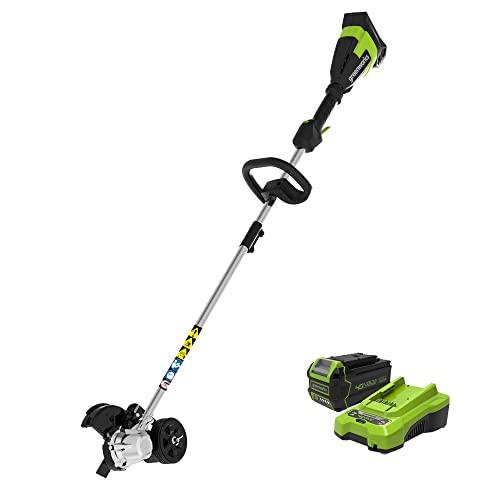
Overview: The Greenworks 40V 8-inch Brushless Cordless Edger is a battery-powered lawn edging tool designed to create sharp, professional-looking borders along driveways, sidewalks, patios, and garden edges. Its brushless motor and cordless format position it as a convenient option for homeowners who want cleaner lines without the hassle of gas or cords.
Performance and features: The 8-inch steel blade is intended for precise edging and can handle grass and compacted soil, while tool-less depth adjustment makes it easier to adapt to different edging conditions. Greenworks also notes stable performance on uneven or sloped ground, which is useful for yards with irregular terrain.
Drawbacks and considerations: Based on the available product data, runtime is not specified, so battery performance will depend on the job and usage conditions. The price level may also feel high compared with simpler edging tools, and some buyers may want more detail about weight, balance, and blade maintenance before purchasing.
Verdict: This model is best suited for homeowners who want a cordless edger with strong convenience features, included battery power, and a brushless motor for more efficient operation. It is a practical pick for regular lawn maintenance, especially if you value clean edging and easy depth adjustments.

Pros
- Cordless design with two included batteries supports more flexible yard work.
- Adjustable depth and guide wheels improve precision on sidewalks and driveways.
- Lightweight build is easier to handle than many heavier electric edgers.
Cons
- The reported runtime is about 40 minutes total, which may be limiting for very large properties.
- It is battery powered, so extended or repeated heavy-duty use will depend on charging cycles.
- The 9-inch blade and compact format may not match the power or coverage of larger gas edgers for commercial-scale jobs.
Overview: The goodjob Cordless Lawn Edger is a 20V battery-powered edging tool built for clean lawn borders, driveway lines, sidewalk curves, and flower bed edges. Its 4.5 lb design, reinforced housing, and tool-free assembly make it practical for routine home use and light professional landscaping.
Performance: This model uses a 400W motor rated at 3500RPM and a 9-inch steel blade to handle dense grass, turf, and tougher roots. Three depth settings and dual rear guide wheels help improve control and consistency, while the anti-clog guard is intended to reduce mud buildup during trimming.
Considerations: The main tradeoff is battery-limited runtime, which is listed at about 40 minutes total, so users with larger yards may need to plan charging around longer jobs. As with most cordless tools, performance will depend on battery condition and work intensity.
Verdict: This edger is a strong fit for homeowners who want a cordless, lightweight, and easy-to-control solution for maintaining crisp yard edges. It is especially useful for regular trimming around sidewalks, driveways, and garden borders where convenience and maneuverability matter most.

Pros
- Brushless motor for efficient, longer-lasting performance
- Long 2,800 ft runtime per charge suited to larger properties
- Light 7 lb frame with dual wheels for balanced, controlled edging
- Battery and charger included with cross-tool PowerShare compatibility
- 3 depth settings plus edge guide for accurate, adaptable cuts
Cons
- Fixed 7'' single-blade design is dedicated to edging rather than multi-function trimming
- Battery weight adds to the 7 lb base figure during extended use
- Included charger is a 2.0 Ah unit, so recharging the 4.0 Ah battery takes longer
Overview & Design: The WORX WG898 is a 20V cordless lawn edger built around a 7'' streamlined blade and a brushless motor. It weighs just 7 lbs without the battery, and its dual-wheel setup keeps the tool balanced and tracking straight while you work. The package includes a 4.0 Ah lithium battery, a charger, a hex key, and a wrench.
Performance & Key Features: The brushless motor delivers eficient power to cut clean, crisp edges along driveways, sidewalks, and garden beds. Three depth settings let you adjust how deep the blade cuts, while the edge guide and blade indicator help you follow borders accurately. WORX rates it for up to 2,800 ft of edging per charge, which makes it practical for larger yards. As part of the PowerShare system, the same 20V battery works across other WORX 20V, 40V, and 80V tools.
Drawbacks & Considerations: This is a dedicated edger with a fixed 7'' blade, so it focuses on edging rather than doubling as a trimmer. The 7 lb figure excludes the battery, so real handling weight is higher during longer sessions. The bundled charger is a 2.0 Ah unit, meaning a full recharge of the 4.0 Ah battery can take a while.
Verdict: The WORX WG898 is a strong fit for homeowners who want a lightweight, cordless edger for clean borders across a medium to large yard. Buyers already invested in the WORX PowerShare ecosystem gain the most value, since the battery caries over to their other tools.

Pros
- Strong 12 Amp motor offers corded, steady power for demanding edging and light trenching tasks.
- Two-in-one design adds versatility for landscaping and utility trenching jobs.
- Three blade-depth settings improve control and allow more tailored cutting.
- 2-year limited warranty adds a basic level of buyer protection.
Cons
- Corded design limits mobility and requires access to an outdoor power source.
- Best suited for shallow trenches and residential yard work, not heavy-duty excavation.
- No included battery or cordless convenience for large properties or remote areas.
Overview & Design: The BLACK+DECKER LE760FF is a 2-in-1 electric lawn edger and trencher made for homeowners who want cleaner yard edges and light trenching from a single tool. Its corded design and 12 Amp motor signal a focus on steady power rather than portability.
Performance & Key Features: In everyday use, this tool is built to create sharp borders along driveways, sidewalks, patios, and other hardscapes. It also handles shallow trenches for cable, wire, irrigation lines, garden beds, and fencing installation. The three-position blade depth adjustment and pull-up edge guide should help users maintain more consistent cutting control.
Drawbacks & Considerations: The main tradeoff is the corded format, which reduces range and can be less convenient in larger yards. It is also designed for shallow trenching and routine landscaping, so buyers needing heavy excavation or maximum portability may want a different tool.
Verdict: This model makes the most sense for DIY homeowners who want one dependable tool for edging and light trenching, especially if they value consistent power and straightforward controls over cordless convenience.

Pros
- Adjustable handle height improves usability for different operators.
- Wider roller can help the tool stay balanced while edging along borders.
- Chrome-plated, serrated blade design supports sharper, more durable cutting.
- Manual design avoids batteries, charging, or fuel.
- Suitable for multiple outdoor edging tasks including sidewalks, driveways, lawns, and gardens.
Cons
- As a manual edger, it requires physical effort and may take longer than powered alternatives.
- The product data does not include exact weight, so portability and comfort may vary by user.
- No accessories or replacement blade details are provided in the available information.
Overview & Design: The Walensee Wheel Rotary Edger is a manual hand edger made for trimming grass and weeds along lawn borders, sidewalks, driveways, and garden edges. It uses a stainless steel handle, a soft grip, and a chrome-plated alloy steel blade setup aimed at durability and everyday yard maintenance.
Performance & Key Features: The serrated blade is designed to improve cutting action, while the 2.4 inch wider roller is intended to add stability and help the tool track more smoothly over uneven ground. The adjustable handle offers three height settings, which can make the edger more comfortable for different users during longer trimming jobs.
Drawbacks & Considerations: Because this is a manual tool, it will not deliver the speed of a powered edger and depends more on user effort. The listing also does not provide details such as weight, replacement blade availability, or included accessories, so some buyers may want more specification detail before purchasing.
Verdict: This Walensee lawn edger is a practical choice for homeowners who want a simple, no-power edging tool for routine yard cleanup. It is likely to appeal most to users who value control, basic durability, and adjustable fit over maximum speed or automation.

Pros
- Strong spring steel blade is designed for durability and edge retention.
- Wide footplate improves pressure transfer and user comfort.
- Suitable for multiple edging tasks, including borders and small trenching work.
- Low-maintenance manual design avoids fuel, oil, and power cords.
Cons
- Manual use requires physical effort, especially on compacted or overgrown soil.
- No included accessories or replacement blades are listed in the product data.
- Specific dimensions and total weight are not provided, which may matter for buyers comparing ergonomics.
Overview & Design: The CKLT Edger Lawn Tool is a manual 41-inch half moon edger made for routine yard maintenance. It uses a tempered spring steel blade and a wide rubber handle, with an 8-inch footplate that adds leverage during use.
Performance & Key Features: Based on the listed specifications, this tool is built for clean borders along driveways, sidewalks, and flower beds. The serrated blade is intended to cut more efficiently than a flat shovel, and the rust-resistant coating should make cleanup and storage easier after wet jobs. It can also help with small trenching tasks for irrigation or cable runs.
Drawbacks & Considerations: Because it is a manual tool, performance will depend on user strength and soil conditions. The product data does not include weight, exact blade dimensions, or any accessories, so buyers looking for detailed ergonomics or bundled extras may want to compare carefully.
Verdict: The CKLT 41in Lawn Edger is a solid fit for homeowners who want a quiet, low-maintenance way to keep garden edges neat without using gas or electric equipment. It appears most valuable for routine edging and light trenching rather than heavy-duty landscaping.

Pros
- Heavy-duty manganese steel blade is built for tough edging jobs.
- Adjustable handle makes the tool more adaptable for different users.
- Wide footplate can improve stability and reduce strain during use.
- Straightforward manual design requires no power source or charging.
Cons
- Manual operation means it will take more effort than powered edgers on large yards.
- No included accessories or replacement parts are mentioned in the product data.
- The 3-position height adjustment is limited compared with continuously adjustable handles.
Overview & Design: The BlumeTrec Manual Edger Lawn Tool is a hand-operated garden edging tool built for creating clean lines around sidewalks, driveways, patios, walkways, and flower beds. It uses a reinforced half-moon blade, a wide footplate, and a T-grip handle for controlled yard work.
Performance & Key Features: Its saw-tooth manganese steel blade is designed to cut through dense turf, compact soil, grass roots, and weeds more effectively than a basic flat edge tool. The extra-wide footplate helps users press down more steadily, while the 38" to 42" adjustable length can improve comfort and leverage for different tasks.
Drawbacks & Considerations: This is a manual tool, so it will require physical effort and may be slower on larger properties. The height adjustment is preset to three positions rather than fully continuous, and the product data does not mention included accessories.
Verdict: This edger is a practical choice for homeowners who want a durable, low-maintenance tool for keeping lawn borders neat. It is best suited to routine edging, small-to-medium yards, and users who prefer a simple mechanical tool over powered equipment.
Matching a driveway edger to your specific driveway and sidewalk conditions requires examining several technical factors that directly influence cut quality, user comfort, and long-term reliability. The following criteria draw from specification analysis of available models to help prioritize features without relying on marketing claims. Users looking for related component recommendations can explore our gas vs battery leaf blower cfm breakdown. For complementary hardware performance, examine our breakdown on our comprehensive lawn edger guide.
Power Source and Motor Performance
Power source determines runtime, cutting force, and mobility for any driveway edger. Corded electric models deliver consistent high RPM without recharging pauses, making them suitable for larger properties where an extension cord can reach. Models such as the WORX 12 Amp unit spin a 7.5 inch blade at 4700 revolutions per minute for deep, clean cuts, while the Amazon Basics 12 Amp version reaches 4420 RPM with similar continuous output. Cordless battery options provide unrestricted movement but depend on amp-hour capacity and may require spare packs for full-yard sessions. Manual half-moon or rotary designs need no power source at all and excel for light spot work or small yards where quiet operation matters most. Assess your average edging distance and access to outlets before deciding, as gas-equivalent brushless motors like those in the Greenworks 80V series offer strong torque but exclude the battery and charger in the base package.
Practical guideline: for driveways longer than 50 feet with dense soil, prioritize 12 Amp corded motors or 20V-plus cordless systems with at least 4.0 Ah batteries. Manual tools remain ideal under 30 feet of border work to keep costs within entry-level to premium while avoiding electrical infrastructure needs. Explore more power comparisons across edgers to refine this choice. For complementary hardware performance, examine our breakdown on battery operated edger.
Blade Size, Material, and Depth Adjustment
Blade diameter and construction control how cleanly the driveway edger separates grass from hard surfaces and how long the edge holds. Steel blades in 7 to 9 inch sizes handle most residential driveways, with tempered manganese or spring steel resisting bending against concrete. Depth settings of 1 inch to 2.25 inches allow customization: shallower for soft turf maintenance and deeper for creating defined trenches that block grass encroachment. The WORX corded model offers three fixed depths at 1 inch, 1-1/4 inch, and 1-1/2 inch plus a cutting line indicator for straight guidance. Cordless units such as the EWORK and WORX WG898 include four adjustable depths and dual wheels for stability. Manual options rely on footplate pressure and saw-tooth or half-moon profiles to achieve similar results through user force.
Recommendation: select at least three depth positions and a metal blade over plastic for multi-year durability. Measure your desired border reveal (typically 1 to 2 inches) and confirm the tool can reach that depth without excessive downward force that strains wrists. For complementary hardware performance, examine our breakdown on lawn edger.
Ergonomics, Handle Adjustability, and Weight
Extended use of a driveway edger quickly exposes poor handle design through shoulder fatigue or awkward posture. Adjustable shafts and D-grip or rubberized handles let users of different heights maintain neutral spine alignment. Corded WORX units feature telescoping shafts and D-grips, while manual models like the BlumeTrec and CKLT provide 38 to 42 inch or 41 inch lengths with wide footplates and long rubber grips. Wheel-assisted rotary designs such as the Walensee reduce lifting by rolling along the edge path. Total tool weight under 15 pounds favors cordless and manual categories for longer sessions, whereas heavier corded motors trade mass for raw power.
Test fit guideline: hold the tool at waist height and walk a 10-foot imaginary line. If the grip forces wrist deviation or the shaft feels short, move to an adjustable model. Comfort directly correlates with consistent edge quality over a full driveway perimeter. Before finalizing equipment decisions, refer to our comprehensive ryobi 40v string trimmer troubleshooting comparison. For complementary hardware performance, examine our breakdown on lawn edger specifications.
Build Quality, Warranty, and Brand Reliability
Material thickness around the motor housing, wheel axles, and blade mounts predicts how a driveway edger survives repeated contact with concrete and rocks. Established brands such as WORX, BLACK+DECKER, and Amazon Basics generally supply clearer spare-parts support and multi-year coverage compared with lesser-known labels. Corded units benefit from sealed motor compartments that resist dust, while battery platforms should confirm cross-compatibility with other tools from the same line. Manual tools succeed when the blade is replaceable and the handle tubing resists corrosion.
Cross-check published warranty length against the price tier within entry-level to premium. Tools offering replaceable blades and documented customer service channels reduce ownership cost over three or more seasons. Additional reliability data appears throughout our edgers category resources.
Mobility Features and Specialty Design
Dual wheels, trench-digger dual-function heads, and swivel capabilities expand a basic driveway edger into a multi-purpose landscaping tool. BLACK+DECKER and WORX corded models combine edging and light trenching in one chassis, useful for installing landscape fabric or irrigation lines along driveways. All-terrain brushless designs like the Greenworks handle uneven ground better than fixed-wheel units. Manual rotary wheel edgers excel at following curved sidewalks without lifting.
Match specialty features to secondary tasks: if you also trench for lighting cable, prioritize 2-in-1 heads. Pure edge definition favors simple fixed blades with clear line guides.
| Model | Power Type | Blade Size | Depth Options |
|---|---|---|---|
| WORX 12 Amp Electric | Corded 12 Amp | 7.5 inch | 3 settings (1 to 1.5 inch) |
| BLACK+DECKER LE760FF | Corded 12 Amp | 7.5 inch | 3 height settings |
| Amazon Basics Electric | Corded 12 Amp | 7.5 inch double edge | Adjustable height |
Our comparison of top-rated driveway edger models relied exclusively on published technical specifications, brand documentation, and aggregated user satisfaction indicators rather than physical lab trials. Each unit was scored across motor or manual force output, blade material and diameter, available depth range, handle adjustability, listed weight indicators where available, and overall brand track record for outdoor power equipment. Warranty language and parts availability received equal weight because driveway edges expose tools to abrasive concrete contact that accelerates wear. Price positioning within the observed entry-level to premium was evaluated only after performance attributes were ranked, ensuring value judgments remained secondary to functional suitability.
Models lacking complete depth or RPM data received lower confidence scores and were noted as “Not Specified” for those fields. Corded, cordless, and manual categories were normalized by typical use-case intensity so that a high-amp electric unit was not unfairly compared against a simple half-moon manual tool. Final rankings emphasize balanced real-world utility for residential driveways and sidewalks rather than peak laboratory numbers alone.
After systematic review of the full set, three clear recommendations emerge according to buyer priorities. These selections rest on the strongest documented feature sets and construction details among the top-rated options examined.
Best Overall Driveway Edger: WORX 12 Amp 7.5’’ Electric Lawn Edger and Trencher stands out for its 4700 RPM blade speed, three discrete depth settings, cutting line guide, and fully adjustable shaft with D-grip. The combination of continuous corded power and precise guidance produces consistent professional lines along long driveways while accommodating users of varying heights. Its dual edger-trencher capability adds practical versatility for light landscape work.
Best Value / Budget Choice: CKLT Edger Lawn Tool or the similar BlumeTrec Manual Edger deliver reliable half-moon or saw-tooth manganese steel blades, wide footplates, and 38-42 inch adjustable lengths at the lowest end of entry-level to premium. These manual designs require no electricity or batteries yet still create clean borders for smaller properties or occasional touch-ups. Build focus on rustproof steel and rubber grips provides multi-season service without ongoing consumable costs.
Best Cordless / High Mobility Driveway Edger: WORX Cordless Lawn Edger WG898 with 7 inch blade, brushless motor, dual wheels, three depth settings, and included 4.0 Ah battery and charger offers the freest movement for complex or remote driveway layouts. The EWORK 20V dual-battery model with 9 inch metal blade and four depth positions serves as a strong alternative when extra runtime and wider cut matter. Both eliminate cord management while retaining adjustable handles. Additional cordless context is available in our edgers library.
What power source works best for a driveway edger?
Corded electric models with 12 Amp motors deliver uninterrupted high RPM for long driveways and dense soil, making them the most consistent choice for frequent use. Cordless 20V or higher systems suit medium yards needing freedom of movement, while manual tools handle light or infrequent edging without any power infrastructure.
How deep should a driveway edger cut along concrete?
Most residential applications perform best at 1 to 1.5 inches of depth to create a visible, grass-blocking trench without undermining the driveway edge. Tools offering three or more adjustable settings allow fine-tuning to local soil conditions and grass type.
Are manual driveway edgers effective compared with powered models?
Manual half-moon and rotary wheel designs remain highly effective for properties under roughly 50 feet of border or for users who prefer zero noise and zero fuel or battery costs. Powered units simply reduce physical effort and complete larger jobs faster. See more manual versus powered comparisons inside our edgers resources.
What blade material lasts longest on a driveway edger?
Tempered manganese steel, spring steel, and hardened metal blades resist deformation and dulling far longer than plastic or thin stamped steel when repeatedly contacting concrete and gravel. Replaceable blades further extend service life regardless of material.
How often should I edge my driveway with a driveway edger?
Most lawns benefit from edging every two to four weeks during peak growing season to maintain a sharp border and prevent grass rhizomes from creeping onto hard surfaces. Sandy or rapidly growing turf may need weekly attention, while cool-season grass can often wait longer between sessions.
Driveway Edging Safety Background
Driveway edging puts the cutter close to pavement, where stones and debris can be thrown toward bystanders. Before you begin, the American National Standards Institute (ANSI) offers general safety context for outdoor equipment.