Quick Answer: Choosing the Best Weed Edger
When choosing the best Weed Edger in 2026, prioritize power source for mobility versus continuous runtime, cutting diameter around 12 inches or adjustable blade depths of 1 to 1.5 inches, tool weight under 6 pounds for reduced strain, and features such as auto line feed or telescopic shafts that improve efficiency and comfort. These factors determine whether a model…

Pros
- Fuel-efficient X-Torq engine reduces both consumption and emissions.
- Heavy-duty edger head suited to professional, high-frequency use.
- Easy-to-understand controls with choke and purge for reliable starting.
- Serviceable design with standalone starter and efficient air filter.
- Backed by a 2-year limited manufacturer's warranty for professional use.
Cons
- Gas-powered operation requires fuel mixing, refueling, and more upkeep than battery or electric edgers.
- Professional-grade build places it at a higher price tier than entry-level homeowner models.
- Product data does not list weight or dimensions, so portability is hard to assess before purchase.
The Husqvarna 525ECS is a professional gas lawn edger built for turf maintenance crews and homeowners who take yard work seriously. It centers on a 25.4cc X-Torq engine paired with a heavy-duty edger head, signaling a tool made for rugged, repeated use rather than occasional touch-ups.
In real-world use, the X-Torq engine is designed to reduce fuel consumption and lower emissions, which helps professionals control operating costs across long shifts. Optimized sight lines improve visibility of the blade for cleaner, straighter edges, while the intuitive choke and purge controls make starting straightforward. The eficient air filter suports longer service intervals and less engine wear.
There are trade-offs to weigh. As a gas unit, it needs fuel handling and routine maintenance that battery or corded models avoid. It also sits in a professional price bracket above basic consumer edgers. The manufacturer listing omits weight and dimensions, so buyers who prioritize portability should confirm those specs before committing.
Overall, the 525ECS is best suited to landscaping professionals and dedicated homeowners who want durable power and serviceability for regular edging work. If you value fuel eficiency, a robust edger head, and easy maintenance, this model earns a strong recommendation.

Pros
- Brushless motor design supports efficient power delivery and durability.
- Cordless format avoids fuel mixing and gas engine maintenance.
- Balanced construction can improve control and comfort during use.
- Broad M18 compatibility is useful for current Milwaukee battery owners.
Cons
- Battery and charger details are not included in the manufacturer listing.
- No exact edging width, runtime, or weight specification is provided.
- May be less ideal for buyers who prefer the unlimited run time of a gas tool for very large properties.
Overview & Design: The Milwaukee M18 FUEL Edger is a cordless edging tool built around Milwaukee's POWERSTATE brushless motor. The design focus is straightforward: deliver strong edging performance in a lighter, more balanced package than a typical gas unit.
Performance & Key Features: According to the product data, it is designed to edge faster than a 31cc gas equivalent. That makes it a good fit for homeowners and maintenance users who want efficient border cleanup along sidewalks, driveways, and garden edges. It also works with the Milwaukee M18 system, which is a practical advantage for users already invested in that battery platform.
Drawbacks & Considerations: The listing does not provide battery, runtime, weight, or accessory details, so buyers should verify those before purchase. It is also important to note that cordless tools trade gas-style continuous runtime for convenience, so very large properties may require spare batteries.
Verdict: This edger makes the most sense for Milwaukee M18 users who want a cleaner, lower-maintenance alternative to gas edging. If you value platform compatibility, easier handling, and brushless performance, it is a strong fit.
Pros
- Reliable gas engine power for uninterrupted use
- Reduced-start-effort system improves usability
- Moderate weight for a gas-powered outdoor tool
Cons
- Heavier than most battery-powered edging options
- Requires gas and 2-stroke engine maintenance
- No accessory bundle or detailed dimension data provided
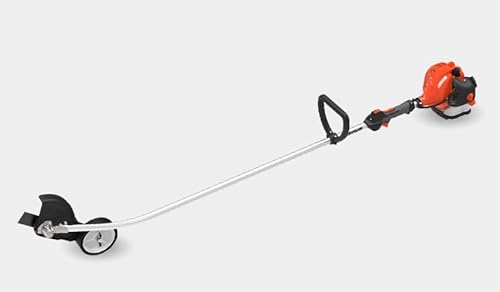
Overview & Design: The Echo PE-225 is a gas-powered edger designed for clean border trimming along sidewalks, driveways, and landscape edges. With a 21.2 cc professional-grade 2-stroke engine and a 13.1-pound build, it aims to balance power with manageable handling.
Performance & Key Features: The 7.75-inch cutting width supports efficient edging passes, while the i-30TM starting system is made to reduce starting effort by 30%. For users who want dependable runtime and strong cutting performance, the gas-powered setup is a clear advantage over cordless tools.
Drawbacks & Considerations: This model still carries the typical tradeoffs of a gas tool, including more maintenance, fuel mixing, and more noise than electric alternatives. Its weight may also feel noticeable during extended use, especially for users who prefer lighter battery-powered equipment.
Verdict: The PE-225 is best suited to homeowners and landscape users who value steady power, straightforward edging performance, and easier starting. It is a practical choice if you want a gas edger for regular yard maintenance and are comfortable with the upkeep that comes with a 2-stroke engine.
Pros
- Strong 82V platform with brushless motor for heavy-duty edging performance.
- Deep 2.2-inch cutting capacity for more defined landscape borders.
- Battery and dual-port charger are included, so it is ready to use out of the box.
Cons
- It is incompatible with Greenworks 80V products, so battery sharing across those systems is not possible.
- The available data does not list weight, runtime details beyond the stated coverage, or full specifications, which may matter to buyers comparing options.
- At this level of power and price positioning, it may be more tool than casual users need for small yards.
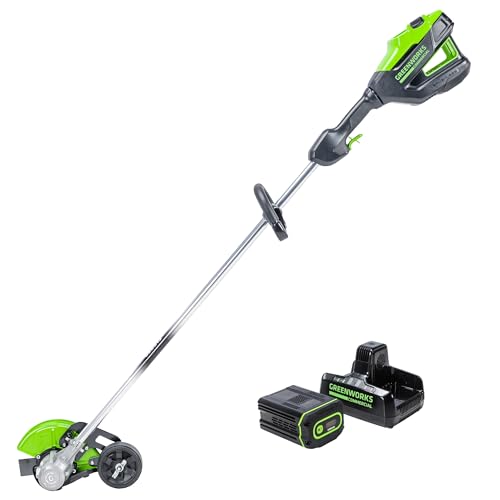
Overview & Design: The Greenworks 82V 8" Brushless Cordless Edger is a battery-powered edging tool designed for clean, professional-looking borders. Its brushless direct-drive motor and heat-treated blade suggest a more durable, work-ready build than basic consumer edgers.
Performance & Key Features: With up to 1.5 kW of power and a maximum cutting depth of 2.2 inches, this edger is built to handle tougher edging tasks with precision. The included 4.0Ah battery is rated for up to 3 miles of edging, and the dual-port rapid charger helps keep downtime lower between jobs.
Drawbacks & Considerations: This model is incompatible with Greenworks 80V products, so it will not fit into every Greenworks battery ecosystem. Also, the listing does not provide full specifications such as weight or detailed runtime conditions, which may be important for buyers who want to compare portability and long-job comfort.
Verdict: This edger makes the most sense for users who need strong edging performance, battery convenience, and a tool that is ready for demanding yard work. It is a good fit for larger lawns, frequent upkeep, and shoppers who value included battery and charging hardware.

Pros
- Cordless 60V MAX platform supports strong edging capability without a fuel mix or cord.
- Hardened steel blade is designed for durability and repeated use.
- Adjustable blade depth improves control for different edging tasks.
- Speed settings give the user more control over power and runtime.
Cons
- Battery and charger are not included, so the total setup cost may be higher if you are not already on the DEWALT platform.
- Tool-only format makes it less convenient for first-time buyers who need a complete starter kit.
- No customer review details were provided in the manufacturer listing, so long-term user satisfaction is hard to verify here.
Overview: The DEWALT DCED472B is a cordless lawn edger built for users who want cleaner landscape borders and a more controlled edging experience. Its 60V MAX platform and tool-only format make it a practical add-on for existing DEWALT users.
Performance & Features: The 7-1/2 in. hardened steel blade is designed for durability, while the adjustable blade depth up to 2-1/2 in. helps tailor the cut to different edge conditions. A large guide wheel improves stability and mobility, and the variable trigger with hi/lo settings gives more control over power output and runtime.
Drawbacks & Considerations: This model does not include a battery or charger, which is important for buyers who are not already using DEWALT 60V tools. Because the product data includes no customer review details, it is harder to judge real-world satisfaction beyond the listed specifications.
Verdict: The DCED472B is best suited for homeowners or landscapers who already own DEWALT 60V batteries and want a cordless edger with adjustable control and durable cutting parts. It is a sensible choice for edging-focused work, but less attractive for first-time buyers seeking an all-in-one package.
Key Technical Factors to Consider Before Buying
A structured evaluation of weed edger models centers on measurable attributes that directly affect cutting quality, user endurance, and long-term reliability. The following criteria draw from technical specifications across the reviewed set to guide practical decisions for different yard conditions and operator needs.
Power Source and Runtime
Power source selection determines mobility and consistency. Cordless 20V systems with dual 2.0Ah batteries deliver combined runtimes near 30 minutes and eliminate cord management, making them suitable for small to medium yards where freedom of movement matters most. Corded models provide uninterrupted power via 12 Amp motors spinning at 4700 RPM for deeper continuous cuts without recharge pauses, though range is limited by extension cord length. Manual half-moon and wheel rotary designs require no power source and excel for light edge maintenance or quiet operation in noise-sensitive areas. For most suburban lots, dual-battery cordless units balance convenience and capacity, while larger properties benefit from corded consistency. Always match Ah ratings and charger speed to expected session length to avoid mid-job interruptions. For troubleshooting and reliability insights, consult our in-depth gas vs battery leaf blower cfm report. For complementary hardware performance, examine our breakdown on lawn edger.
Cutting Diameter, Depth, and Mechanism
Cutting performance hinges on diameter and depth control. String trimmers with 12-inch swaths and 7600 to 9500 RPM motors clear wide grass strips efficiently and convert quickly to vertical edging. Metal-blade or half-moon edgers offer fixed depths of 1 inch, 1.25 inches, or 1.5 inches for creating defined trenches along hardscapes. Auto line feed systems eliminate manual bumping and keep consistent line length, while saw-tooth or tempered spring steel blades on manual tools slice cleanly through soil and roots. Select a 12-inch cutting path for speed on open lawns and adjustable depth settings when precise sidewalk borders are required. Wider diameters reduce passes but increase power demand, so pair them with higher RPM motors for thick vegetation. For troubleshooting and reliability insights, consult our in-depth gas vs battery leaf blower cfm report. For troubleshooting and reliability insights, consult our in-depth ryobi 40v string trimmer troubleshooting report.
Weight, Ergonomics, and Adjustability
Tool weight and handle design govern fatigue over multi-hour sessions. Models weighing 5 to 5.5 pounds with telescopic shafts extending from 38 to 49 inches accommodate varied user heights and minimize stooping. 90-degree tilting heads and 180-degree rotatable handles enable under-bench or slope work without awkward postures. Rubberized wheels and D-grip handles improve tracking for straight lines and reduce vibration transfer. Folding shafts that collapse 180 degrees simplify storage in apartments or garages. Prioritize sub-6-pound units with multiple adjustment points for seniors or users managing larger perimeters. Proper balance around the motor housing further lowers wrist strain during extended edging.
Battery Compatibility and Multi-Tool Ecosystems
Shared battery platforms extend value beyond a single weed edger. 20V Power Share systems allow the same packs to power complementary tools, reducing long-term ownership cost. Dual-battery kits with rapid chargers reaching full capacity in roughly 80 minutes support sequential yard tasks. Manual tools avoid battery concerns entirely and suit infrequent use. When reviewing cordless options, verify included battery count and Ah rating against typical weekly runtime needs. Ecosystem compatibility becomes decisive for owners already invested in a brand platform or planning to expand their lawn care collection.
Durability Features and Safety Elements
Longevity depends on protective guards, spool quality, and material strength. Adjustable spacer guards prevent damage to plants and ornaments. Free lifetime spool programs or multi-pack line inclusions lower ongoing costs. Tempered manganese or spring steel blades resist rust and maintain edge integrity on manual units. Cutting line indicators and support wheels promote accuracy and reduce operator error. Safety locks and one-press starts improve accessibility for less experienced users. Examine construction materials and included accessories carefully, as these details separate tools that last multiple seasons from those requiring frequent parts replacement. Additional guidance on matching these attributes appears in the Edgers category resource pages.
| Model | Power Type | Cutting Specs | Weight / RPM |
|---|---|---|---|
| WORX WG163 Cordless | 20V Dual Battery | 12 inch string, 90° tilt | 5.5 lbs / 7600 RPM |
| KOMASTY 20V Foldable | 20V Dual 2.0Ah | 12 inch auto feed | Lightweight / 9500 RPM |
| WORX 12 Amp Corded | Corded 12 Amp | 7.5 inch blade, 3 depths | Not Specified / 4700 RPM |
Power Type and Cutting Specs
Weed edger models here draw on manufacturer specifications and the product data displayed on Amazon. The table sets model, power type, cutting specifications and rotation speed side by side, which lets readers compare how each unit cuts and how it is powered. Power type and cutting specifications are the main points of contrast, and rotation speed gives a further detail for each model in the list.
Wrap-Up: Which Model Delivers True Value?
After analyzing specifications across the full set, clear leaders emerge for different user priorities. These recommendations group models by primary buyer intent to simplify final selection.
Best Overall Weed Edger: WORX Cordless String Trimmer & Lawn Edger WG163 stands out for its rapid 2-in-1 conversion, 7600 RPM motor, dual 20V batteries, rubberized wheels for straight tracking, and free spool program. The 5.5-pound weight and 90-degree head tilt deliver professional edges with minimal fatigue on typical residential lots. Its Power Share compatibility adds long-term value.
Best Value / Budget Choice: LPSUK 20V Cordless String Trimmer provides 3-in-1 functionality (trimmer, edger, mini mower), 8000 RPM, telescopic shaft, auto line feed with eight spools, and a single 2.0Ah battery plus fast charger at an accessible entry point. The 5-pound chassis suits seniors and small-yard owners seeking multi-mode versatility without premium pricing. For pure manual economy, the Colwelt Saw-Tooth Edger offers a reliable 38-inch half-moon design with T-grip and side-step plate.
Best for Heavy-Duty or Continuous Edging: WORX 12 Amp 7.5-inch Electric Lawn Edger & Trencher supplies uninterrupted corded power at 4700 RPM with three depth settings and a cutting line indicator. Adjustable shaft and D-grip accommodate varied heights while delivering deeper trenches than most string models. Owners needing silent, zero-runtime-limit operation for large hardscape borders will find this configuration optimal. Complementary details on matching tools appear within the full Edgers review collection.
Frequently Asked Questions About Weed Edger
What is the best weed edger for small yards?
Lightweight cordless models under 6 pounds with 12-inch cutting diameters and folding shafts perform best in small yards. Units such as the KOMASTY or LPSUK 20V designs offer auto feed, 30-minute combined runtime, and compact storage that fits apartments or limited garage space while still creating clean edges around tight landscaping. To evaluate matched hardware tolerances, consult our detailed overview of pressure washer nozzle color guide.
How long do batteries last on cordless weed edger models?
Dual 2.0Ah 20V battery kits typically provide up to 30 minutes of continuous operation under moderate load. Actual runtime varies with grass density and RPM demand; allowing batteries to cool before recharging extends overall lifespan. Single-battery units require mid-session swaps for larger areas.
Should I choose a manual or electric weed edger?
Manual half-moon and wheel rotary edgers suit light maintenance, quiet operation, and zero operating cost on small properties. Electric cordless or corded versions deliver higher speed and less physical effort for regular or heavy-duty border work. Match the choice to frequency of use and operator strength. Further comparisons of both styles are available in the Edgers category overview.
What cutting depth is ideal for sidewalk weed edger work?
Depths of 1 to 1.5 inches create durable trenches that resist grass encroachment along sidewalks and driveways. Corded metal-blade models with three preset adjustments excel here, while string trimmers achieve similar results by tilting the head fully vertical and making multiple controlled passes. When planning workspace deployment, consider the engineering criteria outlined in our cleaning a wood deck with a pressure washer guide.
How do I maintain string line on a weed edger for longer life?
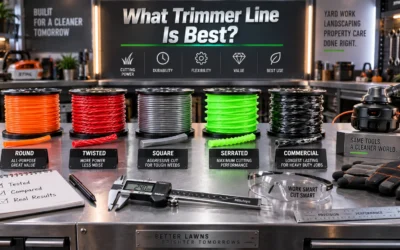
Store spare spools in a cool location and soak new line in water for 24 hours before loading to restore flexibility and reduce snapping. Use only the tip of the line for cutting, avoid forcing the head into hard surfaces, and prefer square or twisted profiles over round for cleaner slices through dense weeds.
Lawn Edges Done Safely
Walk the perimeter before edging, since toys, hoses, and hidden rocks can be thrown or snag the head. Extra context is available in the post on edger for lawns. Broader safety context for lawn tools lives at American National Standards Institute (ANSI).