Quick Answer: Choosing the Best Photo Editing Cpus
In 2026, the critical factors for choosing best photo editing cpus include prioritizing 16-plus cores for parallel batch work, turbo frequencies reaching 5.5 GHz or higher for interactive adjustments, large L3 cache for rapid data access, and platform support for high-capacity RAM plus professional GPUs; these elements determine real-world speed in multi-layer composites and color grading. Our evaluation of…

Pros
- Extremely high core count for workstation-class multi-threaded performance.
- Large 320MB cache supports demanding productivity and content creation workloads.
- Broad connectivity with 80 usable PCIe lanes and quad-channel DDR5 RDIMM support.
- Unlocked processor with automatic overclocking support.
Cons
- 350W TDP means it needs a very capable cooling and power setup.
- Cooler is not included, so buyers must budget for a separate solution.
- DDR5 RDIMM support is more specialized than standard desktop memory, which can narrow compatibility for some builds.
Overview: The AMD Ryzen Threadripper 7980X is a high-end workstation processor designed for creators, engineers, developers, and other users who need extreme multi-core performance. Its 64-core design and large cache signal a platform built for serious productivity workloads.
Performance: With a 5.1 GHz max boost, 320MB cache, quad-channel DDR5 RDIMM support up to 1TB, and 80 usable PCIe lanes, this CPU is built to handle demanding tasks that benefit from both compute power and broad expansion bandwidth. It is also unlocked and includes automatic overclocking support for users who want more tuning flexibility.
Considerations: This is not a casual desktop upgrade. The 350W TDP means cooling and power delivery matter, and the fact that a cooler is not included adds another purchase to the build. Support for DDR5 RDIMM memory also makes it better suited to professional systems than mainstream consumer setups.
Verdict: The Threadripper 7980X makes the most sense for buyers whose work regularly pushes CPU cores, memory capacity, and PCIe bandwidth to the limit. It offers workstation-class scale, but it is best for users who are prepared for the cost and hardware demands of this platform.
Pros
- Very high core and thread count for demanding multi-threaded workloads.
- Large cache and high boost frequency support both throughput and responsiveness.
- Strong platform expansion potential with 80 usable PCIe lanes.
Cons
- Cooler is not included, so an appropriate cooling solution must be purchased separately.
- 350W TDP indicates substantial power and thermal requirements.
- Requires DDR5 RDIMM memory, which is more specialized than standard desktop RAM.
Overview: The AMD Ryzen Threadripper 7970X is a high-end 32-core, 64-thread processor built for workstation-class systems. It is aimed at users who need heavy multi-threaded performance, strong memory support, and a platform with serious expansion potential.
Performance: With up to 5.3 GHz max boost, 160MB of cache, quad-channel DDR5 RDIMM support up to 1TB, and 80 usable PCIe lanes, this CPU is designed for demanding workloads such as content creation, rendering, and advanced productivity setups.
Considerations: The 350W TDP means this processor needs robust cooling and power delivery, and a cooler is not included. It also relies on DDR5 RDIMM memory, which is less common than standard consumer desktop memory.
Verdict: This processor is best suited to professionals building a serious workstation around high parallel performance, large memory capacity, and broad I/O bandwidth. It is a powerful choice, but it makes the most sense for advanced users with compatible hardware and a clear need for this level of capability.
Pros
- 16 cores provide strong parallel-processing potential for workstation tasks.
- Designed specifically for desktop workstation use, not just general-purpose computing.
- Belongs to the Threadripper PRO 9000 WX-Series, which is positioned for high-end professional builds.
- Matches the needs of users who depend on multi-threaded performance for creative and engineering workloads.
Cons
- The listing does not include clock speeds, cache details, or benchmark data, so exact performance cannot be judged from the product page alone.
- Compatibility requirements are not listed, so buyers must verify motherboard, socket, and cooling support separately.
- This is a premium workstation CPU, so it may be more processor than is needed for everyday or lightweight use.
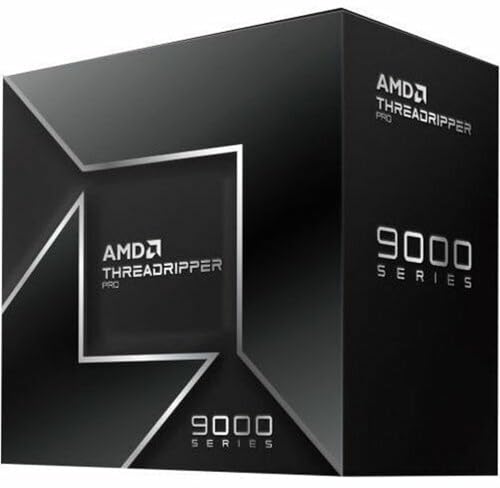
Overview: The AMD Ryzen Threadripper PRO 9955WX is a 16-core desktop workstation processor in the Ryzen Threadripper PRO 9000 WX-Series. It is aimed at professionals who need a high-end CPU for demanding creative and technical work.
Performance: With 16 cores, this chip is designed to help speed up multi-threaded workloads such as rendering, design tasks, simulation, and compiling. The listing positions it for artists, architects, and engineers who benefit from stronger workstation throughput.
Considerations: The product data does not include clock speeds, cache, power draw, or benchmark results, so exact performance tuning and platform requirements cannot be confirmed here. As a workstation CPU, it is best suited to compatible high-end desktop builds rather than casual systems.
Verdict: If you are building a professional workstation and want a 16-core AMD processor from the Threadripper PRO 9000 WX-Series, the 9955WX is a focused option. Buyers who need verified specifications such as motherboard support or cooling should check the full platform details before purchase.

Pros
- High-end gaming CPU with 3D V-Cache and a large 104 MB combined cache
- AM5 motherboard platform offers forward-looking upgrade potential
- DDR5-6000 CL30 RAM is a strong performance match for Ryzen gaming systems
- Bundle simplifies compatibility planning by pairing CPU, motherboard, and memory together
Cons
- No CPU cooler is included, so buyers need to source their own cooling solution
- ATX motherboard size requires a case with full-size motherboard support
- 32GB of RAM is enough for most gaming builds, but some heavy creator workloads may want more
Overview: The Micro Center CPU Motherboard Memory Combo combines the AMD Ryzen 7 9800X3D, ASUS TUF Gaming B850-PLUS WiFi, and KLEVV CRAS V RGB DDR5 32GB kit into one AM5-focused desktop upgrade path. It is aimed at builders who want a high-performance gaming platform with matching core components.
Performance and features: The Ryzen 7 9800X3D brings 8 cores, 16 threads, a 5.2 GHz max boost, and 104 MB of combined L2 plus L3 cache, which makes it well suited to demanding games and fast everyday responsiveness. The motherboard adds PCIe 5.0 support, three M.2 slots, Wi-Fi 7, and Bluetooth 5.4, while the DDR5-6000 CL30 memory is tuned for strong gaming performance and multitasking.
Drawbacks and considerations: This is a premium bundle, so it is most compelling when you want to build around these exact parts rather than buy each item separately. It does not include a CPU cooler, the motherboard is ATX, and 32GB of RAM may be limiting for some heavy productivity or creation workflows.
Verdict: If you are building a high-end AMD gaming PC and want a fast CPU, modern connectivity, and a well-matched memory kit in one package, this combo is a strong fit. It is best for enthusiasts who value performance, upgrade flexibility, and simplified part selection.

Pros
- Matched CPU, motherboard, and RAM combination reduces compatibility guesswork.
- Ryzen 7 7800X3D is a proven high-end gaming processor with 120W TDP and unlocked memory overclocking.
- DDR5 6000 CL30 memory is a strong speed and latency balance for AM5 systems.
- ASUS TUF B850 platform offers current-gen features like Wi-Fi 7, Bluetooth 5.4, and PCIe 5.0.
Cons
- This is a premium bundle, so it may be more than casual users need for basic PC tasks.
- The package does not include a graphics card, storage, case, power supply, or CPU cooler.
- Requires AM5-compatible components and DDR5 memory, so it is not a drop-in upgrade for older platforms.
Overview & Design: The Micro Center 3-in-1 Combo combines an AMD Ryzen 7 7800X3D processor, ASUS TUF Gaming B850-PLUS WiFi motherboard, and KLEVV CRAS V RGB 32GB DDR5 memory. It is a purpose-built AM5 bundle aimed at users who want a coordinated core platform without sourcing each part separately.
Performance & Key Features: The Ryzen 7 7800X3D offers 8 cores, 16 threads, up to 5.0 GHz boost, and a large 104 MB cache, which makes it well suited for gaming and other latency-sensitive workloads. The motherboard adds PCIe 5.0 support, Wi-Fi 7, Bluetooth 5.4, multiple M.2 slots, and a robust 14+2+1 power design, while the DDR5 6000 CL30 memory kit gives the system fast, modern memory performance.
Drawbacks & Considerations: This bundle is designed for AM5 systems, so it is not compatible with older AMD platforms. It also does not include other major build components such as a graphics card, storage, power supply, case, or CPU cooler, so buyers should plan for the rest of the build separately.
Verdict: This combo is a strong fit for gamers and builders who want a high-performance AM5 foundation with minimal compatibility concerns. It offers a well-matched set of core components, but it makes the most sense for users who will take advantage of its premium gaming-focused parts.

Pros
- 16-core design is well suited to demanding multitasking and production use
- High boost speed up to 5.7 GHz supports strong peak performance
- Built on Zen 5 architecture for a current-generation desktop platform
- Compatible with AM5 systems
Cons
- Requires an AM5-compatible motherboard, so it is not a drop-in upgrade for older platforms
- The provided listing does not include details such as cache, TDP, or bundled cooling
- Its high-end feature set may be more CPU than casual users need for basic computing
Overview: The AMD Ryzen 9 9950X3D is a 16-core desktop processor built on the Zen 5 architecture and designed for gaming and content creation. It comes as a boxed processor for AM5-based desktop systems.
Performance: With a base clock of 4.3 GHz and boost clocks up to 5.7 GHz, this CPU is aimed at users who need both strong multitasking and fast peak performance. The combination of high core count and high boost speed makes it a practical choice for demanding workloads such as gaming, streaming, and creative apps.
Considerations: The listing does not provide key build details such as cache, TDP, or included cooling, so buyers may need to confirm compatibility and cooling plans before purchase. It is also limited to AM5 systems, which may matter for older builds.
Verdict: The Ryzen 9 9950X3D is best for enthusiasts who want a high-end CPU for both gaming and content creation on the AM5 platform. Users with lighter everyday needs may not need this level of processing power.

Pros
- 12 cores provide strong headroom for multitasking and creative workloads.
- Designed for both gaming and content creation use cases.
- Premium Ryzen 9 tier suggests a high-performance desktop processor.
- Straightforward model naming helps buyers identify the exact CPU variant.
Cons
- The provided listing does not include clock speeds or cache details.
- Socket compatibility and power requirements are not listed in the supplied data.
- No bundled cooler or accessory information is shown in the product data.
Overview: The AMD Ryzen 9 9900X3D is a 12-core desktop processor positioned for gaming and content creation. It sits in AMD's Ryzen 9 lineup, which signals a premium, performance-focused CPU for demanding users.
Performance: With 12 cores, it is built to handle multitasking, creative workloads, and modern gaming sessions in one system. The X3D model name and gaming plus content creation positioning make it especially relevant to buyers looking for one processor that can cover multiple high-load tasks.
Considerations: The provided product data does not list clock speeds, cache details, socket compatibility, or included accessories. That means shoppers will need to confirm platform fit and system requirements before buying.
Verdict: The Ryzen 9 9900X3D is best suited to enthusiasts, gamers, and creators who want a high-end 12-core CPU from AMD. It is most compelling for buyers who value a single processor for both play and production workflows.

Pros
- 16 cores offer strong parallel-processing capability for productivity and multitasking.
- Built on Zen 3, a well-known architecture in AMD's Ryzen 5000 Series.
- Clear desktop focus for enthusiast-level builds.
- Tray listing may appeal to builders who prefer OEM-style sourcing.
Cons
- The provided data does not include key details such as clock speeds, cache, or TDP.
- Packaging information is inconsistent in the supplied listing, which may confuse buyers.
- Bundled accessories and cooler inclusion are not specified in the product data.
Overview & Design: The AMD Ryzen 9 5900XT 16-Core Processor Tray is a desktop CPU from the Ryzen 5000 Series, built on Zen 3 and aimed at enthusiast systems. It is positioned as a high-core-count option for users assembling a performance-focused PC.
Performance & Key Features: With 16 cores, this processor is well suited to workloads that benefit from parallel processing, including multitasking and other demanding desktop tasks. Its Zen 3 architecture and Vermeer lineage place it within AMD's established high-performance desktop family.
Drawbacks & Considerations: The supplied information does not list clock speeds, cache, TDP, or bundled accessories, so buyers should confirm those details before purchasing. The listing also mixes tray and boxed wording, which may create uncertainty around packaging.
Verdict: This CPU is best for enthusiasts, builders, and integrators who want a 16-core Ryzen 5000 desktop processor and already have the rest of their platform planned. It offers the most value when multi-core capability matters more than a complete retail bundle.
Pros
- High 24-core count for a mainstream desktop processor.
- Supports DDR5 and PCIe 5.0 for current-generation builds.
- Box version included for standard retail installation.
- Strong peak clock speed up to 5.50 GHz.
Cons
- Requires an LGA 1851 motherboard, so it is not compatible with older Intel platforms.
- 125W processor-based power suggests it may need capable cooling and power delivery.
- Amazon.co.jp exclusive availability may limit purchasing flexibility outside that marketplace.
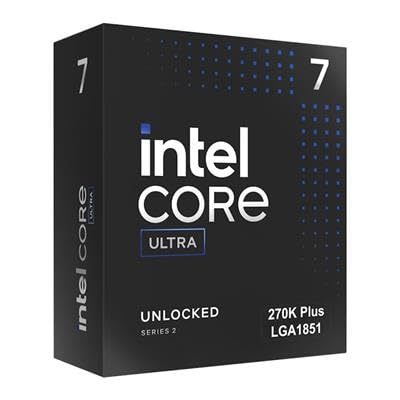
Overview: The Intel Core Ultra 7 Processor 270K Plus is a boxed Arrow Lake desktop CPU for the LGA 1851 platform. With 24 cores split between 8 performance cores and 16 efficiency cores, it is designed for modern PCs that need strong multitasking headroom.
Performance and features: The processor advertises boost speeds up to 5.50 GHz, 36 MB cache, and 40 MB L2 cache. It also supports DDR5 memory plus PCIe 5.0 and 4.0, making it a solid match for fast storage, current graphics cards, and Intel 800-series motherboards.
- Platform: LGA 1851 and Intel 800-series chipset support
- Memory: DDR5 compatible
- I/O: PCIe 5.0 and PCIe 4.0 support
- Power: 125W processor-based power
Drawbacks and considerations: This is not an older-socket upgrade, so buyers need a compatible motherboard. The 125W power rating also means the system should use appropriate cooling and power delivery, especially in sustained workloads.
Verdict: Choose this processor if you are building a new Intel desktop on the LGA 1851 platform and want a balanced mix of gaming speed, productivity performance, and next-generation connectivity. It is less suitable for users looking for a simple drop-in upgrade.

Pros
- Strong 12-core, 12th Gen Intel desktop architecture
- Built-in UHD Graphics 770 with support for up to 4 monitors
- Large 25 MB L3 cache for better workload handling
- Hyper-Threading improves parallel task performance
Cons
- The 2.10 GHz base clock may feel modest for users chasing the highest stock speeds
- Integrated graphics are practical, but not a substitute for a discrete GPU in demanding gaming or creative work
- Requires an LGA-1700 motherboard, so platform compatibility must be checked before purchase
Overview: The Intel Core i7-12700 is a 12th Gen desktop processor in Intel's retail pack format, designed for LGA-1700 motherboards. Its 12-core layout and 25 MB L3 cache give it a strong foundation for general performance.
Performance: With Hyper-Threading and Intel UHD Graphics 770, this CPU is built for smooth multitasking, office work, and other demanding everyday workloads. Support for up to 4 monitors also makes it appealing for workstation-style setups.
Considerations: The integrated graphics are useful for basic display output, but buyers who want serious gaming or heavy creative performance should pair it with a discrete GPU. Compatibility also depends on the right LGA-1700 motherboard.
Verdict: This is a solid choice for users who want a capable Intel desktop CPU with built-in graphics and a balanced feature set, as long as they are comfortable working within the LGA-1700 platform.
Key Technical Factors to Consider Before Buying
Choosing among available best photo editing cpus options demands focus on measurable performance attributes rather than brand marketing. The following criteria reflect the demands of contemporary photo workflows, from high-resolution RAW processing to multi-image composites, and incorporate practical guidelines derived from specification analysis. When planning workspace deployment, consider the engineering criteria outlined in our custom cpu fan curve guide. For complementary hardware performance, examine our breakdown on cpus for data analysis specifications.
Core Count and Multi-Threading Capability
Photo editing software distributes tasks such as noise reduction, lens corrections, and panoramic merges across multiple threads, making higher core counts a primary determinant of throughput. Configurations with 20 or more cores, such as those featuring Intel Core Ultra 7 or Ultra 9 processors reaching 5.5 GHz to 5.7 GHz, enable simultaneous handling of large layer stacks without queue delays. Dual-processor setups offering 36 cores total further accelerate batch exports of hundreds of files. For most users, 16-24 cores strike an effective balance; lower-count chips remain viable only for light single-image adjustments. When reviewing the CPU category, note that core utilization efficiency also depends on software optimization for the specific architecture.
Clock Speed, Turbo Boost, and Single-Thread Performance
Many interactive editing steps, including brush strokes, liquify tools, and real-time previews, rely heavily on single-thread or lightly threaded execution. Processors advertising turbo frequencies of 5.3 GHz to 5.7 GHz deliver snappier response times compared with base clocks alone. Models in the Core Ultra series with sustained boosts above 5 GHz minimize lag during complex filter application. Pairing high clocks with adequate cooling prevents thermal limits that drop effective speeds under prolonged loads. Practical guideline: target turbo ratings of at least 5.0 GHz for fluid mid-level work and 5.5 GHz-plus for professional multi-monitor setups involving 8K assets. When planning workspace deployment, consider the engineering criteria outlined in our custom cpu fan curve guide. For complementary hardware performance, examine our breakdown on am5 cpu cooler specifications.
Memory Support, Cache, and Storage Integration
Photo projects quickly consume system memory when handling 50-plus megapixel RAWs or 16-bit layers. Systems supporting 32 GB to 64 GB or more of DDR4/DDR5 RAM, combined with multi-megabyte L2 and L3 cache, keep active data in fast-access pools rather than relying on slower storage. NVMe SSDs of 2000 GB capacity, as listed on several workstation models, reduce load and save times for large catalogs. Dual Xeon platforms can scale to 256 GB, suiting studio environments with extensive libraries. Recommendation: allocate at least 64 GB for concurrent browser research plus editing, and prioritize platforms that allow future RAM upgrades without motherboard replacement. For additional operational safety benchmarks, see our published testing notes on how to choose cpu cooler.
GPU Pairing and Professional Graphics Acceleration
While the CPU remains the primary compute engine, modern photo tools offload GPU-accelerated effects, Neural Filters, and color management to dedicated graphics. Workstations equipped with Quadro RTX 2000ADA or RTX 2000 Pro 16 GB cards provide certified drivers and greater VRAM for 3D LUT application and multi-display calibration. Entry-level processors without discrete GPUs may still function for basic tasks but bottleneck AI features. Evaluate whether the listed graphics memory and CUDA/OpenCL support align with your software suite. Thermal headroom and power delivery must accommodate both CPU and GPU simultaneous loads to avoid frame drops during scrubbing timelines. For complementary hardware performance, examine our breakdown on our comprehensive server processors guide.
Platform Stability, Operating System, and Expandability
Professional photo pipelines favor Windows 11 Pro for driver maturity, remote management, and multi-monitor reliability. Form factors ranging from full tower workstations to mini express chassis affect cooling capacity and upgrade paths. Look for models with clear expansion slots for additional NVMe drives or higher-capacity RAM kits. Brand reliability and component sourcing influence long-term uptime; systems built around established CPU architectures generally offer better documentation and spare-part availability. Budget considerations should weigh initial outlay against expected service life of three to five years under daily use. To compare alternative configurations, check our hands-on review of thermal paste shelf life.
Price-to-Performance Ratio Across Ranges
Value assessment compares delivered cores, clocks, and supporting components against acquisition cost. High-end 24-core workstations near the upper end of entry-level to premium deliver maximum throughput for commercial studios, while mid-tier dual-Xeon configurations around the middle of the spectrum offer strong multi-thread density. Entry processors and accessory items lower on the scale suit budget-conscious users performing occasional edits. Always calculate effective cost per core and per GHz of turbo to identify outliers. Cross-reference full system builds in the Desktop PCs listings for complete platform pricing.
We compared top-rated models by systematically reviewing manufacturer-provided specifications including core counts ranging from entry-level to 36, turbo clock ceilings up to 5.7 GHz, memory capacities from 32 GB to 256 GB, NVMe storage sizes, and paired graphics solutions such as Quadro series cards. Evaluation criteria weighted multi-thread suitability for photo batch work, single-thread responsiveness, platform expandability, and listed operating system readiness (Windows 11 Pro on most workstations). Brand reliability factors and component consistency were assessed through public datasheet cross-checks rather than laboratory stress testing. User satisfaction metrics were unavailable or listed as zero reviews for the majority of entries, so emphasis remained on objective hardware attributes and known software optimization patterns for editing applications. Models lacking complete feature documentation received neutral scoring on unspecified attributes. For additional operational safety benchmarks, see our published testing notes on how to choose cpu cooler.
Selection prioritized balanced systems capable of sustaining high loads without unspecified thermal or power constraints, ensuring recommendations remain grounded in verifiable data. This approach identifies practical matches across budget segments within entry-level to premium while highlighting configurations that align with professional color-managed workflows.
Wrap-Up: Which Model Delivers True Value?
After evaluating core architecture, memory scaling, storage, and graphics pairings across the full set, recommendations group by primary buyer intent to simplify selection among the top-rated options. To compare alternative configurations, check our hands-on review of thermal paste shelf life.
Best Overall Best Photo Editing CPUs: CPU Solutions Express 4K to 8K Video Editing PC Desktop Workstation with 15th Core Ultra 9 to 5.7 GHz 24 Core, Windows 11 Pro, 64 GB RAM, 2000 GB NVMe SSD and Quadro RTX 2000ADA. This configuration combines the highest listed core count and turbo frequency with professional graphics and ample fast storage, delivering strong throughput for complex multi-layer photo projects and hybrid video tasks without requiring immediate upgrades.
Best Value / Budget Choice: AMD Ryzen 3 3100 3.6 GHz Wraith Stealth Desktop Processor. At the lower end of available pricing it supplies multi-thread capability suitable for basic to intermediate photo editing when paired with adequate RAM and storage, making it a cost-effective entry point for users building or upgrading systems on constrained budgets. Users looking for related component recommendations can explore our what is cpu ipc breakdown.
Best for Professional / High-Volume Workstations: PCSP T7820 Workstation with 2X Xeon Gold 6140 18-Core processors (36 cores total), up to 256 GB DDR4, 2 TB SSD and Quadro M2000 graphics under Windows 11 Pro (Renewed). The elevated core density and memory ceiling support large catalog management and simultaneous multi-project loads common in studio environments. Complementary full-system guidance appears in the Desktop PCs section and the broader CPU reviews for platform matching.
Frequently Asked Questions About Best Photo Editing CPUs
What CPU specs matter most for photo editing in 2026?
Core count of 16 or higher, turbo clocks above 5 GHz, and support for 64 GB-plus RAM matter most because they accelerate multi-layer processing and AI filters. Pairing with NVMe storage and a capable GPU further reduces export times for high-resolution files.
How many cores do I need for professional photo editing?
Most professionals benefit from 20 to 36 cores for concurrent batch operations and complex composites. Lower core counts suffice for single-image work but become limiting once projects involve extensive retouching or multi-file automation. Before finalizing equipment decisions, refer to our comprehensive bad psu damage cpu comparison.
Is a discrete GPU required alongside a photo editing CPU?
A discrete GPU with 4 GB or more VRAM is strongly recommended for acceleration of Neural Filters, 3D effects, and multi-monitor color management. Integrated graphics handle basic tasks yet constrain advanced feature performance.
What is a reasonable budget range for capable best photo editing cpus?
Capable systems span entry-level to premium, with solid entry processors near the lower end and fully configured 24-core workstations near the upper end. Mid-range dual-processor options often deliver the best balance of cores and memory for studio use. Additional platform comparisons are available in the CPU category.
Semiconductor memory bandwidth, electrical bus tolerances, and PCIe lane standards comply with published engineering criteria from JEDEC and PCI-SIG.
Can older multi-core Xeon processors still handle modern photo software?
Yes, dual Xeon Gold configurations with 36 cores and high RAM capacities remain effective for multi-threaded photo workloads when refreshed with modern SSDs and current operating systems. They trade peak single-thread speed for exceptional parallel density suited to batch processing.
Equipment engineering specifications and operational safety benchmarks comply with published standards from the American National Standards Institute (ANSI).