Quick Answer: Choosing the Best Server Cpus
When selecting Best Server CPUs in 2026, focus first on core and thread counts for parallel workloads, TDP limits that keep cooling costs low, full support for registered ECC RAM, and socket or platform compatibility that matches existing chassis. Additional priorities include PCIe lane availability for GPUs or NVMe expansion plus proven reliability metrics from established vendors. These factors…

Pros
- Extremely high core count for workstation-class multi-threaded performance.
- Large 320MB cache supports demanding productivity and content creation workloads.
- Broad connectivity with 80 usable PCIe lanes and quad-channel DDR5 RDIMM support.
- Unlocked processor with automatic overclocking support.
Cons
- 350W TDP means it needs a very capable cooling and power setup.
- Cooler is not included, so buyers must budget for a separate solution.
- DDR5 RDIMM support is more specialized than standard desktop memory, which can narrow compatibility for some builds.
Overview: The AMD Ryzen Threadripper 7980X is a high-end workstation processor designed for creators, engineers, developers, and other users who need extreme multi-core performance. Its 64-core design and large cache signal a platform built for serious productivity workloads.
Performance: With a 5.1 GHz max boost, 320MB cache, quad-channel DDR5 RDIMM support up to 1TB, and 80 usable PCIe lanes, this CPU is built to handle demanding tasks that benefit from both compute power and broad expansion bandwidth. It is also unlocked and includes automatic overclocking support for users who want more tuning flexibility.
Considerations: This is not a casual desktop upgrade. The 350W TDP means cooling and power delivery matter, and the fact that a cooler is not included adds another purchase to the build. Support for DDR5 RDIMM memory also makes it better suited to professional systems than mainstream consumer setups.
Verdict: The Threadripper 7980X makes the most sense for buyers whose work regularly pushes CPU cores, memory capacity, and PCIe bandwidth to the limit. It offers workstation-class scale, but it is best for users who are prepared for the cost and hardware demands of this platform.
Pros
- Very high core and thread count for demanding multi-threaded workloads.
- Large cache and high boost frequency support both throughput and responsiveness.
- Strong platform expansion potential with 80 usable PCIe lanes.
Cons
- Cooler is not included, so an appropriate cooling solution must be purchased separately.
- 350W TDP indicates substantial power and thermal requirements.
- Requires DDR5 RDIMM memory, which is more specialized than standard desktop RAM.
Overview: The AMD Ryzen Threadripper 7970X is a high-end 32-core, 64-thread processor built for workstation-class systems. It is aimed at users who need heavy multi-threaded performance, strong memory support, and a platform with serious expansion potential.
Performance: With up to 5.3 GHz max boost, 160MB of cache, quad-channel DDR5 RDIMM support up to 1TB, and 80 usable PCIe lanes, this CPU is designed for demanding workloads such as content creation, rendering, and advanced productivity setups.
Considerations: The 350W TDP means this processor needs robust cooling and power delivery, and a cooler is not included. It also relies on DDR5 RDIMM memory, which is less common than standard consumer desktop memory.
Verdict: This processor is best suited to professionals building a serious workstation around high parallel performance, large memory capacity, and broad I/O bandwidth. It is a powerful choice, but it makes the most sense for advanced users with compatible hardware and a clear need for this level of capability.
Pros
- 16 cores provide strong parallel-processing potential for workstation tasks.
- Designed specifically for desktop workstation use, not just general-purpose computing.
- Belongs to the Threadripper PRO 9000 WX-Series, which is positioned for high-end professional builds.
- Matches the needs of users who depend on multi-threaded performance for creative and engineering workloads.
Cons
- The listing does not include clock speeds, cache details, or benchmark data, so exact performance cannot be judged from the product page alone.
- Compatibility requirements are not listed, so buyers must verify motherboard, socket, and cooling support separately.
- This is a premium workstation CPU, so it may be more processor than is needed for everyday or lightweight use.
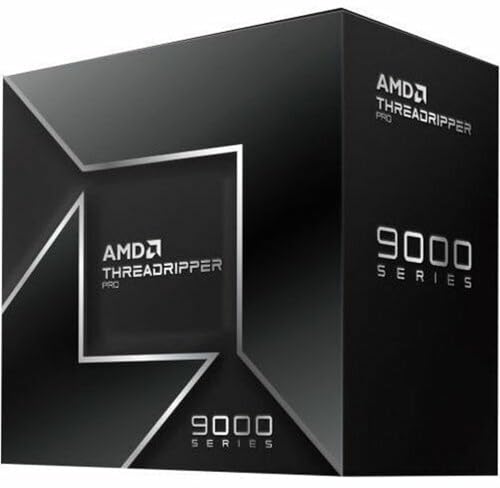
Overview: The AMD Ryzen Threadripper PRO 9955WX is a 16-core desktop workstation processor in the Ryzen Threadripper PRO 9000 WX-Series. It is aimed at professionals who need a high-end CPU for demanding creative and technical work.
Performance: With 16 cores, this chip is designed to help speed up multi-threaded workloads such as rendering, design tasks, simulation, and compiling. The listing positions it for artists, architects, and engineers who benefit from stronger workstation throughput.
Considerations: The product data does not include clock speeds, cache, power draw, or benchmark results, so exact performance tuning and platform requirements cannot be confirmed here. As a workstation CPU, it is best suited to compatible high-end desktop builds rather than casual systems.
Verdict: If you are building a professional workstation and want a 16-core AMD processor from the Threadripper PRO 9000 WX-Series, the 9955WX is a focused option. Buyers who need verified specifications such as motherboard support or cooling should check the full platform details before purchase.

Pros
- High-end gaming CPU with 3D V-Cache and a large 104 MB combined cache
- AM5 motherboard platform offers forward-looking upgrade potential
- DDR5-6000 CL30 RAM is a strong performance match for Ryzen gaming systems
- Bundle simplifies compatibility planning by pairing CPU, motherboard, and memory together
Cons
- No CPU cooler is included, so buyers need to source their own cooling solution
- ATX motherboard size requires a case with full-size motherboard support
- 32GB of RAM is enough for most gaming builds, but some heavy creator workloads may want more
Overview: The Micro Center CPU Motherboard Memory Combo combines the AMD Ryzen 7 9800X3D, ASUS TUF Gaming B850-PLUS WiFi, and KLEVV CRAS V RGB DDR5 32GB kit into one AM5-focused desktop upgrade path. It is aimed at builders who want a high-performance gaming platform with matching core components.
Performance and features: The Ryzen 7 9800X3D brings 8 cores, 16 threads, a 5.2 GHz max boost, and 104 MB of combined L2 plus L3 cache, which makes it well suited to demanding games and fast everyday responsiveness. The motherboard adds PCIe 5.0 support, three M.2 slots, Wi-Fi 7, and Bluetooth 5.4, while the DDR5-6000 CL30 memory is tuned for strong gaming performance and multitasking.
Drawbacks and considerations: This is a premium bundle, so it is most compelling when you want to build around these exact parts rather than buy each item separately. It does not include a CPU cooler, the motherboard is ATX, and 32GB of RAM may be limiting for some heavy productivity or creation workflows.
Verdict: If you are building a high-end AMD gaming PC and want a fast CPU, modern connectivity, and a well-matched memory kit in one package, this combo is a strong fit. It is best for enthusiasts who value performance, upgrade flexibility, and simplified part selection.

Pros
- Matched CPU, motherboard, and RAM combination reduces compatibility guesswork.
- Ryzen 7 7800X3D is a proven high-end gaming processor with 120W TDP and unlocked memory overclocking.
- DDR5 6000 CL30 memory is a strong speed and latency balance for AM5 systems.
- ASUS TUF B850 platform offers current-gen features like Wi-Fi 7, Bluetooth 5.4, and PCIe 5.0.
Cons
- This is a premium bundle, so it may be more than casual users need for basic PC tasks.
- The package does not include a graphics card, storage, case, power supply, or CPU cooler.
- Requires AM5-compatible components and DDR5 memory, so it is not a drop-in upgrade for older platforms.
Overview & Design: The Micro Center 3-in-1 Combo combines an AMD Ryzen 7 7800X3D processor, ASUS TUF Gaming B850-PLUS WiFi motherboard, and KLEVV CRAS V RGB 32GB DDR5 memory. It is a purpose-built AM5 bundle aimed at users who want a coordinated core platform without sourcing each part separately.
Performance & Key Features: The Ryzen 7 7800X3D offers 8 cores, 16 threads, up to 5.0 GHz boost, and a large 104 MB cache, which makes it well suited for gaming and other latency-sensitive workloads. The motherboard adds PCIe 5.0 support, Wi-Fi 7, Bluetooth 5.4, multiple M.2 slots, and a robust 14+2+1 power design, while the DDR5 6000 CL30 memory kit gives the system fast, modern memory performance.
Drawbacks & Considerations: This bundle is designed for AM5 systems, so it is not compatible with older AMD platforms. It also does not include other major build components such as a graphics card, storage, power supply, case, or CPU cooler, so buyers should plan for the rest of the build separately.
Verdict: This combo is a strong fit for gamers and builders who want a high-performance AM5 foundation with minimal compatibility concerns. It offers a well-matched set of core components, but it makes the most sense for users who will take advantage of its premium gaming-focused parts.

Pros
- 16-core design is well suited to demanding multitasking and production use
- High boost speed up to 5.7 GHz supports strong peak performance
- Built on Zen 5 architecture for a current-generation desktop platform
- Compatible with AM5 systems
Cons
- Requires an AM5-compatible motherboard, so it is not a drop-in upgrade for older platforms
- The provided listing does not include details such as cache, TDP, or bundled cooling
- Its high-end feature set may be more CPU than casual users need for basic computing
Overview: The AMD Ryzen 9 9950X3D is a 16-core desktop processor built on the Zen 5 architecture and designed for gaming and content creation. It comes as a boxed processor for AM5-based desktop systems.
Performance: With a base clock of 4.3 GHz and boost clocks up to 5.7 GHz, this CPU is aimed at users who need both strong multitasking and fast peak performance. The combination of high core count and high boost speed makes it a practical choice for demanding workloads such as gaming, streaming, and creative apps.
Considerations: The listing does not provide key build details such as cache, TDP, or included cooling, so buyers may need to confirm compatibility and cooling plans before purchase. It is also limited to AM5 systems, which may matter for older builds.
Verdict: The Ryzen 9 9950X3D is best for enthusiasts who want a high-end CPU for both gaming and content creation on the AM5 platform. Users with lighter everyday needs may not need this level of processing power.

Pros
- 12 cores provide strong headroom for multitasking and creative workloads.
- Designed for both gaming and content creation use cases.
- Premium Ryzen 9 tier suggests a high-performance desktop processor.
- Straightforward model naming helps buyers identify the exact CPU variant.
Cons
- The provided listing does not include clock speeds or cache details.
- Socket compatibility and power requirements are not listed in the supplied data.
- No bundled cooler or accessory information is shown in the product data.
Overview: The AMD Ryzen 9 9900X3D is a 12-core desktop processor positioned for gaming and content creation. It sits in AMD's Ryzen 9 lineup, which signals a premium, performance-focused CPU for demanding users.
Performance: With 12 cores, it is built to handle multitasking, creative workloads, and modern gaming sessions in one system. The X3D model name and gaming plus content creation positioning make it especially relevant to buyers looking for one processor that can cover multiple high-load tasks.
Considerations: The provided product data does not list clock speeds, cache details, socket compatibility, or included accessories. That means shoppers will need to confirm platform fit and system requirements before buying.
Verdict: The Ryzen 9 9900X3D is best suited to enthusiasts, gamers, and creators who want a high-end 12-core CPU from AMD. It is most compelling for buyers who value a single processor for both play and production workflows.

Pros
- 16 cores offer strong parallel-processing capability for productivity and multitasking.
- Built on Zen 3, a well-known architecture in AMD's Ryzen 5000 Series.
- Clear desktop focus for enthusiast-level builds.
- Tray listing may appeal to builders who prefer OEM-style sourcing.
Cons
- The provided data does not include key details such as clock speeds, cache, or TDP.
- Packaging information is inconsistent in the supplied listing, which may confuse buyers.
- Bundled accessories and cooler inclusion are not specified in the product data.
Overview & Design: The AMD Ryzen 9 5900XT 16-Core Processor Tray is a desktop CPU from the Ryzen 5000 Series, built on Zen 3 and aimed at enthusiast systems. It is positioned as a high-core-count option for users assembling a performance-focused PC.
Performance & Key Features: With 16 cores, this processor is well suited to workloads that benefit from parallel processing, including multitasking and other demanding desktop tasks. Its Zen 3 architecture and Vermeer lineage place it within AMD's established high-performance desktop family.
Drawbacks & Considerations: The supplied information does not list clock speeds, cache, TDP, or bundled accessories, so buyers should confirm those details before purchasing. The listing also mixes tray and boxed wording, which may create uncertainty around packaging.
Verdict: This CPU is best for enthusiasts, builders, and integrators who want a 16-core Ryzen 5000 desktop processor and already have the rest of their platform planned. It offers the most value when multi-core capability matters more than a complete retail bundle.
Pros
- High 24-core count for a mainstream desktop processor.
- Supports DDR5 and PCIe 5.0 for current-generation builds.
- Box version included for standard retail installation.
- Strong peak clock speed up to 5.50 GHz.
Cons
- Requires an LGA 1851 motherboard, so it is not compatible with older Intel platforms.
- 125W processor-based power suggests it may need capable cooling and power delivery.
- Amazon.co.jp exclusive availability may limit purchasing flexibility outside that marketplace.
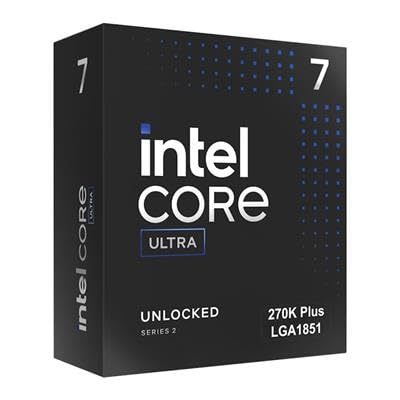
Overview: The Intel Core Ultra 7 Processor 270K Plus is a boxed Arrow Lake desktop CPU for the LGA 1851 platform. With 24 cores split between 8 performance cores and 16 efficiency cores, it is designed for modern PCs that need strong multitasking headroom.
Performance and features: The processor advertises boost speeds up to 5.50 GHz, 36 MB cache, and 40 MB L2 cache. It also supports DDR5 memory plus PCIe 5.0 and 4.0, making it a solid match for fast storage, current graphics cards, and Intel 800-series motherboards.
- Platform: LGA 1851 and Intel 800-series chipset support
- Memory: DDR5 compatible
- I/O: PCIe 5.0 and PCIe 4.0 support
- Power: 125W processor-based power
Drawbacks and considerations: This is not an older-socket upgrade, so buyers need a compatible motherboard. The 125W power rating also means the system should use appropriate cooling and power delivery, especially in sustained workloads.
Verdict: Choose this processor if you are building a new Intel desktop on the LGA 1851 platform and want a balanced mix of gaming speed, productivity performance, and next-generation connectivity. It is less suitable for users looking for a simple drop-in upgrade.

Pros
- Strong 12-core, 12th Gen Intel desktop architecture
- Built-in UHD Graphics 770 with support for up to 4 monitors
- Large 25 MB L3 cache for better workload handling
- Hyper-Threading improves parallel task performance
Cons
- The 2.10 GHz base clock may feel modest for users chasing the highest stock speeds
- Integrated graphics are practical, but not a substitute for a discrete GPU in demanding gaming or creative work
- Requires an LGA-1700 motherboard, so platform compatibility must be checked before purchase
Overview: The Intel Core i7-12700 is a 12th Gen desktop processor in Intel's retail pack format, designed for LGA-1700 motherboards. Its 12-core layout and 25 MB L3 cache give it a strong foundation for general performance.
Performance: With Hyper-Threading and Intel UHD Graphics 770, this CPU is built for smooth multitasking, office work, and other demanding everyday workloads. Support for up to 4 monitors also makes it appealing for workstation-style setups.
Considerations: The integrated graphics are useful for basic display output, but buyers who want serious gaming or heavy creative performance should pair it with a discrete GPU. Compatibility also depends on the right LGA-1700 motherboard.
Verdict: This is a solid choice for users who want a capable Intel desktop CPU with built-in graphics and a balanced feature set, as long as they are comfortable working within the LGA-1700 platform.
Choosing among the available options requires systematic evaluation of architecture details rather than brand loyalty alone. The following criteria reflect the practical decisions that separate efficient data-center builds from under-performing ones across the entry-level to premium spectrum.
Core Count, Threads, and Workload Matching
Server workloads such as virtualization, database queries, and container hosting scale primarily with core and thread density. Dual-socket configurations offering 16 or more physical cores deliver measurable gains in concurrent request handling compared with single-socket 4-core designs. When reviewing configurations, calculate expected virtual machines per core and leave 20 percent headroom for peak spikes. Systems listed with Intel Silver 4110 processors supply 8 cores each and pair well for medium virtualization density, while lower-core Xeon E-series units suit lighter edge or entry-level tower duties. Before finalizing equipment decisions, refer to our comprehensive custom cpu fan curve comparison.
Thread count further multiplies efficiency for hyper-threaded applications. Prefer platforms that advertise simultaneous multi-threading support so each core can handle two instruction streams. This becomes critical when mixing latency-sensitive and bulk-processing jobs on the same node. Always verify the motherboard chipset can fully populate all cores without thermal or power throttling. Before finalizing equipment decisions, refer to our comprehensive custom cpu fan curve comparison.
Clock Speeds, Cache Hierarchy, and Boost Behavior
Base and boost frequencies determine single-thread responsiveness for sequential database operations or compilation tasks. A 2.6 GHz or higher base with turbo headroom above 3 GHz maintains acceptable latency under mixed loads. Large L3 cache reduces memory trips for frequently accessed data sets and is especially valuable in multi-tenant environments. Examine published cache sizes and interconnect bandwidth when comparing dual-CPU boards against single-socket alternatives. For broader ecosystem context, read through our operational guide on how to choose cpu cooler.
Sustained boost duration depends on cooling capacity and power delivery. Coolers rated for high TDP preserve boost clocks longer during prolonged stress, preventing frequency drops that degrade throughput. Cross-reference cooler TDP ratings against the processor’s listed thermal envelope to avoid under-clocking in dense racks.
Thermal Design Power and Cooling Solutions
TDP directly influences both electricity cost and required cooling infrastructure. Processors in the 100-200 W range strike a practical balance for most tower and 1U or 2U deployments, while higher envelopes demand specialized air or liquid solutions. Dedicated 4U coolers designed for industrial chassis dissipate heat effectively without excessive fan noise. When pairing a cooler with a full server, confirm physical clearance and mounting compatibility so airflow paths remain unobstructed. For broader ecosystem context, read through our operational guide on how to choose cpu cooler.
Power efficiency also appears in idle and low-load scenarios. Modern server platforms drop into deep sleep states that cut consumption dramatically when cores are idle. Factor annual power-draw estimates into total cost of ownership rather than purchase price alone, particularly for always-on NAS or edge servers that run continuously.
Memory Support, Capacity, and ECC Reliability
ECC and registered DIMMs protect against soft errors that would otherwise crash virtual machines or corrupt databases. Confirm the platform supports at least 128 GB of DDR4 or newer with multi-channel population for full bandwidth. Systems shipping with 32 GB to 128 GB pre-installed provide a useful starting point but leave upgrade headroom for growing data sets. Memory speed should match the processor’s supported rates to avoid artificial bottlenecks. For troubleshooting and reliability insights, consult our in-depth thermal paste shelf life report.
Channel population rules matter: filling every channel at equal ranks maximizes throughput. Dual-socket boards often double the available memory channels, which benefits large in-memory databases. Always plan for future expansion by choosing boards with empty slots rather than maximum-density starter configurations that leave no room to grow.
Storage Integration, RAID, and Expandability
Onboard SAS or NVMe controllers with hardware RAID options protect data while delivering higher IOPS than software RAID alone. Configurations that include multi-terabyte SSD arrays or hybrid HDD/SSD pools suit both transactional and archival workloads. Check the number of drive bays and backplane support so you can scale capacity without external enclosures. PCIe lane count further dictates how many high-speed NVMe devices or accelerators can be added later. Readers comparing setup options can review our technical analysis on what is cpu ipc.
Network connectivity should include at least dual 1 GbE ports with options for 10 GbE or higher when clustering nodes. Remote management chips such as iLO simplify out-of-band administration and reduce truck rolls for remote sites. These features become decisive when deploying fleets rather than single units.
Platform Compatibility, Form Factor, and Brand Ecosystem
Socket and chipset lock-in determine upgrade paths for years ahead. Tower form factors suit office or branch environments with limited rack space, while rackmount units maximize density in data centers. Vendor ecosystems that supply matching coolers, rails, and spare parts reduce downtime. Brands represented across the selection such as those in leading manufacturers offer varying levels of firmware support and spare-parts longevity that should factor into multi-year planning. For complementary field maintenance guidelines, examine our breakdown of bad psu damage cpu.
For complementary system-level considerations beyond pure processors, examine related hardware categories such as Desktop PCs that share similar component selection principles.
We evaluated top-rated candidates by systematically comparing published technical specifications, form-factor constraints, warranty terms, and platform maturity rather than relying on unsubstantiated performance claims. Each model was scored against core density, memory capacity ceilings, storage controller capabilities, thermal envelopes, and expandability options. Brand reliability metrics such as long-term firmware support and spare-parts availability were weighted equally with raw compute numbers because server uptime depends on sustained serviceability.
Where user-feedback aggregates were available we noted consistency of reported stability under continuous load. Coolers were assessed strictly on rated TDP handling and mounting compatibility with common 4U industrial chassis. Complete servers and NAS units were examined for factory-integrated processor pairings that eliminate compatibility guesswork. The resulting shortlist balances entry-level cooling solutions with fully configured dual-socket systems across the full entry-level to premium so buyers can map solutions directly to workload intensity and budget ceilings.
After scoring every option against the criteria above, clear leaders emerge for different buyer profiles. The dual-socket configurations that pair two Intel Silver 4110 processors stand out for balanced multi-core density, ample memory, and enterprise RAID storage, making them suitable for virtualization hosts that must remain online for years. Cooler-focused entries provide cost-effective thermal solutions for builders who already own compatible chassis, while purpose-built NAS platforms excel when media streaming or file-sharing workloads dominate.
Best Overall Best Server CPUs: Dell PowerEdge T440 Tower Server with 2 Intel Silver 4110 8-core CPUs, 128 GB DDR4 RAM, 16 TB 12 Gb SAS HDDs, RAID. Its dual 8-core setup, generous memory, and hardware RAID deliver the highest combined throughput and data protection among fully configured systems, supporting medium-to-large virtualization clusters without immediate upgrades.
Best Value / Budget Choice: PowerEdge Dell R640 Server with 2X Gold 6126 2.6 GHz equaling 24 cores, 128 GB RAM, 4X 1.2 TB SAS HDD. This renewed rack unit supplies 24 cores and solid memory density at a markedly lower entry point, offering strong cost-to-performance for secondary nodes or development clusters where new-system premiums are unnecessary.
Best for Private Cloud and Media Workloads: Synology DiskStation DS923+ NAS Server with Ryzen 2.6 GHz CPU, 32 GB Memory, 8 TB SSD Storage, 1 TB M.2 NVMe SSD. Hardware-accelerated transcoding, dual LAN ports, and the mature DSM operating system make it the most efficient choice for photo backup, media streaming, and light virtualization at the edge. For additional system-level context that pairs well with these processors, see options under Desktop PCs.
What core count do I need for typical virtualization workloads?
Most medium virtualization hosts perform well with 16 physical cores or more when running mixed Windows and Linux guests. Dual-socket 8-core processors provide this density while retaining upgrade headroom, whereas 4-core entry units suit only light edge or test environments. Always reserve 20 percent of cores for the hypervisor and peak spikes.
How important is ECC memory for server processors?
ECC memory is essential for any production server because it corrects single-bit errors that would otherwise crash virtual machines or corrupt databases. Non-ECC platforms risk silent data corruption under continuous multi-day loads. Confirm the chosen platform fully supports registered ECC DIMMs before purchase.
Can I use a high-TDP cooler with lower-power server CPUs?
Yes, a cooler rated well above the processor TDP improves sustained boost clocks and reduces fan noise under load. Over-sized industrial coolers also provide thermal margin if you later upgrade to higher-wattage processors in the same chassis. Verify physical mounting height and airflow direction match your case.
What is the expected service life of enterprise server processors?
Enterprise-grade processors typically remain production-viable for five to seven years when kept within thermal and power specifications. Firmware updates and spare-parts availability from the vendor often become the limiting factors rather than silicon wear. Choosing platforms with active long-term support extends usable life further.
Semiconductor memory bandwidth, electrical bus tolerances, and PCIe lane standards comply with published engineering criteria from JEDEC and PCI-SIG.
For practical maintenance advice and setup requirements, check our guide on gaming processor.
If you require additional technical details and buying criteria, review our analysis of workstation cpu.
Should I buy a complete server or assemble processor plus cooler myself?
Complete factory-configured servers eliminate compatibility risk and include RAID controllers plus remote management that are time-consuming to integrate yourself. Custom cooler-plus-board builds make sense only when you already own a compatible chassis and require specific thermal or density targets. Explore more processor-focused options in the CPU reviews category when planning a custom route.
Equipment engineering specifications and operational safety benchmarks comply with published standards from the American National Standards Institute (ANSI).