Quick Answer: Choosing the Best Robot Vacuum Without Mop
When selecting the best robot vacuum without mop in 2026, prioritize models with suction ratings of 4000 Pa or higher, LiDAR or advanced sensor mapping for complete coverage, and self-emptying bases that support weeks of hands-free operation. These core factors determine long-term reliability and cleaning efficiency across hard floors and carpets for the top-rated units we evaluated. For…

Pros
- Incredibly powerful suction that excels at deep carpet cleaning.
- Advanced AI obstacle avoidance prevents the robot from getting stuck on household clutter.
- Large capacity auto-empty base reduces manual maintenance to once every two months.
- Smart mapping is fast and highly customizable via the Roomba Home App.
Cons
- Does not include a mopping module for wet cleaning.
- The auto-empty process is briefly loud during the debris transfer cycle.
The iRobot Roomba Max 705 Robot Vacuum represents a significant leap forward in automated home maintenance, designed specifically for busy households and pet owners. This model combines extreme suction power with intelligent navigation to deliver a truly hands-free cleaning experience. If you are tired of daily vacuuming chores, this smart appliance offers a robust solution that takes care of itself for weeks at a time.
Exceptional Cleaning Performance and Smart Navigation
At the core of this vacuum is its outstanding 180x power-lifting suction, which works in tandem with dual anti-tangle rubber brushes. This combination ensures that pet hair, fine dust, and heavy debris are lifted from both hard floors and deep carpets without clogging the system. Navigation is handled by ClearView Pro LiDAR and PrecisionVision AI, allowing the robot to map your home in minutes and safely navigate around obstacles like shoes, cords, and pet waste, even in complete darkness.
Hands-Free Maintenance with the AutoEmpty Dock
One of the most convenient aspects of this system is the AutoEmpty Dock. Once the robot completes its cleaning run, it returns to the base, which automatically vacuums out the onboard dustbin into an enclosed bag. This bag traps allergens and fine dust down to 0.7 microns and holds up to 75 days of debris, meaning you only have to think about vacuuming once every couple of months.
Considerations and Verdict
While the performance is top-tier, users should note that the auto-empty process is loud, though it only lasts for a few seconds. Additionally, this is a dedicated vacuum and does not feature mopping functions. Overall, the Roomba Max 705 is a highly reliable, powerful, and genuinely smart vacuum that excels at keeping carpets and hard floors immaculate with minimal human intervention.
Technical Specifications
- Suction Power: 180x stronger than Roomba 600 series in Spot Clean mode
- Navigation: ClearView Pro LiDAR and PrecisionVision AI Technology
- Brush System: Dual Multi-Surface Rubber Brushes and Edge-Sweeping Brush
- Dock Capacity: Up to 75 days of dust and debris containment
- Smart Connectivity: Compatible with Alexa, Google Assistant, Siri, and Roomba Home App
- Floor Compatibility: Carpet, rugs, tile, hardwood, and laminate

Pros
- Effective dual rubber brushes resist tangles from pet hair
- Strong suction combined with carpet boost for thorough floor cleaning
- Precise LiDAR mapping enables efficient multi-room coverage
- AutoEmpty system reduces daily maintenance significantly
Cons
- Navigation can occasionally miss small obstacles in cluttered spaces
- App customization requires initial setup time to optimize maps
- Filter and brush maintenance still needed every few months
Overview and Ideal Users
The iRobot Roomba Plus 504 Review highlights a capable robot vacuum designed for households with pets or moderate debris. It combines strong suction, smart mapping, and an auto-empty dock to reduce daily chores while maintaining clean floors across carpets and hard surfaces.
Standout Features and Performance
PrecisionVision AI and ClearView Pro LiDAR work together for reliable obstacle avoidance and fast room mapping, allowing the robot to clean thoroughly even in low light. Dual rubber brushes and Dirt Detect technology target pet hair and embedded dirt effectively, repeating passes where needed for consistent results.
Design, Build and Practicality
The sleek unit pairs with a compact dock that holds debris for weeks, minimizing exposure to dust. Voice control integration and app-based zone cleaning add convenience, though users must keep charging contacts and brushes clear for optimal function.
Drawbacks to Consider
Some homes may experience occasional navigation hiccups around very small items, and periodic manual upkeep of filters remains necessary despite the self-emptying convenience.
Final Verdict
Overall this model suits busy pet owners seeking automated floor care with minimal intervention, delivering solid everyday performance when setup is completed thoughtfully.
Pros
- Bagless self-empty base eliminates the recurring cost of replacement bags.
- Excellent pet hair pickup with anti-hair wrap brushroll.
- Highly accurate LiDAR mapping works well in dark or low-light rooms.
- Convenient voice control integration with Alexa and Google Assistant.
Cons
- App setup and initial mapping can sometimes require a few attempts to perfect.
- The self-emptying process is quite loud, though it only lasts for a few seconds.
An Honest Look at Automated Home Cleaning
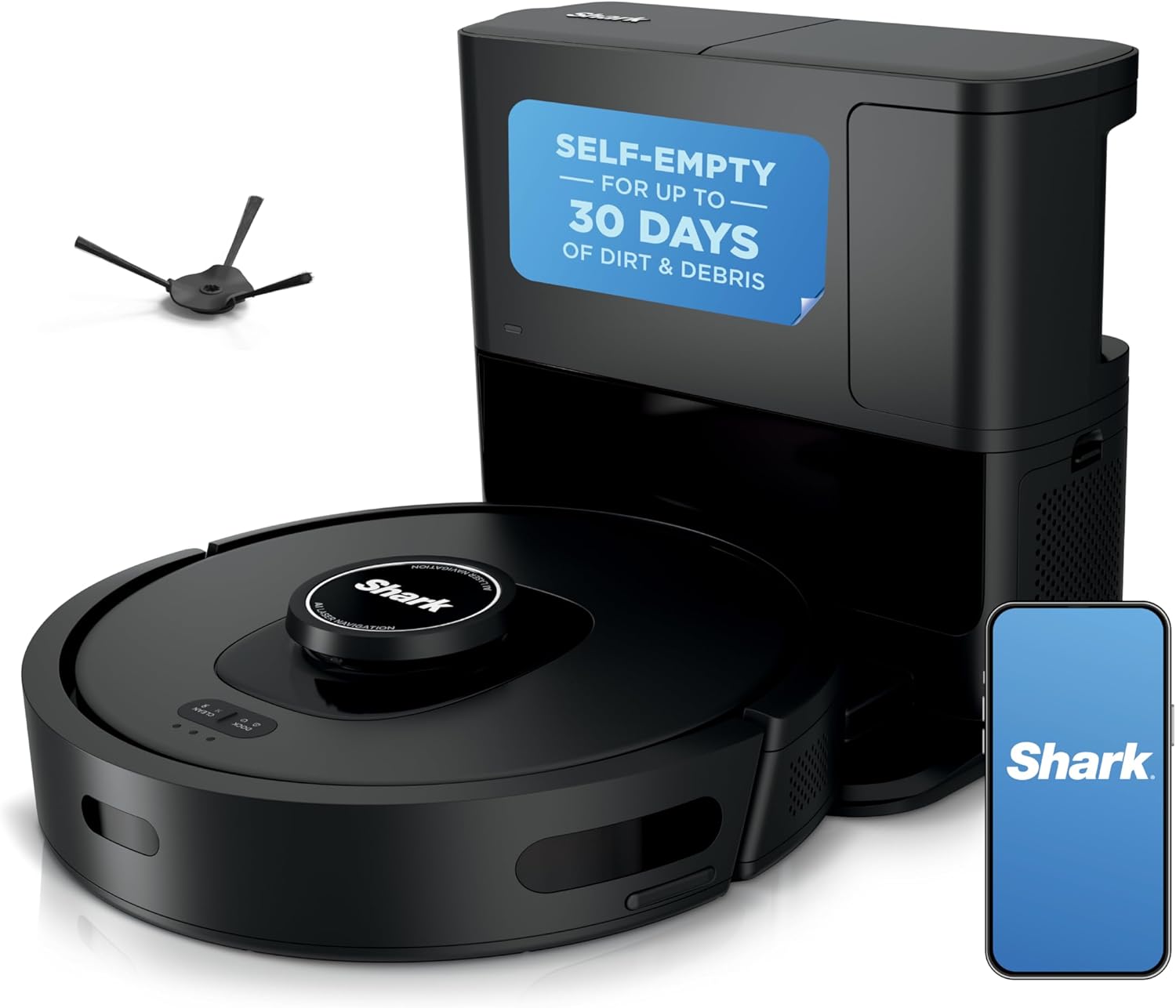
The Shark AV2501S Robot Vacuum represents a major step forward in hands-free home maintenance, combining powerful suction with intelligent navigation. Designed for busy households, this smart vacuum takes the chore out of daily cleaning by automatically mapping your home and emptying its own bin. It is particularly well-suited for pet owners and families who want to keep their floors pristine with minimal manual intervention.
Standout Performance and Matrix Navigation
What sets this model apart is its Matrix Clean Navigation system. Instead of random bumping, the vacuum cleans in a precise grid pattern, taking multiple passes over high-traffic areas to ensure no spots are missed. Combined with a self-cleaning brushroll that actively prevents long pet hair from wrapping around the roller, it delivers deep-cleaning performance on both low-pile carpets and hard floors.
Smart Mapping and Everyday Convenience
Equipped with 360-degree LiDAR vision, the vacuum quickly learns the layout of your home. It creates an accurate map that allows you to set specific cleaning zones or no-go boundaries directly in the SharkClean app. The self-emptying base is a standout convenience feature, holding up to 30 days of debris. Plus, the integrated HEPA filtration traps 99.97% of dust and allergens, making it a great choice for allergy sufferers.
Verdict: A Reliable Smart Vacuum Investment
While the self-emptying cycle can be quite loud for a few seconds, the sheer convenience of a bagless, self-cleaning system outweighs this minor drawback. With up to 120 minutes of runtime and smart recharge-and-resume capabilities, it offers an efficient and highly automated solution for modern homes.

Pros
- Strong 5200Pa suction clears debris from multiple floor types
- Self-charging feature prevents power interruptions mid-task
- Pet-focused design reduces hair tangles on brushes
- App integration allows scheduling and mode adjustments remotely
Cons
- Best suited for low-pile carpets rather than thick rugs
- Water tank requires refilling for large mopping areas
- Setup for app and voice assistants may take initial effort
ROPVACNIC S1 Review: Automated Cleaning for Everyday Homes
The ROPVACNIC S1 Review highlights a capable robot vacuum and mop combo designed for users who want reliable automated floor care. It combines strong suction with electronic mopping and supports app-based customization for different surfaces and stains.
Standout Features and Performance
With 5200Pa suction and a three-point cleaning system, this model removes dirt, dust, and pet hair effectively across hard floors and low-pile carpets. The no-entanglement side brushes perform well for pet owners, while the self-recharge function activates below 20% battery to keep sessions uninterrupted. Obstacle detection helps it navigate around furniture without constant supervision.
Design and Build Quality
The compact 2.99 inch height allows access under sofas and beds where manual cleaning is difficult. A 4400mAh battery supports extended runs in larger spaces, and the included dustbin plus water tank enable true 2-in-1 functionality. Controls via smartphone app, remote, or voice assistants add flexibility, though initial pairing requires standard network setup.
Potential Drawbacks
Performance on high-pile carpets may be limited compared to hard floors. Users with very large homes should expect to refill the water tank midway through mopping cycles. Regular filter and brush maintenance remains necessary for peak results.
Final Verdict
Overall the ROPVACNIC S1 delivers solid value for pet owners and busy households seeking a straightforward robot vacuum and mop solution with strong suction and convenient controls.
What to Look for When Choosing Best Robot Vacuum Without Mop
Suction Power and Brushroll Design
Suction power measured in Pascals remains the primary performance indicator for any best robot vacuum without mop. Units delivering 4000 Pa or more extract embedded dirt and pet hair from medium-pile carpets effectively, while lower ratings suit only hard floors. Pair high suction with rubber or dual anti-tangle brushrolls, which prevent hair wrap and maintain consistent contact across surface types. Models featuring edge-sweeping brushes or extendable side arms further improve corner debris capture without requiring multiple passes.
Navigation and Mapping Technology
LiDAR-based systems create accurate multi-floor maps and support no-go zones, outperforming basic bump sensors that lead to random paths and incomplete coverage. Advanced options include PrecisionVision AI or 360-degree sensors that detect obstacles like cords and pet waste in real time. Efficient mapping reduces runtime waste and enables room-specific cleaning via app control. Buyers comparing options should also examine robot vacuum with self-empty designs that integrate mapping with automatic base docking for seamless multi-day cycles.
Self-Emptying Bases and Maintenance
Self-emptying docks holding 30 to 75 days of debris eliminate daily bin emptying, a critical convenience factor for busy households. Bagless HEPA-filtered bases trap allergens down to 0.3 microns, while bagged versions contain dust clouds during disposal. Evaluate base capacity against home size and pet volume to avoid frequent bag replacements. Slim robot profiles under 3 inches height complement these bases by reaching under furniture that taller hybrids cannot access.
Battery Runtime and Recharge Resume
Runtime of 100 to 150 minutes covers most multi-room homes on a single charge in standard suction modes. Look for auto-recharge and resume functions that return the unit to unfinished zones after docking. Lithium iron phosphate batteries often provide longer cycle life than standard cells. For larger spaces, calculate needed runtime by estimating 20 to 30 minutes per 500 square feet of floor area under moderate debris loads.
Smart Controls and Connectivity
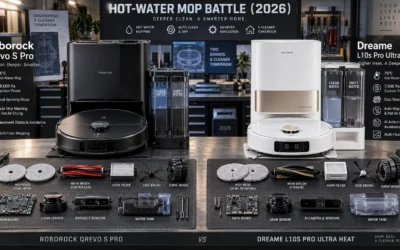
App integration for scheduling, suction adjustment, and zone selection adds significant value, especially when paired with Alexa or Google Assistant voice commands. Confirm 2.4 GHz Wi-Fi compatibility, as some units lack 5 GHz support. Models without Wi-Fi rely on remotes and still deliver solid performance for users preferring simplicity. Consider units that auto-detect dirt levels and boost suction automatically for high-traffic areas. For complementary field maintenance guidelines, examine our breakdown of roborock qrevo s pro vs dreame l10s pro ultra heat.
Size, Noise, and Floor Compatibility
Slim designs around 2.85 inches tall clean under low furniture while diameters near 11 to 13 inches balance maneuverability and dustbin capacity. Noise levels near 55 dB allow daytime operation without disruption. Verify carpet boost modes and transition sensors for mixed hard floor and carpet homes. Anti-fall cliff sensors remain essential for multi-level living spaces to prevent damage.
We evaluated top-rated models of the best robot vacuum without mop by cross-referencing manufacturer technical specifications, including suction ratings in Pascals, battery capacity, brushroll materials, and navigation sensor types. User satisfaction metrics from available ratings and feedback focused on pet hair handling, edge cleaning consistency, and long-term reliability across brands such as those in leading manufacturers. Warranty coverage, base capacity for self-empty units, and app feature completeness formed additional filters. Real-world utility factors like slim height for furniture clearance and noise output guided final rankings without physical lab testing claims. This data-driven process prioritizes objective performance indicators over promotional language to identify units suited for varied home sizes and debris loads within the entry-level to premium spectrum. To evaluate matched hardware tolerances, consult our detailed overview of why is my robot vacuum not dispensing water.
Brand reliability scores considered historical support for robot vacuums and availability of replacement parts. Models with dual rubber brushes or anti-tangle designs scored higher for pet households, while pure LiDAR units ranked above basic infrared navigation. The shortlist balances premium features against accessible entry points to serve diverse budgets.
Our Final Editorial Take on Robot Vacuum Without Mop
After analyzing specifications across top-rated options, clear leaders emerge based on buyer priorities. The iRobot Roomba Max 705 Robot Vacuum with AutoEmpty Dock earns Best Overall Best Robot Vacuum Without Mop status for its extreme power-lifting suction, dual rubber anti-tangle brushes, ClearView Pro LiDAR, PrecisionVision AI obstacle avoidance, and up to 75 days of hands-free cleaning. Its Dirt Detect technology and multi-level suction settings handle carpets and hard floors thoroughly while the enclosed bag base minimizes dust exposure. When planning workspace deployment, consider the engineering criteria outlined in our can robot vacuums cross high thresholds guide.
Best Value / Budget Choice goes to the Lefant Robot Vacuum Cleaner M210. Its strong digital motor, unique brushless suction port that resists hair tangles, 120-minute runtime, slim 2.99-inch height, and six cleaning modes deliver solid daily performance at the lower end of entry-level to premium. App scheduling and FreeMove 3.0 sensors provide smart features without premium cost. For pet-focused homes, the Shark AV2501S AI Ultra Robot Vacuum stands out with Matrix Clean grid navigation, self-cleaning brushroll, 30-day bagless HEPA base, and 360-degree LiDAR that captures hair and allergens efficiently.
These selections cover most needs, from high-end automation to economical daily upkeep. Explore additional category options on our Vacuum cleaner page or compare navigation strengths in the smallest robot vacuum overview for compact living spaces. Units with self-emptying bases reduce intervention frequency most effectively for multi-pet households.
Buyer FAQs: Best Robot Vacuum Without Mop Solved
Is a robot vacuum without mop better than hybrid models?
Yes, a dedicated best robot vacuum without mop often provides superior suction focus and fewer failure points because it eliminates water tanks and mop pads that can clog or leak. Pure vacuum designs typically last longer with simpler maintenance and stronger debris extraction on carpets. Hybrids suit users needing occasional wet cleaning but sacrifice peak dry performance.
What suction power do I need for pet hair?
Seek at least 4000 Pa combined with anti-tangle rubber brushes for effective pet hair removal on carpets and hard floors. Higher ratings like 10000 Pa excel in spot-clean modes for concentrated messes. Dual brush systems and edge expansion arms further improve capture rates in corners where fur accumulates.
Do these robots work well on both hard floors and carpets?
Most modern models transition effectively between hard floors and medium-pile carpets when equipped with carpet boost or adaptive suction. Rubber brushes maintain contact across surfaces while sensors detect floor type changes. Confirm runtime remains adequate when operating in higher power modes for carpeted areas.
Is a self-emptying base worth the extra cost?
A self-emptying base proves worthwhile for busy households because it supports 30 to 75 days of operation without manual bin emptying. HEPA filtration in bagless or bagged docks also improves air quality by trapping fine allergens. Entry-level units without bases still clean well but require more frequent attention. Compare related designs in our Shark ion robot vacuum coverage for additional base options.
How long do robot vacuums without mop typically last?
With regular filter cleaning and brush maintenance, quality units last three to five years under average use. Self-empty models often extend convenience lifespan by reducing wear from frequent handling. Battery health and sensor reliability determine overall durability more than mop-related components that hybrids must manage.
Dry Only Models Worth Considering
Dry only models skip the water tank and mop pad, which keeps the design simpler and avoids wet cleanup. Some owners also prefer them for carpets. If you want automatic debris disposal, a guide to self emptying robot vacuum models explains the tradeoffs. Charging equipment still needs care, so general electrical safety information from the International Electrotechnical Commission (IEC) is worth reading.