Quick Answer: Choosing the Best Robotic Vacuums
Critical factors for the best robotic vacuums in 2026 center on suction of at least 5000Pa for carpets and pet hair, LiDAR or AI-based mapping for efficient coverage without random paths, and self-emptying capacity measured in weeks to minimize intervention. Our review of top-rated options across the entry-level to premium range shows how these elements combine for reliable…

Pros
- Exceptional low-profile access to tight spaces
- Strong suction with reliable detangling performance
- Comprehensive hands-free dock reduces daily chores
- Smart navigation and edge cleaning improve coverage
Cons
- High price point may not suit all budgets
- Requires specific 2.4GHz Wi-Fi network only
- Limited to USA use per manufacturer guidelines
Overview of the Dreame X60 Ultra Robot Vacuum
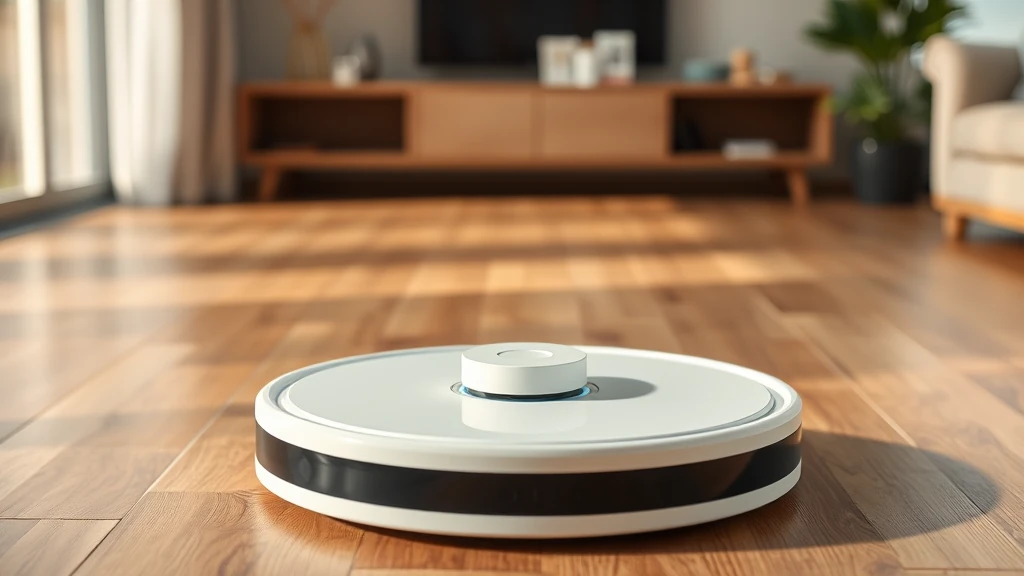
The Dreame X60 Ultra Robot Vacuum combines an ultra-thin build with high suction power to deliver thorough cleaning in modern homes. It targets users who need reliable floor care without manual intervention, especially in spaces with low furniture and mixed floor types.
Standout Features and Performance
Its 3.13 inch height allows access under beds and sofas where thicker models fail, while 35000Pa suction paired with DuoBrush technology lifts deep dirt and hair without tangles. Obstacle detection up to 3.47 inches and extending mop arms ensure edges and corners receive attention, and the dock handles hot water mop cleaning plus long-term dust storage for true hands-free operation.
Design, Build Quality and Drawbacks
Build quality feels premium with adaptive sensors and app integration for custom routines like pet avoidance or carpet modes. Some users may find the initial setup and Wi-Fi requirements limiting, and the premium positioning means it is not the most affordable option available.
Final Verdict
Overall the Dreame X60 Ultra Robot Vacuum excels for households seeking advanced automation and low-clearance cleaning without constant maintenance.

Pros
- FlexiArm edge mop stated to clean as close as 1.85 mm to walls
- Reversible side brush stated to provide up to 30% more corner coverage
- Automatically removes the mop and vacuums carpets before mopping
- Mopping module lifts up to 15 mm, per manufacturer specifications
- Dock self-cleans at 149°F and dries the mop with 113°F warm air
Cons
- Supports only 2.4GHz Wi-Fi networks
- Suction, noise, and corner coverage figures are manufacturer-stated, not verified

Pros
- Strong suction power for thorough carpet and hard floor cleaning
- Comprehensive self-maintenance station reduces daily involvement
- Effective edge and corner reach minimizes missed spots
- Tangle-resistant brushes suit households with pets
- Quiet operation under 61 dB during use
Cons
- Requires 2.4 GHz Wi-Fi only, limiting some network setups
- 125-minute runtime may require recharging for very large single-floor spaces
- All-in-one station takes up dedicated floor space
What the eufy E25 Review Reveals About Performance
The eufy E25 Review highlights a capable robot vacuum and mop designed for users seeking minimal intervention in daily floor care. It combines strong suction with an always-clean roller mop system to handle pet hair, embedded dirt, and stains across hard floors and short carpets.
Standout Features and Real-World Results
Its HydroJet system refreshes the mop twice per second to avoid cross-contamination while the 20000 Pa suction lifts debris from carpets effectively. The CornerRover arm extends for baseboard and corner scrubbing, and the DuoSpiral brushes limit hair tangles substantially. Laser mapping supports multiple floor plans with smooth transitions between vacuum and mop modes.
Design, Build, and Practical Considerations
The unit features a compact station for auto-emptying, mop washing, and hot-air drying, promoting true hands-free operation. Build quality supports reliable navigation and threshold climbing, though the station requires dedicated space. Voice control works via common assistants, and setup completes quickly without tools.
Drawbacks to Note
Limitations include exclusive 2.4 GHz Wi-Fi compatibility and a runtime that suits most homes but may prompt mid-session charging in expansive layouts. These factors are typical for the category and do not detract from core cleaning strengths.
Final Verdict
Overall the eufy E25 suits households wanting reliable automated cleaning with strong edge performance and low maintenance. It delivers consistent results for pet owners and multi-room homes willing to accommodate the docking station.

Pros
- DirtDetect senses hidden debris and boosts suction
- EdgeDetect uses air blasts to pull debris from edges
- FloorDetect adjusts brushroll engagement by surface type
- NeverStuck lifts and lowers to clear thresholds

Pros
- Auto-empties debris into a bin rated for 60 days (manufacturer-stated)
- Auto-refills its water tank for up to 30 days (manufacturer-stated)
- NeverStuck lifts over obstacles and keeps the mop pad above carpet
- EdgeDetect pushes edge debris into the cleaning path
- Washes and dries the mopping pad after every clean
Cons
- Listing's 2X coverage claim is measured against Shark ION only
- Weighs 20.12 pounds, so it is not light to carry

Pros
- Incredible 12,000Pa suction power handles heavy debris effortlessly
- Fully automated dock handles emptying, washing, and warm-air drying with ease
- Zero-tangle brush design is highly effective for pet hair
- FlexiArm reach ensures thorough corner and edge cleaning
Cons
- Only supports 2.4GHz WiFi networks, not 5GHz
- The multi-functional dock requires a significant amount of floor space
- App setup can take some time for multi-floor mapping configurations
The Roborock Qrevo S5V Robot Vacuum and Mop represents a major leap forward in automated home cleaning, designed specifically for busy households, pet owners, and large multi-level homes. By combining industry-leading suction power with an advanced self-cleaning dock, this premium appliance aims to take the chore out of floor maintenance entirely.
Unmatched Performance and Smart Navigation
At the heart of this machine is an incredible 12,000Pa HyperForce suction motor that lifts deep-seated dirt from thick carpets and hard floor crevices alike. Navigating complex home layouts is seamless thanks to PreciSense LiDAR technology and structured light sensors. The robot dynamically maps up to four floors, automatically identifying obstacles like cables and shoes to plan the most efficient route without getting stuck.
Advanced Mopping and Self-Maintenance
Unlike standard hybrid vacuums, the dual spinning mops rotate at 200 RPM to scrub away stubborn spills. The innovative FlexiArm design extends the mop pad to reach corners and baseboards that other vacuums miss. When transitioning to carpet, the mop pads lift by 10mm to keep your rugs dry. Once the job is done, the all-in-one dock takes over by emptying the dustbin, washing the mops, and drying them with warm air to eliminate odors.
Minor Drawbacks and Final Verdict
While the cleaning performance is exceptional, users should note that the device only connects to 2.4GHz WiFi networks, which may require adjusting dual-band router settings during initial setup. Additionally, the comprehensive dock has a relatively large physical footprint. Overall, this robot vacuum delivers outstanding hands-free cleaning, making it a highly recommended investment for anyone looking to automate their daily home maintenance.
Pros
- Powerful 10,000Pa suction excels at deep carpet cleaning and debris pickup
- Large 2.7L self-empty dock reduces maintenance to once every two months
- Highly effective dual anti-tangle brush design for households with pets
- Precise LiDAR navigation works flawlessly even in completely dark rooms
Cons
- App control requires a 2.4GHz Wi-Fi connection and does not support 5GHz bands
- Electronic mopping system is basic compared to premium vibrating or rotating mop models
Effortless Automated Cleaning for Busy Homes
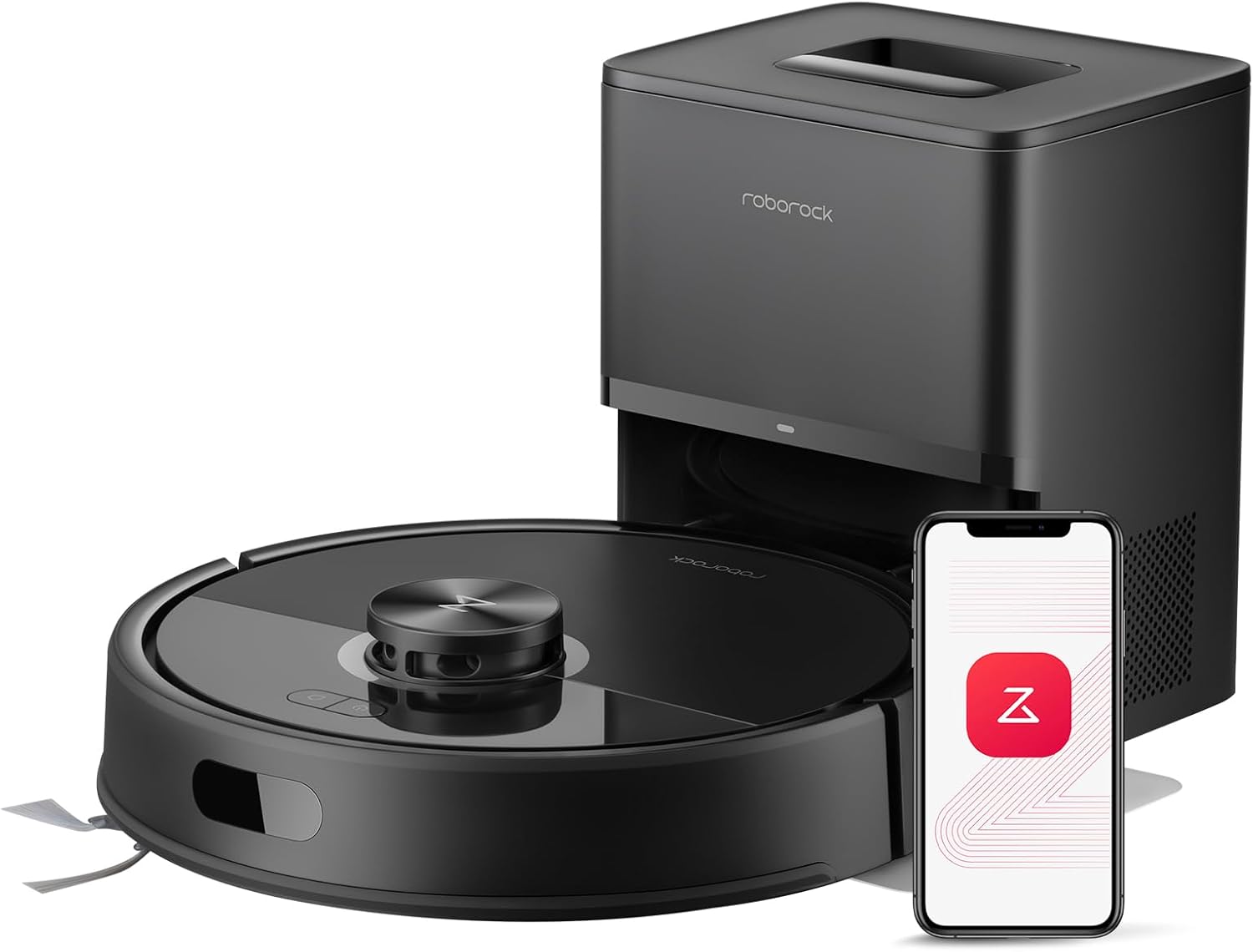
The Roborock Q7 M5+ Robot Vacuum and Mop is designed to take the hassle out of daily floor maintenance. Offering a significant upgrade over previous generations, this hybrid cleaning device is perfect for pet owners and busy families who want clean floors without the daily upkeep. By combining powerful suction with an intelligent self-emptying dock, it delivers weeks of hands-free operation.
Unmatched Suction and Smart Navigation
At the core of this robot vacuum is an impressive 10,000Pa HyperForce suction system. It easily extracts embedded dust, pet hair, and crumbs from both deep-pile carpets and hardwood crevices. Navigating your home is seamless thanks to the PreciSense LiDAR system, which maps your home in real-time. This allows the vacuum to calculate the most efficient cleaning paths, avoiding obstacles and navigating multi-level homes with ease.
Dual Anti-Tangle System for Pet Owners
One of the standout design features is the dual anti-tangle system. Featuring a specialized main brush and a zero-tangling side brush, it resists hair wraps from long-haired pets, reducing the need for manual detangling. Additionally, the integrated electronic mopping system allows you to vacuum and wipe down hard floors in a single run, capturing fine dust particles that dry vacuuming alone might miss.
A Few Minor Considerations
While the cleaning performance is exceptional, there are a couple of limitations. The Roborock App only supports 2.4GHz Wi-Fi networks, which might require adjusting your router settings during setup. Furthermore, the electronic mopping system is excellent for light dust and maintenance but does not scrub stubborn, dried-on stains as effectively as premium vibrating mop modules.
The Verdict
Overall, this robotic cleaner offers a fantastic balance of high-end performance and convenience. With its self-emptying dock, industry-leading suction, and smart mapping capabilities, it is a highly recommended investment for anyone looking to automate their home cleaning routine with minimal manual intervention.

Pros
- Tri-Brush System listed as a key feature
- Listed as working with Alexa for voice control
- Gray finish listed in manufacturer specifications
- Manufacturer-listed weight of 6.6 pounds
Cons
- Product description is blank; little detail beyond specs
- No customer reviews available to validate performance

Pros
- SLAM navigation with 12 sensors plans cleaning paths (manufacturer-stated)
- Scheduled cleaning lets the robot run while you are away
- Real-time view of the cleaning path and progress
- 5200 mAh battery with manufacturer-stated multi-protection design
Cons
- Rated runtime of about 2.5 hours per charge (manufacturer-stated)
- Listing details are incomplete, with no customer reviews or full description
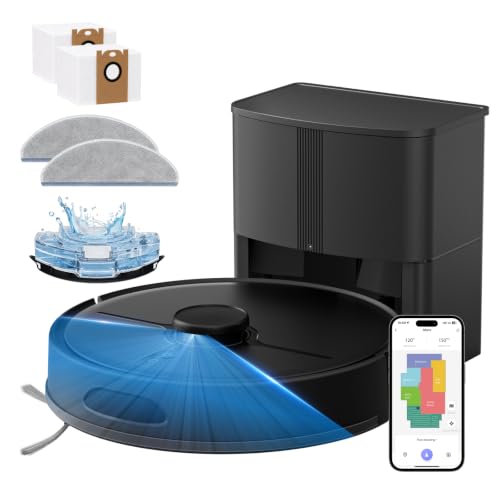
Pros
- Floating V-shaped anti-tangle brush aims to reduce hair wrap
- Brushless motor rated for pet hair and carpet cleaning
- Saves up to 5 maps with virtual walls and No-Go Zones
- LiDAR navigation is claimed to work in low-light rooms
Cons
- Water flow settings are listed for hard floors, not carpets

Pros
- Up to 10,000Pa suction in Spot Mode, per manufacturer
- LDS LiDAR and SLAM mapping listed for efficient cleaning paths
- Dual anti-tangle brush listed for pet hair
- Auto-recharge and resume listed for up to 150-minute gentle cleaning
- Works with Alexa or Google Assistant, plus included remote
Cons
- Runtime figure applies to gentle suction mode only
- Pet and suction claims are manufacturer-stated, not verified results

Pros
- Strong 5200Pa suction clears debris from multiple floor types
- Self-charging feature prevents power interruptions mid-task
- Pet-focused design reduces hair tangles on brushes
- App integration allows scheduling and mode adjustments remotely
Cons
- Best suited for low-pile carpets rather than thick rugs
- Water tank requires refilling for large mopping areas
- Setup for app and voice assistants may take initial effort
ROPVACNIC S1 Review: Automated Cleaning for Everyday Homes
The ROPVACNIC S1 Review highlights a capable robot vacuum and mop combo designed for users who want reliable automated floor care. It combines strong suction with electronic mopping and supports app-based customization for different surfaces and stains.
Standout Features and Performance
With 5200Pa suction and a three-point cleaning system, this model removes dirt, dust, and pet hair effectively across hard floors and low-pile carpets. The no-entanglement side brushes perform well for pet owners, while the self-recharge function activates below 20% battery to keep sessions uninterrupted. Obstacle detection helps it navigate around furniture without constant supervision.
Design and Build Quality
The compact 2.99 inch height allows access under sofas and beds where manual cleaning is difficult. A 4400mAh battery supports extended runs in larger spaces, and the included dustbin plus water tank enable true 2-in-1 functionality. Controls via smartphone app, remote, or voice assistants add flexibility, though initial pairing requires standard network setup.
Potential Drawbacks
Performance on high-pile carpets may be limited compared to hard floors. Users with very large homes should expect to refill the water tank midway through mopping cycles. Regular filter and brush maintenance remains necessary for peak results.
Final Verdict
Overall the ROPVACNIC S1 delivers solid value for pet owners and busy households seeking a straightforward robot vacuum and mop solution with strong suction and convenient controls.

Pros
- 5000 Pa suction with manufacturer-stated carpet auto-boost
- Tangle-free design aims to reduce hand-removal of pet hair
- Returns to its dock automatically when the battery runs low
- Five cleaning modes: Auto, Manual, Edge, Spot, and Room
- 2.87-inch profile for under beds and low furniture
Cons
- Small 250 mL dustbin and 200 mL water tank for large areas
- Runtime and coverage figures are manufacturer-stated

Pros
- Separate 300ml dustbin and 300ml water tank for vacuuming or mopping
- Five cleaning modes: Auto, Spot, Edge, Max, and Scheduled
- Remote, ILIFE Home app, and Alexa or Google Assistant voice control
- App shows cleaning routes and adjusts suction and water output
- Manufacturer rates up to 110 minutes of runtime per charge
Cons
- Vacuuming and mopping cannot run simultaneously
- App works only on 2.4GHz Wi-Fi, not 5GHz networks
- Requires about 5 hours of full charging before first use

Pros
- Manufacturer-stated 2900Pa suction for hair, dust and litter
- Four cleaning modes: auto, random, edge and spot
- HEPA filter design focused on hair and debris on hard floors
- Returns to dock to recharge after cleaning finishes
- Anti-collision, anti-drop and soft-cushion protection for furniture
Cons
- Listed runtime drops to about 100 minutes on high suction
- Carpet cleaning is limited to low-pile surfaces per the listing
Key Technical Factors to Consider Before Buying
Suction Power and Surface Adaptability
Suction power, measured in Pascals, determines how effectively a unit lifts embedded dirt, pet hair, and debris from carpets versus hard floors. Models offering 6000Pa or higher handle medium-pile carpets and high-traffic areas in a single pass, while auto-boost functions detect surface changes and increase intensity without user input. For pet owners, dual anti-tangle brush systems prevent hair wrap on the main roller and side brush, reducing manual cleaning frequency after each cycle. Before finalizing equipment decisions, refer to our comprehensive why robot vacuum keeps getting lost lidar fix comparison.
Surface transitions matter equally. Units with climbing ability around 20mm navigate thresholds between hardwood and rugs reliably. Rubberized or floating brushes maintain consistent contact pressure, improving edge pickup where dust accumulates. Aim for at least three suction levels so users can balance power against noise and battery drain on delicate floors.
Navigation and Mapping Technology
LiDAR systems create precise home maps by scanning 360 degrees in real time, enabling straight-line cleaning paths that cover more area per charge than older random bounce methods. Multi-floor mapping stores up to four or five layouts, allowing automatic recognition when the robot is moved between levels. AI camera or structured light sensors add obstacle recognition for cables, toys, and furniture legs, cutting collision rates and stuck incidents. For broader ecosystem context, read through our operational guide on roborock qrevo s pro vs dreame l10s pro ultra heat.
App-based no-go zones and virtual walls further refine routes around pet bowls or fragile items. Efficient mapping also supports selective room cleaning and progress tracking. For detailed mapping comparisons, review options in our guide to robot vacuums with mapping features that expand on multi-level storage and route optimization.
Self-Emptying Stations and Maintenance Features
Self-emptying docks transfer debris into sealed bags lasting 7 to 90 days depending on bag volume and home dirt load. Larger 2.7L to 3L capacities suit pet households by extending intervals between bag changes. Advanced docks add mop washing with hot water up to 176F or 212F, warm air drying to prevent odor, and auto water refilling for continuous mopping across large square footage.
These features shift the ownership experience from daily bin emptying to occasional bag replacement. Look for detachable bases that simplify deep cleaning of the dock itself. Combined vacuum-mop units with liftable mops protect carpets by raising pads 10mm when rugs are detected. For troubleshooting and reliability insights, consult our in-depth why is my robot vacuum not dispensing water report.
Battery Runtime and Coverage Efficiency
Runtime of 100 to 150 minutes on standard suction covers most single-floor homes of 1500 to 2500 square feet before auto-recharge and resume. Higher-capacity batteries paired with logical LiDAR paths maximize area cleaned per session rather than wasting energy on repeated spots. Auto-recharge returns the unit when power drops, then continues exactly where it left off.
Users with multi-story homes benefit from map switching so the robot adapts suction and mop intensity per floor type. Quiet operation near 55dB allows daytime runs without disruption. Slim profiles under 3.2 inches reach under sofas and beds where dust builds, a trait covered further in resources on the smallest robot vacuum designs.
App Control, Voice Integration, and Customization
Companion apps enable scheduling, suction and water flow adjustment, zone selection, and real-time monitoring. Support for Alexa or Google Assistant adds voice starts for hands-free use. SmartPlan or adaptive algorithms learn room types and traffic patterns to boost power in kitchens while lowering noise in bedrooms during quiet hours.
Wi-Fi notes matter: most units support 2.4GHz only. Privacy options on camera-equipped models limit data sharing. Child locks and do-not-disturb schedules add household safety layers. These controls turn a basic cleaner into a tailored system matching daily routines.
Obstacle Avoidance and Build Reliability
Reactive sensors or RGB cameras detect over 200 object types, including pet waste and thin cables, preventing jams. Cliff sensors stop falls at stairs. Ultra-slim chassis combined with retractable LiDAR towers enter low clearances under furniture. Brands emphasizing zero-tangle certification or dual spinning mops with downward pressure handle dried stains more effectively than basic pads.
Our process for ranking the best robotic vacuums evaluates top-rated models through direct comparison of published technical specifications, including measured suction in Pascals, navigation sensor types, battery runtime claims, dock capacities in liters or days, and mop pressure or lift heights. We cross-reference these against brand warranty terms, such as multi-year coverage from established makers, and available user satisfaction indicators including star ratings even when review volume is limited.
Selection prioritizes balanced performance rather than any single peak metric. Units score higher when high suction pairs with anti-tangle systems and reliable mapping that supports multi-floor homes. Value assessment weighs feature sets against the overall entry-level to premium spectrum, favoring models that deliver self-emptying or advanced mopping without unnecessary complexity. This data-focused approach ensures recommendations remain objective and useful for varied home layouts and debris types.
Wrap-Up: Which Model Delivers True Value?
After analyzing the full set of top-rated contenders, clear leaders emerge based on buyer priorities. The DREAME X60 Ultra stands as the Best Overall Best Robotic Vacuums thanks to its 35,000Pa suction, 3.13-inch ultra-thin body that reaches under low furniture, dual AI cameras for recognizing over 280 obstacles, and a complete 10-in-1 dock handling 100-day dust disposal plus 212F hot-water mop cleaning. These specs combine for thorough coverage in complex homes with minimal oversight.
Best Value / Budget Choice goes to the Bagotte Robot Vacuum and Mop Combo offering 6000Pa suction, full LiDAR mapping, and app-controlled no-go zones at an accessible entry point within the broader entry-level to premium. It delivers core automation including mopping and self-recharge without premium dock extras, making it practical for smaller spaces or first-time buyers seeking reliable daily cleaning. For pet-focused households the roborock Q7 M5+ earns Best for Pet Hair with 10,000Pa HyperForce suction, dual anti-tangle brushes rated for long hair, and a RockDock Plus supporting 7-9 weeks of hands-free emptying.
These selections cover premium capability, cost efficiency, and specialized hair handling. Shoppers can explore further options through our main vacuum cleaner category page or compare self-maintenance designs against other robot vacuum approaches to confirm fit. Overall, current models from brands including Tikom, ROPVACNIC, Dreame, roborock, and Bagotte provide measurable gains in efficiency over older units, provided users match suction and dock capacity to their floor types and dirt volume.
Frequently Asked Questions About Best Robotic Vacuums
Is it worth buying a best robotic vacuums in 2026?
Yes, mature navigation, higher suction ratings, and self-emptying docks make modern units reliable enough to replace most manual vacuuming sessions. Features such as multi-floor maps and anti-tangle systems deliver consistent results that free several hours weekly for typical households.
How long do best robotic vacuums typically last?
High-quality models last 3 to 5 years with regular sensor cleaning, filter replacement, and brush maintenance. Checking manufacturer warranties of 1 to 2 years provides added security against early component wear.
Can these robots clean pet hair effectively?
Models equipped with 6000Pa or higher suction plus dual anti-tangle or zero-tangle brush designs remove pet hair from carpets and hard floors without frequent clogs. Self-emptying stations further help by sealing loose hair away from the main unit for weeks at a time.
Do I need LiDAR navigation for multi-level homes?
LiDAR or equivalent precise mapping is strongly recommended because it stores separate floor plans and recognizes location automatically when moved. Camera-only or basic sensor systems struggle with consistent multi-floor efficiency and often require remapping after each transfer.
What maintenance do self-emptying models require?
Primary tasks involve replacing the sealed dust bag every 7 to 90 days depending on capacity and household dirt load, plus occasional mop pad cleaning or filter checks. Advanced docks that auto-wash and dry mops reduce hands-on work even further, details of which appear in specialized comparisons such as the Ecovacs Deebot T20 Omni robot vacuum and mop review.
Matching Features to Your Home
Different homes call for different strengths, such as strong suction for carpets or mopping for hard floors. Think about rooms, rugs, and clutter before choosing. Electrical safety tips that apply to any plug-in gadget are covered by the International Electrotechnical Commission (IEC).