Quick Answer: Cfm Blowers
CFM (cubic feet per minute) measures blower air volume; MPH measures air velocity. For clearing leaves, CFM matters most: 400 to 700 CFM handles typical suburban yards, 700 to 1000 CFM handles wet leaves and heavy debris. High MPH (150 to 200) lifts stuck material. There is no direct CFM-to-MPH conversion formula.
Pros
- Produces up to a rated 765 CFM of blowing power
- Variable-speed trigger offers customizable air delivery
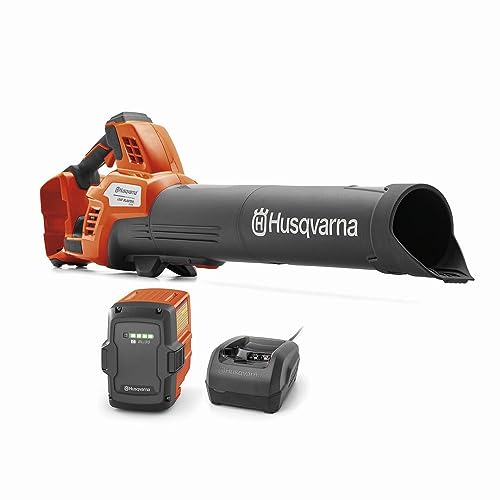
- Includes a 56V 5.0Ah battery and matching charger
Cons
- High-output operation can significantly reduce runtime per charge
- 5.0Ah battery adds noticeable weight for single-handed work
Pros
- M18 FUEL system utilizes dual battery power for high output
- Cordless design offers unrestricted portability across large areas
- Integrates with the Milwaukee M18 tool ecosystem
Cons
- Tool only; requires two M18 batteries and a charger sold separately
- Dual batteries increase overall handheld carrying weight
Pros
- Offers up to a manufacturer-rated 700 CFM air volume
- Brushless motor ensures efficient power delivery
- Includes a 4.0Ah battery and rapid charger
Cons
- The 60V battery pack adds weight during extended handheld use
What CFM Actually Means on a Leaf Blower
CFM stands for cubic feet per minute. It is a volumetric flow rate: the amount of air a blower moves through its outlet in one minute. One cubic foot is roughly a 12-inch cube. A blower rated at 650 CFM moves 650 of those cubes of air every minute, about 10.8 cubic feet per second, or roughly 81 gallons of air per second.
Manufacturers measure CFM with an anemometer at the nozzle outlet, typically at maximum throttle with the specified nozzle attachment. This is why the same motor can be rated at different CFM values with different nozzles: a tapered concentrator nozzle raises air velocity (MPH) but reduces measured CFM, while a wide nozzle increases CFM but lowers MPH. For broader ecosystem context, read through our operational guide on how to choose leaf blower.
CFM vs. MPH: Two Different Physics Problems
MPH measures how fast air leaves the nozzle, velocity. CFM measures how much air moves, volume. Think of a box fan versus a jet of air from a compressed air hose: the hose moves air much faster but far less of it. For moving leaves across a lawn, volume wins. For lifting wet, matted leaves off a driveway or dislodging mud, velocity helps.
There is no reliable formula to convert CFM to MPH or vice versa. The two values are measured independently and depend on nozzle geometry, motor speed, and housing design. A blower rated at 765 CFM and 200 MPH is not “twice as powerful” as one rated at 380 CFM and 100 MPH, the relationship is not linear.
CFM Ranges and What They Can Actually Clear
Use this table to match CFM rating to real yard conditions. Values assume dry, loose debris unless noted.
| CFM Range | Typical Use | Debris Type | Yard Size |
|---|---|---|---|
| Under 350 | Hard surfaces, light cleanup | Dry leaves, grass clippings, pine needles | Small patios, balconies |
| 350 to 500 | Residential driveway and walkway clearing | Dry to slightly damp leaves | Small to medium suburban lots |
| 500 to 700 | General yard clearing, mulch beds | Damp leaves, small twigs | Medium suburban yards |
| 700 to 880 | Heavy fall cleanup, wet leaf piles | Wet leaves, wet gravel, mud, light snow | Large yards, wooded lots |
| 880 to 1000+ | Commercial and acreage work | Heavy wet debris, packed leaves, slush | Large properties, professional use |
For context, the EGO POWER+ 765 CFM Blower (LB7654) delivers up to 765 CFM and 200 MPH in turbo mode, with a variable speed dial covering 260 to 580 CFM for controlled work. The EGO POWER+ 880 CFM Blower (LB8803-2) extends that to 880 CFM with a 270 to 700 CFM working range. The EGO Commercial 1000 CFM Blower (LBX1000) reaches 1000 CFM and 32N of push force, rated for 100 minutes on low, 33 minutes on high, and 20 minutes on turbo with a 56V 10.0Ah battery.
Why CFM Matters More Than MPH for Most Homeowners
Leaf clearing is a volume problem. A single leaf weighs very little; the challenge is moving hundreds of them across a lawn or into a pile. Higher CFM means more leaves move per pass, which means fewer passes and less time. Higher MPH is mainly useful for breaking the surface tension of wet, matted leaves or lifting debris out of cracks in pavement.
Practical rule: if your debris is dry and loose, prioritize CFM. If your debris is wet, packed, or stuck to hard surfaces, look for a blower that combines high CFM with at least 150 MPH and a concentrator nozzle. If you regularly clear wet leaves from a paved driveway, a blower with a turbo or boost mode is worth the premium.
For a broader look at how these metrics compare across power sources, see our guide to gas or electric leaf blower comparison.
Diagnostic Matrix: Matching Blower Specs to Yard Problems
Work through this matrix to identify why your current blower underperforms or to choose the right rating for a new purchase.
| Symptom | Likely Cause | Spec to Check | Action |
|---|---|---|---|
| Leaves move only a few feet | CFM too low for debris volume | CFM rating under 400 | Upgrade to 500+ CFM or use a wider nozzle |
| Wet leaves won’t lift off pavement | Insufficient air velocity | MPH under 120, no concentrator nozzle | Use turbo mode or a tapered nozzle; wait for partial drying |
| Blower moves air but not debris | Nozzle too wide, air dispersed | Nozzle type | Switch to a concentrator or articulating nozzle |
| Run time drops sharply in cold weather | Battery chemistry limitation | Battery capacity (Ah), temperature | Keep batteries warm; carry a spare; consider higher Ah rating |
| Motor bogs down in thick piles | Torque insufficient for load | Motor type (brushless vs brushed), CFM | Choose a brushless motor rated 700+ CFM |
| Excessive noise complaints | High MPH / high throttle use | Decibel rating, variable speed | Use lowest effective speed; consider electric over gas |
Step-by-Step: How to Test Your Blower’s Real-World CFM
Manufacturer CFM ratings are measured under controlled conditions. Your yard, nozzle, and battery state will differ. Here is how to evaluate actual performance without lab equipment.
Step 1: Establish a Baseline Test Area
- Select a 10-foot by 10-foot section of dry leaves on a hard surface or short-cut lawn.
- Spread leaves evenly to a depth of 2 to 3 inches.
- Note wind conditions, test only in calm air (under 5 mph) for repeatable results.
Step 2: Run Controlled Passes
- Start at the lowest speed setting and make one pass at a consistent walking pace (about 3 feet per second).
- Repeat at each speed setting, including turbo/boost if available.
- Photograph or mark the cleared area after each pass.
Step 3: Evaluate and Compare
- Measure the width of the cleared path at each speed. Wider cleared paths indicate higher effective CFM.
- Time how long it takes to fully clear the test area at your most-used speed.
- Repeat the test with damp leaves to see how performance degrades, this reveals whether you need more MPH or more CFM.
If your blower clears a 10-foot section in under 60 seconds on dry leaves but takes over 3 minutes on damp leaves, the limiting factor is likely velocity, not volume. A concentrator nozzle or turbo mode will help more than a higher CFM rating alone.
Choosing Between Handheld, Backpack, and Commercial CFM Ratings
Handheld blowers typically range from 350 to 880 CFM. Backpack blowers generally start around 600 CFM and extend past 1000 CFM, with the weight carried on the shoulders rather than in the arm. Commercial units like the EGO Commercial 1000 CFM Blower add weather resistance (IPX5), UV-resistant housings, and longer-duty motors rated for all-day use.
For most homeowners with a quarter-acre lot, a 500 to 700 CFM handheld blower is sufficient. If you have mature trees, a wooded lot, or regularly clear wet autumn leaves, step up to 700+ CFM or consider a backpack unit. For a detailed breakdown of the trade-offs, see backpack vs handheld blowers.
Maintenance Intervals to Protect CFM Output
Airflow degrades over time as filters clog, impellers wear, and housings crack. Follow this schedule to keep your blower near its rated CFM.
| Interval | Task | Why It Matters |
|---|---|---|
| Every use | Clear intake vents of debris and dust | Blocked intake reduces CFM by up to 30% |
| Every 5 uses | Inspect impeller for cracks, warping, or debris buildup | Damaged impellers lose efficiency and create vibration |
| Monthly (heavy use) | Clean or replace air filter (if equipped) | A clogged filter starves the motor and reduces output |
| Seasonally | Check housing screws and seals for air leaks | Leaks bypass the impeller and lower effective CFM |
| Seasonally | Inspect nozzle for cracks or deformation | Damaged nozzles disrupt airflow patterns |
| Annually | Have motor brushes checked (brushed models) | Worn brushes reduce motor speed and airflow |
For chainsaw chains, sharpening stones, and general outdoor power equipment upkeep, see our chainsaw and outdoor tool maintenance guide.
Battery Considerations for Cordless CFM Blowers
High-CFM cordless blowers draw significant power. The EGO Commercial 1000 CFM Blower, for example, uses a 1,700W brushless motor and is rated for 100 minutes on low, 33 minutes on high, and 20 minutes on turbo with a 56V 10.0Ah battery. Smaller batteries will deliver shorter run times, especially in turbo mode.
Practical guidance: if you need sustained 700+ CFM output, budget for at least one high-capacity battery (7.5Ah or larger) and ideally a second pack for continuous work. Cold weather reduces lithium-ion capacity significantly, keep spare batteries indoors and swap before they are fully depleted.
For a curated list of cordless models across CFM ranges, see our cordless leaf blowers guide.
Safety and Noise Notes
High-CFM blowers can exceed 90 to 100 dB at the operator’s ear. Wear hearing protection during extended use. Keep the nozzle pointed away from people, pets, and windows. Check local noise ordinances before operating early in the morning or late in the evening, many municipalities restrict blower use by decibel rating and time of day.
For workplace use, review OSHA equipment safety regulations regarding hearing protection, respiratory protection in dusty conditions, and powered equipment operator training.
Buyer FAQs: Cfm Blowers Solved
Is higher CFM always better?
Not always. Higher CFM means more air volume, but it also means higher battery draw and shorter run time. For small patios and light debris, a 350 to 450 CFM blower is easier to handle and runs longer. Match the CFM rating to your actual debris volume and yard size.
Can I convert CFM to MPH?
No. CFM and MPH measure different properties, volume and velocity, and the conversion depends on nozzle geometry, which varies by model. Treat them as independent specifications.
What CFM do I need for wet leaves?
For wet, matted leaves on hard surfaces, look for 700+ CFM combined with at least 150 MPH and a concentrator nozzle. Turbo or boost modes are specifically designed for this scenario.
Does nozzle type affect CFM?
Yes. A tapered concentrator nozzle increases MPH but reduces measured CFM at the outlet. A wide or round nozzle increases CFM but lowers MPH. Manufacturers typically rate CFM with the standard nozzle included in the box.
How long do high-CFM cordless blowers last?
Brushless motor models are generally rated for several thousand hours of operation. Battery lifespan is typically 500 to 1000 charge cycles before noticeable capacity loss. Proper storage, avoiding full depletion, and keeping batteries at moderate temperatures extends both.
How CFM Blowers Are Rated
CFM blowers are rated by airflow volume, but makers may use different methods and nozzle sizes. Compare the same metric across models before deciding. General safety resources for outdoor power equipment are available at American National Standards Institute (ANSI).