Quick Answer: Cfm For Leaf Blowers
CFM (Cubic Feet per Minute) measures the volume of air a blower moves and is the primary indicator of clearing capacity. For standard residential yards, aim for 450 to 500 CFM. For heavy, wet debris or large properties, select a unit exceeding 650 CFM to ensure efficient, rapid debris displacement.
Pros
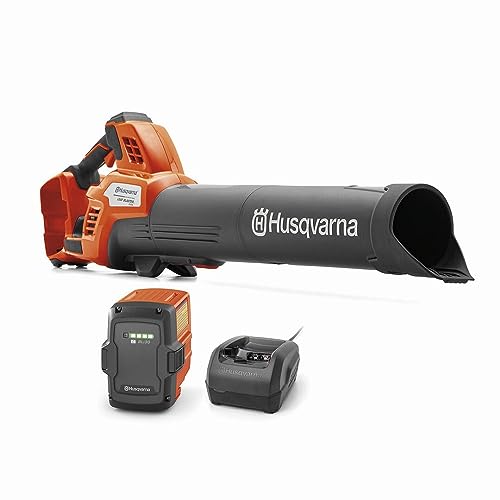
- Produces up to a rated 765 CFM of blowing power
- Variable-speed trigger offers customizable air delivery
- Includes a 56V 5.0Ah battery and matching charger
Cons
- High-output operation can significantly reduce runtime per charge
- 5.0Ah battery adds noticeable weight for single-handed work
Pros
- M18 FUEL system utilizes dual battery power for high output
- Cordless design offers unrestricted portability across large areas
- Integrates with the Milwaukee M18 tool ecosystem
Cons
- Tool only; requires two M18 batteries and a charger sold separately
- Dual batteries increase overall handheld carrying weight
Pros
- Offers up to a manufacturer-rated 700 CFM air volume
- Brushless motor ensures efficient power delivery
- Includes a 4.0Ah battery and rapid charger
Cons
- The 60V battery pack adds weight during extended handheld use
Understanding the Physics of Air Displacement
When evaluating outdoor power equipment, the distinction between air speed and air volume is critical. While many consumers focus on MPH (Miles Per Hour), which measures the velocity of the air stream, CFM (Cubic Feet per Minute) dictates the actual mass of air being displaced. Think of MPH as the “punch” of the air, while CFM represents the “width” and “depth” of the air curtain.
In practical physics, a high MPH rating with low CFM results in a narrow, laser-like stream that may scatter leaves rather than moving them. Conversely, high CFM creates a broad, voluminous wall of air that pushes entire piles of debris forward. For most homeowners, CFM is the more important metric because it determines how quickly a job can be completed. Readers comparing setup options can review our technical analysis on how to choose leaf blower.
CFM vs. MPH: The Diagnostic Matrix
To select the right tool, you must balance these two metrics based on your specific environment. A blower with 200 MPH but only 300 CFM will struggle to move a wet pile of oak leaves, whereas a unit with 150 MPH and 700 CFM will clear it efficiently.
When High MPH is Critical
- Stuck Debris: Leaves matted down by rain or stuck in turf require the high-velocity impact of high MPH to break the surface tension and dislodge the material.
- Hard Surfaces: On concrete or asphalt, high MPH helps blast debris out of expansion joints and corners.
- Distance: If you need to move debris from a driveway to a lawn several yards away, velocity is key.
When High CFM is Critical
- Volume Clearing: Moving large piles of dry leaves requires a massive volume of air to maintain momentum.
- Wet Leaves: Wet debris is heavy; high CFM provides the necessary force to push the added weight.
- Large Properties: High CFM reduces the number of passes required to clear a lawn, saving time and battery/fuel.
Sizing Guide: Matching CFM to Your Yard
Choosing the correct CFM rating depends on the square footage of your property and the type of debris you typically encounter. Below is a technical breakdown to help you diagnose your needs.
Residential & Light Duty (Under 1/2 Acre)
For small driveways, patios, and minimal leaf fall, a 250 to 450 CFM range is sufficient. These units are typically lighter, quieter, and easier to maneuver in tight spaces. If you are looking for portability, explore our guide on cordless leaf blowers which often fall into this category.
Standard Residential (1/2 to 1 Acre)
For average suburban yards with moderate tree cover, you should target 450 to 600 CFM. This range offers the best balance of weight and power, allowing you to move moderate piles of leaves without fatigue. To determine if a battery unit can handle this load, consult our gas or electric leaf blower comparison.
Large Properties & Heavy Debris (1+ Acre)
For properties with dense tree coverage, wet leaves, or large acreage, you require 650 to 1000+ CFM. At this level, backpack units become the preferred choice due to ergonomic weight distribution. See our analysis of backpack vs handheld blowers to understand the physical advantages of high-CFM backpack models.
Technical Specifications & Nozzle Physics
It is vital to understand that CFM ratings are often measured at the blower tube, not the nozzle tip. As air travels down the tube, friction and turbulence can reduce effective CFM. A tapered nozzle increases velocity (MPH) but can restrict volume (CFM) if not designed correctly.
When comparing models, look for “Air Volume at Nozzle” rather than “Air Volume at Housing.” High-quality manufacturers will provide both metrics. Additionally, the diameter of the blower tube plays a significant role; a wider tube allows for higher CFM but requires a more powerful motor to maintain velocity.
Maintenance Intervals for Peak Performance
Even the most powerful blower will lose CFM if not properly maintained. Airflow restrictions caused by debris or wear can significantly degrade performance.
Diagnostic Checklist
- Intake Screen: Inspect the air intake screen before every use. Clogged screens restrict air volume, causing the motor to overheat and reducing CFM by up to 30%.
- Tube Obstructions: Ensure the blower tube is free of mud dauber nests or accumulated debris.
- Impeller Condition: For gas models, check the impeller for cracks. A damaged impeller disrupts the airflow vortex, drastically lowering efficiency.
Regular maintenance ensures your equipment operates at its rated specifications. For comprehensive care of your outdoor fleet, refer to our chainsaw and outdoor tool maintenance resources.
Safety and Regulatory Compliance
High-CFM blowers generate significant noise and particulate displacement. Always adhere to local noise ordinances and wear appropriate hearing protection. Furthermore, be mindful of the direction of airflow to avoid blowing debris into neighbors’ properties or onto roadways. For professional operators, ensuring compliance with workplace safety standards is mandatory; review the OSHA equipment safety regulations to ensure your operation meets federal guidelines.
Picking the Right CFM Range
Light cleanup on a patio rarely needs the airflow a large acreage demands, so match CFM to the job. Oversized blowers can be tiring and loud. For general safety information on blowers and yard tools, see American National Standards Institute (ANSI).