Do Lawn Sweepers Work? The Direct Answer
Yes, lawn sweepers work effectively for their intended purpose of removing surface debris like leaves, grass clippings, and small twigs from lawns. However, effectiveness varies significantly based on sweeper type (push vs. powered), lawn conditions, debris moisture, and debris size. Push sweepers perform best on dry, relatively flat lawns with light debris, while powered sweepers handle heavier accumulations and larger areas more efficiently.
Pros
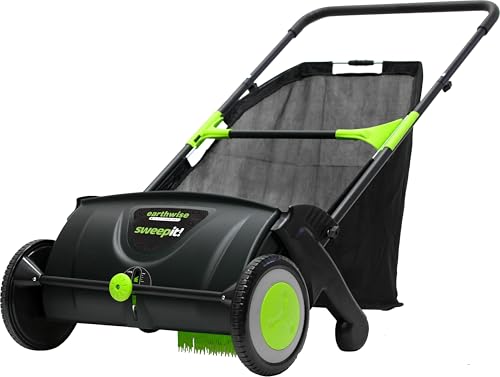
- Manual push design operates quietly without gasoline, cords, or batteries
- Four-brush pickup mechanism covers a 21-inch sweeping path
- Adjustable brush height tailors contact to lawn conditions
- Features a removable 2.6-bushel collection bag
Cons
- Not recommended for wet debris, sticks, pinecones, or tall grass
- Requires multiple passes or manual emptying during heavy leaf drops
Pros
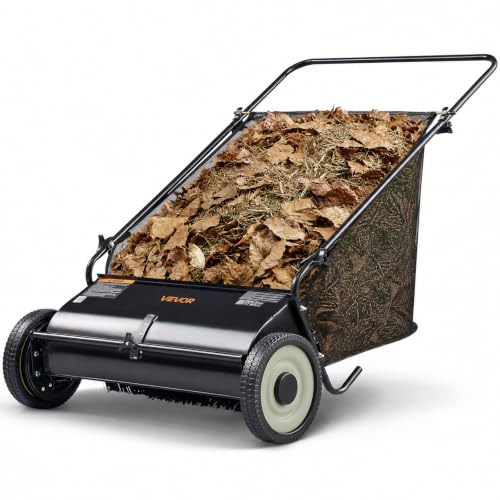
- Wide 26-inch clearing path sweeps broad swaths of lawn in fewer passes
- Large 7 cu. ft. hopper bag reduces the frequency of disposal stops
- Tool-free manual adjustment knob easily calibrates brush ground height
- Rugged steel frame provides dependable structural stability
Cons
- Weighs 33 pounds before adding debris, requiring manual pushing effort
- Takes up considerable storage space due to its 56-inch length
How Do Lawn Sweepers Work?
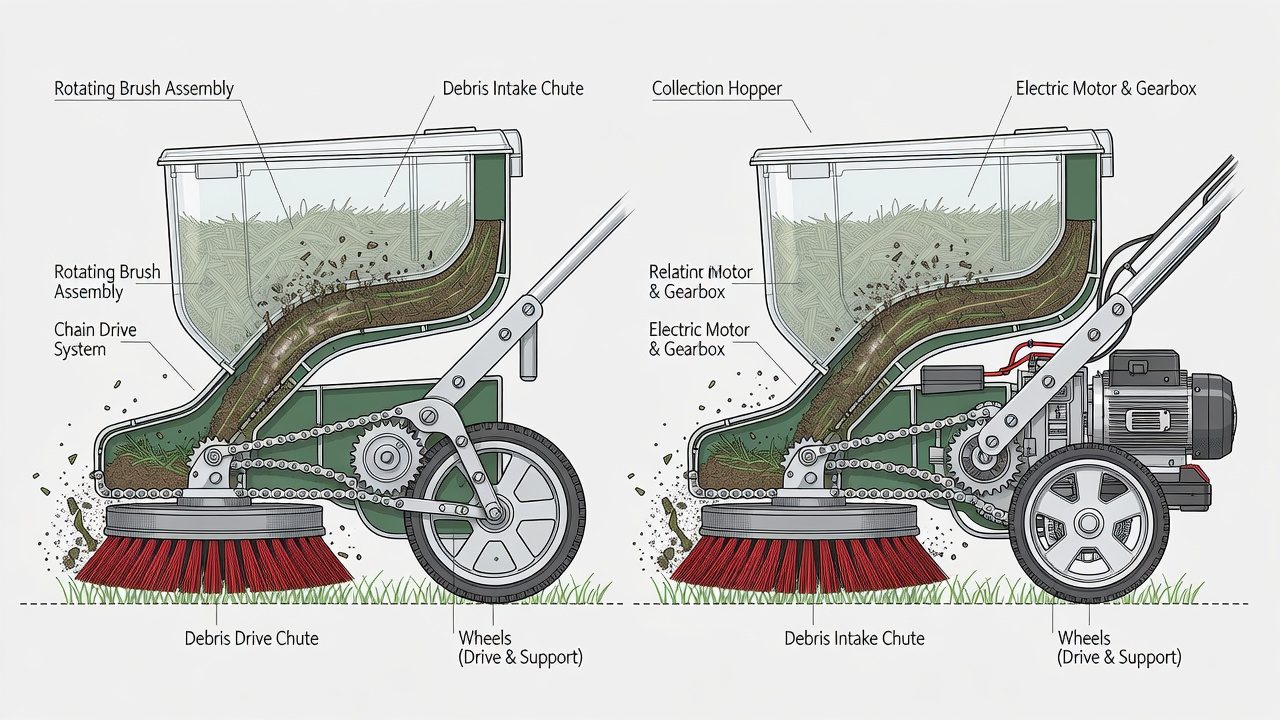
Lawn sweepers use rotating brush mechanisms to collect surface debris and deposit it into a collection hopper. Understanding the mechanics helps explain why they work well in some situations and struggle in others.
Push Sweepers (Manual)
Push sweepers operate through human power. As you push the sweeper forward, wheels turn the brush mechanism via a chain or gear system. The rotating brushes sweep debris into a collection container. These sweepers typically have a 18-32 inch sweep width and work through mechanical action alone, requiring consistent pushing motion to generate brush rotation.
Powered Sweepers (Electric or Gas)
Powered sweepers use an engine or electric motor to independently rotate the brushes, meaning the sweeping action continues regardless of forward movement speed. You control the brush speed and direction separately from movement, offering more flexibility and requiring less physical effort. Powered models typically cover wider areas (up to 32 inches) and handle heavier debris loads more effectively.
Types of Debris Lawn Sweepers Collect
- Leaves: Dry leaves are ideal, sweepers collect them efficiently
- Grass clippings: Well-suited for sweeper collection, especially fresh clippings
- Small twigs: Generally effective on pieces under 1 inch
- Pine needles: Can be collected but may require multiple passes
- Small stones and dirt: Some sweepers collect these; others allow them to fall through
- Wet leaves: Poor performance; leaves clump and clog brushes
Factors That Affect Lawn Sweeper Effectiveness
Moisture and Weather Conditions
Debris moisture is the single biggest factor affecting sweeper performance. Dry debris sweeps cleanly into the hopper. Wet leaves and grass clippings clump together, jam bristles, and reduce collection efficiency by 40-60% compared to dry conditions. Morning dew or rain within 24 hours significantly impairs performance. Optimal sweeping occurs on dry days, ideally 24+ hours after rain.
Debris Size and Type
Lawn sweepers excel at debris under 1 inch in diameter. Larger branches, thick twigs, or heavy accumulated debris overwhelm the system. Fine particles like dirt or sand sometimes pass through the collection container, depending on sweeper design. Leaf consistency matters too, crispy, dry leaves sweep better than heavy, dense leaves.
Lawn Condition and Terrain
Relatively flat, even lawns produce the best results. Uneven terrain causes the sweeper deck to lift off the ground, reducing brush contact with debris. Steep slopes (over 15 degrees) are difficult to navigate and reduce effectiveness. Thick, dense turf requires slower movement for effective collection, while thin or bare spots allow better debris contact. Sloped lawns may be unsuitable for push sweepers entirely.
Sweeper Design: Brush Type and Width
Bristle design, stiffness, and spacing affect performance. Stiffer bristles work better on compacted debris and grass clippings; softer bristles suit delicate leaf collection. Wider sweep paths (28-32 inches) cover more area but require more muscle on push models. Collection hopper capacity matters, full hoppers reduce suction and collection efficiency.
When Lawn Sweepers Work Well
Best Use Cases for Maximum Effectiveness
- Fall leaf cleanup: Dry leaves are ideal debris for sweepers; they collect efficiently and the volume justifies using a sweeper over raking
- Post-mowing clipping collection: Fresh grass clippings sweep cleanly; sweepers are faster than bagging mower passes
- Small to medium lawns (under 1 acre): Sweepers cover these efficiently; larger lawns favor powered models or alternative methods
- Regular maintenance: Sweeping accumulated light debris (needles, small leaves, clippings) works well on a weekly or bi-weekly basis
- Relatively flat terrain: Lawns without significant slopes or uneven ground perform best
- Dry weather windows: Sweeping 1-2 days after rain or during dry seasons maximizes results
Seasonal Performance
Fall is peak sweeper season, volume of leaves justifies the tool investment, and dry conditions are common. Spring works moderately well for debris from winter and early growth. Summer is lighter (grass clippings mainly). Winter is impractical due to moisture and frozen ground. Spring and fall provide optimal conditions. For complementary field maintenance guidelines, examine our breakdown of marshall stanmore iii vs harman kardon onyx studio 8.
Limitations: When Lawn Sweepers Struggle
Types of Debris Sweepers Cannot Handle Well
- Wet leaves and grass: Clump and jam bristles, reducing efficiency by half or more
- Heavy, dense leaves: Sweepers designed for light leaves struggle with oak or similar heavy foliage
- Large branches or twigs: Anything over 1-1.5 inches doesn’t fit into collection systems
- Compacted or matted debris: Previously wet or heavily compressed material resists sweeping
- Fine particles: Sand, dirt, or small stones often pass through rather than collecting
- Sticks mixed with leaves: Mixed debris jams more easily than uniform material
Terrain Limitations
Sweepers struggle on slopes over 15 degrees and uneven ground. Significant hills force the sweeper deck off the lawn surface, reducing brush contact. Washboard or rutted terrain causes the sweeper to bounce, compromising collection. Push sweepers become exhausting on slopes; powered models handle grade better but still struggle on extreme slopes.
Lawn Type Challenges
Very thick, dense turf (like certain zoysia or bermuda grasses) resists brush penetration. Thin or sparse lawns offer less resistance but have little debris to collect. Thatch buildup reduces sweeper contact with debris on the surface. To evaluate matched hardware tolerances, consult our detailed overview of dyson v8 cyclone vs bissell featherweight stick.
Lawn Sweepers vs. Alternative Methods
Sweepers vs. Raking
| Factor | Lawn Sweeper | Raking |
|---|---|---|
| Speed | 3-5x faster on medium lawns | Slower; physically demanding |
| Physical effort | Moderate (push models); minimal (powered) | High; fatiguing over large areas |
| Debris type | Best for dry, uniform debris | Works on wet debris; more versatile |
| Terrain | Best on flat lawns | Works on slopes and uneven ground |
| Cost | $150-$600+ upfront investment | $20-$50 one-time cost |
| Best use | Regular seasonal cleanup; large volume of dry leaves or clippings | Spot cleanup; wet debris; slopes; budget-conscious |
Sweepers vs. Leaf Blowers
Leaf blowers scatter debris to edges or into piles but don’t collect it. Sweepers collect debris into a hopper for easy disposal. Blowers work better on wet debris and slopes but require additional raking or collection afterward. Sweepers are more efficient for final collection but can’t match blower speed for moving debris around.
Sweepers vs. Lawn Vacuums
Powered lawn vacuums (mulching or suction-based systems) collect debris more aggressively and handle wetter material better than sweepers. They’re faster on large properties but cost significantly more ($800-$3,000+) and require more storage space. Sweepers are more affordable and lighter-duty, suitable for regular maintenance rather than heavy cleanup. When planning workspace deployment, consider the engineering criteria outlined in our bissell crosswave hydrosteam vs shark stainforce guide.
Tips for Maximizing Lawn Sweeper Performance
Pre-Sweeping Preparation
- Wait for dry conditions: Allow 24+ hours after rain before sweeping
- Remove large debris: Pick up sticks, branches, and stones before sweeping to prevent jamming
- Check lawn height: Mow grass to 2-3 inches for optimal sweeping; longer grass interferes with brush contact
- Prepare collection area: Have bags or a disposal container ready near the sweeper path
Sweeping Technique
- Maintain consistent speed: Don’t stop frequently; continuous motion improves brush engagement
- Overlap passes slightly: 6-12 inches of overlap ensures complete coverage
- Make multiple passes on heavy debris: Two passes work better than one aggressive pass on thick leaf accumulation
- Empty hopper regularly: A full or overstuffed hopper reduces suction and collection efficiency
- Adjust bristle height: Set bristles to just barely touch the ground; too high misses debris, too low creates drag
Maintenance for Consistent Performance
- Clean brushes after each use: Remove matted debris and clippings to maintain bristle stiffness
- Check and replace bristles: Worn or bent bristles reduce effectiveness; replace annually or as needed
- Inspect and clean filters: Fine particle accumulation clogs filters and reduces collection capacity
- Lubricate moving parts: Chain or gear systems need regular lubrication to maintain brush rotation speed
- Check for debris jams: Clear jammed material immediately to prevent damage and restore function
- Store properly: Keep sweepers dry and protected; moisture promotes rust and bristle degradation
Everything You Need to Know: Do Lawn Sweepers Work FAQ
Are lawn sweepers worth the money?
Lawn sweepers are worth the investment if you regularly collect significant debris (fall leaves, grass clippings) on a medium-sized, relatively flat lawn. For fall cleanup on a 5,000-10,000 sq ft property, a sweeper saves 5-10 hours compared to raking. At $150-$300 for a quality push sweeper, the time savings justify the cost for most homeowners. Powered models ($400-$600+) make sense for larger properties or those with heavier debris. If you have a small lawn, wet debris, slopes, or only occasional cleanup needs, raking or blowing may be more practical.
Can lawn sweepers pick up wet leaves?
Lawn sweepers struggle significantly with wet leaves. Moisture causes leaves to clump, stick to bristles, and jam the collection system. Sweeper efficiency drops 40-60% on wet debris compared to dry. If you must sweep wet leaves, use a powered sweeper with stiffer bristles and make multiple passes, but expect reduced results. The best approach is to wait 24+ hours after rain for leaves to dry before sweeping.
Do lawn sweepers work on uneven or sloped lawns?
Lawn sweepers perform poorly on uneven or significantly sloped terrain. On slopes over 15 degrees, the sweeper deck lifts away from the lawn surface, reducing brush contact with debris. On washboard or heavily rutted ground, the sweeper bounces and skips sections. Push sweepers become exhausting to operate uphill. For sloped or uneven lawns, raking or a leaf blower remains more practical than sweeping.
How often should I empty the hopper while sweeping?
Empty the hopper whenever it reaches 75-80% full capacity, or whenever you notice a decline in collection efficiency. A full hopper reduces brush effectiveness and increases the risk of jamming. For fall leaf cleanup on a 5,000-10,000 sq ft lawn, expect to empty the hopper 3-5 times depending on leaf volume and hopper capacity. Regular emptying ensures consistent performance throughout your sweeping session.
Conclusion
Lawn sweepers are effective tools for their intended purpose: collecting dry surface debris like leaves and grass clippings from relatively flat lawns. They work well for fall cleanup, post-mowing clipping collection, and regular maintenance in ideal conditions. However, they have clear limitations, wet debris, steep terrain, and heavy accumulations challenge their effectiveness. For most homeowners with medium-sized, dry, relatively flat lawns who tackle seasonal debris regularly, a push or powered sweeper delivers solid value and significantly reduces cleanup time compared to raking. Understanding when sweepers excel and when alternatives work better ensures you choose the right tool for your specific lawn care situation.
Related Maintenance and Operating Guides
To keep your equipment running at peak operating efficiency, explore our related technical walkthroughs and maintenance tutorials:
- Consult our detailed breakdown on cordless stick vacuum buyer guide.
- Consult our detailed breakdown on robotic pool cleaner comparison guide.
Safety Notes for Lawn Sweepers
Lawn sweepers pull debris off turf and into a collection bin, and their moving parts deserve respect. Broad safety background on yard machinery is available from American National Standards Institute (ANSI). Keep hands and feet clear of the intake while the unit runs.