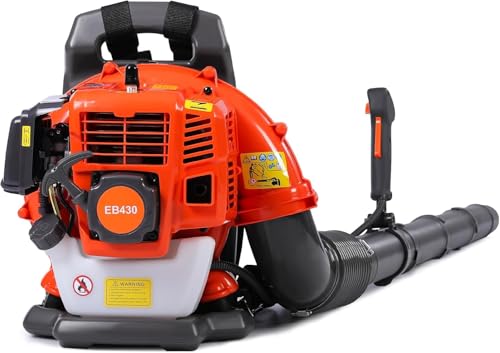
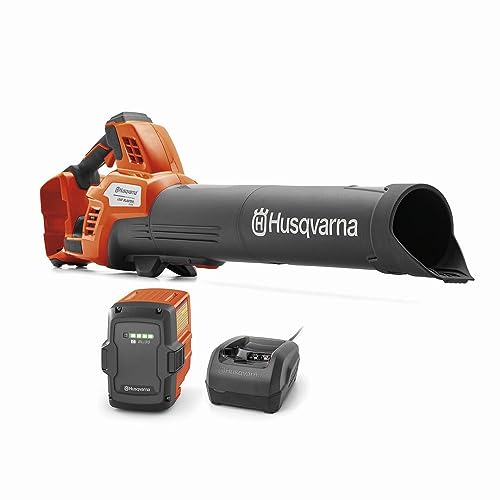
Quick Answer
Most two-stroke gas leaf blowers need mixed fuel, gasoline blended with two-stroke oil, usually at a 50:1 ratio. Check the engine label before you buy fuel. Some four-stroke models, including certain Stihl 4-MIX units, still need mixed fuel, so follow the manual. Use fresh fuel suited to your engine type.
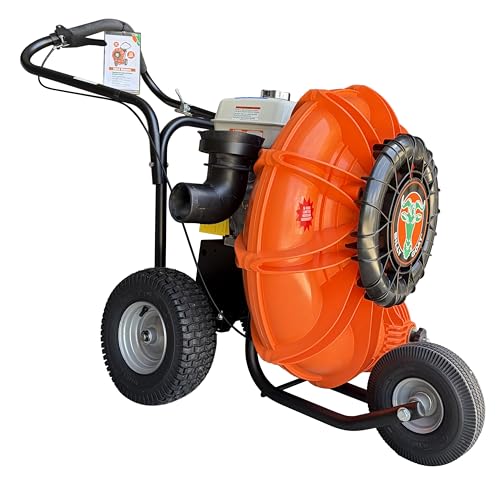
Pros
- Powered by a commercial-grade Honda GX270 engine
- Delivers a high rated airflow of 1,700 CFM and 200 mph velocity
- 17-inch 16-blade composite fan designed for efficient output
- Fingertip directional lever controls airflow up and down
- Pneumatic rear wheels ease maneuvering over uneven terrain
Cons
- Large 58 x 29 x 45 inch frame demands ample storage room
- Heavier commercial walk-behind build lacks handheld agility

Pros
- High-volume clearing with a rated 3000 CFM and 207 MPH
- Electric start eliminates manual pulling effort
- Standard clevis pin hitch connects easily to ATVs and tractors
- Adjustable vertical airflow discharge for directed blowing
- Durable steel frame construction with large wheels
Cons
- Requires a towing vehicle like an ATV or lawn tractor
- Weighs 291 pounds and demands significant storage space
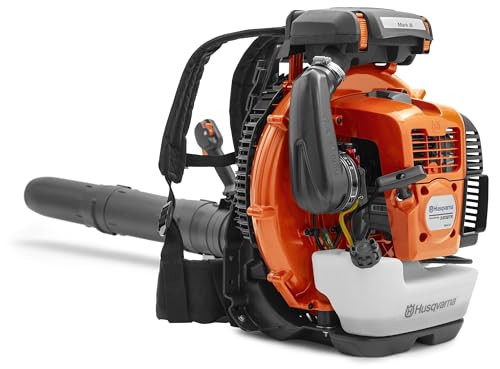
Pros
- Strong rated output of 1000 CFM, 220 MPH, and 47 N blow force
- Ventilated ergonomic harness with load-distributing hip belt
- Two-stage intake air filtration protects engine in dusty jobs
- Intuitive tube-mounted throttle control
Cons
- Substantial 34-pound weight can lead to operator fatigue
- Requires ongoing 2-cycle fuel mixing and maintenance
Why the Answer Depends Entirely on Engine Type
The phrase “mixed gas” describes fuel that has been pre-blended with two-stroke oil before it ever reaches the tank. Whether your blower needs it is not a preference question, it is a mechanical requirement determined by how the engine lubricates itself. Two-stroke engines have no oil sump, no oil pump, and no dipstick. The oil that protects the cylinder walls, piston rings, and crankshaft bearings arrives dissolved in the gasoline and is burned along with it in what engineers call a total-loss lubrication system. Four-stroke engines, by contrast, circulate oil through a sealed crankcase and take straight gasoline at the pump.
Identify your engine before you buy fuel. Look for these markings on the housing or engine shroud: To evaluate matched hardware tolerances, consult our detailed overview of how to choose leaf blower.
| Marking | Engine Type | Fuel Required |
| 2-CYCLE, 2-STROKE, or “50:1” stamped on housing | Two-stroke | Pre-mixed gasoline + two-stroke oil |
| 4-CYCLE, 4-STROKE, or “4-MIX” (Stihl) | Four-stroke | Straight 89+ octane unleaded gasoline |
| Stihl “4-MIX” label | Four-stroke, valve-in-head, still requires mix | 50:1 pre-mixed fuel (treated as two-stroke) |
Stihl’s 4-MIX engine is the most common source of confusion in this category. It is a four-stroke design with overhead valves, yet it still requires a 50:1 fuel-and-oil mixture because it uses the same total-loss lubrication path as a two-stroke. If you own a Stihl BR 600, BR 700, or FS 91 R, you are mixing fuel, check the manual to confirm the exact ratio before filling.
The Physics: What the Oil Actually Does Inside the Cylinder
When the piston descends on the compression stroke, the crankcase pressure drops and draws in a fresh charge of air-fuel-oil mixture through the intake port. That charge is then transferred into the combustion chamber above the piston. As the piston rises, the mixture is compressed and ignited. During combustion, the oil film that was carried in with the fuel coats the cylinder wall and piston ring lands, providing the boundary lubrication that prevents metal-to-metal contact at speeds that routinely exceed 7,000 RPM. When planning workspace deployment, consider the engineering criteria outlined in our how to choose a leaf blower guide.
The oil is not fully consumed. A significant fraction, often cited as roughly one-third of the injected mixture, exits through the exhaust port as an aerosol before combustion is complete. This is why two-stroke exhaust smells distinctly oily and why two-stroke equipment produces higher hydrocarbon emissions than four-stroke equivalents. It is also why the oil-to-gas ratio cannot be “close enough.” Too little oil and the cylinder wall film breaks down under heat. Too much oil and the mixture will not atomize cleanly, leading to incomplete combustion, carbon buildup on the piston crown and ring grooves, spark plug fouling, and exhaust port restriction.
Standard Mix Ratios by Brand and Engine
| Brand / Engine Family | Ratio | Oil per 1 Gallon | Oil per 2.5 Gallons |
| Husqvarna (most handheld and backpack) | 50:1 | 2.6 fl oz | 6.5 fl oz |
| Stihl (including 4-MIX) | 50:1 | 2.6 fl oz | 6.5 fl oz |
| Echo (most PB and PB-265/250 series) | 50:1 | 2.6 fl oz | 6.5 fl oz |
| Poulan / Poulan Pro | 40:1 or 50:1 | 3.2 fl oz (40:1) | 8.0 fl oz (40:1) |
| Older Ryobi, Craftsman, MTD | 32:1 or 40:1 | 4.0 fl oz (32:1) | 10.0 fl oz (32:1) |
| Briggs & Stratton 4-stroke (rare in blowers) | Straight gas | 0 | 0 |
Always defer to the owner’s manual and the decal on the machine. If the manual specifies 50:1 and you can only find 40:1 oil bottles, use the 40:1 measurement markings on the bottle and measure for 50:1, most modern two-stroke oils are formulated to be safe at both ratios, but the manual governs. Never substitute automotive motor oil (SAE 10W-30, 5W-30, etc.) for two-stroke oil. Motor oil contains additives that do not burn cleanly in a two-stroke combustion chamber and will leave heavy deposits that destroy the piston and rings.
Step-by-Step: Mixing Fuel Correctly
Follow this sequence every time you mix. Skipping the order of operations is the most common cause of a stratified, oil-rich or oil-lean mixture.
Materials
- Approved two-stroke oil (TC-W3 for water-cooled, but air-cooled blowers typically specify an API TC or JASO FD oil, check the manual)
- Fresh 89-octane or higher unleaded gasoline, less than 30 days old
- Graduated mixing container or a marked gas can with ratio markings
- Funnel and nitrile gloves
Procedure
- Measure the oil first. Pour the correct volume of two-stroke oil into the empty mixing container. Measuring oil into an empty container prevents the oil from clinging to the walls and being under-delivered when you pour into a partially filled can.
- Add gasoline. Fill to the target volume. For a 50:1 mix in a 2-gallon container, add 5.2 ounces of oil, then top up with gasoline to the 2-gallon line.
- Seal and agitate. Cap the container and shake vigorously for 30 seconds. The mixture should appear uniformly colored with no visible oil streaks or separation at the surface.
- Label the container. Write the ratio and the date on the can with a paint marker. Never store unlabeled fuel.
- Shake again before every fill. Even a properly mixed batch will stratify if it sits for weeks. Agitate the can for 15 seconds immediately before pouring into the blower tank.
Diagnostic Matrix: Symptoms of Wrong Fuel
Use this matrix to trace a running problem back to its fuel-related root cause before you start replacing parts. The ECHO PB-250LN case study from technician forums illustrates the pattern: half power, hard starting after warm-up, and a new carburetor, plug, fuel lines, filter, breather, and air filter failing to fix it, pointing to an ignition coil or, more commonly, a fuel mixture problem that was never actually corrected.
| Symptom | Likely Fuel Cause | Confirming Test | Corrective Action |
| Hard cold start, smokes heavily on startup | Mixture too rich (excess oil) | Inspect spark plug, wet, black, oily deposits | Drain tank, flush with correct premix, replace plug |
| Starts, runs 3 to 5 minutes, then bogs and dies | Stale fuel, varnished carburetor jets, or fuel filter clogged | Remove fuel filter, inspect for white waxy deposits | Drain all fuel, replace filter and lines, run carburetor cleaner through the system |
| Runs at half power, hard to restart when warm | Lean mixture (too little oil) causing early piston ring wear, or ignition coil failing under heat | Compression test, below 100 PSI on a warm two-stroke indicates ring/cylinder damage | Perform compression test first; if compression is good, test ignition coil air gap (0.006 to 0.010 in typical) |
| Excessive blue-white smoke, oil dripping from exhaust | Mix ratio far too rich, or wrong oil type used | Check plug color and smell the exhaust | Correct the ratio, switch to the specified two-stroke oil, replace plug |
| Engine seizes or locks up completely | Ran straight gasoline with no oil, or mixture extremely lean | Attempt to pull the starter, engine will not rotate | Engine replacement or professional rebuild; this is not a field-repairable failure |
| Rough idle, dies at idle, recovers at full throttle | Stale fuel, carburetor idle circuit partially clogged | Inspect fuel in tank, yellowed, cloudy, or smells varnished | Drain and replace fuel, clean or replace carburetor |
Fuel Staleness: The 30-Day Rule and What Actually Happens
Gasoline begins to degrade the moment it leaves the refinery. The lighter, more volatile hydrocarbons evaporate first, raising the fuel’s ignition temperature and reducing its ability to vaporize in the carburetor. Simultaneously, the remaining compounds oxidize and polymerize into gum and varnish. In a two-stroke premix, the oil does not prevent this process, it only lubricates. After approximately 30 days of storage, the mixture will have lost enough volatility to cause hard starting, and after 60 to 90 days, varnish deposits will begin to restrict the tiny jets and passages inside the carburetor.
Ethanol-blended gasoline (E10, the standard pump fuel in most of the United States) accelerates degradation. Ethanol is hygroscopic, it absorbs water from the atmosphere. In a fuel system, this water-ethanol blend can separate from the gasoline (phase separation), settle at the bottom of the tank, and corrode aluminum carburetor components. It also dissolves old rubber fuel lines, turning them into a gelatinous sludge that clogs the fuel filter.
Practical Storage Protocol
- Drain the blower tank and carburetor bowl completely before storing the machine for more than two weeks. Run the engine until it stalls with the fuel valve closed to empty the carburetor.
- Store premixed fuel in a sealed, approved container away from direct sunlight and heat. A sealed container limits oxygen exposure and slows oxidation.
- Add a fuel stabilizer rated for two-stroke premix at the time of mixing, not after the fuel has gone stale. Stabilizers slow oxidation but cannot reverse varnish that has already formed.
- Discard any premix older than 30 days if no stabilizer was used, or older than 90 days with stabilizer. Dispose of stale fuel at a household hazardous waste collection site, do not pour it on the ground or down a storm drain.
- Never mix old fuel with new fuel to “stretch” it. Adding fresh gasoline to degraded fuel does not restore the volatile compounds that have already evaporated; it only dilutes the varnish concentration enough to keep the engine running temporarily while the deposits continue to accumulate.
Two-Stroke vs. Four-Stroke: A Practical Comparison for Yard Work
The fuel question is really a proxy for a larger equipment decision. If you are choosing between platforms, the fuel requirement is one of several variables that affect daily use, emissions, noise, and maintenance burden. For a full breakdown of runtime, CFM output, and cost-per-season, see our comparison of gas or electric leaf blower comparison.
| Factor | Two-Stroke (Mixed Gas) | Four-Stroke (Straight Gas) |
| Fuel | Pre-mixed gasoline + oil, 32:1 to 50:1 | Straight 89+ octane unleaded |
| Weight (empty) | Lighter, no oil sump or valvetrain | Heavier, crankcase, valves, oil |
| Power-to-weight | Higher, preferred for handheld blowers | Lower, common in backpack units |
| Emissions | Higher HC and CO; aerosol oil in exhaust | Lower, cleaner combustion |
| Mixing required | Yes, every fill or from a pre-mixed can | No |
| Typical CFM range | 400 to 750 CFM (handheld), 600 to 900 CFM (backpack) | 600 to 1,000+ CFM (backpack) |
| Common failure from fuel error | Seized piston, scored cylinder | Fouled plug, clogged exhaust port from oil residue |
For a deeper look at how form factor affects fuel capacity, runtime, and operator fatigue, read our backpack vs handheld blowers guide.
Pre-Mixed Fuel: Is It Worth the Premium?
Pre-mixed fuel in sealed cans (Husqvarna XP+, Stihl MotoMix, Echo PowerBlend, VP Small Engine Fuels) eliminates the measurement step entirely. These products are typically ethanol-free, use synthetic two-stroke oil, and carry a shelf life of two years or more in unopened containers. For occasional users who run a blower a few times per season, the cost premium is often justified by the elimination of stale-fuel problems, the single most common cause of two-stroke equipment failure in residential settings.
For daily professional use, mixing your own fuel from bulk gasoline and quality two-stroke oil is more economical. The key is discipline: mix only what you will consume within 30 days, label every container, and never leave fuel sitting in the machine between jobs.
Maintenance Intervals Tied to Fuel System Health
| Interval | Fuel System Task | Why It Matters |
| Every fill | Shake the mixing container before pouring; inspect tank cap seal | Prevents stratified mixture and air leaks that lean out the mixture |
| Every 25 operating hours | Inspect and replace fuel filter; check fuel lines for cracking | Clogged filters restrict flow under load, causing lean running and overheating |
| Every 50 operating hours | Inspect spark plug; clean or replace; check electrode gap | Fouled plugs indicate mixture problems and cause hard starting |
| Every 100 operating hours | Carburetor inspection and cleaning; check idle speed and L/H needle settings | Varnish buildup restricts fuel delivery and degrades performance |
| Annually or before storage | Full fuel system drain, carburetor bowl removal, fuel line replacement if over 3 years old | Prevents season-start failures and extends engine life |
Two-stroke engine maintenance overlaps significantly with other small-engine equipment. For chainsaw chain sharpening, carburetor tuning, and general small-engine service procedures that apply across your tool shed, see our chainsaw and outdoor tool maintenance resource.
Safety and Regulatory Notes
Two-stroke leaf blowers emit a measurable fraction of their fuel charge as unburned aerosol exhaust. This is not a defect, it is inherent to the total-loss lubrication design. For commercial operators, this has regulatory implications. OSHA and EPA guidelines govern equipment emissions, noise exposure, and fuel handling practices on job sites. Review the current OSHA equipment safety regulations before operating gas-powered blowers in commercial or municipal settings, particularly in California and other states with strict small-engine emissions rules.
Always mix fuel outdoors or in a well-ventilated area. Gasoline vapors are flammable and heavier than air, meaning they can travel along the ground to a distant ignition source. Keep a Class B fire extinguisher within reach whenever you are handling or storing fuel.
Buyer FAQs: Do Leaf Blowers Take Mixed Gas Solved
Can I use the same mixed gas in my string trimmer and my leaf blower?
Yes, if both engines specify the same ratio. Most modern handheld blowers and trimmers from the same brand use 50:1. Check both manuals. If one requires 40:1 and the other requires 50:1, mix separately or use a ratio that satisfies the stricter requirement only if the manufacturer permits it.
What happens if I accidentally put straight gas in a two-stroke blower?
Do not start the engine. Drain the tank completely, flush it with a small amount of correctly mixed fuel, drain again, then refill with proper premix. If the engine was started and run on straight gas, even briefly, the cylinder and piston rings may already be scored. A compression test will reveal the extent of the damage.
Can I mix oil and gas directly in the blower’s fuel tank?
It is possible but not recommended. Measuring oil into a small tank is imprecise, and the oil will not distribute evenly without thorough agitation. Use a graduated mixing container every time. The few seconds saved are not worth the risk of an uneven mixture.
Does higher-octane fuel make a two-stroke blower run better?
Octane rating measures resistance to detonation (knock), not energy content. Most two-stroke blowers are designed for 89 octane. Using 91 or 93 octane will not produce more power in an engine that is not knock-limited. However, using fuel below the specified octane (87 in some high-compression engines) can cause detonation under load, which damages the piston crown and ring lands over time.
How do I dispose of old mixed gas?
Take it to a household hazardous waste collection facility or a participating auto parts store that accepts used fuel. Do not pour it down a drain, on the ground, or into a trash container. Many municipalities hold periodic collection events, check your local waste authority’s schedule.
Related Reading
If you are still deciding which platform to buy, our guide to the best cordless leaf blowers covers battery-powered alternatives that eliminate the fuel-mixing question entirely, with runtime data and CFM comparisons for residential and light-commercial use.
Fuel Mix for Gas Blowers
Most gasoline leaf blowers run on a fuel and oil mixture, so check the manual for the correct ratio. Using the wrong blend can damage the engine over time. General safety guidance on handling fuel is offered at American National Standards Institute (ANSI).