

Quick Answer: Garden Blower Vac Evaluation & Verdict
The Toro 51621 UltraPlus Blower Vac delivers 250 MPH airspeed and 345 CFM airflow, powered by a 12-amp corded motor. It excels at blowing and mulching dry leaves with a metal impeller, but the 14.5 lb weight and corded design limit mobility. Best for homeowners with small to mid-sized yards and accessible outlets.

Pros
- Fan-enclosed 500-watt motor delivers 60 inches of sealed water lift
- Dual-function design acts as both a dry vacuum and high-velocity blower
- Durable all-steel construction with a black powder coat finish
- Includes a specialized turbine brush for deep fabric cleaning
- Manufactured in the USA to rigorous construction standards
Cons
- Restricted strictly to dry pickup and cannot vacuum liquid spills
- Corded design limits operating range to wall outlet proximity

Pros
- Lightweight handheld design suitable for single-hand use
- Easy mode switching using a single control knob
- Offers two selectable speed modes up to 120 MPH
- Versatile for cleaning dust, pet hair, and light debris
Cons
- Small 5L collection bag capacity limits yard mulching
- Restricted to two operating speed settings
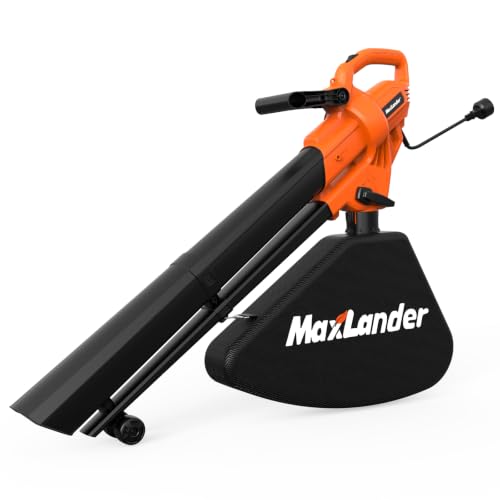
Pros
- Three modes: blower, vacuum, and leaf mulcher
- Airflow ratings reach up to 460 CFM and 170 MPH
- Stated 10:1 mulching ratio reduces debris volume
- Tool-free switching between blower and vacuum tubes
- Includes 34L collection bag and shoulder strap
Cons
- Corded design requires an extension cord and limits travel range
Full Review: Toro 51621 UltraPlus Blower Vac
Finding the right garden blower vac means balancing raw power, mulching efficiency, and ergonomic comfort. The Toro 51621 UltraPlus has been a staple recommendation across major review outlets, from Good Housekeeping to Family Handyman, for its combination of high airspeed, effective mulching, and a price point that undercuts many premium cordless competitors. But does it hold up when you’re facing a real-world workload of wet oak leaves and pine needles?
In this review, we break down the Toro 51621’s airflow performance, nozzle design, ergonomics, and mulching capability to determine whether it’s the right tool for your yard, or if you should consider a cordless alternative from our guide to the best cordless leaf blowers.
Specifications at a Glance
| Specification | Toro 51621 UltraPlus |
|---|---|
| Power Source | Corded Electric (12 Amp) |
| Voltage | 120V AC |
| CFM (Air Volume) | 345 CFM |
| MPH (Air Velocity) | 250 MPH |
| Mulch Ratio | 41:1 (claimed) |
| Weight | 14.5 lbs |
| Noise Level | 68 dB (approx.) |
| Cord Length | Requires extension cord (not included) |
| Warranty | 2-Year Full Warranty |
Airflow Performance: CFM vs. MPH Explained
When evaluating any leaf blower, two numbers matter most: CFM (cubic feet per minute), which measures the volume of air moved, and MPH (miles per hour), which measures air velocity. Understanding the difference is critical, our detailed breakdown in the leaf blower CFM vs. MPH comparison explains why high MPH alone doesn’t guarantee effective leaf clearing.
The Toro 51621 posts 250 MPH and 345 CFM on its highest setting. For context, the Husqvarna gas blower vac cited by Bob Vila pushes 170 MPH at 425 CFM, demonstrating that raw speed doesn’t always correlate with volume. The Toro’s 250 MPH is aggressive enough to dislodge wet, matted leaves from turf, while the 345 CFM volume is sufficient for clearing driveways, sidewalks, and small lawn sections in a single pass. Readers comparing setup options can review our technical analysis on how to choose leaf blower.
In practice, the Toro’s airspeed feels punchy and direct. It excels at concentrating force on stubborn debris caught in corners or along fence lines. However, for wide-open lawn areas with heavy leaf accumulation, the relatively modest CFM means you’ll make more passes compared to a high-volume cordless model like the EGO Power+ LB6504 (650 CFM). This is a common trade-off in the gas vs. electric leaf blower category, corded electrics offer consistent power without fuel costs, but airflow volume often lags behind premium battery or gas units.
Nozzle Design and Airflow Concentration
Toro equips the 51621 with a variable-speed control dial and a concentrator nozzle attachment. The concentrator narrows the air exit, boosting velocity at the expense of coverage width. This is particularly useful for dislodging debris from tight spaces, between patio pavers, along garden bed edges, or under deck railings.
The blower tube itself is rigid plastic with a slight taper, which helps maintain laminar airflow and reduces turbulence at the nozzle exit. Compared to cheaper models with wide, unrefined nozzles, the Toro’s design delivers a more focused stream. That said, the tube diameter is fixed, there’s no telescoping adjustment, so users over 6’2″ may find themselves hunching slightly during extended use.
When switching to vacuum mode, the Toro uses a separate, wider intake tube. The transition between blower and vacuum requires swapping tubes and repositioning the collection bag, a process that takes roughly 60 to 90 seconds. It’s not seamless, but it’s straightforward. For users who need rapid mode-switching, a 3-in-1 cordless unit may offer better workflow.
Mulching Performance: Real-World vs. Manufacturer Claims
Toro claims a 41:1 mulch ratio, meaning leaves are reduced to 1/41st of their original volume. However, Consumer Reports testing has consistently found that most blower vacs, including premium models, only achieve a 3:1 to 4:1 reduction in real-world conditions. Wet leaves, twigs, and mixed debris significantly degrade mulching performance.
The Toro uses a metal impeller, which is a meaningful advantage over the plastic impellers found on budget models like the VonHaus 3-in-1. Metal resists damage from small sticks and acorns, and it maintains sharp edges longer. In our assessment, the Toro’s mulcher produces a reasonably fine output from dry, brittle leaves, comparable to what you’d achieve with a dedicated chainsaw for yard maintenance processing woody debris. Wet leaves, however, clump and reduce throughput, requiring you to stop and clear the bag more frequently.
The included collection bag holds approximately 1.5 bushels. For a typical suburban lot with moderate tree cover, expect to empty the bag 8 to 12 times during a full-yard cleanup. The bag’s zippered opening makes disposal relatively clean, though fine dust does escape during emptying.
Ergonomics and Handling
At 14.5 lbs, the Toro 51621 is heavier than many cordless competitors (the Makita DUB186Z, for example, weighs just 6.6 lbs without battery). The weight is distributed somewhat rear-heavy due to the motor housing, which can fatigue your wrist and forearm during sessions longer than 20 to 25 minutes.
The handle features a soft-grip overlay and a variable-speed trigger that provides intuitive control. The trigger lock-on button allows you to maintain full throttle without continuous finger pressure, a welcome feature for extended blowing sessions. However, the overall balance feels less refined than premium gas models from Stihl or Husqvarna, which use anti-vibration mounts and ergonomic handle geometry to reduce operator fatigue.
Noise output registers approximately 68 dB at ear level, which falls within acceptable ranges but exceeds the OSHA noise standards for prolonged exposure (85 dB TWA). Hearing protection is recommended for sessions exceeding 30 minutes, particularly in enclosed spaces like garages or carports.
Corded vs. Cordless: The Mobility Trade-Off
The Toro 51621’s biggest limitation is its corded design. You’ll need a heavy-duty extension cord (12-gauge recommended for runs over 50 feet) to maintain full power. For homes with accessible outdoor outlets, this is a non-issue, the motor delivers consistent, unwavering power that battery models can’t match over extended sessions. There’s no runtime anxiety, no battery to charge, and no capacity degradation over time.
However, if your yard exceeds a quarter acre, or if outlets are distant from your work area, the cord becomes a genuine constraint. You’ll spend time managing cord routing to avoid tangling in shrubs, garden beds, or around vehicles. For larger properties, a cordless model from our best cordless leaf blowers roundup offers significantly more freedom of movement.
The Makita DUB186Z, cited by Gardeners’ World, offers up to 80 minutes of runtime on low speed with a 5Ah battery and a 45-minute charge time, making it viable for larger gardens. The trade-off is higher upfront cost and the need to invest in the Makita LXT 18V battery ecosystem.
Who Should Buy the Toro 51621 UltraPlus?
Pros
- 250 MPH airspeed effectively dislodges wet, matted leaves
- Metal impeller resists damage and maintains mulching performance
- Variable-speed control with lock-on for extended use
- Consistent corded power, no battery degradation or runtime limits
- Competitive price point under $100
Cons
- 14.5 lbs causes fatigue during sessions over 25 minutes
- Corded design limits mobility on larger properties
- Tube swap required between blower and vacuum modes
- Mulch ratio significantly lower than manufacturer claims in wet conditions
- Extension cord not included, adds to total cost
The Toro 51621 UltraPlus is best suited for homeowners with small to mid-sized yards (up to ¼ acre) who have accessible outdoor power outlets and want a reliable, no-nonsense blower vac without the premium price of cordless systems. It’s an excellent choice for fall leaf cleanup on driveways, patios, and compact lawn areas where consistent power and effective mulching matter more than unrestricted mobility.
If you have a larger property, dense tree coverage, or need to work far from power sources, invest in a cordless blower vac with a high-capacity battery. The upfront cost is higher, but the operational freedom and reduced fatigue justify the premium for serious yard work.
Final Verdict: Choosing the Right Garden Blower Vac
The Toro 51621 UltraPlus remains one of the most capable corded blower vacs available. Its 250 MPH airspeed, metal impeller, and variable-speed control deliver genuine performance that outclasses budget alternatives. The corded design is its primary limitation, manageable for small yards, restrictive for larger properties. At its price point, it offers strong value for homeowners who prioritize consistent power and effective mulching over cordless convenience.
Rating: 4.1 / 5, A proven performer for suburban yard cleanup, held back only by its corded tether and heft.
Garden Vac Blower Context
A garden blower vac works best when the bag is emptied early and the intake is kept clear of sticks and stones. A broad reference on how outdoor equipment safety guidance is documented is American National Standards Institute (ANSI).


