Quick Answer: Highest Cfm Blower
The highest CFM handheld blowers currently on the market are the Husqvarna 350iB at 1,105 CFM measured at 5 inches, the EGO Commercial LBX1000 rated at 1,000 CFM, and the EGO POWER+ LB8800 at 880 CFM. CFM measures air volume, not speed. For wet leaves and heavy debris, prioritize CFM above 800 and Newton force above 25N. For hard surfaces and distance, prioritize MPH above 200. Match output to yard size, not marketing numbers.
Pros
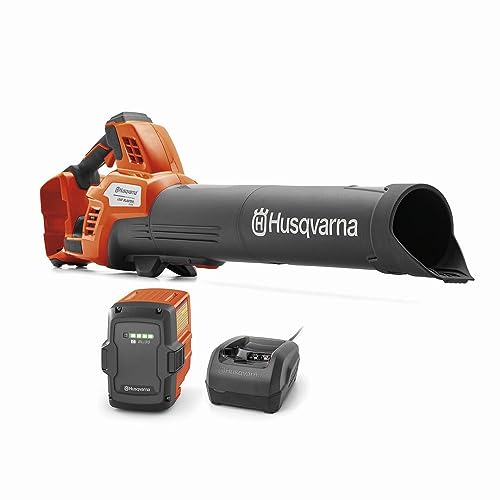
- Produces up to a rated 765 CFM of blowing power
- Variable-speed trigger offers customizable air delivery
- Includes a 56V 5.0Ah battery and matching charger
Cons
- High-output operation can significantly reduce runtime per charge
- 5.0Ah battery adds noticeable weight for single-handed work
Pros
- M18 FUEL system utilizes dual battery power for high output
- Cordless design offers unrestricted portability across large areas
- Integrates with the Milwaukee M18 tool ecosystem
Cons
- Tool only; requires two M18 batteries and a charger sold separately
- Dual batteries increase overall handheld carrying weight
Pros
- Offers up to a manufacturer-rated 700 CFM air volume
- Brushless motor ensures efficient power delivery
- Includes a 4.0Ah battery and rapid charger
Cons
- The 60V battery pack adds weight during extended handheld use
What CFM Actually Measures (And Why It Matters More Than MPH)
CFM stands for cubic feet per minute. It is a volumetric measurement: how much air the blower moves through its nozzle in sixty seconds. A blower rated at 880 CFM is displacing 880 cubic feet of air every minute. Think of it as the “width” of the air column leaving the tube.
MPH measures air velocity , the speed of that air column. Think of it as the “sharpness” of the stream. The two metrics are not interchangeable, and confusing them is the single most common mistake buyers make when shopping for the highest CFM blower. Users looking for related component recommendations can explore our how to choose leaf blower breakdown.
Here is the physics in plain terms: moving a large volume of air slowly (high CFM, moderate MPH) is what lifts and carries heavy, wet, matted material. A wide, slow-moving air column gets under debris and displaces it. A narrow, fast stream (high MPH, low CFM) is what scatters light debris and cracks dried mud off hard surfaces. Neither is universally better. The right answer depends entirely on what you are moving and where.
The Newton Force Metric: The Missing Piece
CFM and MPH are measured independently, which means a manufacturer can optimize for one at the expense of the other. Newton (N) force is the metric that combines them. It measures the actual push force at the nozzle in Newtons, using an ANSI-standard test with a force meter held 3 to 4 inches from the outlet, recording the highest stable reading. Before finalizing equipment decisions, refer to our comprehensive how to choose a leaf blower comparison.
Newton force is the closest published number to “how hard does this thing actually blow.” A blower with 880 CFM and 200 MPH producing 30N will outperform a blower with 950 CFM and 150 MPH producing 22N on almost every real-world task, because the air has both volume and velocity behind it. When you are comparing the highest CFM blowers, always look for the Newton rating alongside the CFM figure.
The Highest CFM Handheld Blowers Ranked
The following figures are manufacturer ratings unless noted as independently measured. Test conditions vary between sources, so treat cross-brand comparisons as directional rather than absolute.
| Model | Rated CFM | Rated MPH | Newton Force | Battery | Best For |
|---|---|---|---|---|---|
| Husqvarna 350iB | 1,105 (measured at 5″) | 153 | ~32N (est.) | 40V 4.0Ah | Wet leaves, large properties |
| EGO Commercial LBX1000 | 1,000 | 185 | 32N | 56V 10.0Ah | Commercial daily use |
| EGO POWER+ LB8800 | 880 | 200 | 30N | 56V 5.0Ah+ | Heavy debris, wet material |
| EGO POWER+ LB7654 | 765 | 200 | ~32N | 56V 5.0Ah | High-speed clearing |
| Greenworks 80V (various) | 580 to 765 | 145 to 270 | ~20N | 80V 2.0Ah+ | Mid-size residential yards |
| Skil PWRCore 40 | 650 | 165 | ~18N | 40V 5.0Ah | Runtime-focused residential |
Independent testing by Pro Tool Reviews measured the EGO LXB8800 at 880 CFM, 200 MPH, and 30 Newtons, and crowned it the most powerful handheld battery blower they had tested at the time of publication. TechGearLab measured the Husqvarna 350iB at 1,105 CFM and 153 MPH on turbo at 5 inches from the nozzle, with runtime exceeding 37 minutes on high, more than 12 minutes longer than the next model in their test.
Why the Highest Rated CFM Is Not Always the Best Choice
There is a real phenomenon worth understanding before you buy the biggest number on the box: CFM ratings are almost always measured at the nozzle with the tube removed, or at a fixed short distance under ideal conditions. Performance drops off with distance, and the drop is not linear.
TechGearLab’s testing illustrates this clearly. The EGO Power+ 765 CFM produced 940 CFM at 5 inches from the nozzle but dropped to 388 CFM at 30 inches, a reduction of roughly 59% over just two feet. This is aerodynamic reality: the air column entrains surrounding air, slows, and spreads. A blower rated at 1,000 CFM at the nozzle may deliver 400 to 500 CFM at the working distance you actually use.
Practical implication: if your typical working distance is 12 to 18 inches (which it should be for most tasks), the gap between an 880 CFM blower and a 1,000 CFM blower narrows considerably. The gap between a 400 CFM blower and an 800 CFM blower, however, remains substantial at any distance. The biggest gains come from moving out of the mid-range, not from chasing the absolute maximum.
Sizing Guide: Matching CFM to Your Property
Use this table as a starting point. Adjust upward if you routinely deal with wet leaves, pine needles, gravel, or heavy spring cleanup.
| Property Size | Typical Debris | Recommended CFM Range | Recommended MPH | Blower Type |
|---|---|---|---|---|
| Under 1/4 acre | Dry leaves, light grass | 350 to 550 | 120 to 160 | Handheld cordless |
| 1/4 to 1/2 acre | Mixed leaves, some wet patches | 550 to 750 | 150 to 180 | Handheld cordless |
| 1/2 to 1 acre | Dense leaves, wet debris, light gravel | 750 to 900 | 170 to 200 | High-power handheld or backpack |
| 1 to 2 acres | Heavy wet leaves, mixed debris | 900 to 1,100+ | 180 to 220 | Backpack blower |
| 2+ acres / commercial | Everything, all conditions | 1,100+ (backpack) | 200+ | Commercial backpack |
For a deeper dive into form factor tradeoffs, see our comparison of backpack vs handheld blowers. The short version: above roughly 30 minutes of continuous use, or above 800 CFM of required output, a backpack unit reduces fatigue dramatically and often delivers higher sustained CFM because the motor is not constrained by handheld weight limits.
Diagnostic Matrix: Why Your Blower Is Underperforming
If you already own a high-CFM blower and it is not moving material the way you expect, work through this matrix before assuming the tool is defective.
| Symptom | Likely Cause | Diagnostic Test | Fix |
|---|---|---|---|
| CFM feels low on turbo | Battery below 50% charge | Check voltage sag under load; most units derate below 50% | Use a fully charged battery; carry a spare |
| Airflow drops after 5 minutes | Thermal throttling of motor or battery | Feel housing temperature; check for error LED | Let cool 10 minutes; avoid continuous turbo |
| Motor runs but weak output | Clogged air intake filter | Remove intake guard; inspect for packed debris | Clean or replace filter per manual interval |
| Reduced output, rattling sound | Impeller damage or debris ingestion | Remove tube; inspect impeller blades for chips | Replace impeller assembly |
| Inconsistent speed on trigger | Variable speed controller fault | Test on turbo lock; if consistent, trigger sensor is failing | Contact warranty service |
| Short runtime on high | Battery cell degradation | Compare runtime to spec at 70°F; test with known-good pack | Replace battery if runtime is under 60% of rated |
| Weak output with new battery | Tube or nozzle restriction | Disconnect tube and compare airflow at motor outlet | Clear obstruction; check for crushed tube sections |
Step-by-Step: Getting Maximum CFM From Your Blower
Step 1: Verify Battery State
Lithium-ion batteries deliver peak current when fully charged and warm. A pack at 40% charge can lose 15 to 25% of peak CFM output because the motor controller limits current to protect the cells. Charge to 100%, and if you are working in cold weather below 50°F, keep the battery in a warm location until use. Cold packs can lose 20 to 30% of usable capacity instantly.
Step 2: Clean the Air Intake
Every blower has an intake screen or filter between the impeller and the outside air. This is the most neglected maintenance item on cordless blowers. Packed grass, dust, and leaf fragments restrict airflow directly into the impeller, reducing output even when the motor is running at full speed. Remove the intake guard, clear debris with a brush (not compressed air, which can drive particles deeper), and reinstall. Do this at least every 10 hours of use during leaf season.
Step 3: Inspect the Impeller
The impeller is the centrifugal fan inside the housing. A single chipped or bent blade reduces balance and airflow. Remove the tube, shine a light into the housing, and rotate the impeller by hand. You should see even blade spacing and no visible damage. Cracked blades are a safety hazard and a performance killer, replace the impeller assembly if you find damage.
Step 4: Use the Correct Tube and Nozzle
Most high-CFM blowers ship with both a concentrator nozzle and a wider tube. The concentrator increases MPH by narrowing the air column but reduces the effective CFM spread. For wet leaves and heavy debris, use the wider tube, it moves more volume over a broader area, which is what actually lifts matted material. Reserve the concentrator for hard surfaces, cracks, and stubborn gravel.
Step 5: Optimize Your Technique
Hold the nozzle 4 to 8 inches above the surface and sweep in overlapping arcs. Working too close (under 3 inches) compacts debris instead of lifting it. Working too far (over 24 inches) wastes the majority of your CFM to air entrainment and spread. The 4 to 8 inch range is where the air column retains enough velocity to lift while maintaining enough width to move material efficiently.
Step 6: Work With the Wind, Not Against It
Blowing into a headwind can cut effective range by 30 to 50%. Check wind direction before starting, and plan your debris piles downwind. If you must work into wind, reduce your sweep angle and work closer to the surface to maintain lift.
Maintenance Intervals for High-CFM Blowers
| Component | Interval | Procedure | Failure Mode If Neglected |
|---|---|---|---|
| Air intake screen | Every 5 to 10 hours of use | Remove, brush clean, reinstall | 15 to 30% CFM loss, motor overheating |
| Battery contacts | Monthly during season | Wipe with dry cloth; check for corrosion | Intermittent power, voltage sag |
| Impeller inspection | Every 25 hours | Visual check for chips, cracks, debris | Imbalance, vibration, reduced output |
| Tube and nozzle | Every use | Check for cracks, blockages, crushed sections | Airflow restriction, safety hazard |
| Battery storage | End of season | Store at 40 to 60% charge, 40 to 70°F | Cell degradation, capacity loss |
| Motor brushes (if applicable) | Per manufacturer spec | Inspect and replace if worn below limit | Loss of power, motor failure |
For general outdoor power equipment maintenance principles that apply across blowers, chainsaws, and trimmers, see our guide to chainsaw and outdoor tool maintenance. The same discipline, clean air paths, inspect wear components, store batteries properly, applies across the category.
Battery Runtime: What the Ratings Actually Mean
Runtime ratings are measured on low speed under controlled conditions. Real-world runtime on high or turbo is substantially shorter. The EGO Commercial LBX1000, for example, is rated at up to 100 minutes on low, 33 minutes on high, and 20 minutes on turbo with a 56V 10.0Ah battery. That is a five-to-one spread between low and turbo. If your work requires sustained turbo output, plan for 15 to 25 minutes per battery and carry at least one spare.
Independent runtime testing adds useful context. TechGearLab measured the Husqvarna 350iB at over 37 minutes on high, and Wirecutter recorded roughly 27 minutes on high for the EGO Power+ 650 CFM, with the Skil PWRCore 40 reaching 32 minutes. Runtime and peak CFM are often inversely related, the highest-output blowers drain batteries fastest, which is why commercial users typically invest in larger battery platforms rather than single oversized packs.
CFM vs MPH: Decision Framework
Use this framework to decide which metric to prioritize for your specific situation:
Prioritize CFM When:
- You are moving wet, heavy, or matted leaves
- You need to clear large areas quickly
- You are working in landscaped beds where wide, gentle airflow prevents damage
- You are moving pine needles, acorns, or small gravel
Prioritize MPH When:
- You are cleaning hard surfaces (driveways, sidewalks, patios)
- You need to crack dried mud or dislodge stuck debris
- You are working in tight spaces where a narrow stream gives you control
- You need to move debris a significant distance in a single pass
For a full breakdown of how these metrics interact across gas and electric platforms, read our gas or electric leaf blower comparison. The short version: electric blowers now match or exceed gas CFM ratings, but gas units still hold an edge in sustained runtime for all-day commercial work.
Commercial vs Residential: Where the CFM Ceiling Sits
Residential high-CFM handheld blowers currently top out around 880 to 1,000 CFM. Commercial backpack units push well beyond that, with some gas models rated at 900 to 1,100 CFM at the tube and battery commercial units like the EGO Commercial LBX1000 bridging the gap with 1,000 CFM, 185 MPH, and 32N of force in a handheld form factor built with UV-resistant composite housing and IPX5 weather resistance.
The commercial designation matters beyond raw numbers. Commercial-grade blowers are engineered for 5X longer service life, with reinforced housings, sealed electronics, and motors rated for continuous duty cycles rather than intermittent residential use. If you are using a blower more than 4 hours per week, the commercial platform pays for itself in durability and consistent output over time.
Safety Considerations for High-Output Blowers
High-CFM blowers generate significant force. The EGO Commercial LBX1000’s 32N of push force is enough to move heavy debris but also enough to cause injury if the stream is directed at people, animals, or loose objects. Always wear eye protection, high-velocity air carries grit, sand, and small stones. Hearing protection is recommended for units rated above 70 dBA, and many high-output blowers exceed that threshold on turbo.
For workplace applications, review OSHA equipment safety regulations regarding personal protective equipment and noise exposure limits. Residential users should follow the same basic precautions: eye protection, closed-toe shoes, and awareness of what the air stream is pointed at.
Buyer FAQs: Highest Cfm Blower Solved
What is the highest CFM handheld blower available?
The Husqvarna 350iB has been independently measured at 1,105 CFM at 5 inches from the nozzle on turbo, making it the highest recorded handheld figure in published testing. The EGO Commercial LBX1000 is rated at 1,000 CFM with 185 MPH and 32N of force, and the EGO POWER+ LB8800 is rated at 880 CFM with 200 MPH and 30N. Ratings vary by test methodology, so compare within the same source when possible.
Is higher CFM always better?
No. Higher CFM means more air volume, but it also means faster battery drain, more noise, and often more weight. For a small residential yard with dry leaves, a 500 CFM blower is more than adequate and will run significantly longer per charge. Match CFM to your property size and debris type rather than buying the maximum number available.
How does CFM drop off with distance?
CFM measured at the nozzle is not the CFM you get at working distance. Independent testing showed a 765 CFM-rated blower producing 940 CFM at 5 inches but only 388 CFM at 30 inches, a drop of roughly 59% over two feet. This is why working distance technique matters as much as the rating on the box.
Can a battery blower match a gas blower’s CFM?
Yes, at the rating level. Battery blowers now match or exceed gas CFM ratings, with commercial battery units reaching 1,000 CFM and 32N of force. The remaining gap is runtime: gas blowers can run continuously as long as you have fuel, while battery units are limited by pack capacity. For most residential use, runtime is not the limiting factor.
What CFM do I need for wet leaves?
Wet leaves are significantly heavier and more adherent than dry leaves. For reliable wet-leaf clearing, target 750 CFM or higher with at least 170 MPH and 25N of force. Below that threshold, you will spend more time making multiple passes than you would with a properly sized unit.
How do I maintain CFM output over time?
Clean the air intake every 5 to 10 hours of use, inspect the impeller every 25 hours, check the tube for blockages before each use, and store batteries at 40 to 60% charge in a temperature-controlled space. These four habits account for the vast majority of performance degradation in cordless blowers.
Our Final Editorial Take on Highest Cfm Blower
The highest CFM blower on the market today is the Husqvarna 350iB at 1,105 CFM measured, followed closely by the EGO Commercial LBX1000 at 1,000 CFM rated. For most residential users, the EGO POWER+ LB8800 at 880 CFM and 200 MPH represents the sweet spot of maximum output, manageable weight, and reasonable runtime. Buy for your property size and debris type, not for the largest number on the box, and maintain the air path religiously, because a clean 700 CFM blower outperforms a clogged 1,000 CFM blower every time.
For more buying guidance across the cordless category, explore our full roundup of the best cordless leaf blowers.
Top Airflow Blowers Overview
High airflow models tend to be heavier and louder, and they can feel demanding on small properties. Airflow rating is only one measure of performance. Consumer background on lawn machines is listed at American National Standards Institute (ANSI).