Quick Answer: How Does a Lawn Sweeper Work?
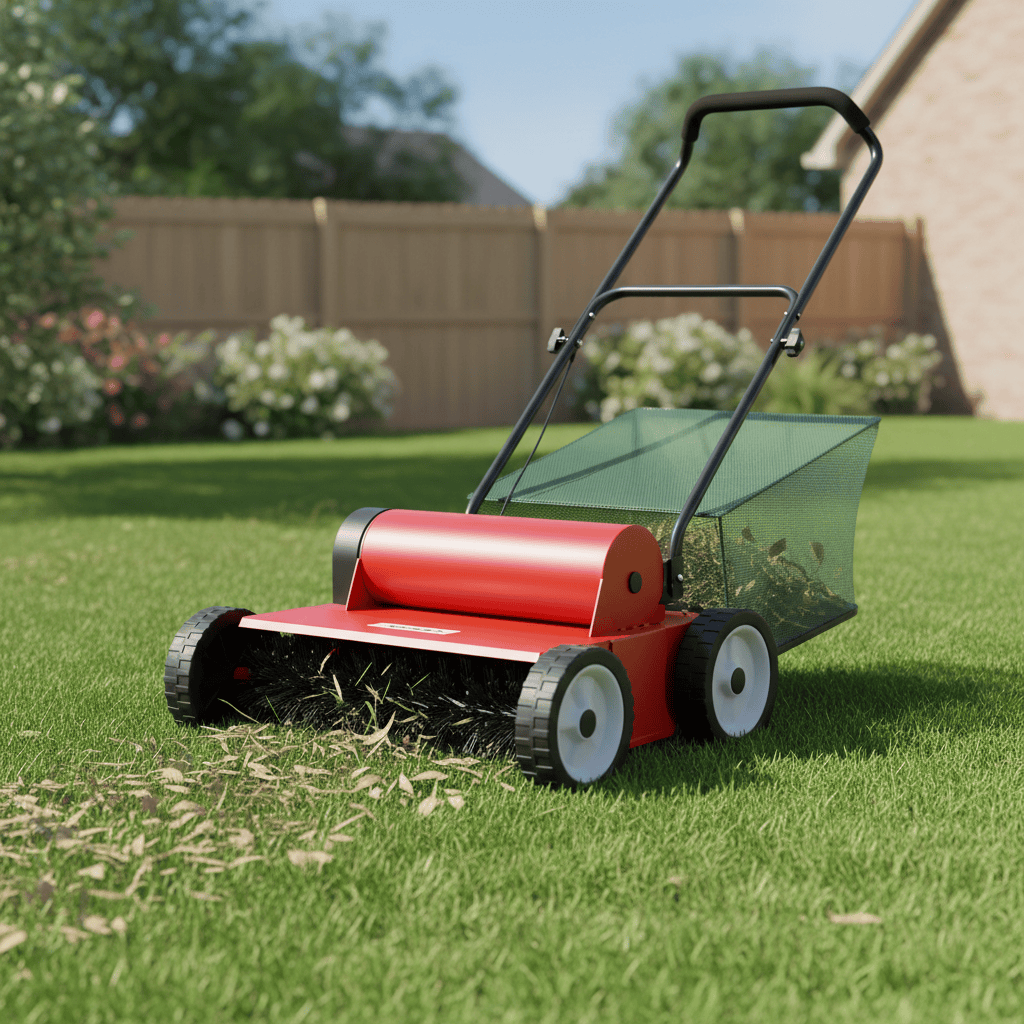
A lawn sweeper works through a simple, wheel-driven mechanical process. As you push a manual model or tow one behind a tractor or ATV, the wheels turn a drive gear that spins a cylindrical brush reel. The rotating brushes sweep upward, lifting grass clippings, leaves, and light debris off the lawn and directing them forward into an attached hopper or collection bag. When the hopper is full, you empty it. Most models include height adjustment so the bristles can be matched to the lawn surface, and they work best on dry, short grass rather than heavy, wet, or compacted debris.
The Core Working Mechanism: A Step-by-Step Breakdown
Unlike most other lawn collection tools, a traditional lawn sweeper does not rely on an engine to create suction or air power. Instead, it is a purely mechanical machine. The ground itself drives the sweeping action. Every part works together in a logical chain: the motion of the sweeper turns the wheels, the wheels spin a drive gear, the drive gear rotates a brush reel, and the spinning brushes toss debris into a waiting hopper. Understanding each link in that chain makes the whole tool easy to understand, operate, and troubleshoot.
The Wheels: Converting Movement into Power
The wheels of a lawn sweeper are far more than simple transport. They are the engine of the machine. When you push a manual sweeper or pull a tow-behind model behind a lawn tractor or ATV, the wheels roll across the ground and rotate on their axle. As long as the sweeper is moving forward, the wheels are generating rotational energy. This is why a sweeper only works while in motion, the instant it stops, the sweeping action stops too. It also explains why the tool is so economical to run: there is no fuel, no extension cord, and no battery to recharge.
The Drive Gear: Multiplying the Rotation
The rotating axle of the wheels connects to a drive gear, usually through a gear-and-chain or gear-and-belt arrangement. This gearing is a critical part of the design. The brushes need to spin several times faster than the wheels themselves turn, so the drive system is engineered to step up the rotation speed. A slow walking pace is therefore enough to spin the brush reel at a brisk, effective speed. The gear also transfers power evenly across the width of the machine so that the entire brush reel spins at a consistent rate, giving uniform sweeping across the full swath of the sweeper.
The Brush Reel: The Sweeping Action
Mounted across the width of the sweeper is the brush reel, a cylindrical drum covered with bristles arranged in a spiral or angled pattern. As the drive gear turns the reel, the bristles make sweeping contact with the lawn surface. Two forces combine to collect debris: the rotation of the reel flicks material upward, while the forward motion of the sweeper carries it backward into the hopper. The spiral arrangement of the bristles creates a continuous sweeping action, funneling grass clippings, leaves, twigs, and pine needles toward the center as they are lifted. The bristles are stiff enough to comb through short grass, yet flexible enough to avoid scratching the soil underneath.
The Hopper: Collection and Emptying
Behind or above the brush housing sits the hopper, also called the collection bag. As the spinning brushes fling debris upward, it is thrown directly into the hopper opening. Most hoppers are made from durable woven fabric or heavy plastic and are designed with breathable mesh panels. This mesh serves an important purpose: it allows air to escape as the hopper fills while trapping the solid material inside. When the hopper reaches capacity, the operator must empty it. Depending on the model, this means lifting the hopper off its mounting bracket and dumping the contents into a compost pile, cart, or yard-waste bin, or, on some tow-behind models, pulling a release lever to tip the hopper and dump the load without leaving the towing vehicle.
Height Adjustment: Matching the Surface
Most lawn sweepers include a height-adjustment mechanism, often a simple lever or knob that raises or lowers the brush housing relative to the wheels. This adjustment controls how deeply the bristles dig into the grass. On short, closely mown turf, the brushes can be lowered so they contact the surface firmly and capture fine clippings. On longer grass or uneven ground, the brushes should be raised to prevent them from dragging in the soil, gouging the turf, or kicking up dust. Getting the height right is one of the most important steps for good pickup performance, and it is worth re-checking whenever you move the sweeper to a different area of the yard.
Types of Lawn Sweepers and How Their Drive Systems Differ
All lawn sweepers share the same fundamental working principle, a wheel-driven brush reel throwing debris into a hopper, but the way that principle is packaged varies considerably. The main difference between types comes down to how the unit is moved and whether the brush reel is driven by the ground wheels or by an independent power source. Choosing the right type depends mostly on the size of your lawn and the equipment you already own.
Manual Push Lawn Sweepers
A manual push lawn sweeper is the simplest and most affordable type. You walk behind it and push it across the lawn, much like a push mower. The wheels, positioned on either side of the machine, drive the brush reel as they roll. These models are lightweight, quiet, and require no fuel or electricity. They are ideal for small to medium-sized lawns where the operator does not mind walking several passes, and many are designed with folding handles for compact storage. The main trade-off is that the operator provides all of the power, and on larger properties the constant walking and emptying can become tiring. For complementary field maintenance guidelines, examine our breakdown of marshall stanmore iii vs harman kardon onyx studio 8.
Tow-Behind Lawn Sweepers
Tow-behind lawn sweepers are built for large areas. They attach to the hitch of a lawn tractor, riding mower, ATV, or utility vehicle and are pulled across the property. Because the towing vehicle does the moving, tow-behind models can be substantially wider and carry much larger hoppers than push models. Many use a wider brush reel that can cover several feet of ground in a single pass, making them the practical choice for estates, parks, sports fields, and commercial properties. Some tow-behind designs add a caster wheel near the hopper to keep the unit stable while turning, and the brush drive still comes from the ground wheels of the sweeper itself, so the mechanism works exactly as described above, only with the tow vehicle supplying the forward motion.
Powered Lawn Sweepers
A smaller but important category is the powered lawn sweeper, which uses a small gasoline engine or electric motor to spin the brush reel independently of the wheels. Because the brushes are driven by the motor rather than the ground contact, the sweep speed stays consistent even if you walk briskly or tow at varying speeds. Powered models can be helpful on soft, sandy, or uneven ground where ground-driven wheels might slip, and the extra brush speed can improve pickup of slightly heavier material. The trade-offs are additional weight, higher cost, more maintenance, and the need for fuel or an electrical supply, which is why ground-driven models remain the most popular for typical residential use. To evaluate matched hardware tolerances, consult our detailed overview of dyson v8 cyclone vs bissell featherweight stick.
Key Factors for Effective Use and Limitations
Knowing how a lawn sweeper works is only half the story. Getting the best results depends on using it under the right conditions, adjusting it correctly, and understanding what it can and cannot do. A few simple habits separate a frustrating experience from a satisfying one.
What a Lawn Sweeper Picks Up Best
A lawn sweeper is at its best collecting dry, light material from short grass. Dry grass clippings, dry leaves, small twigs, and pine needles are exactly what the brush reel is designed to flick into the hopper. Dry debris is light, so it travels easily with the brush action, and short grass allows the bristles to reach down to the surface where the debris sits. For this reason, a sweeper works beautifully right after mowing, when the lawn is dry and the clippings are freshly cut and loose. When planning workspace deployment, consider the engineering criteria outlined in our bissell crosswave hydrosteam vs shark stainforce guide.
Why Brush Height Adjustment Matters
Height adjustment directly controls pickup quality. If the brushes are set too high, they glide over the debris without making firm contact, and material is left behind. If they are set too low, the bristles dig into the soil, which damages the turf, creates clouds of dust, and wears out the brushes prematurely. The best approach is to set the height so the bristles just touch level ground, then test a short pass and fine-tune from there. On bumpy ground, a slightly higher setting prevents the brushes from catching on high spots.
Speed and Emptying Rhythm
Forward speed matters more than most people expect. Walking or towing at a steady, moderate pace gives the brushes time to engage the debris and toss it into the hopper. Moving too quickly makes the bristles skip over material and reduces pickup efficiency. Likewise, an empty hopper collects far better than a full one. As the hopper fills, air circulation through the mesh drops and pickup becomes noticeably weaker. Signs that it is time to empty include debris being left behind, material spilling over the top of the hopper, and a visible increase in pushing or towing effort.
Limitations to Keep in Mind
Because the hopper is relatively small and the brush action is gentle, a lawn sweeper is not designed for heavy-duty work. Wet leaves are the classic problem: they are heavy and mat together, quickly clogging the hopper and clogging the brush. Thick thatch, dense piles of leaves, large fallen branches, stones, and other hard objects are beyond the tool’s capability. A sweeper also does not cut anything, it only collects material that is already loose, so it is usually run after a mowing pass rather than instead of one. Ground-driven models can slip on wet or steep terrain, and hopper capacity means frequent emptying on large properties. Understanding these limits helps you choose the right tool for the job and avoid pushing a sweeper beyond its design.
Lawn Sweeper vs. Other Lawn Tools: Clarifying the Differences
Lawn sweepers are often confused with lawn mowers, leaf blowers, and lawn vacuums, but each of these tools works differently and serves a different purpose. Understanding the distinctions helps you pick the right equipment and prevents frustrating mistakes like expecting a sweeper to cut grass or a blower to collect debris. The table below summarizes the key differences.
| Tool | Primary Function | How It Works | Best Used For |
|---|---|---|---|
| Lawn Sweeper | Collects loose debris | Wheel-driven brush reel flicks debris into a hopper as the unit moves | Dry clippings, dry leaves, and light debris on short, flat turf |
| Lawn Mower | Cuts grass | Rotating blade severs grass; may discharge, bag, or mulch the clippings | Keeping turf at a desired height |
| Leaf Blower | Moves debris | Airflow pushes leaves and clippings into piles or across surfaces | Gathering debris into a pile or clearing hard surfaces |
| Lawn Vacuum | Sucks up debris | Suction pulls material through a hose or intake into a collection bag | Wet leaves, pine cones, and heavier debris, often over large areas |
Lawn Sweeper vs. Lawn Mower
A lawn mower cuts grass; a lawn sweeper collects material that is already loose. Some mowers include bagging attachments that collect clippings as they cut, which can replace a sweeper for many people. However, if you prefer to leave the clippings on the lawn during mowing, or if your mower does not bag, a sweeper is the follow-up pass that removes the debris. The two tools are complementary rather than competing: many homeowners mow first and then sweep the lawn to gather clippings for compost or a tidy finish.
Lawn Sweeper vs. Leaf Blower
A leaf blower does not collect anything. It uses a stream of air to push leaves and clippings into piles or onto a tarp, after which you must rake or bag the pile by hand. A sweeper, by contrast, collects the debris directly into its hopper as it travels, no second step required. If you already own a blower and prefer piling and hauling, an additional sweeper may be unnecessary. But if your goal is to collect debris in one continuous pass, the sweeper is the more complete solution for flat, short turf.
Lawn Sweeper vs. Lawn Vacuum
A lawn vacuum uses suction to pull debris through an intake into a collection bag, similar in concept to a shop vacuum laid on its side. Because suction is powerful, vacuums handle wet leaves, matted debris, and heavier material such as pine cones better than a brush sweeper can. The trade-offs are cost, size, and complexity: lawn vacuums are typically larger and pricier, and many are tow-behind units that pair with a tractor or ATV. For a homeowner with mostly dry leaves and clippings on a modest lawn, a sweeper is simpler, cheaper, and easier to maintain; the vacuum only earns its keep on heavy debris or very large, leaf-heavy properties.
When Should You Choose a Lawn Sweeper?
A lawn sweeper is the right choice when you want a low-cost, low-maintenance way to collect dry clippings and leaves from a relatively flat lawn without repeated raking. It is an ideal fit if you mow regularly, compost your clippings, or simply like a clean, debris-free finish. Skip the sweeper if your yard is constantly wet, if you deal with heavy pine cones and thick fallen branches, or if you already own a bagging mower and a blower that cover your needs. For the common case, a dry day, a freshly mown lawn, and a pile of loose clippings, the humble wheel-driven sweeper is one of the most efficient and satisfying tools in the shed.
Frequently Asked Questions About How Does A Lawn Sweeper Work
Can a lawn sweeper pick up wet leaves?
It can pick up some, but wet leaves are heavy and tend to mat together, which quickly clogs the hopper and reduces pickup dramatically. A lawn sweeper works best on dry leaves and dry grass clippings. If you must sweep wet material, do it in small passes, empty the hopper frequently, and be prepared for a less thorough result.
Why is my lawn sweeper leaving debris behind?
The most common causes are a brush height set too high, a hopper that is too full, or moving too quickly. Check that the bristles are making firm contact with the ground, that the hopper has air space remaining, and that you are walking or towing at a moderate, steady pace. Heavy, wet, or matted debris can also overwhelm the brushes regardless of the setting.
Do I need a powered or tow-behind lawn sweeper?
Not necessarily. A manual push model works well for small to medium lawns and requires no fuel or electricity. If your property is large and you already own a tractor, riding mower, or ATV, a tow-behind model covers far more ground per pass and holds a bigger hopper. A powered sweeper only matters if you have soft or slippery ground where the wheels may slip, or if you want an independent power source. Choose based on your lawn size, terrain, and existing equipment.
Can I use a lawn sweeper on pavement or gravel?
Yes, but raise the brush height so the bristles skim the hard surface rather than scraping it. On pavement, lower bristles can wear down the brushes quickly and kick up dust; on gravel, they can hurl stones into the hopper and damage turf edges. For cleaning driveways, patios, and walkways, use a normal broom or blower instead and reserve the sweeper for the lawn.
Electrical safety benchmarks, battery charging cycles, and automated home appliance construction tolerances conform to international specifications established by the International Electrotechnical Commission (IEC 60335).
Related Maintenance and Operating Guides
To keep your equipment running at peak operating efficiency, explore our related technical walkthroughs and maintenance tutorials:
- Consult our detailed breakdown on robotic pool cleaner comparison guide.