How Long Does It Take to Mow a Lawn?
For a typical residential lawn of approximately quarter-acre (10,000 sq ft), mowing takes 30 minutes to 1.5 hours with a push mower, or 15–45 minutes with a riding mower. The actual duration depends on four primary factors: lawn size, equipment type, grass condition, and terrain. Understanding these variables helps you plan your time accurately and set realistic expectations, whether you’re a homeowner tackling weekend yard work or managing multiple properties.
Lawn Size: The Primary Time Driver
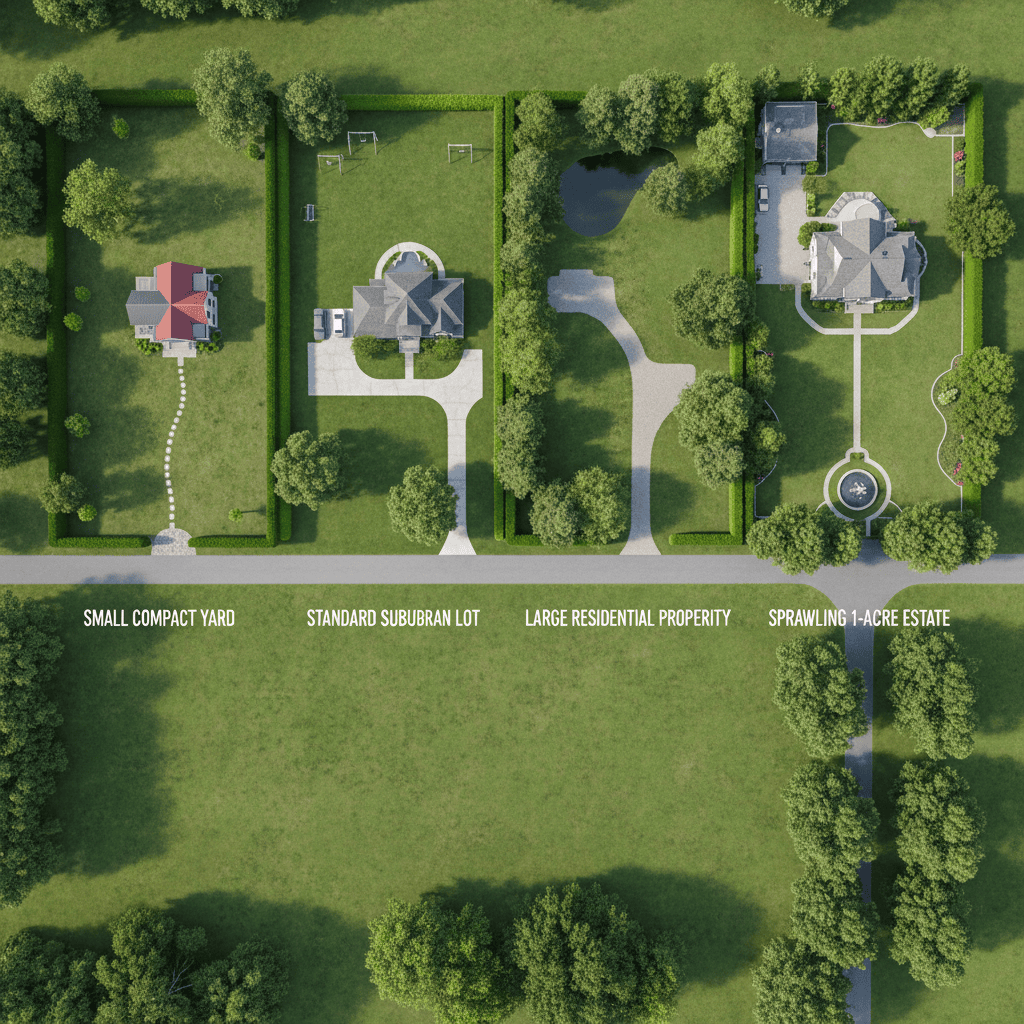
Lawn size is the single most significant factor determining mowing duration. Here’s a breakdown of typical residential scenarios:
- Small yards (under 2,500 sq ft): 15–30 minutes with a push mower; 10–15 minutes with a riding mower
- Average suburban lot (5,000–10,000 sq ft): 30–60 minutes with a push mower; 15–30 minutes with a riding mower
- Large residential property (15,000–20,000 sq ft): 1–1.5 hours with a push mower; 30–45 minutes with a riding mower
- Extra-large property (1+ acre): 2–3+ hours with a push mower; 45 minutes–2 hours with a riding mower
To estimate your lawn size, measure the length and width of your property in feet, then multiply. A standard suburban lot is often 50 feet wide by 100–200 feet deep. If your property is irregular, divide it into sections, calculate each separately, and add them together.
Keep in mind that lawn shape also affects mowing time. A square or rectangular lawn is faster to mow than an L-shaped or irregularly shaped property, which requires more pattern adjustments and turns.
How Equipment Type Affects Mowing Duration
The tool you use dramatically impacts how quickly you complete the job. Here’s how different equipment compares:
Push Mower (Manual or Electric)
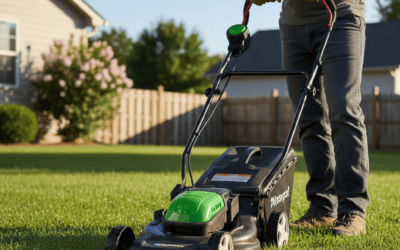
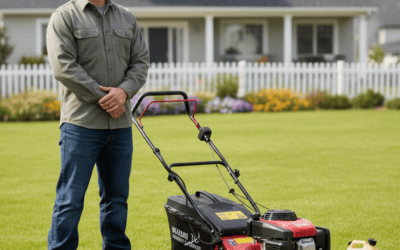
Push mowers are the most common residential choice. A standard gas-powered push mower covers approximately 2,000–3,000 sq ft per hour in ideal conditions. Manual push mowers are slower (1,500–2,000 sq ft/hour) because they require more physical effort. Cordless electric push mowers perform similarly to gas models (2,000–3,000 sq ft/hour) but with quieter operation and lower maintenance.
Riding Mower or Lawn Tractor
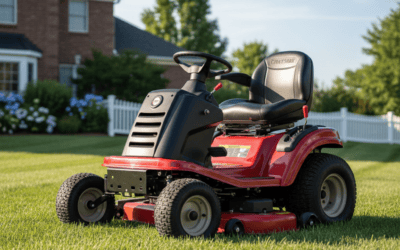
Riding mowers are significantly faster, typically covering 3,000–5,000 sq ft per hour depending on the blade width (36–54 inches is standard). For properties larger than half an acre, a riding mower often becomes worthwhile despite the higher equipment cost.
Zero-Turn Mower
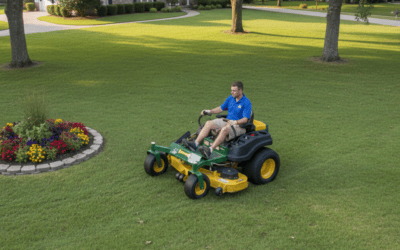
Zero-turn mowers are the fastest residential option, covering 4,000–6,000 sq ft per hour. Their ability to turn 360 degrees without forward/backward movement minimizes wasted time on pattern adjustments. These are ideal for large properties or frequent mowing.
Professional-Grade Equipment
Commercial-grade mowers and crews with professional equipment can cover significantly larger areas. A professional grounds crew with walk-behind and riding equipment might mow an acre in 30–45 minutes, though pricing typically starts at $50–$100+ per visit depending on location and lot size.
Grass Condition & Seasonal Factors
Grass condition has a substantial impact on mowing efficiency. Here’s what affects speed:
Grass Height
Cutting grass that’s at optimal height (2.5–4 inches for most residential lawns) is fastest. Overgrown grass—particularly when unmowed for several weeks—requires slower blade movement to avoid clogging the mower deck and producing uneven cuts. Expect to add 20–50% extra time for significantly overgrown lawns.
Wet Grass
Mowing wet or freshly watered grass is slower and less effective. Wet clippings clump together and clog mower decks, requiring frequent stops to clear buildup. Wet grass also creates an uneven cut. Wait for grass to dry (at least 2–3 hours after rain or watering) whenever possible.
Grass Density and Type
Thick, dense grass takes longer to cut cleanly than thin or sparse grass. Cool-season grasses (common in northern climates) are denser than warm-season varieties and may require slightly longer mowing times. However, the difference is usually minimal—typically 5–10% longer.
Seasonal Frequency Impact
During peak growing season (spring and early summer), grass grows faster, requiring more frequent mowing. Mowing every week keeps grass at optimal cutting height, making each session faster. Skipping weeks forces you to mow higher or take longer to remove excess growth safely.
Terrain & Property Features
The landscape around your lawn affects mowing time beyond just the grass itself:
Slopes and Hills
Steep slopes slow mowing significantly. Riding mowers may struggle on grades steeper than 15 degrees, while push mowers require more physical effort and careful control. Hills can add 15–30% to mowing time and increase fatigue.
Obstacles and Landscaping
Trees, flower beds, decorative rocks, playground equipment, and parked vehicles all require mowing around them—a process called “edging” or “trimming.” Each obstacle adds 1–2 minutes. A lawn with many features can add 15–30 minutes to your total time. After mowing, edge trimming along walkways, driveways, and garden borders typically adds another 10–20 minutes.
Compacted or Uneven Ground
Bumpy, compacted soil makes mower operation slower and more difficult. Well-maintained lawns with level, prepared ground mow faster and more smoothly.
Time Estimates by Common Scenarios
| Scenario | Lawn Size | Push Mower | Riding Mower | Notes |
|---|---|---|---|---|
| Small suburban lot | 5,000 sq ft | 30–45 min | 15–25 min | Minimal obstacles, level terrain |
| Average family home | 10,000 sq ft | 45–90 min | 25–40 min | Some trees or landscaping |
| Large residential property | 15,000 sq ft | 90–120 min | 40–60 min | Multiple obstacles, possibly uneven |
| Overgrown lawn | 10,000 sq ft | 90–150 min | 45–90 min | Tall grass, possible double-mowing |
| Small quarter-acre with hills | 10,000 sq ft | 75–120 min | 30–50 min | Slopes add 20–30% time |
| Well-maintained 1-acre property | 43,500 sq ft | 180+ min | 60–90 min | Riding mower strongly recommended |
Tips to Reduce Mowing Time
If you’re looking to mow more efficiently, these strategies can help:
- Plan your mowing pattern: Use a systematic pattern (spiraling inward, parallel lines, or diagonal stripes) rather than random paths. This minimizes overlapping and wasted time.
- Mow on a regular schedule: Weekly or bi-weekly mowing keeps grass at optimal height, reducing cutting time and producing cleaner results. Frequent short sessions are faster than occasional long ones.
- Maintain your equipment: Sharp blades cut faster and cleaner than dull ones. A dull blade requires slower movement to avoid tearing grass. Sharpen blades every 20–40 hours of use, or seasonally.
- Clear debris before mowing: Remove sticks, rocks, toys, and other objects from the lawn beforehand. This prevents mower damage and eliminates stops for cleanup.
- Mow when grass is dry: Always mow during the morning (after dew dries) or afternoon, never immediately after rain or watering.
- Consider equipment upgrades: If you have more than a quarter-acre, a riding mower pays for itself in time savings within a season or two. For properties over an acre, zero-turn mowers are worth the investment.
- Hire professional lawn care: For large properties (1+ acres), frequent mowing needs, or mobility limitations, professional lawn care services can be more cost-effective than your time and equipment investment. Typical costs range from $50–$150 per visit depending on size and location.
Frequently Asked Questions
How often should I mow my lawn?
Most residential lawns should be mowed every 7–10 days during the growing season (spring and summer). Mow when grass reaches 3–4 inches tall, cutting it back to 2–2.5 inches. This keeps mowing time consistent and maintains lawn health. During slower growth periods (fall and winter), extend the interval to 2–3 weeks or stop entirely when grass stops growing.
Why does mowing take longer than expected?
Common reasons include overgrown grass requiring slower mowing speed, a dull blade causing clogging, wet grass that clumps in the deck, numerous obstacles requiring careful edging, steep slopes that slow progress, or a smaller mower than optimal for your lawn size. Regular maintenance and scheduling also help prevent time overruns.
Is it faster to hire someone or mow myself?
For small to average lawns (under 10,000 sq ft), DIY mowing is usually faster if you already own equipment. For large properties (over 15,000 sq ft) or if you lack equipment or mobility, professional services are faster and may be more economical when factoring in your time, equipment maintenance, and replacement costs.
Can I reduce mowing time by cutting grass shorter?
Cutting grass shorter might seem faster, but it’s counterproductive. Cutting below 2 inches stresses the grass, encourages weeds, and can damage the mower. Stick to the recommended 2–4 inch height for your grass type and climate. Optimal height actually reduces total maintenance time over the season because healthier grass requires fewer interventions.