Quick Answer
Leaf blower prices range widely, from inexpensive corded electric models to professional gas backpack units. Power source is the biggest factor: corded electric is usually cheapest, battery handhelds cost more, and gas and backpack models sit higher. Airflow, airspeed, and battery capacity drive most of the remaining price difference.

Pros
- Features a high-output Strato-Charged engine
- AutoTune carburetor provides automated fuel management
- Padded harness with waist belt and ventilated back pad
- LowVib technology helps minimize operator vibration
- Integrated service port enables quick maintenance access
Cons
- Gas engine requires routine upkeep and fuel mixing
- Bulkier footprint compared to smaller handheld units

Pros
- High-output clearing power with a rated 88 m/s maximum blowing force
- Efficient Stihl 4-MIX engine designed for large-area clearing
- Integrated Stihl anti-vibration system reduces operator strain
- Adjustable blow tube and soft-grip handle
- Wide, padded shoulder straps enhance comfort during long jobs
Cons
- Substantial total weight of approximately 23.8 pounds
- Requires ongoing small-engine fuel mixing and routine upkeep

Pros
- Cordless mobility without battery runtime limitations
- Sturdy construction suited for tough yard and property clearing
- Standard handheld configuration
Cons
- Gas engine requires manual fuel mixing and regular maintenance
- Weighs 11 pounds, which is heavier than most cordless alternatives
Leaf Blower Price Ranges by Type
Leaf blower pricing follows a predictable structure tied to power source, air volume output, and duty cycle. Understanding these tiers prevents overspending on features your yard does not require.
| Blower Type | Typical Price Range | CFM Range | Best For |
|---|---|---|---|
| Corded Electric | $35-$100 | 250 to 400 CFM | Small patios, driveways under 1,500 sq ft |
| Battery Handheld | $89-$400 | 350 to 650 CFM | Suburban lots, moderate leaf volume |
| Gas Handheld | $150-$400 | 400 to 700 CFM | Large yards, wet leaves, extended runtime |
| Backpack (Battery) | $250-$650 | 500 to 750 CFM | Half-acre-plus, all-day comfort |
| Backpack (Gas Pro) | $400-$1,200 | 600 to 900+ CFM | Commercial routes, heavy debris |
Corded Electric: The Budget Floor
Corded models represent the lowest entry point at $35, $100. They typically weigh under 9 pounds and operate on a standard 120V outlet. The trade-off is a 50, 100 foot extension cord requirement and limited portability. For homeowners with small, flat hardscapes, these units deliver adequate airflow without battery management overhead. Readers comparing setup options can review our technical analysis on how to choose leaf blower.
Battery Handheld: The Sweet Spot
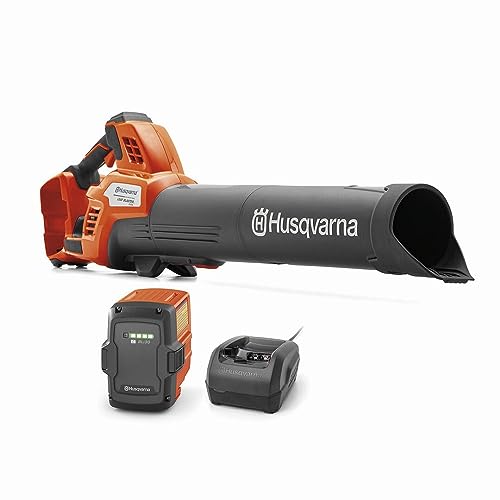
Battery handhelds occupy the $89-$400 residential band. Entry-level 20V-40V kits with batteries included start near $89-$199. Premium 56V-80V brushless models with larger batteries reach $300-$400. The critical variable is whether the battery and charger are included; bare-tool pricing can be 40 to 60% lower than kit pricing.
Gas Handheld and Backpack Units
Gas handhelds start around $150 for homeowner-grade 25cc-30cc engines and climb to $400 for professional 40cc+ models. STIHL gas handhelds specifically begin at $200+, while professional backpack models exceed $600. Backpack units cost more because they carry larger engines or higher-capacity batteries, but the weight transfers from your arms to your shoulders and back, reducing fatigue during extended sessions.
What Drives the Price: CFM, MPH, and Battery Physics
Two specifications dominate leaf blower marketing and pricing: cubic feet per minute (CFM) and miles per hour (MPH). Understanding their physics helps you evaluate whether a price premium delivers real performance.
CFM vs. MPH: Volume vs. Velocity
CFM measures air volume moved per minute. MPH measures air velocity at the nozzle. High MPH alone cannot move heavy, wet leaves if the volume is insufficient. High CFM with low MPH moves large volumes of light, dry debris efficiently. For wet leaves and heavy debris, prioritize CFM ratings above 500 and MPH above 100. Manufacturers that emphasize only MPH often inflate numbers using narrow nozzle attachments that reduce real-world coverage.
Battery Capacity and Runtime Economics
Battery runtime typically ranges from 8 to 30 minutes per charge on residential models. Higher voltage (56V-80V) and higher amp-hour (Ah) ratings extend runtime but increase cost significantly. A replacement battery for premium systems can cost $200-$500. This is why buying into a single battery platform across multiple tools (mower, trimmer, blower) reduces long-term costs. Once you own compatible batteries, bare-tool purchases become economical.
Engine Displacement and Gas Blower Pricing
Gas blower pricing correlates directly with engine displacement measured in cubic centimeters (cc). Homeowner models use 25cc-30cc engines. Professional models use 40cc-75cc engines with higher torque and sustained CFM output. Two-stroke engines require fuel-oil mixing; four-stroke models eliminate mixing but cost more upfront. Commercial-grade backpack blowers with 60cc+ engines and anti-vibration systems command $600-$1,200.
Feature-Based Price Premiums
Specific features add measurable cost. Evaluating these against your yard requirements prevents paying for unused capability.
| Feature | Approximate Price Impact | Practical Value |
|---|---|---|
| Mulching Capability | +$50-$100 (avg. ~$170 total) | Reduces bag volume 10:1 to 16:1 |
| Vacuum Attachment | +$30-$80 | Collects leaves directly; slower than blowing |
| Variable Speed Trigger | +$20-$50 | Prevents damage to flower beds and mulch |
| Turbo/Boost Button | +$15-$40 | Short bursts for wet or packed leaves |
| Brushless Motor | +$40-$100 | Longer motor life, better efficiency |
| Quiet Operation (<65 dB) | +$30-$75 | Required in noise-restricted municipalities |
| Backpack Harness | +$100-$300 | Essential for sessions over 30 minutes |
Mulching and Vacuum Attachments
Blowers with mulching capability average around $170. The mulch ratio measures how many bags of loose leaves compress into one bag of shredded material. Higher ratios (16:1 vs. 10:1) typically cost more but reduce disposal frequency. Vacuum attachments convert the blower into a collection system, though airflow drops significantly in vacuum mode. For homeowners who bag leaves rather than compost in place, mulching features justify their cost.
Noise Regulations and Quiet Models
Gas leaf blowers frequently exceed 70 to 75 dB, which is illegal in some municipalities during certain hours. Quiet electric models operating below 65 dB cost more but ensure compliance. Check local ordinances before purchasing a gas model; a $300 blower you cannot legally operate is a wasted investment. Electric and battery models generally operate 10 to 20 dB quieter than gas equivalents.
Handheld vs. Backpack: Cost Justification
The price gap between handheld and backpack blowers can exceed $350. Whether that premium is justified depends on yard size, leaf volume, and session duration.
When Handheld Is Sufficient
Handheld blowers handle lots under half an acre with moderate leaf drop. A quality battery handheld in the $200-$350 range with 500+ CFM clears most suburban yards in a single session. The lower upfront cost and lighter weight (5 to 8 lbs) make these the default choice for homeowners with storage constraints.
When Backpack Justifies the Premium
Backpack blowers cost more but move wet leaves and heavy debris that handhelds cannot. The weight distribution across shoulders and back reduces arm fatigue during 45 to 90 minute sessions. For properties over half an acre, mature tree cover, or commercial use, the $250-$600+ investment pays back in time saved and physical strain avoided. Battery backpack models in the $300-$500 range now rival gas units for residential use.
Total Cost of Ownership Beyond Purchase Price The sticker price is not the full cost. Maintenance, fuel, batteries, and accessories determine long-term expense. Gas Blower Operating Costs Gas blowers require fuel-oil mixture (typically 50:1 for two-stroke), spark plug replacement, air filter cleaning, and carburetor maintenance. Annual fuel costs run $20-$50 for residential use. Spark plugs and filters add $10-$20 per year. Over five years, operating costs can reach $150-$300. Four-stroke models eliminate fuel mixing but require oil changes. Battery Replacement Cycles Lithium-ion batteries degrade over time and charge cycles. Expect 3 to 5 years of useful life with regular use. Replacement batteries for premium systems cost $200-$500. Budgeting $50-$100 per year for eventual battery replacement is prudent. Buying bare tools within an existing battery ecosystem minimizes this long-term cost. Accessories and Consumables Extension cords ($25-$50 for 100-foot outdoor-rated), spare batteries, nozzle attachments, and storage solutions add $50-$200 over the tool’s lifetime. Mulching kits and vacuum bags for compatible models cost $20-$60 each. Diagnostic Matrix: Matching Budget to Yard Requirements
Use this matrix to determine the appropriate price tier based on your specific conditions.
| Yard Size | Leaf Volume | Recommended Type | Budget Range |
|---|---|---|---|
| Under 2,000 sq ft | Light (few trees) | Corded or entry battery | $35-$150 |
| 2,000 to 8,000 sq ft | Moderate | Battery handheld 40V+ | $150-$350 |
| 8,000 to 20,000 sq ft | Moderate-heavy | Premium battery or gas handheld | $250-$450 |
| 0.5 to 1 acre | Heavy or wet | Battery or gas backpack | $350-$650 |
| 1+ acre | Very heavy | Gas backpack pro-grade | $500-$1,200 |
Step-by-Step: How to Evaluate a Leaf Blower Purchase
Follow these steps to avoid overpaying for features you will not use.
Step 1: Measure Your Yard and Count Trees
Calculate total square footage and estimate annual leaf volume based on tree count and species. Deciduous oaks and maples produce significantly more debris than evergreens. This determines whether a $100 handheld or a $600 backpack is appropriate.
Step 2: Check Local Noise Ordinances
Contact your municipality or review local codes before buying a gas blower. Some areas restrict gas blowers to specific hours or ban them entirely. This single check can eliminate entire product categories from consideration.
Step 3: Audit Your Existing Battery Ecosystem
If you already own 20V, 40V, or 56V tools from a single brand, purchasing a bare-tool blower within that platform saves $50-$150 versus buying a new kit. Verify voltage compatibility and amp-hour requirements before purchasing.
Step 4: Compare CFM at Your Price Point
At each budget tier, compare CFM ratings rather than MPH. A $250 blower with 550 CFM outperforms a $300 blower with 450 CFM for most residential tasks. Read independent reviews for real-world runtime and power consistency.
Step 5: Factor in Total Five-Year Cost
Add purchase price, expected battery replacements, fuel, maintenance, and accessories. A $200 gas blower with $300 in operating costs over five years costs more than a $400 battery blower with minimal maintenance.
Maintenance Intervals That Protect Your Investment
Proper maintenance extends blower life and preserves resale value. Follow these intervals for each power type.
| Maintenance Task | Gas Blower | Battery Blower | Corded Blower |
|---|---|---|---|
| Air Filter Cleaning | Every 10 to 15 hours | Every season | Every season |
| Spark Plug Replacement | Annually | N/A | N/A |
| Fuel System Check | Before storage, monthly in season | N/A | N/A |
| Battery Health Check | N/A | Every 3 months | N/A |
| Impeller/Intake Inspection | Monthly | Monthly | Monthly |
| Storage Preparation | Drain fuel, stabilize | Store at 40 to 60% charge | Coil cord, dry storage |
For chainsaw and outdoor tool maintenance techniques that transfer to blower care, see our guide on chainsaw and outdoor tool maintenance.
Used Leaf Blower Pricing
Used leaf blowers range from $25 to $300+ depending on power source, condition, and brand. Gas models depreciate faster due to engine wear concerns. Battery models retain value if the battery holds charge. Inspect for cracked housings, worn impellers, and battery health before purchasing. A used gas blower at 40 to 50% of new price can be economical if the engine runs cleanly and maintenance records exist.
What to Look for When Choosing How Much Do Leaf Blowers Cost
For detailed comparisons, explore our cordless leaf blowers roundup, the gas or electric leaf blower comparison, and the backpack vs handheld blowers analysis. Review OSHA equipment safety regulations before operating commercial-grade equipment.
Price Ranges for Leaf Blowers
Leaf blower prices reflect power source, build quality and included accessories, such as batteries or chargers. Compare total ownership costs, including fuel, replacement parts and service. General consumer safety information is available from American National Standards Institute (ANSI).