Direct Answer: Weed Wacker Price Ranges
Electric corded trimmers cost $25-$100, battery-powered models run $80-$200, and gas-powered units range from $150-$500+. The wide price variation reflects differences in power source, build quality, and intended use. Most homeowners with small to medium yards find good value in battery-powered models ($100-$150), while those with large properties or professional needs justify gas-powered equipment despite higher upfront costs.
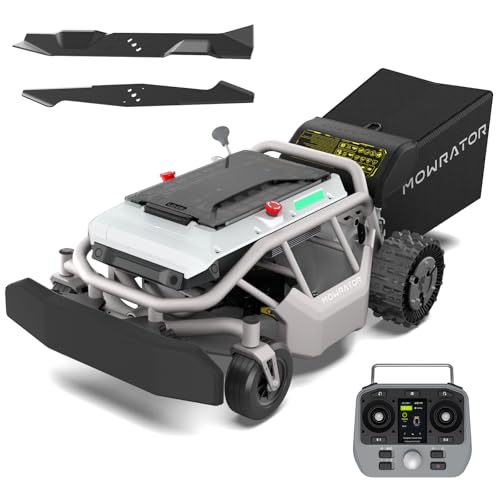
Pros
- Strong dual-motor 2WD system with upgraded tires for reliable performance on inclines up to 24 degrees.
- Versatile 21-inch blade setup includes both standard mowing and mulching options for year-round tasks.
- Automotive-grade LiFePO4 battery offers extended life and fast 70-minute charging for efficient sessions.
- Simple out-of-box remote operation with no RTK setup or apps required.
- Built-in safety sensors and compact agile design support family-friendly mowing near gardens and play areas.
Cons
- Operates only via remote control rather than fully autonomous navigation, requiring continuous user presence.
- Maximum 0.75-acre coverage per charge limits suitability for larger properties.
- 2WD configuration prioritizes simplicity and may need more careful path planning on highly uneven terrain.
The Mowrator S1 2WD remote control lawn mower features a robust steel deck, dual high-torque rear motors, and upgraded soft-compound grip tread tires with weighted metal hubcaps. Its compact and agile build gives an immediate sense of durability suited for residential yards while supporting multi-season tasks.
Performance centers on the 1985.6 W motor driving a 21-inch steel blade that switches easily between standard mowing for thick grass and the included mulching blade for leaf shredding. It maintains steady power on slopes up to 24 degrees (45 percent gradient), covers up to 0.75 acres on a 56V 12Ah LiFePO4 battery with 1.5-hour runtime, and recharges fully in 70 minutes via the 600W charger. Five cutting heights from 1.8 to 4.6 inches plus ultrasonic sensors and emergency stop complete a practical safety package.
Key considerations include the need for active remote operation instead of hands-free autonomy, a coverage limit of 0.75 acres that may require multiple charges on bigger lawns, and the 2WD layout that works well on moderate slopes yet benefits from attentive handling on irregular ground.
This model delivers strong value for homeowners with medium-sized yards, seniors, or anyone seeking to reduce physical strain. It stands out for users wanting reliable slope capability, mulching versatility, and straightforward controls without complex setup.
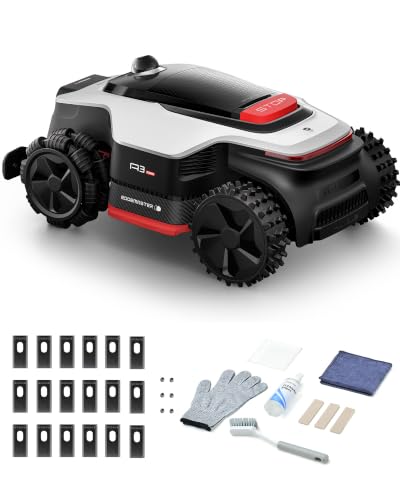
Pros
- AWD hub motors, rated by the maker for 80% (38.7°) slopes
- Wire-free setup using 360° LiDAR and binocular AI vision
- Manufacturer-claimed 45-minute recharge with included 5A adapter
- Night mowing mode, described by the maker as whisper-quiet
- Dreamehome app control with 4G module and HDR camera
Cons
- Edge trimmer module is sold separately
- Manufacturer rates coverage at 0.25-0.5 acre
- No customer reviews available to verify performance

Pros
- Includes two 4.0Ah batteries and a rapid charger
- Self-propelled rear-wheel drive assists on slopes
- 4-in-1 system: mulch, bag, side discharge, and leaf pickup
- Comes with an extra mower blade
Cons
- Coverage up to 3/4 acre varies by terrain and technique
- Requires 60V platform compatibility for spare batteries

Pros
- Powerful 60V brushless motor provides efficient gas-comparable cutting force
- Self-propelled rear-wheel drive simplifies work on uneven terrain and dense grass
- Comes complete with two 4.0Ah batteries, rapid charger, and grass bag ready for use
- 4-in-1 cutting modes and LED lights add all-day versatility
- Quiet zero-emission design with IPX4 water resistance for outdoor durability
Cons
- Runtime is limited to about 3/4 acre per charge and varies by terrain and technique
- Requires battery charging cycles unlike unlimited-run gas or corded mowers
- Exact weight and dimensions are not detailed in available specifications
The Greenworks 60V 21" Brushless Self-Propelled Cordless Lawn Mower stands out as a robust battery-powered walk-behind unit built for homeowners managing medium to large lawns. Its design focuses on cordless convenience with a durable frame, rear-wheel drive system, and IPX4 weather resistance, creating an immediate impression of modern reliability without the mess of gas engines.
Performance & Key Features center on the 60V brushless motor paired with two 4.0Ah batteries that deliver gas-like power for up to 3/4 acre per charge. Self-propelled traction handles slopes and thick grass with adjustable speed, while the 4-in-1 system supports mulching, bagging, side discharge, and turbo leaf pickup. Ultra-bright LED lights extend usable hours, and the quiet operation runs 3x quieter than gas mowers with zero emissions and instant starts. The included rapid charger and compatibility with 75+ Greenworks 60V tools further enhance daily efficiency.
Drawbacks & Considerations include the fact that runtime varies based on terrain and technique, so larger or denser areas may require careful battery management. Unlike gas models, it depends on charging cycles, and detailed weight or dimensional data is not provided in the specifications, which could influence handling preferences for some users.
Verdict: This mower delivers excellent value for eco-conscious homeowners seeking powerful, low-maintenance cordless performance on yards up to 3/4 acre. Those already in the Greenworks 60V ecosystem or wanting quiet, emission-free mowing will gain the most, especially with the dual batteries, rapid charger, and strong warranties included.
Electric Corded Weed Wackers: The Budget Option ($25-$100)

Corded electric trimmers are the most affordable category and ideal for homeowners with small to medium yards within 100 feet of an outlet.
What You Get at This Price Point
- Entry-level models ($25-$50): Basic single-speed motors, manual head advancement, plastic construction. Suitable for light, occasional use.
- Mid-range corded ($50-$100): Variable speed controls, automatic or semi-automatic head advancement, reinforced shafts, and better ergonomics.
Advantages and Trade-offs
Pros: No batteries to charge or maintain, lightweight, quiet operation, minimal maintenance, environmentally friendly. Cons: Limited by cord length (typically 100 feet maximum with extension cord), can’t use in wet conditions, cord management adds inconvenience.
Best for: Apartment dwellers, homeowners with small yards, those who trim occasionally, budget-conscious buyers.
Battery-Powered Weed Wackers: The Mid-Range Sweet Spot ($80-$200)
Battery-powered trimmers offer the best balance for most homeowners: freedom of movement without the maintenance and fuel costs of gas models.
Understanding Battery Costs
Battery-powered weed wackers often appear cheaper upfront ($80-$120) but total cost depends on what’s included:
- Trimmer only (no battery/charger): $60-$100
- With one battery and charger: $100-$180
- With two batteries and charger: $150-$250
If you already own tools in the same brand’s ecosystem (DeWalt, Ryobi, Makita, Milwaukee), you may only need the trimmer head ($60-$100) and use existing batteries, making this the most economical option.
Battery Voltage: What It Means for Price and Performance
| Voltage | Typical Price | Best Use | Runtime |
|---|---|---|---|
| 18V | $80-$130 | Small yards, light trimming | 20 to 30 min per charge |
| 20V | $100-$160 | Most homeowners, medium yards | 30 to 45 min per charge |
| 40V/60V | $150-$250 | Large properties, dense vegetation | 45 to 90 min per charge |
Advantages and Trade-offs
Pros: Zero emissions, quiet, no fuel mixing, minimal maintenance, freedom of movement, low operating costs. Cons: Battery replacement costs ($80-$150 per battery after 3 to 5 years), runtime limitations, charging time (30 to 90 minutes between uses).
Best for: Homeowners with medium to large yards, those who value convenience, environmentally conscious buyers, people investing in a complete tool system. Readers comparing setup options can review our technical analysis on marshall stanmore iii vs harman kardon onyx studio 8.
Gas-Powered Weed Wackers: The Professional Grade ($150-$500+)
Gas-powered trimmers offer the highest power and unlimited runtime, making them the choice for professionals and those with very large properties or thick vegetation.
Price Breakdown by Use Case
- Homeowner-grade gas trimmers: $150-$300. Entry-level performance for occasional use.
- Contractor/professional models: $300-$500+. Commercial-grade durability, more powerful engines, better ergonomics.
Hidden Costs Beyond Purchase Price
Gas models require budgeting for ongoing expenses: For complementary field maintenance guidelines, examine our breakdown of dyson v8 cyclone vs bissell featherweight stick.
- Fuel: $3-$8 per use depending on runtime and current gas prices
- Oil mixing: Two-stroke engines require mixing fuel and oil ($10-$20/season)
- Spark plugs and maintenance: Annual tuneups, air filter replacements ($30-$60/year)
- Storage: Winterization to prevent fuel line damage ($5-$15 per season)
Total 5-year cost: Initial $200 + ($50 annual maintenance × 5) + ($100 seasonal fuel × 5) = approximately $850 in real spending.
Advantages and Trade-offs
Pros: Highest power output, unlimited runtime, faster cutting, professional capability. Cons: Loud, high emissions, requires fuel storage and mixing, maintenance-intensive, heavier to operate, steeper learning curve. To evaluate matched hardware tolerances, consult our detailed overview of bissell crosswave hydrosteam vs shark stainforce.
Best for: Large properties (1+ acres), professional landscapers, thick or overgrown vegetation, those who use equipment frequently.
Key Cost Factors Beyond Base Price
Accessories and Add-Ons
- Extra batteries: $80-$150 per battery (for battery models)
- Chargers: $40-$120 (usually included, but replacements cost this range)
- Replacement string (spools): $5-$15
- Shoulder strap or harness: $10-$30 (improves comfort on larger properties)
- Blade head conversion: $20-$40 (some models allow switching from string to metal blades)
Brand and Warranty Impact
Premium brands (DeWalt, Makita, Milwaukee) command 15 to 25% higher prices but typically offer:
- 3-year warranties vs. 1-year on budget brands
- Better parts availability and service networks
- Battery compatibility across their full tool ecosystem
- Generally longer equipment lifespan (7 to 10 years vs. 3 to 5 years)
Budget brands (Greenworks, Sun Joe, Toro) offer solid value for homeowners who don’t need professional durability.
Where to Buy and Finding the Best Price
Retail Options
- Big-box retailers (Home Depot, Lowe’s, Walmart): Wide selection, frequent sales, easy returns
- Specialty outdoor equipment stores: Expert advice, often stock higher-end gas and professional models
- Online (Amazon, manufacturer sites): Competitive pricing, but verify warranty coverage and return policy
- Used/refurbished markets (Facebook Marketplace, local pawn shops): Save 30 to 50%, but verify condition and warranty status
Timing for Better Deals
- Spring (March-April): Peak season, prices higher, but full inventory
- Fall (September-October): End-of-season clearance, 15 to 30% discounts
- Winter (November-January): Holiday sales and Black Friday deals on battery models
- Online exclusive deals: Subscribe to retailer alerts for flash sales year-round
Money-Saving Strategies
- Buy during off-season (fall/winter) for 20 to 30% savings
- Consider buying the trimmer head only if you own batteries from the same brand
- Bundle deals combining multiple tools and batteries (often save $50-$100)
- Check warehouse clubs (Costco, Sam’s Club) for exclusive pricing on select models
- Refurbished models from manufacturer websites carry full warranties at 15 to 25% discounts
Total Cost of Ownership: 5-Year Comparison
| Type | Initial Cost | Annual Maintenance/Fuel | Battery Replacement (Year 4) | 5-Year Total |
|---|---|---|---|---|
| Corded Electric | $50 | $5 | $0 | $75 |
| Battery-Powered | $150 | $15 | $100 | $365 |
| Gas-Powered | $200 | $100 | $0 | $700 |
Note: Assumes average homeowner use (1 to 2 times per month). Professional use will increase maintenance and fuel costs significantly.
Common Questions on How Much Are Weed Wackers Answered
Are expensive weed wackers worth the cost?
For most homeowners, a mid-range battery-powered model ($120-$160) offers the best value. Premium brands cost 20 to 30% more but last 2 to 3 years longer and maintain better resale value. If you’re a casual user, a budget corded model is perfectly adequate. If you own a large property or use equipment professionally, spending $300+ on a quality gas model is justified.
Can I use my existing batteries from other tools?
Yes, this is one of the biggest money-savers. DeWalt, Ryobi, Makita, and Milwaukee all use proprietary battery systems. If you already own tools in one of these brands, buying just the trimmer head ($60-$100) instead of a full kit saves $80-$150. Check your tool’s voltage (18V, 20V, 40V) and confirm compatibility before purchasing.
What’s the lifespan of a weed wacker?
Corded electric: 5 to 7 years. Battery-powered: 5 to 8 years (battery life typically 3 to 5 years, then $80-$150 to replace). Gas-powered: 7 to 10 years with regular maintenance. Budget models trend toward the lower end of these ranges; premium brands last longer.
Is a cordless (battery) weed wacker good enough for a large yard?
For yards up to half an acre, a 40V battery model with two batteries handles most trimming in one session. For larger properties (1+ acres) with thick vegetation, gas-powered is more practical due to unlimited runtime and higher cutting power. Consider battery capacity and your trimming needs before deciding.
Related Maintenance and Operating Guides
To keep your equipment running at peak operating efficiency, explore our related technical walkthroughs and maintenance tutorials:
- Consult our detailed breakdown on cordless stick vacuum buyer guide.
- Consult our detailed breakdown on robotic pool cleaner comparison guide.
Trimmer Cost Background Reading
Weed wacker prices depend on power source, shaft design, and included accessories, so compare features before deciding. General safety information for trimmer buyers is available from American National Standards Institute (ANSI).