Direct Answer: Weed Wacker Price Ranges
Weed wacker prices vary significantly based on power source and intended use. Corded electric models cost $30-$150, battery-powered trimmers run $80-$300, gas-powered equipment ranges from $150-$500, and professional-grade weed wackers start at $300-$1,000+. The primary cost driver is power source, followed by brand reputation, motor strength, runtime capability, and warranty coverage. Most homeowners find quality trimmers in the $80-$200 range sufficient for residential yard maintenance.

Pros
- Includes both battery and charger for immediate setup.
- Compatible with RYOBI 18V ONE+ batteries for broader system flexibility.
- Lightweight design improves portability and reduces fatigue during regular yard work.
- Supports both .065 and .080 trimmer line for added line compatibility.
Cons
- 13-inch maximum cutting width is more suited to small and medium yards than large properties.
- No runtime, noise level, or weight spec is provided in the manufacturer listing.
- The product details do not specify advanced features such as brushless motor technology or telescoping shaft adjustment.
Overview: The RYOBI ONE+ 18V 13 in. Cordless Battery String Trimmer/Edger is a lightweight, battery-powered lawn tool designed for basic trimming and edging tasks. Its 2-in-1 setup makes it a practical option for homeowners who want one tool for routine yard cleanup.
Performance: A pivoting head helps the tool transition into edging mode, while the variable-speed trigger gives the user more control over light trimming and tougher spots. The adjustable 11 in. to 13 in. cutting width adds flexibility, and compatibility with .065 and .080 line makes replacement easier.
Drawbacks: This model is best matched to smaller or medium-size yards because its 13-inch cutting width is modest. The manufacturer listing does not list runtime, total weight, or advanced motor details, so buyers should avoid assuming high-end performance beyond the stated features.
Verdict: For homeowners already using the RYOBI ONE+ platform, this trimmer/edger offers convenient cordless operation and broad battery compatibility. It is a sensible pick for straightforward lawn maintenance, especially when included battery and charger value matters.

Pros
- Gas-powered design avoids battery charging and supports longer run sessions when fuel is available.
- Includes multiple cutting modes for different yard tasks, which can reduce the need for separate tools.
- Shoulder strap improves control and comfort during extended use.
- Tool-free air filter access makes maintenance easier than on more complex setups.
Cons
- Gas-powered 2-cycle tools require fuel mixing and more maintenance than electric trimmers.
- 52cc power may be more than some users need for light residential edging or small yards.
- No detailed specifications are provided for weight, noise level, or line-feed system in the raw data.
Overview: The leasote 52cc Weed Wacker Gas Powered is a 3-in-1 yard tool that works as a string trimmer, edger, and brush cutter. It is positioned for users who want a gas-powered solution with more cutting flexibility than a basic trimmer.
Performance and features: Its 52cc full-crank 2-cycle engine is the main selling point, offering the type of power needed for thicker grass and more demanding lawn cleanup. The 10-inch blade diameter, shoulder strap, and balanced design are meant to improve coverage and comfort during use.
Drawbacks and considerations: Because this is a gas-powered 2-cycle tool, it will typically require fuel mixing and regular maintenance. The raw product data also does not provide key details such as weight, noise level, or line-feed specifics, so buyers should factor in those unknowns before purchasing.
Verdict: This model makes the most sense for homeowners or property owners who want a single tool for trimming, edging, and brush cutting, especially if they value gas-powered runtime and stronger cutting capability over the simplicity of an electric option.
- Best for mixed lawn care tasks
- Useful for thicker grass and heavier growth
- More maintenance than cordless alternatives

Pros
- Includes two 20V 4.0Ah lithium-ion batteries and a dedicated charger
- Automatic line feed eliminates manual spool bumping
- Switches easily between trimming and wheeled lawn edging modes
- Comes bundled with 8 pre-wound replacement spools
- Lightweight 6.3 lb build with an adjustable comfort handle
Cons
- 12-inch cutting diameter is narrower than full-sized commercial units
Understanding Weed Wacker Types and Power Sources
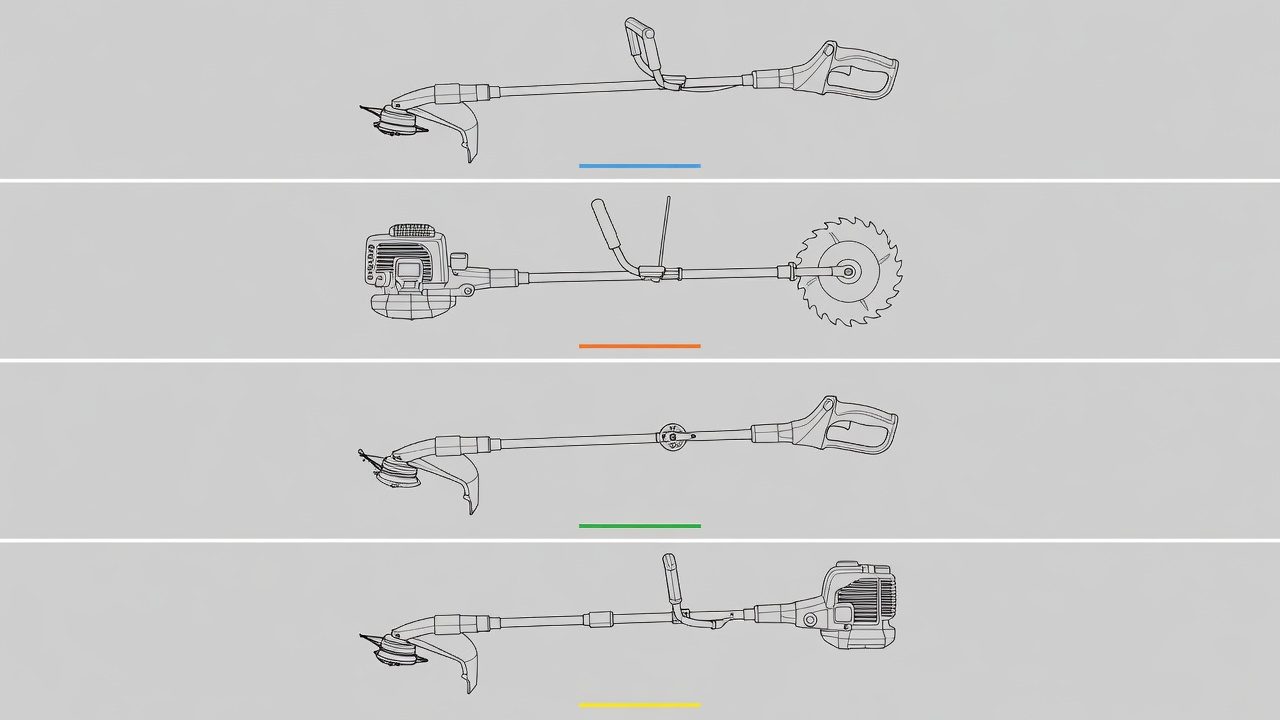
The term “weed wacker” refers to string trimmers (also called weed trimmers or weed whackers), which use a spinning nylon line to cut grass and weeds along lawn edges and hard-to-reach areas. Related tools include:
- String trimmers: Most common, lightweight, suitable for edging and general yard maintenance
- Brush cutters: Heavier-duty tools with metal blades instead of line, typically $200-$600+
- Edgers: Specialized for creating clean borders, often $100-$300
- Multi-tool attachments: Convertible systems where trimmer heads attach to a single power shaft, $150-$400 for the system
Power source directly determines both price and performance characteristics. Understanding each option helps you match cost to your needs.
Corded Electric Weed Wackers: Budget-Friendly and Low-Maintenance
Corded electric models are the most affordable option, making them ideal for homeowners with small to medium yards and nearby electrical outlets. These trimmers plug directly into a standard household outlet via an extension cord.
Why they cost less:
- Simpler motor technology with fewer components
- No battery or fuel tank to develop and manufacture
- Lower warranty and support costs for manufacturers
- Lightweight design reduces material costs
Trade-offs: Limited by cord length (typically 50 to 100 feet with an extension cord), continuous power means no runtime limitations, but mobility is restricted. Best for properties under one-third acre with accessible outlets.
Entry-level models ($30-$60): Basic single-line designs, 2 to 4 amp motors, adequate for light weekly trimming.
Mid-range corded ($60, $150): Dual-line heads, variable speed control, 4, 6 amp motors, adjustable cutting widths, shoulder straps for comfort. Before finalizing equipment decisions, refer to our comprehensive marshall stanmore iii vs harman kardon onyx studio 8 comparison.
Battery-Powered Weed Wackers: Growing Popularity and Convenience
Price range: $80-$300
Battery-powered (cordless) string trimmers have become increasingly popular due to improved battery technology. They offer mobility without the tether of a corded model, though runtime varies by battery capacity. For broader ecosystem context, read through our operational guide on dyson v8 cyclone vs bissell featherweight stick.
Why they cost more than corded:
- Lithium-ion battery technology development and manufacturing
- Rechargeable battery packs ($40-$120 replacement cost)
- Charger included with most models
- Higher-performance motors compared to similarly-priced corded options
Runtime considerations: Most battery trimmers run 20, 60 minutes per charge, depending on power setting and battery amp-hour (Ah) rating. A 1.3 Ah battery typically provides 20, 30 minutes; 2.0 Ah extends runtime to 40, 50 minutes; 4.0 Ah+ models reach 60+ minutes but cost significantly more. For troubleshooting and reliability insights, consult our in-depth bissell crosswave hydrosteam vs shark stainforce report.
Entry-level battery models ($80-$150): 18 to 20V systems, 1.3 to 2.0 Ah batteries, single-line or basic dual-line heads, 20 to 40 minute runtime.
Mid-range battery ($150-$250): 40V systems, 2.0 to 4.0 Ah batteries, dual-line capability, variable speed, 40 to 60 minute runtime, often compatible with other yard tools in the same brand ecosystem.
Premium battery models ($250-$300): High-capacity batteries, advanced motors, commercial-grade cutting heads, extended warranties.
Gas-Powered Weed Wackers: Maximum Power and Unlimited Runtime
Price range: $150-$500
Gas-powered string trimmers offer the highest power and unlimited runtime (while fuel lasts), making them suitable for larger properties, commercial use, and dense vegetation. They’re heavier and require fuel and maintenance.
Why they cost significantly more:
- Internal combustion engine development and manufacturing
- Complex carburetor and fuel delivery systems
- Metal shaft construction for durability
- Higher warranty and service support costs
- More stringent emissions and safety standards
Entry-level gas models ($150-$250): 25 to 30cc engines, single-line designs, basic cutting heads, manual fuel mixing (two-stroke engines), suitable for residential properties up to one acre.
Mid-range gas ($250-$350): 30 to 40cc engines, dual-line capability, adjustable cutting widths, better vibration dampening, semi-automatic line advance systems.
Professional-grade gas ($350-$500): 40 to 55cc engines, heavy-duty metal components, professional-level vibration and noise reduction, commercial-grade cutting heads, extended warranties.
Hidden costs: Gas ($3-$5 per tank depending on tank size), spark plug replacement ($5-$10), air filter maintenance ($10-$20 annually), seasonal carburetor cleaning, and engine oil/fuel mix supplies.
Professional-Grade and Commercial Weed Wackers
Price range: $300-$1,000+
Professional equipment is designed for landscaping crews, property maintenance companies, and demanding residential users who need equipment running 6+ hours daily. These trimmers feature commercial-grade components, industrial engines, and comprehensive warranty coverage.
What justifies the higher cost:
- Engine power: 50 to 70cc or more
- Reinforced metal construction throughout
- Advanced vibration dampening systems
- Professional-level cutting heads and line advancement
- 2 to 3 year warranties with commercial support
- Improved fuel efficiency and reduced emissions
- Better ergonomic design for all-day use
Most homeowners do not need professional-grade equipment. These tools are priced for commercial use where daily runtime justifies durability investment.
Key Factors That Affect Weed Wacker Cost
1. Motor Power (Amps or cc)
Motor strength directly impacts cutting performance and price. Corded electric trimmers use amp ratings (2 to 6 amps), battery models use voltage (18 to 80V), and gas trimmers use engine displacement (25 to 70cc). Higher power means faster cutting speed and ability to handle thicker vegetation, commanding premium pricing.
2. Brand Reputation and Warranty
Established brands (DeWalt, Makita, Echo, Stihl, Husqvarna, Ryobi) charge 15 to 30% more than generic alternatives due to reliability reputation, warranty backing (typically 1 to 3 years), customer support, and parts availability. A 3-year warranty costs more to provide than a 1-year warranty.
3. Cutting Head Type and Width
Adjustable cutting heads cost more than fixed designs. Dual-line capability adds $20-$50 to base price. Wider cutting widths (18 inches vs. 12 inches) require larger motors and stronger frames, increasing cost by $30-$80. Automatic line-advance systems add $40-$100 compared to manual bump-feed.
4. Battery Technology (For Cordless Models)
Higher amp-hour (Ah) battery capacity dramatically affects price. A 1.3 Ah battery costs $40-$60, while a 4.0 Ah battery runs $120-$180. Systems with multiple compatible batteries are priced 20 to 40% higher than single-battery systems but offer better long-term flexibility.
5. Weight and Ergonomic Design
Lightweight designs with padded handles, shoulder straps, and vibration dampening add $30-$100 to manufacturing cost. Premium models under 8 pounds (versus standard 9 to 12 pounds) cost more but reduce fatigue during extended use.
6. Durability and Build Quality
All-metal vs. plastic components, reinforced shafts, sealed bearings, and corrosion-resistant coatings increase durability but add $50-$200 to cost. Professional-grade tools emphasize durability; budget models prioritize affordability over longevity.
Price Comparison Table: Budget Considerations
| Type | Price Range | Best For | Runtime | Maintenance |
|---|---|---|---|---|
| Corded Electric | $30-$150 | Small yards, light weekly use | Unlimited (cord-dependent) | Minimal (annual cleaning) |
| Battery-Powered | $80-$300 | Medium yards, residential use | 20 to 60 minutes per charge | Low (battery storage in winter) |
| Gas-Powered | $150-$500 | Large yards, dense vegetation | Unlimited (fuel-dependent) | High (seasonal maintenance, fuel mixing) |
| Professional-Grade | $300-$1,000+ | Commercial landscaping, daily use | Unlimited (fuel-dependent) | Regular (professional servicing recommended) |
Hidden Costs Beyond the Purchase Price
Replacement string line: $5-$15 per spool. Budget $10-$30 annually for residential use.
Extra batteries and chargers: For cordless models, a second battery ($60-$180) and additional charger ($30-$80) add $90-$260 to total investment but provide backup power for extended use.
Gas and fuel mix: Gas-powered trimmers require premixed fuel (or separate oil mixed with gas). Budget $30-$50 annually for typical residential use.
Maintenance supplies: Air filters ($10-$20), spark plugs ($5-$10), and seasonal carburetor cleaning kits ($15-$30) apply mainly to gas models.
Extended warranty: Adding 1 to 2 years of extended coverage typically costs 20 to 40% of the purchase price.
Total first-year cost examples:
- Budget corded electric ($50): $50 + $15 line = $65
- Mid-range battery ($150): $150 + $80 second battery + $20 line = $250
- Gas-powered ($250): $250 + $40 gas/mix + $20 filters = $310
Homeowner vs. Professional Use: Choosing the Right Price Point
For typical homeowners with quarter- to half-acre properties trimming weekly: Budget $80-$150 for a quality battery-powered model or $50-$100 for a corded electric trimmer. These price points provide sufficient performance for residential maintenance without overinvestment in features you won’t use.
For homeowners with one-acre+ properties or dense vegetation: Gas-powered models ($250-$400) provide the power and runtime necessary for efficient trimming. The higher maintenance demands are justified by the capability.
For professional landscapers or daily commercial use: Invest $400-$800+ in professional-grade equipment. The durability, warranty support, and performance justify premium pricing when the tool generates revenue.
For budget-conscious buyers: Entry-level corded electric ($30-$60) models offer surprising value for light, occasional use. They’re reliable for short-term or backup needs and cost less than a single fill-up of gas.
How to Evaluate Value at Different Price Points
At $50-$100: Verify single-year warranty, check motor specifications (amps/voltage), and confirm cutting width. Look for user reviews mentioning reliability in year 2 to 3 of ownership, as budget models sometimes fail shortly after warranty expiration.
At $100-$200: Expect 2-year warranty minimum, dual-line capability, and customer support accessibility. Verify battery compatibility with other brand tools if purchasing cordless, as ecosystem compatibility adds long-term value.
At $200-$400: Look for 3-year warranty, professional-grade components, and commercial availability. Check whether the brand provides local service centers or mail-in repair support.
At $400+: Confirm commercial warranty terms (typically 1 to 3 years depending on use), verify professional support channels, and research long-term parts availability. At this price, customer support and parts access matter as much as the tool itself.
Frequently Asked Questions About How Much Is A Weed Wacker
Is a more expensive weed wacker always better?
Not necessarily. A $150 battery-powered trimmer is “better” for a homeowner with a small yard than a $400 professional gas model, which would be oversized and expensive to maintain. Match the tool’s capability to your actual needs: property size, vegetation density, trimming frequency, and comfort with maintenance demands. Overspending on unnecessary features provides no practical benefit.
What’s the cheapest reliable weed wacker I can buy?
Quality corded electric trimmers from established brands (Ryobi, BLACK+DECKER) start at $40-$60 with 2-year warranties and proven reliability for light residential use. For cordless, expect to spend $100-$130 for an entry-level battery model with adequate runtime and durability. Avoid extremely cheap no-name brands under $30, as they often fail within the first season.
Should I buy a weed wacker with a warranty plan or pay extra for extended coverage?
Most quality trimmers come with 1 to 3 year warranties at no additional cost. Extended warranties (adding 1 to 2 years) typically cost 20 to 40% of the purchase price and are worthwhile for professional/commercial use where downtime is costly. For homeowners, standard warranty coverage is usually sufficient; extended plans are generally poor value unless you know the manufacturer has service issues.
Can I save money by buying a used or refurbished weed wacker?
Yes, used trimmers typically cost 30 to 50% less than new, and refurbished models from manufacturers cost 15 to 30% less. However, verify warranty coverage (usually limited on used items) and inspect string line wear, motor condition, and battery health if cordless. Used gas models should be tested for fuel system condition. This approach works well for casual or backup trimmers but carries risk if the tool fails shortly after purchase.
Summary: Choosing Your Weed Wacker Budget
Weed wacker prices reflect genuine differences in power, durability, and convenience. A $50 corded electric trimmer and a $400 professional gas model serve completely different purposes and users. Start by defining your needs: yard size, vegetation type, trimming frequency, and willingness to perform maintenance. Then select the power type that matches those needs, not the highest-priced option. Most homeowners find quality, reliable equipment in the $80-$200 range and rarely need to spend more. For professional users and heavy-duty applications, investing in $300-$500+ equipment pays dividends through durability and support.
Related Maintenance and Operating Guides
To keep your equipment running at peak operating efficiency, explore our related technical walkthroughs and maintenance tutorials:
- Consult our detailed breakdown on cordless stick vacuum buyer guide.
- Consult our detailed breakdown on robotic pool cleaner comparison guide.
Technical Standards and Compliance
Mechanical safety standards, operational tolerances, and protective gear guidelines align with benchmark specifications established by the American National Standards Institute (ANSI).