How Much Does a Zero Turn Mower Weigh?
Zero turn mowers typically weigh between 600 and 1,500 pounds, depending on deck size and engine displacement. Residential models with 42–48 inch decks average 800–1,000 lbs, while commercial-grade mowers with 60–72 inch decks often exceed 1,500 lbs. Weight directly affects transport requirements, towing capacity needs, and operational suitability for different terrain types.
Understanding Zero Turn Mower Weight Categories
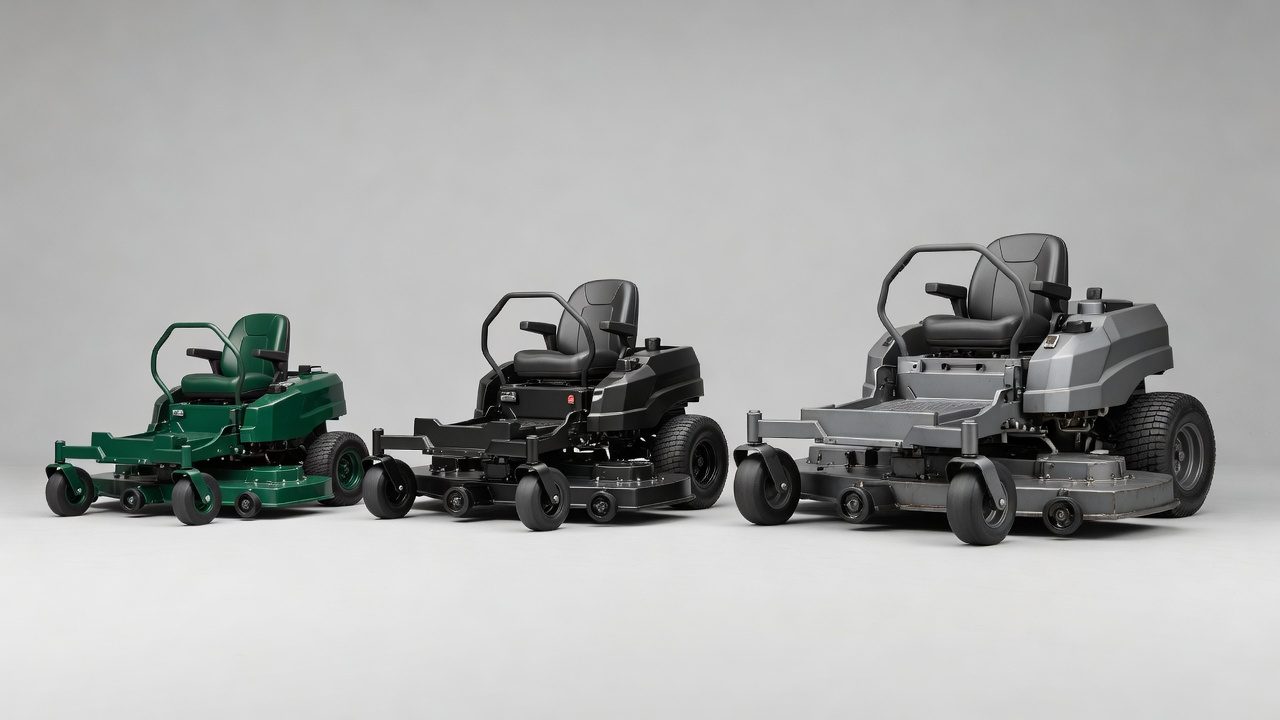
Mower weight varies significantly across product categories because different machines are engineered for different purposes. A compact residential mower is built to be lighter and more maneuverable for typical homeowner yards, while a heavy-duty commercial mower is designed for durability and capacity in demanding professional environments.
Residential Zero Turn Mowers (42–48 Inch Decks)
Residential zero turn mowers typically weigh between 800 and 1,000 pounds. These machines are designed for typical suburban and smaller rural properties, with engines ranging from 18 to 23 horsepower. The lighter weight makes them easier to transport on a standard enclosed trailer or truck bed and reduces the towing vehicle requirements.
Mid-Range Zero Turn Mowers (48–54 Inch Decks)
Mid-range models bridge residential and commercial categories, weighing between 1,000 and 1,200 pounds. These machines offer increased cutting width and horsepower (typically 23–27 hp) for larger residential properties or small commercial operations. They require more robust towing vehicles and trailers than residential models but remain accessible for property owners managing multi-acre landscapes.
Commercial Zero Turn Mowers (60–72 Inch Decks)
Commercial-grade zero turn mowers typically weigh 1,400 to 1,600 pounds or more, depending on frame construction and engine displacement. These machines feature powerful engines (27–35+ hp), heavy-duty hydrostatic transmissions, and reinforced frames designed for daily professional use. Commercial mowers demand specialized trailers and heavy-duty towing vehicles rated for their weight class.
Key Factors That Affect Zero Turn Mower Weight
Several variables determine a mower’s final weight. Understanding these factors helps you predict how weight specifications will scale as you compare different models.
Deck Size and Cutting Width
Deck size is the primary driver of mower weight. Larger cutting decks require stronger structural support, heavier spindles, and reinforced blade systems. A 42-inch deck typically adds less material weight than a 72-inch deck. As deck size increases by 6 inches, expect an additional 100–150 pounds depending on frame material and construction quality.
Engine Displacement and Horsepower
Engine displacement directly correlates with mower weight. A small-displacement engine (18–23 cc) weighs less than a large-displacement engine (27–35+ cc). Higher horsepower engines require thicker cylinder blocks, larger cooling systems, and more substantial mounting hardware. Commercial mowers with 35+ horsepower engines can add 200–300 pounds compared to residential models with similar deck sizes.
Fuel Capacity and Tank Material
Fuel tanks range from 2 to 6 gallons depending on the mower class. Larger tanks add weight—each gallon of fuel weighs approximately 6 pounds. Commercial models with 6-gallon tanks add roughly 36 pounds when full, compared to residential models with 2–3 gallon tanks. Tank material (plastic vs. metal) also influences weight, though plastic is lighter and increasingly common.
Frame Material and Construction
Frame construction quality and material choice impact overall weight. Steel frames are heavier but more durable for commercial environments. Some manufacturers use reinforced steel for high-traffic applications, which adds 150–250 pounds compared to lighter-duty residential frames. Powder-coated or galvanized finishes also add minor weight for corrosion protection.
Transmission Type: Hydrostatic vs. Belt-Driven
Hydrostatic transmissions (fluid-based) are heavier than belt-driven systems because they require pumps, hoses, and fluid reservoirs. A hydrostatic transmission typically adds 100–200 pounds compared to a belt-driven system. However, hydrostatic systems are standard on commercial and most mid-range mowers because they provide superior control, smoother operation, and longer durability—justifying the additional weight.
Weight Ranges by Deck Size: Quick Reference Table
| Deck Size | Typical Weight Range | Mower Class | Engine HP Range |
|---|---|---|---|
| 42 inches | 800–950 lbs | Residential | 18–21 hp |
| 48 inches | 900–1,100 lbs | Residential to Mid-Range | 19–24 hp |
| 54 inches | 1,050–1,250 lbs | Mid-Range | 23–27 hp |
| 60 inches | 1,250–1,450 lbs | Commercial | 27–31 hp |
| 72 inches | 1,450–1,700 lbs | Commercial | 31–35+ hp |
Note: Weights vary by manufacturer and specific model features. Always verify exact specifications from the mower manufacturer before purchasing.
Why Mower Weight Matters for Your Property
Transport and Storage Requirements
Mower weight directly determines what type of trailer and towing vehicle you need. Residential mowers (800–1,000 lbs) fit on single-axle trailers and can be towed by many pickup trucks and SUVs. Commercial mowers (1,400+ lbs) require dual-axle trailers and heavy-duty towing vehicles with higher GVWR (Gross Vehicle Weight Rating) ratings. Underestimating mower weight can damage your vehicle and create safety hazards.
Towing Vehicle Capacity Needs
Your towing vehicle must accommodate the mower weight plus the trailer weight plus tongue weight. A typical single-axle trailer weighs 800–1,200 pounds, and tongue weight is typically 10–15% of the total load. A 1,000-lb mower on an 800-lb trailer with 270-lb tongue weight requires a vehicle rated for approximately 2,070 pounds of towing capacity. Many light-duty pickup trucks max out at 5,000–7,000 pounds, so ensure adequate capacity before purchasing heavier commercial models.
Soil Compaction and Lawn Health
Heavier mowers can increase soil compaction, especially on wet or clay-heavy soil. A 1,600-lb commercial mower exerts significantly more ground pressure than an 800-lb residential model. Repeated passes in the same paths can create ruts and reduce water infiltration. Properties with clay soil or poor drainage benefit from lighter mowers or from varying mowing patterns to distribute weight across the lawn. Sandy or well-draining soil tolerates heavier equipment better.
Maneuverability on Slopes and Terrain
Lighter mowers are easier to control on slopes and uneven terrain. A 900-lb residential mower feels nimble and responsive on moderately sloped yards, while a 1,600-lb commercial mower requires more deliberate steering inputs and presents a higher tipping risk on side slopes exceeding 15–20 degrees. Properties with significant elevation changes typically suit lighter or mid-range mowers better than heavy commercial models.
Assessing Whether Weight Is Right for Your Needs
For Residential Properties
Homeowners maintaining lawns under 2 acres should prioritize mowers in the 800–1,000 lb range (42–48 inch decks). This weight class balances cutting performance with transport ease and minimizes soil compaction on typical residential soil. Most residential properties are served adequately by these lighter machines, and they require minimal towing vehicle investment.
For Larger Residential or Small Commercial Operations
Properties between 2 and 5 acres benefit from mid-range mowers weighing 1,050–1,250 pounds (48–54 inch decks). These machines offer faster mowing times without requiring the heavy-duty transport infrastructure that commercial mowers demand. They’re suitable for property managers, landscapers starting their businesses, or homeowners with larger estates.
For Commercial and High-Volume Operations
Professional landscapers and grounds maintenance teams justify the weight premium of commercial mowers (1,400–1,700 lbs) because they deliver faster cutting speeds, superior durability, and better performance across diverse terrain and weather conditions. The heavier weight becomes a non-issue because commercial operations invest in appropriate trailers and towing vehicles from the start.
Frequently Asked Questions
What is the lightest zero turn mower available?
The lightest zero turn mowers are typically 42-inch residential models from brands like John Deere, Cub Cadet, and Husqvarna, weighing around 800–850 pounds. These entry-level machines are designed for homeowners prioritizing maneuverability and ease of transport over cutting capacity. Lighter still are some compact zero-turn models under 750 pounds, though these sacrifice deck size and engine power.
How much does a John Deere zero turn mower weigh?
John Deere zero turn mowers vary by model. Residential models like the Z235 (42-inch deck) weigh approximately 850 pounds, while mid-range models like the Z445 (54-inch deck) weigh around 1,150 pounds. Commercial models like the Z955 (60-inch deck) exceed 1,400 pounds. Always consult the specific model specifications from John Deere for exact weight details.
Do I need a special trailer for a 1,500-pound mower?
Yes. A 1,500-pound mower requires a dual-axle enclosed trailer rated for at least 3,500–4,000 pounds gross capacity. Single-axle trailers are insufficient and create unsafe towing conditions. Dual-axle trailers distribute weight evenly, improve towing stability, and protect the mower from weather and debris. Verify your towing vehicle’s GVWR rating before investing in a commercial-weight mower.
Does mower weight affect cutting quality?
Weight does not directly affect cutting quality, but it influences the mower’s ability to maintain consistent blade speed and cut precision across variable terrain. Heavier commercial mowers maintain more stable blade RPM under load and navigate dense or wet grass more effectively than lighter residential models. However, a well-maintained 1,000-lb residential mower produces excellent cut quality on typical residential turf.