Direct Answer: How to Sharpen a Chainsaw
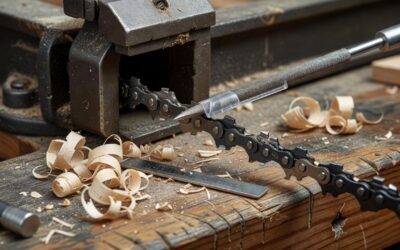
The most reliable way to sharpen a chainsaw is to file the chain by hand. First, engage the chain brake and secure the guide bar in a vise or bar clamp. Then use a round file matched to your chain’s pitch (commonly a 5/32-inch file for 3/8-inch pitch chains) held in a filing guide at the manufacturer’s recommended angle, usually around 30 degrees. File each cutter from the inside outward using smooth forward strokes, applying pressure only on the push stroke, and repeat until every cutter is sharp and uniform in length. Finally, use a depth gauge tool to file down any rakers that sit too high, typically to about 0.025 inch (0.65 mm) below the cutter’s top plate. Electric chain sharpeners can speed up the process for advanced users, but manual filing remains the recommended method for accurate, controlled results.
Why Sharpening Matters: How to Tell When a Chainsaw Chain Needs Sharpening
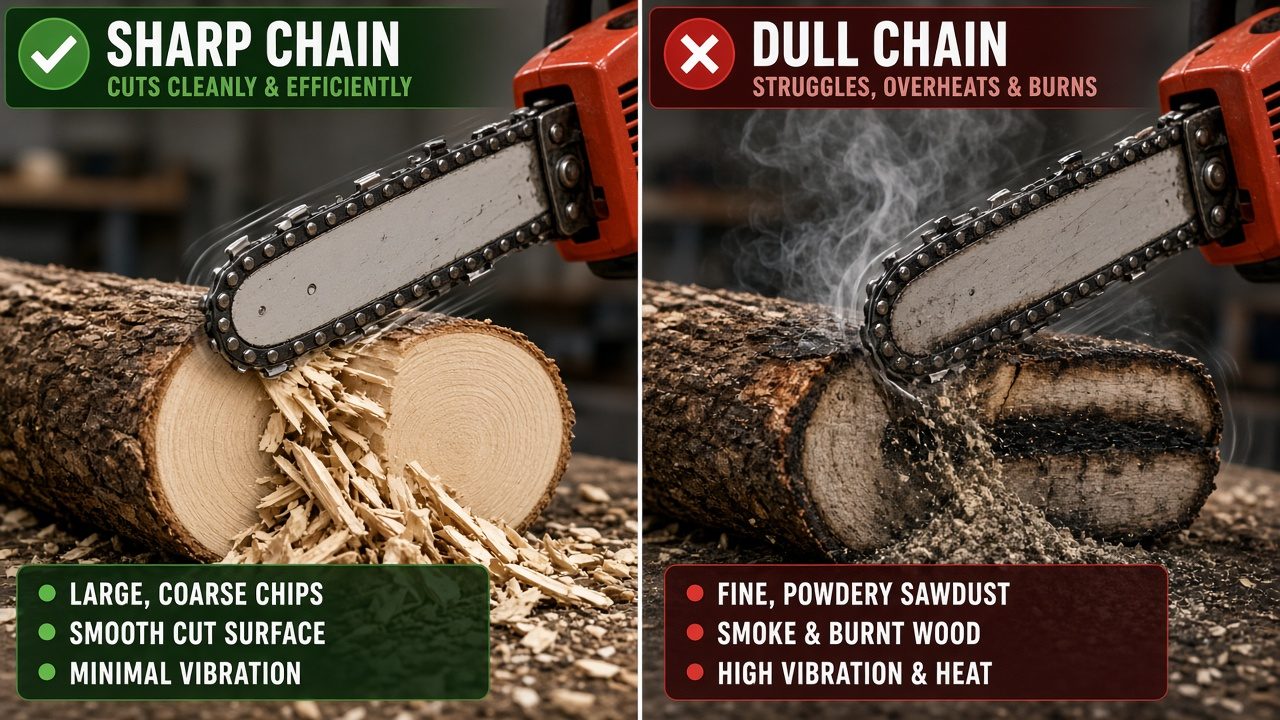
A sharp chain is the difference between a safe, efficient cut and a frustrating, dangerous one. Before you pick up a file, it helps to confirm that a dull chain is actually the problem and to understand what causes a chain to lose its edge.
Common Signs That a Chainsaw Chain Is Dull
- Fine sawdust instead of wood chips: A sharp chain pulls out coarse, chunky wood chips. If you see fine, powdery sawdust, the cutters are no longer slicing into the wood properly.
- You have to push hard: A sharp chain pulls itself into the wood with minimal effort. If you find yourself leaning into the saw or forcing the bar forward, the chain is dull.
- Increased vibration: Dull cutters grab unevenly, causing the saw to shake and bounce. This makes the tool harder to control and more tiring to use.
- Smoke or a burnt smell: Friction from dull cutters heats the chain and the wood, producing smoke and a scorched odor.
- Poor cut quality: The cut wanders off line, produces a rough surface, or takes noticeably longer to complete.
How Often Should You Sharpen a Chainsaw Chain?
There is no single rule, but a good habit is to check the chain after every tank of fuel or after about 30 minutes of cutting. If you cut dirty, sandy, or previously nailed wood, the chain will dull much faster and may need attention several times per session. Some operators sharpen at the first sign of sawdust fines, while others file after every few hours of use. The key is to sharpen before the chain becomes badly worn, because a neglected chain takes longer to bring back to spec.
What Happens If You Keep Cutting with a Dull Chain?
Cutting with a dull chain is not just inefficient; it is unsafe. A dull chain increases the risk of kickback because the cutters cannot bite cleanly and the bar tends to bounce off the wood. It also accelerates wear on the guide bar and drive sprocket, because the chain must be pushed harder and runs hotter. Over time, you may also stretch the chain and damage the sprocket nose, turning a simple sharpening job into an expensive repair.
Key Tools and Factors: Choosing the Right Round File, Filing Guide, and Depth Gauge
Sharpening a chainsaw by hand requires only a few specialized tools, but choosing the correct sizes and angles is essential. Using the wrong file or angle can make the chain cut poorly or even damage the cutters.
How to Choose the Correct Round File Size
The round file size is determined by the chain’s pitch, which is the distance between drive links divided by two. Most homeowner chainsaws use a 3/8-inch pitch chain, which takes a 5/32-inch round file. Other common combinations include:
| Chain Pitch | Round File Size |
|---|---|
| 1/4-inch | 4.0 mm (5/32-inch) |
| 3/8-inch low profile | 4.0 mm (5/32-inch) |
| 3/8-inch standard | 5/32-inch (4.8 mm) |
| .325-inch | 3/16-inch (4.8 mm) |
| .404-inch | 7/32-inch (5.5 mm) |
Check the chain’s pitch stamped on the drive link or consult your saw’s manual. The file must fit the cutter so that about one-fifth of the file’s diameter sits above the top plate when filing. A file that is too small will not reach the full cutting edge, and one that is too large will round off the cutter incorrectly.
What Filing Angle Should You Use?
The standard top-plate filing angle is approximately 30 degrees, with manufacturer-specific ranges typically between 25 and 35 degrees. This angle is measured relative to the chain’s direction of travel. The filing guide holds the file at the correct angle automatically, which is why it is strongly recommended for beginners. Filing at the wrong angle will make the chain cut slowly, pull to one side, or wear unevenly.
Why Do You Need a Filing Guide and a Depth Gauge Tool?
A filing guide clamps onto the bar and positions the round file at the correct height and angle for every cutter. Without it, it is very difficult to keep all cutters uniform. A depth gauge tool (also called a raker gauge) measures the height of the depth gauge, or raker, which sits just ahead of each cutter. The depth gauge controls how deeply the cutter bites into the wood. If the rakers sit too high, the chain will not cut; if they sit too low, the chain will grab aggressively and increase kickback risk. The depth gauge tool lets you file the rakers down to a consistent height, typically 0.025 inch (0.65 mm) below the cutter’s top plate.
Step-by-Step Guide: How to Sharpen a Chainsaw Chain by Hand
Follow this process carefully, and you will get a consistently sharp chain that cuts straight and safely.
Step 1: Prepare the Chainsaw Safely
- Engage the chain brake: Push the front hand guard forward so the chain locks in place. This prevents the chain from rotating while you file.
- Remove the bar and chain (optional but recommended): Taking the bar off the saw makes it easier to clamp and file, and it lets you inspect the bar rails and sprocket. If you leave the bar on, secure the saw firmly on a workbench.
- Clamp the bar: Use a bar clamp or a bench vise to hold the guide bar securely. Never hold the saw with one hand while filing with the other.
- Wear gloves and eye protection: The cutters are extremely sharp, and tiny metal filings can fly into your eyes.
- Clean the chain: Brush off sawdust, dirt, and resin so they do not clog the file or dull it prematurely.
Step 2: Identify the First Cutter and Mark Your Starting Point
Look at the top of the bar and find a cutter that faces you. The cutters alternate: one faces left, the next faces right, and so on. Mark the first cutter with a permanent marker or a piece of tape so you know where you started. You will sharpen every other cutter in one pass, then rotate the chain to reach the opposite side.
Step 3: Position the File in the Guide
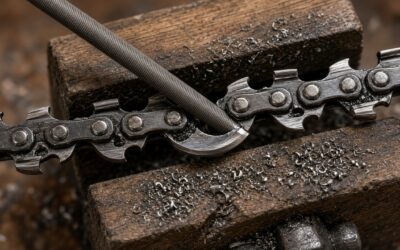
Place the round file in the filing guide and set the guide on the cutter so the file rests against the cutting edge. The file should contact the cutter from the inside of the tooth, and about one-fifth of the file’s diameter should be visible above the top plate. The guide’s angle markings should align with the manufacturer’s recommended angle, usually 30 degrees.
Step 4: File Each Cutter Correctly
- Stroke direction: File from the inside of the cutter toward the outside, following the existing bevel.
- Pressure: Apply firm, even pressure only on the forward (push) stroke. Lift the file on the return stroke so you do not dull the file or round off the cutter.
- Number of strokes: Use the same number of strokes on every cutter so they stay uniform. Usually 5 to 10 strokes are enough for a lightly dulled chain; a badly neglected chain may need more.
- Check the edge: The top plate and side plate should meet in a sharp, clean corner. If you see a shiny burr, keep filing until it disappears.
Step 5: Sharpen Every Other Cutter, Then Flip the Chain
Work your way down the bar, sharpening only the cutters that face you. When you reach the end, loosen the bar clamp or rotate the chain so the opposite cutters are accessible, then file those the same way. Always use the same number of strokes and the same angle on every cutter.
Step 6: Set the Depth Gauges (Rakers)
After the cutters are sharp, check the depth gauges. Place the depth gauge tool over a cutter so the slot sits over the raker. If the raker protrudes above the tool’s surface, file it down with a flat file until it is flush with the gauge. The standard clearance is about 0.025 inch (0.65 mm), but check your chain manufacturer’s specification. Repeat for every raker. Be careful not to file the rakers lower than spec, because that makes the chain overly aggressive and increases kickback risk.
Step 7: Know When All Cutters Are Evenly Sharpened
All cutters should look identical in length, angle, and edge sharpness. If some cutters are noticeably shorter than others, the chain will cut unevenly and pull to one side. In that case, file the longer cutters down to match the shortest one, using fewer strokes on the longer ones. A simple test is to hold the chain up and sight down the row of cutters; they should form a consistent line.
Alternatives and Final Checks: Electric Sharpeners, When to Replace, and Post-Sharpening Care
Should You Use an Electric Chainsaw Sharpener Instead of Filing by Hand?
Electric chain sharpeners use a rotating grinding wheel to sharpen each cutter quickly. They are a good option for users who sharpen many chains regularly or who struggle to maintain a consistent angle by hand. However, they require careful setup: you must match the wheel diameter to the chain pitch, set the correct grinding angle, and avoid overheating the cutter, which can ruin the temper of the steel. For most homeowners, a manual round file and guide produce excellent results with less risk of damaging the chain. If you do use an electric sharpener, follow the manufacturer’s instructions and take light passes to avoid burning the metal.
When Should You Replace the Chain Rather Than Sharpen It?
No amount of filing can save a chain that is worn out. Replace the chain if:
- The cutters are too short: If the cutters have been filed down so far that the depth gauges are nearly level with the top plates, the chain cannot cut properly anymore.
- Drive links are worn or damaged: Check the drive links for cracks, bent tangs, or excessive wear that could damage the bar.
- The chain is stretched: If you cannot maintain proper tension, or if the chain skips on the bar, it is time for a new one.
- There are broken or cracked cutters: A cracked cutter can snap during use and cause serious injury.
- The chain has hit dirt, rocks, or metal repeatedly: Severe impact can bend or fracture cutters beyond repair.
How to Check Your Sharpening Work Before Making the Next Cut
Before reinstalling the chain, wipe it clean and apply a light coat of bar and chain oil. Inspect the guide bar for burrs or wear on the rails, and file down any raised edges with a flat file if needed. Reinstall the chain and adjust the tension so the chain fits snugly against the bar but can still be pulled around by hand with slight resistance. Then recheck the chain tension after the first few cuts, because cutters are filed shorter over time and the chain will stretch as it warms up. Finally, make a test cut in a piece of scrap wood. A properly sharpened chain should pull itself through the wood, produce coarse chips, and cut a straight line with minimal vibration.
Frequently Asked Questions
Can I sharpen a chainsaw chain without removing the bar?
Yes, you can sharpen the chain while the bar is still mounted on the saw. Engage the chain brake, clamp the bar securely, and file the cutters as described above. Removing the bar makes the job easier and lets you inspect the bar and sprocket, but it is not strictly necessary for routine sharpening.
What is the difference between a round file and a flat file for chainsaw sharpening?
A round file is used to sharpen the curved cutting edge of each cutter, matching the radius of the tooth. A flat file is used only to lower the depth gauges (rakers) after the cutters are sharpened. You need both tools for a complete sharpening job.
How do I know what size round file my chainsaw needs?
Check the chain’s pitch, which is usually stamped on the drive link or listed in your saw’s manual. Common pairings are a 5/32-inch file for 3/8-inch low-profile and standard chains, a 3/16-inch file for .325-inch chains, and a 7/32-inch file for .404-inch chains. When in doubt, consult the chain manufacturer’s specifications.
Why does my chainsaw still cut poorly after sharpening?
If the chain is sharp but still cuts poorly, check the depth gauge height, the filing angle, and the uniformity of the cutters. Also inspect the guide bar for wear, make sure the chain is tensioned correctly, and verify that the chain is installed in the correct direction. If all of those are correct, the chain may be worn out and need replacement.