Assess Your Lawn Mower’s Condition
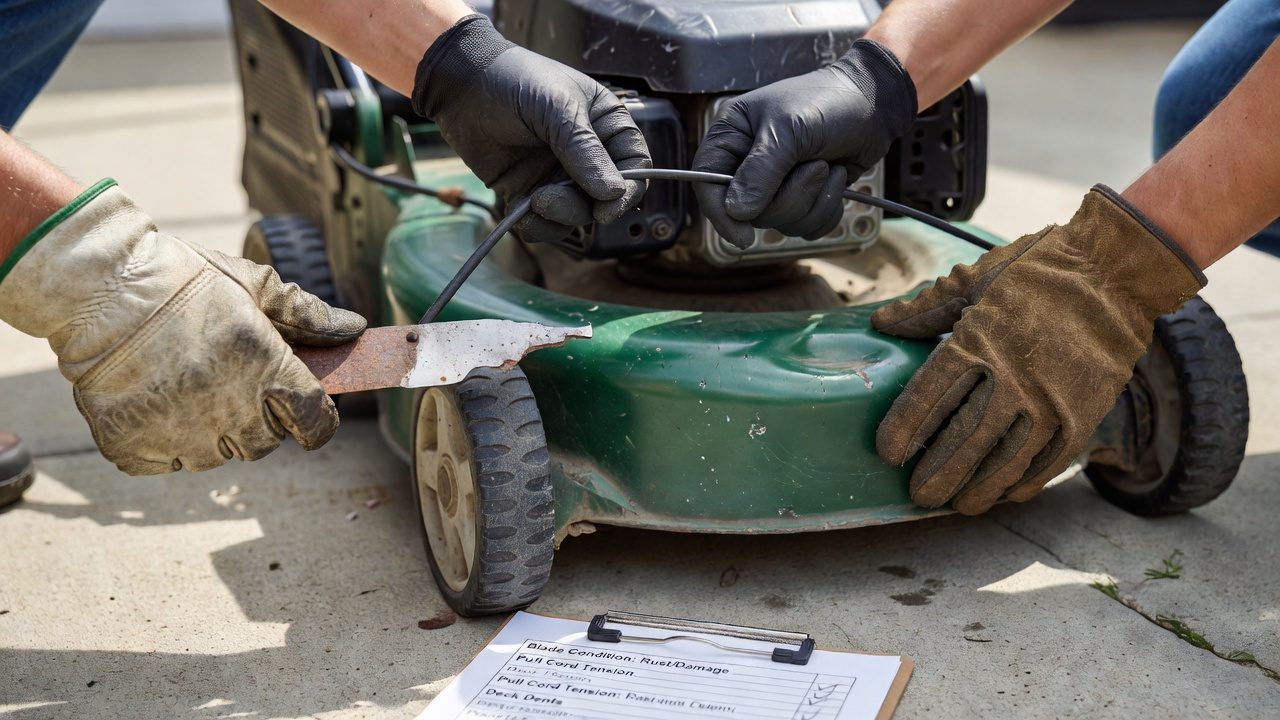
Before choosing a disposal method, evaluate whether your lawn mower is still functional. This determination will guide you toward the most practical and profitable option.
Ask yourself these key questions:
- Does it start and run? If the engine turns over and the blade operates, your mower has resale or donation value.
- What condition are the exterior and blade in? Surface rust and minor wear are acceptable for resale; deep rust, missing parts, or a damaged deck may limit options.
- When was it last serviced? Recently maintained mowers command higher prices and are more attractive to buyers and charitable organizations.
- How old is the mower? Newer models (under 10 years old) are easier to sell; older mowers may only qualify for scrap or donation.
A working mower in reasonable condition opens profitable resale and donation pathways. A broken or severely deteriorated mower should move directly to recycling or bulk pickup.
Sell Your Lawn Mower Online for Quick Cash
If your mower runs, selling it online is often the fastest way to get rid of it while recouping some money. Local marketplace platforms connect you directly with buyers in your area.
Best Platforms for Selling Used Lawn Mowers
- Facebook Marketplace: Free to list, reaches millions of local buyers, built-in messaging and payment options. Post clear photos of the mower running and close-ups of any damage.
- Craigslist: Long-established platform with strong local buyer presence. List in your city and include condition, age, brand, and asking price.
- OfferUp: Mobile-first app popular for local sales. Allows in-app offers and built-in protection for both parties.
- Letgo (now OfferUp): Merged with OfferUp; still available in some regions for local equipment sales.
How to Price Your Lawn Mower
Research comparable mowers on these platforms to set a competitive asking price. Generally:
- Gas mowers (working, under 5 years old): $150–$400
- Gas mowers (working, 5–10 years old): $80–$200
- Push mowers (basic models): $40–$150
- Riding mowers (functional, older): $300–$1,000+
Start slightly above your target price to leave room for negotiation. Include brand, engine type, cutting width, and whether it includes a bagger.
Safety When Meeting Buyers
- Meet in a public location during daylight hours.
- Have a friend present if possible.
- Let the buyer test the mower in a safe outdoor space before finalizing the sale.
- Accept payment only in cash or verified digital transfer.
- Provide a bill of sale documenting the transaction.
Donate Your Lawn Mower to Charity
Donating a functional lawn mower supports your community while avoiding the hassle of finding individual buyers. Many organizations accept working equipment and arrange pickup or drop-off.
Organizations That Accept Lawn Mower Donations
- Goodwill Industries: Accepts working lawn mowers. Check your local Goodwill location for donation guidelines and potential pickup availability.
- Salvation Army: Accepts functional lawn equipment. Many locations offer free pickup for larger items.
- Habitat for Humanity ReStore: Focuses on home improvement and landscaping equipment. Donation supports affordable housing initiatives.
- Local community centers: Some maintain tool-lending libraries or donate equipment to neighborhood programs.
- Schools and vocational programs: Technical schools may accept mowers for maintenance training.
Tax Deduction for Lawn Mower Donations
Donations to qualified nonprofits may be tax-deductible. You can deduct the fair market value of the mower. To qualify:
- Donate to a qualified 501(c)(3) organization.
- Keep a receipt documenting the donation and the mower’s condition.
- Photograph the item before donating.
- Itemize deductions on your tax return (Form 1040, Schedule A).
Consult a tax professional to determine the appropriate deductible value and ensure your donation meets IRS requirements.
Recycle or Scrap Your Broken Lawn Mower
When a lawn mower is too damaged to repair or sell, recycling recovers valuable metals and keeps hazardous materials out of landfills.
Find Local Scrap Metal Recycling Centers
- Earth911 Recycling Search: Visit earth911.com, enter your ZIP code, and search “lawn mower” to find nearby scrap yards and recycling facilities.
- Local scrap yards: Call or visit independent metal recycling businesses in your area. Most accept lawn mowers and pay based on weight and metal composition.
- Municipal hazardous waste programs: Some cities operate collection events for items containing oil or fuel. Check your local waste management website.
What Metals Can Be Recovered
Lawn mowers contain valuable recyclable materials:
| Material | Value & Notes |
|---|---|
| Steel deck and frame | Ferrous metal; recycled into new steel products |
| Aluminum housing and parts | Non-ferrous; higher value per pound than steel |
| Copper wiring | High-value recyclable; typically stripped by scrap yards |
| Cast iron engine block | Ferrous metal; often the heaviest component |
Scrap yards typically pay $0.05–$0.15 per pound for ferrous metals and $0.50–$2.00+ per pound for aluminum and copper, depending on current commodity prices.
Use Municipal Bulk Pickup or Junk Removal Services
If resale, donation, and recycling feel too complicated, bulk pickup and professional junk removal are convenient alternatives.
Schedule Municipal Bulk Item Pickup
Most cities offer free or low-cost bulk item pickup for residents. Steps to schedule:
- Check your city or county website: Search “bulk pickup” or “bulk item removal” along with your city name.
- Verify lawn mower eligibility: Some municipalities accept lawn mowers; others may require advance notice or a separate hazardous waste collection.
- Schedule online or by phone: Many cities allow scheduling through their website or by calling the sanitation department.
- Place the mower at your curb: Typically pickup occurs on a specific day; leave it accessible for collection trucks.
- Note fuel and oil requirements: You may be required to drain fuel and oil before pickup (see preparation section below).
Free or low-cost bulk pickup is available in most urban and suburban areas; rural areas may have limited options.
Hire a Junk Removal Service
Professional junk removal services handle pickup, transport, and disposal for a fee. Typical costs range from $100–$300 depending on location and mower size.
- 1-800-GOT-JUNK: National service; schedules same-day or next-day pickup in most areas. Pricing based on item volume and location.
- Local junk removal companies: Search “junk removal near me” for independent operators who may offer competitive rates.
- Hauling services: Some landscaping or general handyman services offer equipment disposal as an add-on.
Book online or by phone, confirm the mower is included in the pickup, and have it ready at your curb or driveway on the scheduled day.
Prepare Your Lawn Mower for Disposal
Before any disposal method, properly prepare your mower to ensure environmental safety and compliance with local regulations.
Drain Fuel Safely
- Run the engine until empty: The safest method is to run the mower until it consumes all remaining fuel.
- Siphon remaining fuel: If the engine won’t start, use a fuel siphon pump to extract gasoline into an approved container. Never siphon by mouth.
- Store fuel safely: Place extracted fuel in an approved gasoline container and take it to a hazardous waste collection site or gas station that accepts old fuel.
- Leave the tank dry: Even a small amount of fuel poses a fire or explosion risk during transport and processing.
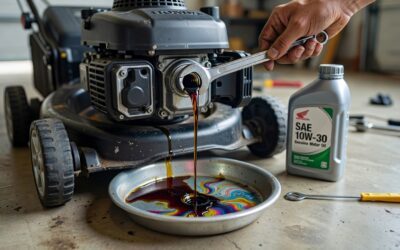
Drain Oil Before Disposal
- Warm the engine slightly: Running the mower for a few minutes warms the oil, making it flow more easily.
- Locate the drain plug: Consult your mower’s manual or a repair guide to find the oil drain plug on the engine.
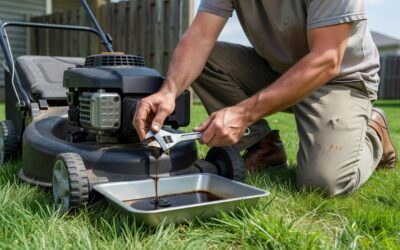
- Position a drain pan: Place an oil pan or old container beneath the drain plug to catch oil.
- Remove the plug and drain completely: Let all oil drain; this typically takes 5–10 minutes.
- Dispose of oil properly: Take used oil to a recycling center, auto parts store, or municipal hazardous waste collection. Never pour oil down drains or into soil.
- Replace the plug if required: For recycling or donation, leaving the plug in place is standard.
Disclose Hazardous Materials
If donating or selling, disclose the mower’s fuel and oil status to the buyer or organization. If using a junk removal service or bulk pickup, confirm they accept equipment with residual fuel or oil, or follow their specific drainage requirements.
Frequently Asked Questions
Can I put a lawn mower in the trash or curbside recycling?
No. Lawn mowers should never go in regular trash or curbside recycling bins. They contain oil, fuel residue, and metal components that pose environmental and safety hazards. Curbside programs are designed for household items only. Always use dedicated scrap metal recycling, bulk pickup, or junk removal services.
How much can I expect to get for selling a used lawn mower?
A working gas mower typically sells for $100–$300 depending on age, brand, and condition. Older push mowers may fetch $40–$100. Riding mowers can command $300–$1,000+ if functional. Research comparable listings on Facebook Marketplace or Craigslist in your area to set a competitive price. Accept that older or cosmetically worn mowers will sell for lower amounts.
Do I need to disassemble the lawn mower before recycling it?
No. Scrap yards and recycling facilities are equipped to process whole lawn mowers. Disassembling introduces personal injury risk and typically is not necessary. Bring the complete mower to your local scrap yard; they will handle separation of metal types and safe disposal of non-metal components.
What if my lawn mower has an electric battery (cordless model)?
Cordless and battery-powered mowers may have lithium-ion batteries that require special handling. Do not discard the battery in regular trash or recycling. If donating or selling, include the battery and charger. If recycling, take the mower to a facility that specifically accepts cordless power tools and batteries, or contact the manufacturer for guidance. Many battery manufacturers operate take-back programs.