The 1/3 Rule: The Golden Standard for Mowing Frequency
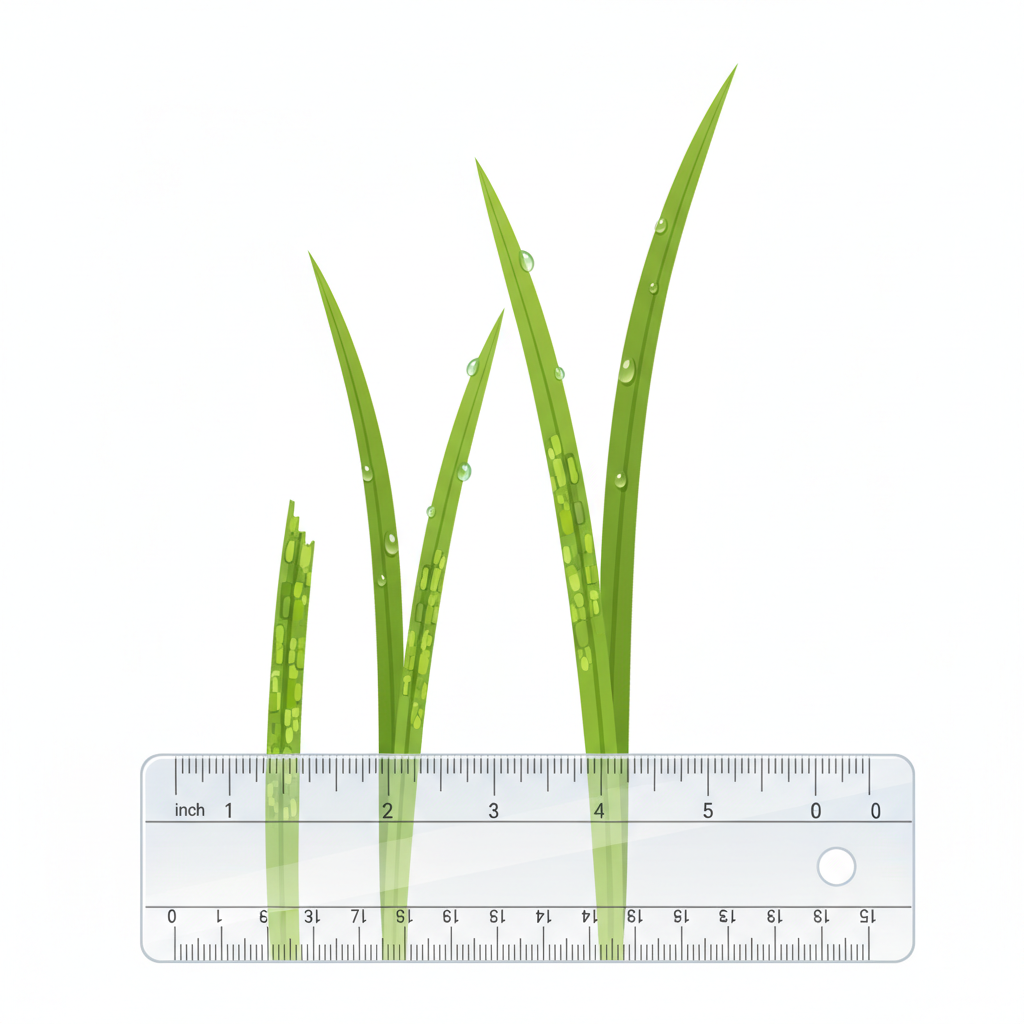
Turf scientists and lawn care professionals universally recommend the 1/3 rule as the primary guide for determining when to mow. This principle states: never cut more than 1/3 of the grass blade in a single mowing. In practical terms, mow when your grass reaches approximately 1/3 taller than your desired final height.
For example, if you prefer your lawn at 2.5 inches tall, mow when it reaches about 3.75 inches. If your target height is 3 inches, mow at roughly 4.5 inches. This approach protects lawn health because cutting more than 1/3 of the blade—a practice called scalping—stresses the plant, exposes soil, invites weed seeds, and increases disease susceptibility.
How to Measure Grass Height Accurately
Use a ruler or measuring tape placed vertically on the soil. Measure from the soil surface to the tip of the tallest blade. Most lawn mowers have adjustable deck heights marked in inches, making it easy to set your desired cutting height. Start at 2.5-3 inches for most lawns—this height provides disease resistance, shade to prevent weeds, and better root development than shorter cuts.
Why the 1/3 Rule Matters for Lawn Health
Grass plants rely on leaf surface area to photosynthesize and produce energy. Removing too much blade at once depletes the plant’s reserves, slowing recovery and growth. This stress increases vulnerability to:
- Disease pressure (fungal infections thrive on stressed turf)
- Weed invasion (sparse, weakened turf cannot compete with weeds)
- Heat and drought stress (shorter grass exposes soil, reducing moisture retention)
- Compaction damage (stressed grass recovers poorly from foot traffic)
Seasonal Mowing Schedules: Spring, Summer, Fall, and Winter
Grass growth rates fluctuate dramatically by season, driven by temperature and daylight hours. Understanding seasonal patterns allows you to adjust mowing frequency to match actual growth rather than following a fixed calendar schedule.
Spring: Peak Growth and Weekly Mowing
Spring triggers rapid growth as soil temperatures warm and daylight increases. For cool-season grasses (dominant in northern climates), spring is the most vigorous growth period. Expect to mow every 7 days or even more frequently during mid-spring when conditions are ideal—typically mid-April through May in temperate zones.
During spring, grass often grows 0.5-1 inch per week, meaning the 1/3 rule may require mowing twice weekly in peak weeks. Don’t skip mowings during this season; infrequent spring mowing forces you into scalping later, damaging your lawn.
Early Summer: Maintain Weekly or Bi-Weekly Schedule
Early summer (June in northern regions) maintains strong growth for cool-season grasses, though the rate may slow slightly compared to spring. Continue weekly mowing as your standard. For warm-season grasses (dominant in southern climates), early summer marks the beginning of peak growth, so establish a weekly schedule now.
Mid to Late Summer: Adjust for Heat Stress and Slower Growth
As temperatures exceed 85°F regularly, cool-season grasses slow or enter semi-dormancy. Growth rate drops to 0.25-0.5 inches per week. Extend your mowing interval to every 10-14 days to reflect reduced growth. This also helps protect stressed grass by reducing mowing frequency during heat.
Conversely, warm-season grasses hit their stride in mid-summer. Maintain weekly mowing to manage vigorous growth. Warm-season varieties thrive in heat, so they require consistent management throughout summer.
Fall: Shift Frequency as Growth Declines
Cool-season grasses experience a secondary growth surge in fall (September-October) as temperatures drop and moisture increases. Resume weekly mowing during early fall, then transition to every 10-14 days as growth naturally slows in late fall.
Warm-season grasses slow significantly in fall and enter dormancy by November in most regions. Reduce mowing frequency to every 2-3 weeks in early fall, then stop entirely as grass turns brown and growth stops—typically by early November in the transition zone.
Winter: Dormancy and Minimal or No Mowing
In regions with true winters, most lawns enter dormancy. Cool-season grasses stop growing by December and remain dormant until spring. Do not mow dormant grass—it causes damage and provides no benefit. Only mow if warm spells trigger brief growth spurts (common in late winter warm-ups), and only if grass visibly grows.
In warm climates where warm-season grasses dominate, winter mowing may be minimal or cease entirely as grass stops growing. Some warm-season grasses transition to tan or brown dormancy. Resume mowing only when spring green-up begins.
Cool-Season vs. Warm-Season Grasses: Know Your Grass Type
Grass type fundamentally determines your mowing schedule because cool-season and warm-season varieties have opposite peak growth periods.
Cool-Season Grasses: Spring and Fall Peak
Common cool-season varieties include Kentucky bluegrass, perennial ryegrass, and tall fescue. These grasses thrive in northern climates and transition zones. They grow most actively when temperatures are 60-75°F, which occurs in spring (April-May) and fall (September-October). Growth slows dramatically in summer heat above 85°F and stops entirely in winter dormancy.
Mowing schedule for cool-season grasses:
- Spring: Every 7 days (peak growth)
- Early summer: Every 7-10 days
- Mid-late summer: Every 10-14 days (reduced growth during heat stress)
- Fall: Every 7-10 days (secondary growth surge), then 10-14 days
- Winter: No mowing (dormant)
Warm-Season Grasses: Summer Peak
Common warm-season varieties include Bermuda grass, Zoysia, St. Augustine, and Bahia grass. These grasses thrive in southern climates and warm regions. They grow most actively when temperatures exceed 80°F, which occurs in late spring through fall. They enter dormancy and turn brown in winter, resuming green growth in spring.
Mowing schedule for warm-season grasses:
- Spring: Every 10-14 days (slow green-up until heat arrives)
- Summer: Every 7-10 days (peak growth)
- Fall: Every 10-14 days (growth slows as temperatures drop), then minimal
- Winter: No mowing (dormant, brown)
How to Identify Your Grass Type
If uncertain, examine blade texture and growth pattern. Cool-season grasses typically have finer blades and grow in bunches. Warm-season varieties often have coarser blades and spread via rhizomes or stolons, creating a more uniform carpet. Consult your county extension office or local lawn care provider with a photo of your lawn for a definitive identification.
Climate and Environmental Factors That Affect Mowing Frequency
Beyond season and grass type, several environmental variables modify mowing needs:
Rainfall and Soil Moisture
Adequate moisture accelerates growth. Heavy spring or early summer rainfall increases grass growth rate, potentially requiring more frequent mowing. Conversely, drought conditions significantly slow growth, allowing you to extend intervals between mowings. During dry spells, check actual grass height rather than following your typical schedule—you may only need to mow every 2-3 weeks instead of weekly.
Temperature
Optimal growth for cool-season grasses occurs at 60-75°F; growth nearly stops above 85°F. For warm-season grasses, optimal growth is above 80°F. Unusually cool or warm springs and falls shift your mowing schedule by 1-2 weeks compared to normal years. Monitor actual grass growth rather than relying solely on calendar dates.
Sunlight Exposure
Shaded areas receive less light, reducing photosynthesis and growth rate. Grass in full shade may grow 30-50% slower than grass in full sun. Adjust mowing frequency for different zones: mow sunny areas weekly while extending intervals to 10-14 days for shaded sections. Alternatively, use a mulching mower to recycle clippings and nourish slower-growing areas.
Soil Fertility and Nitrogen
Well-fertilized lawns with adequate nitrogen grow faster than nutrient-poor lawns. If you apply spring fertilizer, expect to increase mowing frequency for 4-6 weeks post-application. This is actually desirable—healthy, vigorous growth supports a dense, weed-resistant lawn.
Common Mowing Mistakes That Hurt Lawn Health
Cutting Grass Too Short (Scalping)
The most damaging mistake is removing too much blade at once. Scalping stresses plants, exposes soil to weeds and erosion, and weakens the lawn’s ability to recover. If you skip mowing for 2-3 weeks, your grass may grow well above the 1/3 rule threshold. Resist the temptation to cut it all at once. Instead, mow to remove roughly 1/3, then mow again 3-4 days later to bring it to desired height. Gradual reduction prevents shock.
Mowing Too Infrequently
Waiting too long between mowings forces you into scalping. Frequent, light mowing (removing ~1/3 each time) is far better than infrequent, heavy cuts. Maintain a consistent schedule during growth season to keep grass within the ideal mowing window.
Irregular or Erratic Schedules
Inconsistent mowing stresses turf. One week you mow, the next you skip, then you mow twice—this variability prevents the grass from establishing a predictable growth pattern and increases weed pressure. Aim for consistency within 1-2 days of your target interval.
Mowing When Grass Is Wet
Wet grass clumps, clogs mower decks, and creates uneven cuts. Wet soil compacts easily, damaging root zones. Mow when grass is dry (typically mid-to-late morning after dew dries) for cleaner cuts and better results.
Ignoring Blade Sharpness
Dull blades tear rather than cut, damaging leaf tissue and increasing disease susceptibility. Sharpen mower blades every 20-30 hours of use (roughly every 2-3 months for typical residential lawns). Sharp blades produce clean cuts that heal quickly and look better.
Quick Reference: Mowing Frequency by Season and Grass Type
| Season | Cool-Season Grasses | Warm-Season Grasses |
|---|---|---|
| Spring | Every 7 days (peak growth) | Every 10-14 days (slow green-up) |
| Early Summer | Every 7-10 days | Every 7 days (peak growth) |
| Mid-Late Summer | Every 10-14 days (heat stress) | Every 7-10 days |
| Fall | Every 7-10 days (secondary peak) | Every 10-14 days, then minimal |
| Winter | No mowing (dormant) | No mowing (dormant) |
Adjusting Your Schedule: When to Mow More or Less Often
Mow More Frequently When:
- Heavy rain increases growth — Mow every 5-6 days instead of 7 if rainfall keeps grass growing aggressively
- You’ve applied fertilizer — Nitrogen boosts growth for 4-6 weeks; increase frequency by 1-2 days
- Temperatures are ideal — During perfect spring or fall conditions, lawns may need mowing twice weekly
- You’re recovering from a skipped mowing — Mow every 3-4 days for 2-3 cycles to return to ideal height without scalping
Mow Less Frequently When:
- Drought or dry conditions persist — Extend intervals to every 10-14 days or longer if growth visibly slows
- Summer heat stresses cool-season grass — Reduce frequency and keep blades taller to help the plant survive stress
- Grass is transitioning into dormancy — As fall cool-season grasses or spring warm-season grasses slow, mow less frequently
- You’re traveling or unable to mow — If you miss a mowing, extend the next interval and plan gradual height reduction over 2-3 mowings rather than one heavy cut
Wet Weather Considerations
Heavy rains can cause mowing delays. If you must skip a week due to wet soil, don’t panic. Wait for soil to dry (usually 2-3 days after rain), then mow. If grass has grown beyond the 1/3 rule threshold, perform the gradual reduction technique: mow to remove 1/3, wait 3-4 days, mow again. Never scalp wet grass or in waterlogged conditions—you’ll damage roots and compact soil.
Frequently Asked Questions
Q: Can I mow my lawn every two weeks instead of weekly?
A: Not consistently during peak growth season without risking scalping. During spring and early summer when cool-season grasses grow 0.5-1 inch weekly, bi-weekly mowing often exceeds the 1/3 rule, forcing you to scalp. However, bi-weekly mowing is acceptable during slower growth periods (late summer heat stress, mid-fall, early spring before peak growth). Adjust to actual growth rather than a fixed schedule.
Q: What’s the best height to cut my grass?
A: Aim for 2.5-3.5 inches for most cool-season grasses and 1.5-2.5 inches for warm-season varieties. These heights provide disease resistance, shade to prevent weeds, and sufficient leaf surface for healthy growth. Taller grass also requires less frequent mowing. Avoid cutting below 2 inches for cool-season grasses—short grass stresses plants and invites weeds. For precise guidance specific to your grass species, consult your local extension office.
Q: Does mulching grass clippings affect mowing frequency?
A: No. Mulching clippings (leaving them on the lawn rather than bagging) returns nitrogen to soil and reduces fertilizer needs, but it doesn’t change how often you should mow. You still follow the 1/3 rule and mow on the same schedule. Mulching does mean you can’t skip mowings without visible buildup of clippings, so some homeowners find it enforces a more consistent schedule. Mulching also eliminates bagging time, making frequent mowing less burdensome.
Q: Should I mow my lawn if it hasn’t grown much?
A: Check actual grass height. If it hasn’t approached the 1/3-over-target threshold, skip mowing. This is especially important during heat stress, drought, or dormancy transitions. Unnecessary mowing damages grass and wastes fuel. Let growth dictate your schedule, not the calendar.
Key Takeaways
Optimal lawn mowing frequency depends on the 1/3 rule (mow when grass is 1/3 taller than desired height), grass type (cool-season vs. warm-season), and seasonal growth rates. Most lawns need mowing weekly during peak growth (spring for cool-season, summer for warm-season) and every 10-14 days during slower periods. Avoid scalping by never removing more than 1/3 of the blade, maintain consistent mowing schedules, keep blades sharp, and adjust frequency based on rainfall, temperature, and actual grass growth rather than following a rigid calendar. Proper mowing practices build a healthy, dense, weed-resistant lawn that requires less maintenance long-term.