Why Choose a Cordless Lawn Mower?
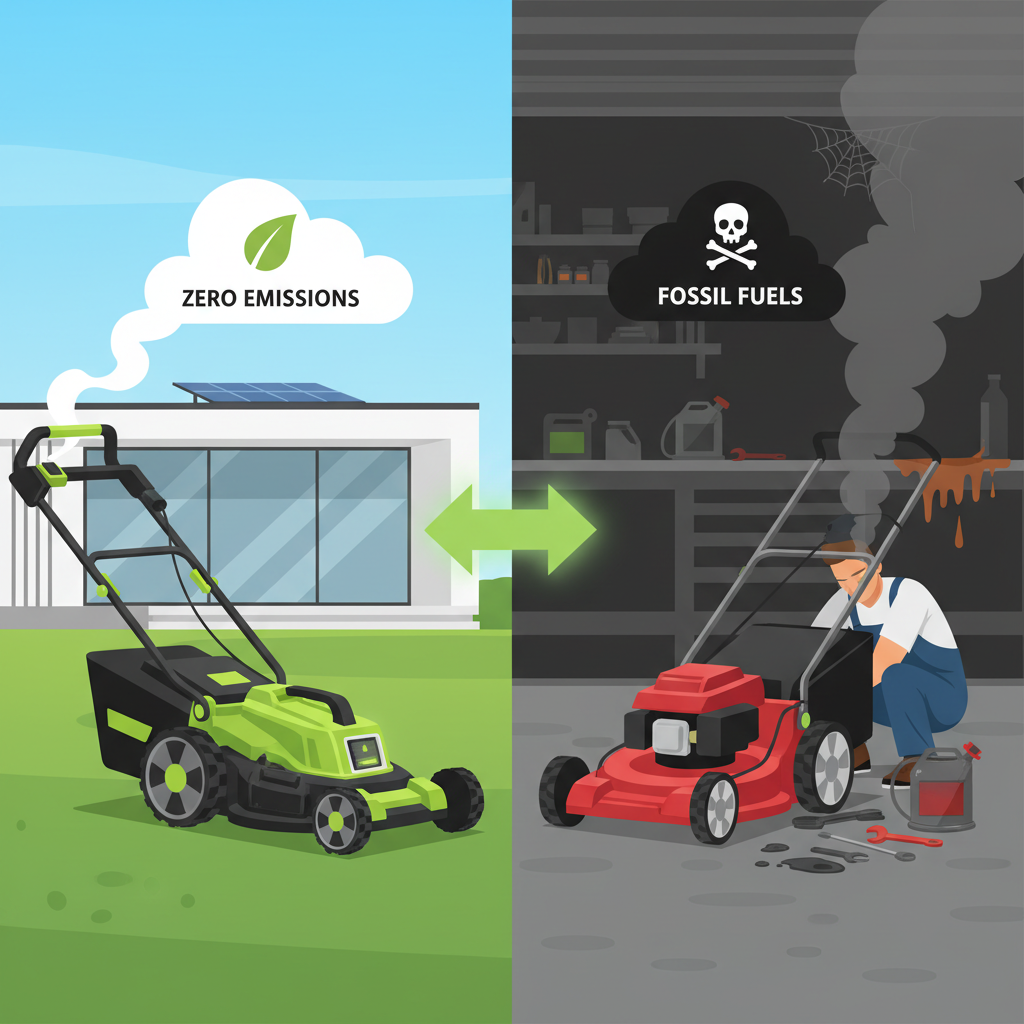
Cordless (battery-powered) lawn mowers have become the default choice for residential lawn care over the past decade. Unlike gas-powered mowers, they produce zero emissions, require minimal maintenance, and operate nearly silently—making early morning or evening mowing socially acceptable. Compared to corded electric mowers, cordless units offer freedom from outlet limitations and tangled extension cords.
The core advantage is convenience combined with environmental responsibility. You charge the battery, mow, and store it without seasonal winterization, oil changes, spark plug maintenance, or the smell of gasoline. Battery technology has matured dramatically; modern cordless mowers now deliver 30–90 minutes of runtime depending on voltage and blade engagement—enough for most residential properties on a single charge.
However, cordless mowers aren’t universally superior. They struggle with extremely thick, wet, or overgrown grass compared to heavy-duty gas equipment. They also require upfront investment in batteries and chargers, which can offset the long-term maintenance savings. To evaluate matched hardware tolerances, consult our detailed overview of jbl partybox club 120 vs sony srs xv500.
Understanding Battery Runtime and Yard Size
Battery runtime is the single most important specification and the primary source of confusion for buyers. Runtime depends on three factors: battery capacity (amp-hours, or Ah), voltage, and blade load (how hard the motor works to cut grass). To evaluate matched hardware tolerances, consult our detailed overview of jbl partybox club 120 vs sony srs xv500.
Battery Voltage Classes
- 20V batteries: Compact and lightweight, typically deliver 20–40 minutes of runtime on a full charge. Best for small yards (under 1/8 acre, roughly 5,000 sq ft) with low-to-medium grass height. Common in Ryobi, DeWalt, and Milwaukee budget lines.
- 40V batteries: The sweet spot for residential use. Deliver 30–60 minutes depending on grass density. Suitable for small to medium yards (1/8 to 1/4 acre). Brands include Ryobi, Greenworks, and some Ego models.
- 56V batteries: Premium tier with 45–75 minutes of runtime. Ideal for medium to large yards (1/4 to 1/2 acre). Ego Power+ leads this category.
- 80V+ batteries: Heavy-duty professional or prosumer grade, delivering 60–90+ minutes. Used by Ryobi Pro, Ego Pro, and Makita for properties 1/2 acre and larger.
A practical rule: multiply your yard size in square feet by 0.00003 to estimate the minutes of runtime you’ll need. A 10,000 sq ft lawn requires roughly 20 minutes; a 20,000 sq ft lawn needs 30–40 minutes. If your grass is thick, wet, or overgrown, add 20–30% to your estimate.
Yard Size Categories
| Yard Size | Recommended Voltage | Typical Runtime Needed | Battery Investment |
|---|---|---|---|
| Small (under 5,000 sq ft) | 20V | 15–25 minutes | $80–$150 |
| Medium (5,000–15,000 sq ft) | 40V | 30–45 minutes | $150–$300 |
| Large (15,000–30,000 sq ft) | 56V–80V | 45–90 minutes | $250–$450 |
| Very Large (30,000+ sq ft) | 80V+ dual battery | 90+ minutes | $400–$700+ |
Key Specifications to Compare Beyond Voltage
Cutting Deck Width
Measured in inches, deck width determines how much grass you cut per pass. Standard widths are 16, 19, and 21 inches. A 21-inch deck covers larger areas faster but is harder to maneuver in tight spaces or around obstacles. For yards under 10,000 sq ft, a 19-inch deck balances speed and control. For larger properties, 21 inches saves time. When planning workspace deployment, consider the engineering criteria outlined in our z890 vs x870e motherboard guide.
Cutting Height Range and Adjustment
Quality mowers offer height adjustment from 1 to 4 inches (some up to 5 inches). This flexibility accommodates different grass types and seasonal needs. Spring/fall growth benefits from 2.5–3.5 inches; summer heat and dormancy periods benefit from taller grass (3–4 inches). Avoid mowers with limited adjustment ranges; they’re inflexible for varying lawn conditions.
Mulching vs. Bagging
Mulching (also called side discharge) finely chops clippings and returns them to the soil as nutrients. It’s low-maintenance and environmentally friendly but requires consistent mowing frequency (weekly or bi-weekly). Bagging collects clippings in a rear or side bag for disposal; it’s necessary if you skip mowing schedules or have thick thatch buildup. Top-tier mowers offer both capabilities with easy switching; avoid models that do only one. For additional operational safety benchmarks, see our published testing notes on marshall stanmore iii vs harman kardon onyx studio 8.
Deck Material
Aluminum decks are lightweight and rust-resistant but dent easily. Steel decks are durable and forgiving but prone to rust if not dried properly. Most mid-range and premium mowers use aluminum with protective coatings. High-end models sometimes use reinforced composite materials.
Blade Quality
Two-blade systems are standard and sufficient. Some premium models offer three blades for finer mulching. Blade sharpness degrades every 20–50 mowing hours depending on grass type and debris. Look for mowers with easily accessible blade mounts for DIY sharpening (typically $10–$20 service or 10 minutes of work). To compare alternative configurations, check our hands-on review of dyson v8 cyclone vs bissell featherweight stick.
Battery Ecosystem and Total Cost of Ownership
A cordless mower is rarely a standalone purchase. Consider whether you already own other power tools from the same brand. Most manufacturers use proprietary battery platforms—Ryobi One+, DeWalt 20V, Ego Power+, Makita 18V—so batteries and chargers are interchangeable across their entire tool lineup.
Long-term math: If you already own a cordless drill, impact driver, or trimmer from a brand, buying a mower in the same ecosystem saves $100–$200 on battery and charger purchases. You reuse existing batteries.
If starting fresh, calculate total first-year cost: mower ($200–$700) + battery ($60–$200) + charger ($40–$100) = $300–$1,000 for the complete system. Budget brands (Ryobi, Greenworks) cluster at the low end; premium brands (Ego, Makita) at the high end. Users looking for related component recommendations can explore our bissell crosswave hydrosteam vs shark stainforce breakdown.
Battery lifespan: Modern lithium-ion batteries degrade at roughly 2–3% per year under normal use. A quality battery should deliver 80% capacity after 5 years and 60% after 10 years. Avoid extreme heat or cold storage, which accelerates degradation. Most brands warrant batteries for 3 years or 100 charge cycles (whichever comes first).
Performance Tiers Explained
Budget Tier ($200–$350)
Typically 20V or 40V, 16–19 inch decks, 20–40 minute runtime. These mowers handle small, well-maintained lawns but struggle with thick grass or inconsistent mowing schedules. Build quality is adequate but with plastic components and simpler blade systems. Brands: Ryobi, Greenworks, some Craftsman models. Best for: Small yards, supplemental mowing, or first-time cordless adopters.
Mid-Range Tier ($400–$650)
Typically 40V–56V, 19–21 inch decks, 40–60 minute runtime. Refined cutting performance, better deck construction, and reliable mulching/bagging. These are the workhorses for most homeowners. Brands: Ego 56V, DeWalt 40V, Ryobi Pro. Best for: Medium to large residential yards, the primary household mower, consistent weekly mowing.
Premium Tier ($700+)
80V+ systems, 21 inch decks, 60–90+ minute runtime, dual-battery compatibility, commercial-grade construction. Performance rivals small gas mowers. These are built for frequent use or properties 1/2 acre and larger. Brands: Ego Pro, Makita, Ryobi Pro 80V, DeWalt Flexvolt. Best for: Large properties, professional landscapers, users demanding minimal compromise.
Real-World Performance Limitations
Challenging Conditions
Cordless mowers perform well in typical residential conditions but show limitations in edge cases:
- Wet or dewy grass: Clippings stick to the deck more easily, reducing mulching effectiveness. Bagging becomes necessary.
- Thick or overgrown grass: Motor strain increases, cutting runtime by 30–50%. Tall, dense growth may require two passes or pre-trimming with a string trimmer.
- Hills and slopes: Motor works harder against gravity. Runtime decreases and blade engagement becomes inconsistent on steep terrain (over 15 degrees).
- Cold weather: Battery performance drops 30–40% in temperatures below 40°F. Not ideal for early-season spring mowing in cold climates.
- Gravel or debris-heavy yards: Foreign objects damage mulching blades and reduce efficiency. Gas mowers tolerate this better.
Maintenance and Storage
Cordless mowers require minimal upkeep: occasionally rinse the deck after use to prevent grass buildup, sharpen blades annually, and check belt tension (if applicable). Batteries charge in 30–90 minutes depending on capacity and charger type. Store mowers in dry, climate-controlled spaces; extreme heat or cold degrades batteries and mechanical components.
Step-by-Step Selection Guide
Step 1: Measure Your Yard
Estimate square footage. Divide your lot into rectangles, measure length and width, multiply, and sum the sections. This determines voltage and runtime requirements.
Step 2: Assess Terrain and Grass Type
Is your lawn flat, sloped, or mixed? Is grass thick and healthy or thin and patchy? Challenging terrain and dense grass require higher voltage. Well-maintained flat lawns are satisfied with lower-voltage budget options.
Step 3: Determine Your Mowing Cadence
Do you mow weekly or sporadically? Weekly mowing keeps grass manageable and cordless mowers sufficient. Bi-weekly or less frequent mowing requires higher runtime and capacity to handle overgrown conditions.
Step 4: Check Existing Tools
Do you own other cordless tools? If yes, prioritize mowers compatible with your current battery platform to save money. If not, consider brands with strong ecosystem support (Ryobi for budget, Ego for mid-range performance, Makita for premium).
Step 5: Prioritize Features
List must-haves: mulching capability, bagging, specific height range, or 21-inch deck. Rank by importance. This narrows options significantly.
Step 6: Compare Warranty and Support
Most brands offer 3-year limited warranties on the mower and 2–3 years on batteries. Read fine print—some exclusions apply to commercial use or warranty claim processes. Local service availability matters; brands with strong dealer networks (DeWalt, Makita, Ryobi) are easier to repair.
Brand Positioning and What Differentiates Them
Ryobi: Budget-friendly, strong value proposition. Largest battery ecosystem (One+ platform). Trade-off: lower build quality and performance compared to premium brands. Best for budget-conscious homeowners and DIY enthusiasts with small to medium yards.
DeWalt: Professional-grade reputation, premium pricing. 20V and 40V options. Strong warranty and support. Appeal: tool professionals who already own DeWalt equipment. Good for users prioritizing brand reliability and longevity.
Ego Power+: Premium brand with emphasis on runtime and performance. 56V and 80V systems lead the industry for residential cordless. Higher price justified by extended runtime and refined cutting. Best for users wanting minimal compromise and are willing to pay for it.
Makita: Professional contractor equipment extended into consumer market. 80V+ systems. Excellent build quality and motor engineering. Premium pricing. Best for serious enthusiasts, large properties, or professionals transitioning from gas.
Greenworks: Budget alternative to Ryobi, often sold through big-box retailers. 40V and 60V options. Solid value but smaller ecosystem and less widespread support.
Common Questions on Best Cordless Lawn Mower Answered
Q: How long do cordless mower batteries last before replacement?
Lithium-ion batteries typically maintain 80% capacity after 3–5 years of regular use (roughly 100 charge cycles per year). After 10 years, expect 60–70% capacity. Replacement batteries cost $100–$300 depending on voltage and capacity. Most homeowners replace batteries only once every 7–10 years with typical weekly mowing. This is still more economical than gas mower maintenance (oil, filters, spark plugs, seasonal tune-ups).
Q: Can I use one battery for multiple cordless tools?
Yes, if tools share the same platform. A 40V Ryobi battery works with all One+ branded tools (drills, saws, leaf blowers, etc.). A 56V Ego battery powers all Ego Power+ products. This ecosystem compatibility is a major advantage if you own multiple tools. However, batteries are not interchangeable across brands (Ryobi batteries don’t work with DeWalt tools).
Q: Is a cordless mower suitable for tall or overgrown grass?
Cordless mowers struggle with significantly overgrown grass (over 4 inches). The motor strains, cutting efficiency drops, and runtime decreases by 30–50%. If your lawn is consistently overgrown, either pre-trim with a string trimmer or consider a gas-powered model. For normal residential maintenance (weekly mowing), cordless mowers excel.
Q: What’s the noise level of cordless mowers compared to gas?
Cordless mowers operate at 60–75 decibels (similar to a vacuum cleaner). Gas mowers are typically 85–90 dB (louder than a lawnmower-adjacent conversation). This 10–15 dB difference represents roughly 3–4 times the perceived loudness. Cordless mowers are genuinely quieter, making early morning or evening mowing acceptable to neighbors.
Final Recommendation
For the majority of homeowners, a mid-range 40V–56V cordless mower ($400–$600) is the optimal choice. It balances affordability, runtime, and cutting performance across most residential property sizes and conditions. If your yard is small (under 5,000 sq ft) and well-maintained, a budget 20V model saves money. If you have a large property (over 1/4 acre) or frequent mowing demands, invest in a premium 56V+ system for extended runtime and durability.
Check your existing tool ecosystem first. Buying into the same battery platform as your cordless drill or trimmer multiplies the value proposition and saves hundreds in duplicate chargers and batteries. Prioritize mulching capability (most mowers offer this) unless you have specific debris management needs. Finally, ensure your chosen brand has local service availability and a reasonable warranty to protect your investment.
For more hands-on benchmarks and buying recommendations, consult our guides on heavy-duty chainsaw buyer guide, as well as automated robotic lawn mower guide.
Mechanical safety standards, operational tolerances, and protective gear guidelines align with benchmark specifications established by the American National Standards Institute (ANSI).

Pros
- Commercial-grade electric performance with instant torque and no gas engine maintenance.
- Large included battery package and fast charger improve runtime and turnaround time.
- Heavy-duty 54-inch fabricated deck is built for durability and wider coverage per pass.
- Comfort-focused operator features are better than many basic riding mowers in this class.
- Backed by a 4-year limited warranty for added purchase confidence.
Cons
- At 848.78 pounds, it is very heavy and will be difficult to move manually or transport without proper equipment.
- The large footprint, with dimensions of 76.77 x 73.23 x 56.3 inches, requires substantial storage space.
- The premium feature set and battery system may be more than many small-yard owners need.
Overview & Design: The Greenworks 80V 54" MaximusZ Zero Turn Riding Lawn Mower is a commercial-style electric mower built for large residential properties. Its 54-inch 10-gauge fabricated steel deck, zero-turn layout, and premium operator seat give it a serious, heavy-duty feel right away.
Performance & Key Features: This model is positioned as a 41HP gas-equivalent machine with instant torque, a constant 17,900 FPM blade speed, and SmartCut technology that adapts to changing grass conditions. The included battery kit with (2) 16.0Ah and (4) 6.0Ah batteries is designed to support up to 4+ acres per charge, while the 1.5kW fast charger helps reduce downtime.
Drawbacks & Considerations: The mower is extremely heavy at 848.78 pounds, so it is not easy to move or store in tight spaces. It is also a major investment and may be excessive for smaller yards or users who do not need the runtime and power of a large battery-electric zero-turn.
Verdict: This is a strong fit for homeowners with large lawns who want powerful, low-maintenance mowing performance and premium comfort features. Buyers who need a wide cutting deck, long runtime, and electric operation will likely get the most value from it.

Pros
- Brushless motor system delivers gas-equivalent power without emissions or excessive noise
- High-capacity battery kit enables cutting coverage of up to 4.4 acres per charge set
- Durable 10-gauge steel deck and constant high blade tip speed handle dense grass effectively
- Premium seating and lighting features support comfortable extended operation
- 4-year warranty provides strong protection for the investment
Cons
- Runtime tops out around 4.4 acres depending on conditions, requiring recharges for bigger properties
- Electric design depends on charging infrastructure and battery management rather than simple refueling
- Height adjustment is noted only basically without extensive position details in available specs
The Greenworks 60V MaximusZ Zero Turn Riding Lawn Mower is a commercial-grade electric machine built for large lawns. Its primary construction centers on a heavy-duty 60-inch 10-gauge fabricated steel deck that prioritizes durability and airflow, paired with premium comfort elements including an adjustable suspension seat with lumbar support and foldable armrests for a solid first impression of quality and user focus.
Performance shines through an intelligent brushless motor system offering power equivalent to a 31HP gas engine with zero emissions. Three high-torque brushless hub motors sustain a constant 17,900 FPM blade speed, while SmartCut Technology auto-adapts to prevent bogging in thick or wet grass. The complete kit supplies (2) 20.0Ah suitcase batteries plus (4) 8.0Ah batteries and a 1.5kW fast charger for up to 4.4 acres of cutting. Additional capabilities include a 4-in-1 deck for mulching, bagging, rear and side discharge, 300 lb towing capacity with front/rear hitch, dual LED headlights, and an LCD display.
Drawbacks and considerations include the practical need to recharge the battery set after maximum runtime, which can interrupt work on properties exceeding 4.4 acres. Being fully electric means reliance on power sources for recharging instead of fuel, and height adjustment is referenced only in basic terms without more granular position data in the specifications.
In verdict, the Greenworks 60V MaximusZ delivers the most value to homeowners and professionals managing medium-to-large properties who want quiet, emission-free commercial power, versatile cutting options, and the security of a 4-year warranty in a comfortable zero-turn package.

Pros
- Strong stated cutting capacity for large properties, with up to 4 acres per charge.
- Zero-turn design supports fast, precise mowing around obstacles.
- Uses battery power instead of gas, reducing maintenance-related chores and emissions.
- Includes six high-capacity batteries and a charger, so it is ready for use out of the box.
Cons
- Heavy at 720 pounds, which may make transport, storage, or maneuvering by hand difficult.
- Large dimensions require substantial garage or shed space.
- The high upfront cost may put it out of reach for buyers with smaller lawns or limited budgets.
Overview & Design: The EGO Power+ ZT5207L is a 52-inch electric riding lawn mower with a zero-turn radius, built for users who need efficient coverage on larger properties. Its black finish, substantial frame, and 720-pound weight reflect a serious, full-size riding mower designed for demanding residential mowing.
Performance & Key Features: EGO says Peak Power+ technology combines up to six 56V ARC Lithium batteries, and the mower is rated at a 25 HP-equivalent output. The 52-inch deck and zero-turn steering should help reduce mowing time and improve control around landscaping, while the included six 56V 12.0Ah batteries are stated to support up to 4 acres per charge.
Drawbacks & Considerations: This model is large and heavy, so it will not suit every storage space or every user. Its premium positioning also means buyers should be confident they need this much capacity, since smaller yards may not justify the size, weight, or cost.
Verdict: The ZT5207L is best for homeowners with expansive lawns who want battery-powered convenience and zero-turn efficiency in one machine. It is a compelling option if you value gas-like performance, broad deck coverage, and compatibility with EGO's 56V battery ecosystem.

Pros
- Offers quiet, emission-free electric operation with power matching traditional 22 HP gas mowers.
- Includes four high-capacity 56V 10.0Ah batteries for up to 2 acres of runtime right out of the box.
- Customizable LCD interface and multiple driving modes enhance user control and ride comfort.
- Versatile 10-position cutting height and 3-in-1 deck options provide flexible lawn finishing.
- Fast two-hour full recharge capability supports productive multi-session mowing days.
Cons
- Maximum single-charge coverage is limited to about 2 acres without purchasing additional batteries for bigger properties.
- Requires access to a power outlet for recharging, which may interrupt workflow on very large or remote lawns.
- Battery management and storage add extra steps compared to simple gas-powered alternatives.
The EGO Power+ ZT4204L is a premium electric zero-turn riding lawn mower built for homeowners seeking a clean alternative to gas models. It features a robust 42-inch stamped steel deck and includes four 56V 10.0Ah ARC Lithium batteries plus a charger, delivering an immediate impression of high-quality engineering focused on power and convenience.
In real-world use, this mower matches the performance of a 22 horsepower gas unit while reaching speeds up to 8 MPH. The zero-turn radius combined with three selectable driving modes via the LCD interface allows smooth navigation and efficient cutting of up to 2 acres per charge. Users can fine-tune the cut across 10 height positions from 1.5 to 4.5 inches and choose between mulching, bagging, or side discharge for complete lawn care flexibility. Full recharges take roughly two hours with the included Z6 charger.
Potential drawbacks include the 2-acre limit on the stock battery set, meaning larger properties will need extra batteries for uninterrupted operation. As a fully electric system, it also depends on regular charging access rather than quick refueling, and battery handling requires more attention than traditional gas mowers.
Overall, the EGO Power+ ZT4204L is an excellent choice for environmentally conscious homeowners with lawns up to a few acres who value quiet operation, low maintenance, and precise control. Those with extensive grounds should plan for additional battery capacity to maximize its benefits.