Direct Answer
You can make a lawn mower faster through three main approaches: (1) maintenance-based improvements like sharpening blades, replacing air filters, and using quality fuel, which safely optimize existing performance; (2) mechanical adjustments such as transmission gear changes or blade pitch modifications on applicable models; and (3) engine modifications for more significant gains. However, faster operation often sacrifices cutting quality and increases safety risks. The best choice depends on your mower type, how you use it, and whether you prioritize speed or cut quality.
Understanding What “Faster” Really Means for Your Mower
Before making changes, clarify what speed matters to you. Lawn mowers have two distinct performance metrics that people often confuse:
- Travel speed: How quickly the mower moves across your lawn (relevant for riding mowers, zero-turn mowers, and self-propelled push mowers)
- Blade cutting speed: The rotational speed (RPM) of the cutting blades, which affects cutting quality and debris discharge
These operate independently. You can have a fast-traveling mower with slow blades, or vice versa. Increasing blade speed without increasing travel speed means you’ll cover the same ground but cut more aggressively—useful for thick or overgrown grass. Increasing travel speed while maintaining blade speed lets you mow faster without sacrificing cut quality.
Your mower type also determines what’s possible:
- Push mowers (manual or electric): Limited speed potential; improvements focus mainly on blade sharpness and maintenance
- Self-propelled push mowers: Can adjust transmission settings or throttle on some models
- Riding mowers and zero-turn mowers: Offer the most flexibility for gear adjustments, throttle control, and engine tuning
Safe, Maintenance-Based Speed Improvements (Start Here)
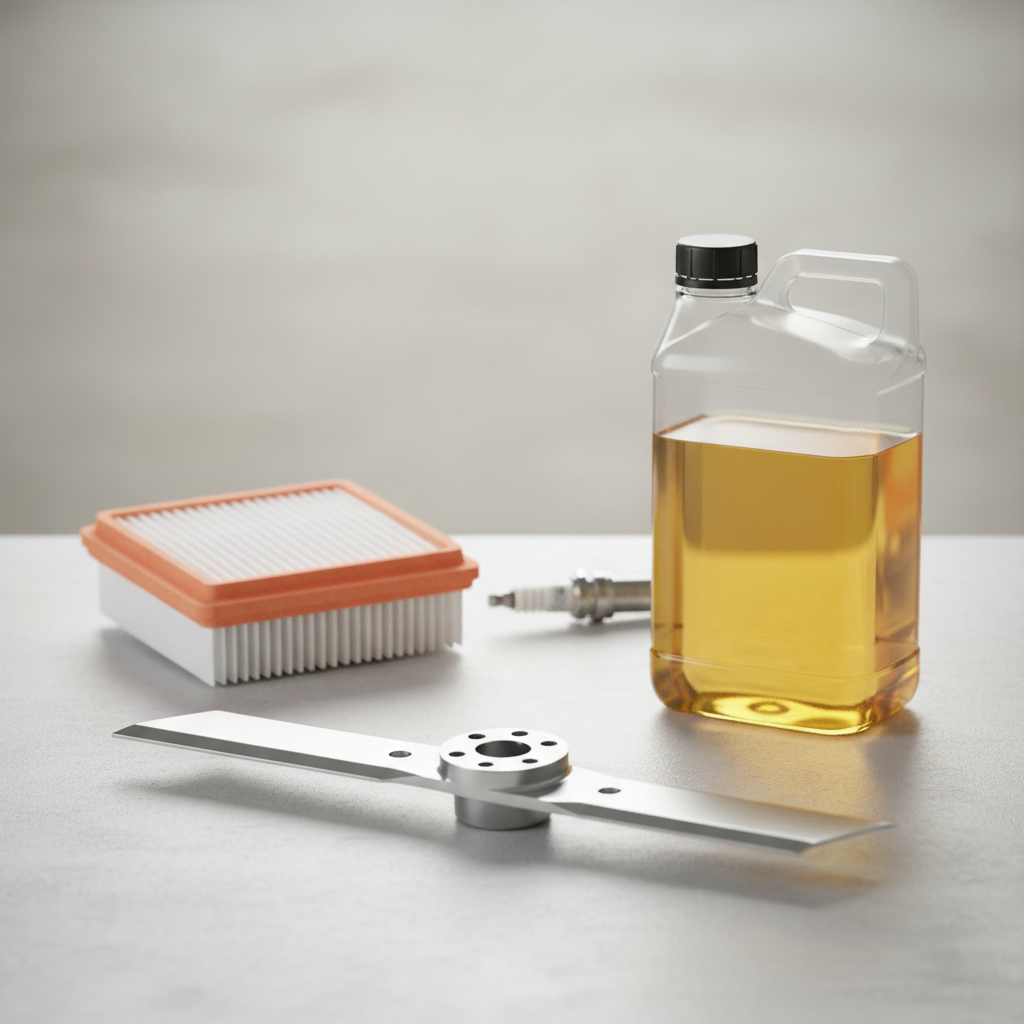
The easiest and safest way to maximize your mower’s speed is to restore it to peak factory performance through proper maintenance. A poorly maintained mower operates well below its design specifications.
Sharpen the Cutting Blades
Dull blades are the #1 performance killer. A dull blade doesn’t cut grass cleanly—it tears and bruises it—forcing the engine to work harder and the mower to move slower. Sharp blades slice through grass with minimal resistance, allowing higher travel speeds without bogging down the engine.
- How often: Every 20–40 hours of mowing (roughly every 2–4 weeks during growing season)
- How to check: Feel the blade edge with your finger (engine off). A sharp blade feels like a razor; a dull one feels like a butter knife
- Impact: Sharpening blades often restores 10–20% of perceived cutting speed
Take blades to a local equipment shop if you’re uncomfortable doing it yourself. Cost: $10–$30 per blade.
Replace or Clean the Air Filter
A clogged air filter restricts airflow to the engine, reducing combustion efficiency and power output. This directly limits how fast the engine can run.
- How to check: Remove the air filter and hold it to sunlight. If you can’t see light through it, replace it
- Replacement frequency: Every season or every 50 hours of use, whichever comes first
- Cost: $5–$15 for a new filter
- Impact: A clean filter can restore 5–10% engine efficiency
Some mowers have washable foam filters. Clean and re-oil these per manufacturer guidelines before replacing.
Use Quality Fuel and Keep the Tank Fresh
Small engines are sensitive to fuel quality. Old fuel gums up carburetors, and low-octane fuel can cause knocking and reduced power.
- Best practice: Use fresh, name-brand gasoline (Top Tier brands like Shell, Chevron, or Mobil). Avoid gas station off-brands
- Octane rating: Most residential mowers run fine on regular 87-octane. High-octane fuel won’t help unless your mower’s manual specifies it
- Fuel age: Gasoline degrades after 30 days. If you’re storing the mower, drain old fuel or use a fuel stabilizer
- Impact: Fresh fuel + clean carburetor = 5–15% power restoration
Clean or Replace the Spark Plug
A fouled spark plug misfires, reducing engine power and speed. Cleaning or replacing the plug is a quick win.
- When: At the start of each mowing season
- Cost: $3–$8
- Impact: Modest but noticeable improvement in throttle response
These four maintenance steps alone often restore a mower to 90–95% of its original performance without any modifications. If your mower is old or hasn’t been serviced regularly, maintenance is your fastest (and cheapest) path to improvement.
Mechanical Adjustments for Increased Speed
Transmission Gear Changes (Riding and Zero-Turn Mowers)
Many riding mowers and zero-turn mowers have adjustable transmission settings or belt-driven pulley systems that control travel speed. Check your owner’s manual for your specific model.
- Belt-driven mowers: Some allow pulley size swaps to alter gear ratios. Larger driven pulleys = faster travel. This requires mechanical knowledge and part purchases ($50–$200)
- Hydrostatic transmissions: Speed is controlled by a lever or dial. Moving it to “high” increases speed, but this is already factory-optimized for most models
- Trade-off: Increasing speed via gearing reduces torque, meaning the mower may struggle on slopes or in thick grass
Blade Pitch and Deck Angle Adjustments
Some mowers allow you to adjust the angle or pitch of the cutting deck to increase blade speed without engine modifications.
- Increasing blade RPM: Steeper blade angles spin faster but produce a more aggressive cut and louder noise
- Risk: Too steep an angle reduces cut quality and can cause scalping (cutting the grass too short and damaging the lawn)
- Limit: Don’t exceed manufacturer specifications; warranty may be voided
Throttle Adjustments
On some mowers, throttle is not wide open at the “full” setting. Check your manual for throttle limiter screws that can be adjusted to allow higher RPMs, but be cautious—this can void your warranty and increase heat on the engine.
Engine Modifications for Significant Speed Gains
These changes require more technical skill and carry higher risks. Most engine modifications will void your warranty.
Engine Displacement Upgrades
Replacing a small-displacement engine (e.g., 17 HP) with a larger one (e.g., 25 HP) dramatically increases power. This is practical mainly for riding mowers and commercial equipment.
- Cost: $400–$1,500+ for the engine plus installation
- Effort: High—requires mechanical expertise
- Benefit: 40–60% speed increase possible
- When it makes sense: Rarely. By this point, buying a faster mower outright is usually cheaper
Carburetor Tuning and Jetting
Adjusting the fuel-to-air mixture (jetting) can optimize combustion for more power. However, incorrect tuning causes engine damage.
- Difficulty: Intermediate to advanced
- Typical gain: 3–8% power increase
- Risk: Engine overheating, lean running (too little fuel), poor idling
- Recommendation: Only attempt if you have small-engine experience or take it to a professional
Exhaust Modifications
A less-restrictive exhaust allows better engine breathing, slightly increasing power. Aftermarket mufflers and pipes exist for some mower models.
- Typical gain: 2–5% power increase
- Cost: $100–$300
- Side effect: Louder operation
Safety Considerations and Diminishing Returns
Cut Quality Degradation
Faster blade speeds and travel speeds often reduce cut quality. Pushing your mower beyond factory specifications means:
- Uneven cutting due to reduced ground contact time
- Poor mulching and discharge (clumps of grass instead of fine clippings)
- Scalping (cutting into soil on uneven ground)
- Torn grass edges (health risk for the lawn)
Safety Hazards
Higher speeds increase accident risks:
- Reduced operator control on slopes or in obstacles
- Higher blade speeds = greater injury risk if you contact the deck
- Increased debris ejection velocity (potential projectile hazard)
- Overheating of the engine if modifications increase load without proper cooling
Warranty and Liability
Modifications void manufacturer warranties. If the mower fails or causes injury after modification, you’re liable. Some homeowners insurance policies also exclude coverage for modified equipment.
The Reality of Diminishing Returns
A 10% speed improvement from maintenance costs nothing. A 20% improvement from transmission adjustments costs $50–$200. A 40% improvement from engine upgrades costs $400–$1,500+. At some point, buying a faster mower (which comes with a warranty and is already optimized) makes more financial and practical sense.
Modification vs. Replacement: Making the Decision
Ask yourself these questions:
| Scenario | Best Action |
|---|---|
| Mower is old and poorly maintained | Maintenance first (cheap, often solves the problem) |
| You want 10–15% faster speed | Maintenance + blade sharpening (free to $30) |
| You want 20–30% faster speed | Gear adjustments or transmission tweaks ($50–$300) |
| You want 40%+ faster speed, or your mower is 10+ years old | Buy a faster mower ($800–$3,000). New mowers are more efficient and safer |
| Your lawn is large and mowing takes hours | Upgrade to a larger deck or zero-turn mower (bigger impact than speed tuning) |
Frequently Asked Questions
Can I make my push mower faster?
Marginally. Push mowers have no transmission or engine tuning options. Focus on blade sharpness, air filter cleanliness, and using quality fuel. For self-propelled push mowers, check your manual for transmission adjustments. If you need significantly faster mowing, a riding mower or zero-turn mower is a better investment.
Will increasing blade RPM help me mow faster?
It depends on your goal. Higher blade RPM cuts more aggressively, which is useful in thick or overgrown grass. However, it doesn’t increase how quickly the mower moves across the lawn—that’s controlled by the transmission. For faster overall mowing, focus on travel speed (gear adjustments) and blade sharpness rather than blade RPM alone.
Is it safe to modify my mower’s engine?
Engine modifications carry risks: reduced reliability, voided warranty, potential overheating, and increased operator hazard. Most modifications yield only 5–15% gains that are barely noticeable. Safer and more practical gains come from maintenance and transmission adjustments. If you want significant performance increases, buy a faster mower.
What’s the cheapest way to make my mower faster?
Maintenance: sharpen the blades (free if you do it yourself, or $10–$30 at a shop), replace the air filter ($5–$15), and use fresh fuel. These steps often restore 15–25% of performance on a neglected mower and cost under $50. Do this first before considering any modifications.