

Direct Answer: How to Mow a Lawn
Mowing a lawn requires three core steps: prepare your mower and yard, cut grass at the appropriate height (typically 2.5 to 3.5 inches for cool-season grasses) using consistent, overlapping passes, and clean your equipment afterward. The key to a healthy lawn is mowing when grass is dry, maintaining a sharp blade, and following a regular schedule of every 7 to 10 days during the growing season while never removing more than one-third of the grass blade in a single session.
Choosing the Right Mower Type
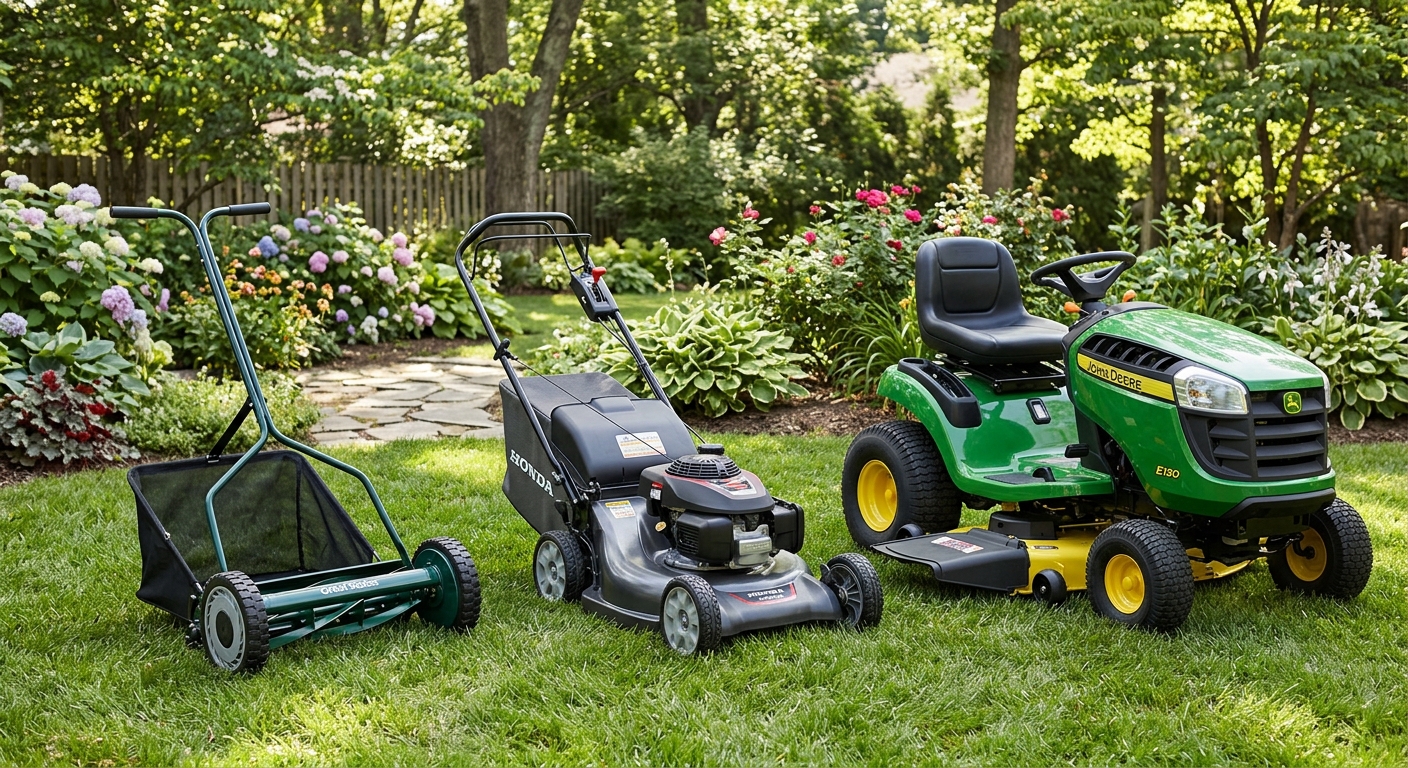
Your mower choice depends on lawn size, terrain, and personal preference. Understanding the main types helps you select the right tool for your situation.
Push Mowers
Manual push mowers are ideal for small lawns (under 2,000 square feet) and require physical effort to propel. They’re quiet, affordable, and great for precision work. Gas-powered push mowers handle medium lawns (2,000 to 5,000 square feet) with engine assistance, making them easier to maneuver. Electric or battery-powered push mowers are quieter than gas models, produce zero emissions, and require less maintenance, perfect for suburban lots and environmentally conscious homeowners.
Riding Mowers
Riding mowers suit larger lawns (over 5,000 square feet) and reduce physical strain. They cut faster than push mowers and come with comfortable seating and steering controls. Larger properties benefit from zero-turn radius models, which improve maneuverability around obstacles.
Rotary vs. Reel Mowers
Rotary mowers (most common) use a spinning blade to cut grass and work well on various grass types and uneven terrain. Reel mowers use multiple rotating blades to create a clean, scissor-like cut, preferred by lawn perfectionists for their precise cutting but requiring more maintenance and flat terrain.
Pre-Mowing Preparation
Proper preparation ensures a safe, effective mowing session and protects your equipment. Users looking for related component recommendations can explore our z890 vs x870e motherboard breakdown.
Preparing Your Mower
- Check fuel: Ensure your mower has adequate fuel. For gas mowers, use fresh gas (not more than 30 days old) to prevent engine problems.
- Inspect the blade: A sharp blade is essential. Dull blades tear grass instead of cutting cleanly, leaving brown-tipped edges susceptible to disease. Check blade sharpness every 20 to 50 hours of use.
- Verify spark plugs and filters: Replace spark plugs annually and clean or replace air filters regularly to maintain engine efficiency.
- Check tire pressure: Properly inflated tires (for riding mowers) ensure even cutting height and reduce soil compaction.
Safety Equipment and Timing
Always wear:
- Eye protection (safety glasses or goggles) to shield against flying debris
- Hearing protection (earplugs or earmuffs) to protect against engine noise
- Closed-toe shoes with good traction
- Long pants to protect legs
Optimal timing: Mow when grass is dry (typically mid-morning after dew has evaporated). Wet grass clumps in the discharge chute, promotes disease, and stresses your mower’s engine. Avoid mowing in extreme heat or right after rain. Before finalizing equipment decisions, refer to our comprehensive marshall stanmore iii vs harman kardon onyx studio 8 comparison.
Step-by-Step Mowing Technique
Determine Cutting Height
Grass height depends on type and season:
- Cool-season grasses (northern climates): 2.5 to 3.5 inches
- Warm-season grasses (southern climates): 1.5 to 2.5 inches
- General rule: Never cut more than one-third of the blade length in a single mowing. Removing too much stresses the plant and invites disease.
Adjust your mower’s cutting height using the lever or wheel adjustments before you start, most mowers have settings for each wheel. For broader ecosystem context, read through our operational guide on dyson v8 cyclone vs bissell featherweight stick.
Begin Mowing
Start with the perimeter: Mow the outer edges of your lawn first to create a boundary and define your pattern. This also clears obstacles and gives you room to maneuver.
Overlap each pass: When moving to the next row, overlap the previous pass by 2 to 3 inches to prevent missed strips of unmowed grass.
Maintain consistent speed: Push the mower at a steady pace, typically 3 to 4 mph for walking speed. Moving too fast results in uneven cutting; too slow wastes time and stresses the engine.
Handle Edges and Obstacles
Use a string trimmer or edge trimmer to cut grass along sidewalks, flower beds, and trees where the mower can’t reach. For rocks, roots, or debris, remove them by hand before mowing to prevent blade damage or equipment failure.
Mowing Patterns and Why They Matter
Varying your mowing pattern promotes even lawn health and prevents soil compaction.
Common Patterns
- Rows: Straight, parallel lines, the simplest and most common pattern. Ideal for rectangular lawns.
- Stripes: Alternating rows in opposite directions create a striped effect and help prevent ruts.
- Spiral: Start at the lawn’s edge and work toward the center in a circular motion. Effective for irregularly shaped lawns.
- Checkerboard: Combine two perpendicular patterns for visual interest. More time-intensive but excellent for lawn appearance.
Why Rotation Matters
Mowing in the same direction every week causes soil compaction, creates ruts, and may lead to uneven growth. Rotating your pattern every 2 to 3 weeks distributes foot traffic and mower weight, promoting healthier, more uniform grass.
Post-Mowing Care and Maintenance
Clean Your Mower
After each use:
- Disconnect the spark plug wires (on gas mowers) to prevent accidental starting.
- Remove caked grass and debris from the undercarriage using a brush or scraper. Buildup reduces cutting efficiency and promotes rust.
- Rinse the deck (if your mower is rated for wet cleaning) or use compressed air to clear grass clippings.
- Inspect for damage: Look for bent blades, cracked belts, or loose bolts and repair as needed.
Blade Maintenance
Sharpen blades every 20 to 50 hours of use or when you notice torn grass edges. Dull blades cause lawn stress and disease susceptibility. You can sharpen blades yourself using a file or take them to a professional service.
Balance the blade: An unbalanced blade causes vibration and uneven cutting. After sharpening, check balance using a blade balancer or by hanging the blade on a nail through its center hole, it should remain level.
Grass Clippings: What to Do
- Mulch: Leave clippings on the lawn. They decompose quickly, returning nitrogen to the soil and reducing fertilizer needs. This works best when clippings are short (under 2 inches).
- Bag: Collect clippings if they’re long, wet, or if you’re managing thatch. Bagged clippings can be composted.
- Side discharge: Some mowers direct clippings to the side. Avoid using this method on windy days to prevent clippings from scattering into gardens or onto pavement.
Mowing Schedule and Seasonal Considerations
How Often to Mow
During the active growing season, mow every 7 to 10 days. This frequency ensures grass remains at optimal height and prevents it from becoming overgrown and stressed.
Seasonal Adjustments
- Spring: As grass greens up, begin mowing weekly. Raise cutting height slightly (3.5 inches for cool-season grasses) to shade soil and reduce weed germination.
- Summer: Mow at maximum height to reduce heat stress. Increase frequency if growth accelerates due to rain or fertilizer application.
- Fall: Gradually lower cutting height in September and October. Stop mowing when grass growth slows (typically November for cool-season regions).
- Winter: No mowing needed. In mild climates with year-round growth, mow occasionally at a higher height.
Safety Precautions and Common Mistakes
Main Safety Hazards
- Blade contact: Never reach under the mower deck or adjust blades while the engine runs. Always disconnect spark plug wires first.
- Projectiles: Stones, sticks, and debris can be ejected at high speed. Keep bystanders away from the mower’s discharge area.
- Tipping hazard: On riding mowers, avoid mowing steep slopes or crossing ravines. Mow up and down slopes, not side-to-side.
- Engine heat: Mufflers and engines reach high temperatures. Avoid touching the mower immediately after use.
Common Mowing Mistakes to Avoid
- Mowing wet grass: Causes clumping, disease spread, and mower clogging.
- Cutting too short: Weakens grass, invites weeds, and increases drought stress.
- Ignoring blade sharpness: Dull blades tear grass and reduce lawn health.
- Mowing the same pattern repeatedly: Leads to soil compaction and uneven wear.
- Skipping maintenance: Regular filter changes and spark plug inspections prevent engine failure.
- Mowing in extreme conditions: Heat, cold, or drought stress reduces grass recovery.
Troubleshooting Common Issues
Mower won’t start: Check fuel freshness, spark plug condition, and battery charge (electric models). Clean the air filter.
Uneven cutting: Inspect blade sharpness and balance. Check tire pressure on riding mowers and wheel height on push mowers.
Engine stalling: Often caused by a clogged fuel filter or carburetor. Clean or replace the fuel filter and run fresh gas through the system.
Excessive vibration: A bent or unbalanced blade is the likely culprit. Inspect and replace or balance the blade.
Frequently Asked Questions About How Do You Mow The Lawn
What is the best time of day to mow?
Mid-morning (8 a.m.-11 a.m.) is ideal. Morning dew has evaporated, so grass is dry and cuts cleanly. Afternoon heat can stress freshly cut grass, and evening mowing may leave grass vulnerable to fungal diseases overnight.
Can I mow in the rain or right after rainfall?
No. Wet grass clumps in the mower deck, clogs the discharge chute, and stresses the engine. More importantly, wet grass is prone to disease, and mowing spreads fungal spores throughout your lawn. Wait at least 24 hours after rain before mowing.
How do I know when my blade needs sharpening?
Examine freshly cut grass blades. If the tips are ragged or brown instead of clean-cut and green, your blade is dull. Dull blades tear the grass tissue, causing brown-tipped damage and making the lawn susceptible to disease.
Should I collect or mulch my grass clippings?
Mulching (leaving clippings on the lawn) is generally better for lawn health because clippings decompose quickly and return nutrients to the soil, reducing fertilizer needs. Bag clippings if they’re long, wet, or if thatch is building up on your lawn.
Technical Standards and Compliance
For further specifications and verified tests, explore our breakdown of how to replace strimmer line.
Mechanical safety standards, operational tolerances, and protective gear guidelines align with benchmark specifications established by the American National Standards Institute (ANSI).









