
Quick Answer
To change oil in a Craftsman lawn mower, locate the drain plug underneath the mower deck, drain the old oil into a pan, replace the oil filter if equipped, refill with the correct oil grade (SAE 30 for warm climates or 10W-30 for variable temperatures), and verify the level with the dipstick. Most Craftsman push mowers hold 18 to 48 oz; riding mowers hold 1.5 to 2 quarts. The entire process takes 15 to 20 minutes with basic tools.
Identify Your Craftsman Mower Type
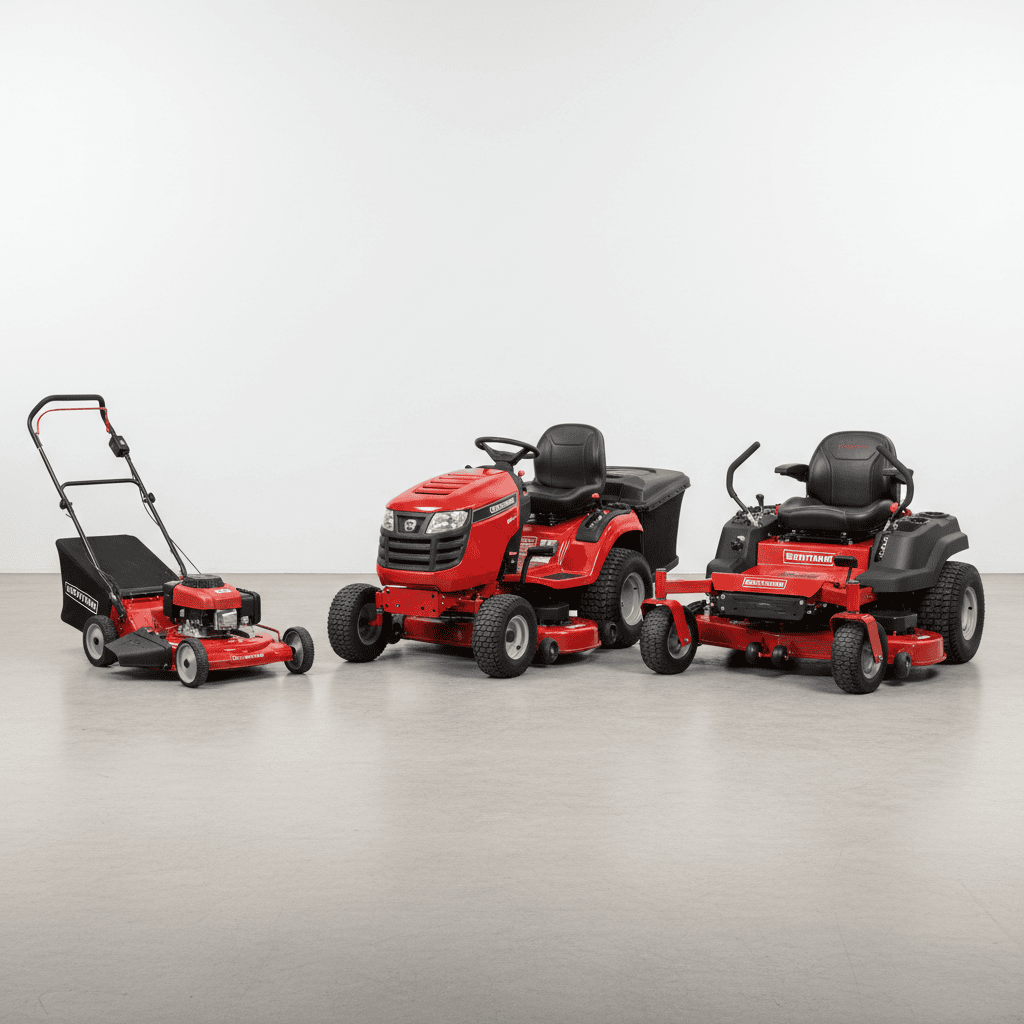
Craftsman manufactures three primary lawn mower categories, each with slightly different oil-change procedures:
- Push mowers: Lightweight, engine-mounted horizontally on the deck. Oil capacity typically ranges from 18 to 48 oz (0.5 to 1.5 quarts). Drain plug is usually accessible from underneath or the side of the deck.
- Riding mowers: Larger machines with the engine positioned vertically. Oil capacity typically ranges from 1.5 to 2 quarts. Drain access is usually from beneath the engine or through a side panel.
- Zero-turn radius (ZTR) mowers: Commercial-grade riding mowers. Oil capacity varies by model (2 to 4 quarts). Drain plugs are often more accessible due to professional-grade design.
Check your owner’s manual to confirm your specific model type, oil capacity, and recommended grade. If you’ve misplaced the manual, search online for “Craftsman [model number] owner’s manual” to download a digital copy.
Gather Tools and Materials
Before starting, assemble the following items to avoid interruptions:
- Oil drain pan: A shallow pan to catch draining oil (minimum 2-quart capacity for riding mowers).
- Wrench or socket set: To remove the drain plug (typically 14mm, 15mm, or 17mm).
- New oil: Correct grade and quantity for your mower model (see Common Craftsman Models Reference below).
- Oil filter wrench (if applicable): For spin-on filters on riding mowers.
- New oil filter (if equipped): Match your mower’s specifications.
- Rags or paper towels: For wiping spills and checking the dipstick.
- Funnel: To pour new oil without spillage.
- Jack or ramps (optional): For better access to the drain plug on riding mowers.
Refer to your manual to confirm oil grade and capacity. Most Craftsman mowers use SAE 30 for warm climates or 10W-30 for variable temperatures.
Prepare Your Mower for Oil Change
Proper preparation ensures safety and optimal oil drainage:
- Run the engine briefly (2 to 3 minutes): Warm oil flows more freely and carries out contaminants better than cold oil. However, do not overheat the engine; aim for hand-warm, not hot.
- Turn off the engine and wait 5 minutes: Allow the engine to cool slightly so you don’t burn yourself on hot components.
- Disconnect the spark plug wire: Pull the wire cap off the spark plug to prevent accidental ignition while working.
- Position the mower safely: Place on a level surface or use a ramp to safely access the drain plug. For riding mowers, you may need to tilt or use a jack to reach the plug underneath.
- Place the drain pan directly under the plug: Ensure it’s positioned to catch all draining oil.
Drain the Old Oil
This is the core step for all Craftsman mower types:
- Locate the drain plug: On push mowers, it’s typically on the side or bottom of the engine. On riding mowers, it’s usually beneath the engine block. Consult your manual if unsure.
- Position the drain pan: Slide it directly under the plug to catch all oil.
- Remove the drain plug: Using the correct wrench size, turn the plug counterclockwise. Once hand-tight, unscrew slowly and carefully, hot oil will flow out quickly. If the plug is stuck, apply penetrating oil (like WD-40) and wait 10 to 15 minutes before trying again.
- Allow complete drainage: Let the oil drain for 5 to 10 minutes. You’ll notice the flow slows significantly; wait until drips are minimal before proceeding.
- Wipe and reinstall the drain plug: Use a rag to clean the plug, then screw it back in hand-tight. Do not over-tighten, you can strip the threads or crack the plug. If your manual specifies a torque value (usually 15 to 25 ft-lbs), use a torque wrench for accuracy.
- Dispose of old oil safely: Pour used oil into a sealed container. Take it to a local recycling center, auto parts store (many accept free oil disposal), or hazardous waste facility.
Replace the Oil Filter (If Equipped)
Many Craftsman riding mowers include a spin-on oil filter; push mowers typically do not. Check your manual to confirm whether your model has one.
- Locate the filter, usually mounted vertically on the engine block.
- Place the drain pan underneath the filter to catch residual oil.
- Using an oil filter wrench, turn the filter counterclockwise until it’s hand-loose.
- Unscrew by hand and carefully set aside.
- Wipe the filter mounting surface clean with a rag.
- Apply a thin layer of new oil to the rubber gasket of the new filter (do not oil the threads).
- Screw the new filter on by hand until the gasket contacts the mounting surface, then turn an additional three-quarter turn. Do not use the filter wrench to tighten.
For cartridge-style air/oil filters:
Some older Craftsman models use cartridge filters. Check your manual for the specific replacement procedure, as it varies by design. To evaluate matched hardware tolerances, consult our detailed overview of marshall stanmore iii vs harman kardon onyx studio 8.
Add New Oil and Check the Level
This step ensures you add the correct amount without overfilling:
- Pour new oil into the filler cap opening: Use a funnel to minimize spills. Add oil slowly in half-quart increments for push mowers or one-quart increments for riding mowers.
- Replace the filler cap: Screw it back on securely.
- Wait 2 to 3 minutes: This allows oil to settle in the pan and drain from the filter (if replaced).
- Check the dipstick: Pull the dipstick fully out, wipe it clean with a rag, reinsert it completely, then pull it out again to read the level. The oil should reach the “Full” mark or the top hash line, not above it.
- Adjust as needed: If too low, add a small amount of oil and recheck. If too high, drain a small amount using the drain plug or a hand pump.
- Replace the dipstick securely: Ensure it’s fully seated to prevent oil leaks.
Never overfill. Excess oil can cause foaming, poor engine lubrication, and leaks. When planning workspace deployment, consider the engineering criteria outlined in our dyson v8 cyclone vs bissell featherweight stick guide.
Common Craftsman Models: Oil Capacity and Type Reference
Use this quick-reference table to confirm specifications for your mower:
| Mower Type | Typical Capacity | Recommended Oil Grade | Change Interval |
|---|---|---|---|
| Push mower (3 to 5 HP) | 18 to 32 oz (0.5 to 1 qt) | SAE 30 or 10W-30 | Every 50 hours or annually |
| Push mower (larger frame) | 32 to 48 oz (1 to 1.5 qt) | SAE 30 or 10W-30 | Every 50 hours or annually |
| Riding mower (14 to 18 HP) | 1.5 to 2 qt | 10W-30 or SAE 30 | Every 50 hours or twice annually |
| Zero-turn mower (22+ HP) | 2 to 3 qt | 10W-30 | Every 50 to 100 hours |
- SAE 30: Use in warm climates (above 50°F) where temperature stays consistent. Flows less freely in cold conditions.
- 10W-30: Use in variable or cold climates. The “10W” rating ensures easier starting in cold weather, while the “30” rating maintains protection at higher temperatures.
Always consult your owner’s manual for your specific model, as recommendations vary.
Maintenance Tips After an Oil Change
Keep your Craftsman mower running smoothly with these post-change practices:
- Check oil level weekly during mowing season: A quick dipstick check takes 30 seconds and prevents low-oil damage.
- Change oil at recommended intervals: Most Craftsman mowers require an oil change every 50 hours of use or at the start of each mowing season, whichever comes first. Some riding mowers may go 100 hours between changes.
- Monitor for leaks: After your first mow post-change, place a piece of cardboard under the mower overnight. Look for oil spots, which could indicate a loose drain plug or filter.
- Store oil safely: Keep new oil in a cool, dry place away from direct sunlight. Sealed containers last indefinitely; opened containers should be used within a season.
- Replace the air filter annually: A clogged air filter reduces engine efficiency and increases oil degradation.
Buyer FAQs: How To Change Lawn Mower Oil Craftsman Solved
Q: Can I use synthetic oil in my Craftsman lawn mower?
A: Most Craftsman mowers are designed for conventional mineral oil. However, some newer models support synthetic 10W-30. Check your owner’s manual before switching. Synthetic oil lasts longer between changes but is more expensive.
Q: What if I overfill the oil?
A: Overfilling causes foaming, which reduces lubrication and can damage the engine. If you overfill, drain excess oil using the drain plug or a hand pump until the dipstick reads “Full.” Never run the engine with overfilled oil.
Q: Do push mowers have oil filters?
A: Most small push mowers do not have spin-on oil filters. Instead, they use a cartridge-style air filter that also filters oil mist. Some larger push mowers and most riding mowers have dedicated oil filters. Consult your manual.
Q: How do I know if my mower’s engine is warm enough to drain oil?
A: After running the engine for 2 to 3 minutes, the engine should feel warm to the touch (around 100 to 110°F), but you should still be able to hold your hand on the engine block for 3 seconds without burning yourself. If it’s too hot to touch, let it cool for 5 minutes.
Q: Can I mix old and new oil?
A: No. Always drain all old oil and replace with fresh oil. Mixing introduces contaminants and reduces the effectiveness of the new oil’s additives.

Pros
- Large-size design named in product title
- Sharpening and balancing functions listed
- Listed as a new upgraded version

Pros
- Adjustable 15-to-45-degree range in title
- Sharpening and balancing functions listed
Pros
- Includes replacement gaskets and a 98079-55846 spark plug
- Matches Honda HRR216 and HRS216 lawn mower models
- Designed around the 16100-Z8B-901 carburetor specification
Cons
- Restricted to select Honda GCV160 mower applications
- Installation requires basic mechanical tools and skills
Related Maintenance and Operating Guides
To keep your equipment running at peak operating efficiency, explore our related technical walkthroughs and maintenance tutorials:
- Consult our detailed breakdown on bissell crosswave hydrosteam vs shark stainforce.
- Consult our detailed breakdown on heavy-duty chainsaw buyer guide.
Oil Change Safety Background
Drain warm oil into a sealed container, wipe up spills at once, and take used oil to a local recycling center. For general background on outdoor equipment maintenance, see American National Standards Institute (ANSI).