Quick Answer: How To Change Oil Lawn Mower 2?
To change the oil on your lawn mower, warm the engine briefly, locate and open the drain plug (or tilt the mower if no plug exists), drain the old oil completely, replace the oil filter if your model has one, refill with the manufacturer-recommended oil type and amount listed in your owner’s manual, check the oil level with the dipstick,…

Pros
- High-efficiency 1600W 24V brushless motor ensures lasting power and reduced wear
- Crawler tracks provide excellent grip and stability for extreme slopes and varied landscapes
- Remote adjustable cutting height chassis offers flexible mowing customization
- Dual manganese steel blades deliver precision cutting with natural mulching benefits
- Hybrid power and snow plow support multi-season all-terrain use
Cons
- Requires continuous remote control input and lacks full autonomous navigation
- Oil-electric hybrid system may need fuel handling and extra maintenance attention
- Product data omits specifics on cutting width, overall dimensions, and runtime
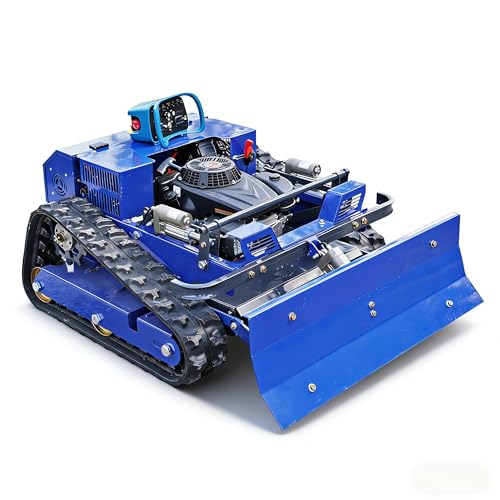
The AIWEIYA Remote Control Lawn Mower with Snow Plow is a crawler track all-terrain machine built for challenging outdoor spaces. Its oil-electric hybrid design and adjustable chassis create a sturdy first impression suited to large turf and extreme slopes.
In performance, the 1600W 24V permanent magnet brushless motor paired with a precision gearbox supplies reliable power and durability. Dual manganese steel blades cut cleanly while mulching clippings for soil benefits. Crawler tracks enable stable travel across lawns, hills, reed beds, terraces, orchards, parks, and wetlands, with remote 360 degree rotation and smooth climbing.
Key considerations include the need for ongoing remote operator control instead of autonomous function. The hybrid power setup may involve fuel management. Available details do not cover cutting width or full dimensions.
This mower delivers strong value for property owners managing large or steep terrains who want remote convenience plus snow plow versatility for multi-season work.
Pros
- Powerful 1600W brushless motor combined with gearbox for superior longevity and track drive performance
- Outstanding slope capability up to 45° and in-place rotation for complex or hilly properties
- Fully remote adjustable chassis height enables quick changes without manual intervention
- Manganese dual blades promote both clean cuts and natural lawn fertilization
- Broad terrain versatility covering yards, hills, orchards, and weed-heavy zones
Cons
- Depends entirely on remote control rather than autonomous GPS navigation for hands-free operation
- Oil-electric hybrid setup requires regular fuel and oil maintenance unlike pure battery models
- Oriented toward large professional or estate use, which may exceed needs of small residential lawns
The AIWEIYA Remote Control Lawn Mower is a professional oil-electric hybrid crawler track model built for landscape and estate grass cutting. Its rubber track chassis and solid construction convey immediate durability suited to demanding outdoor environments and steep ground.
Performance centers on the 1600W 24V brushless motor that powers efficient cutting with remote-adjustable heights from 1.1 to 5.9 inches. Two-piece manganese blades deliver precise fine cuts that help fertilize the lawn, while the crawler design supports 360-degree rotation and climbing slopes up to 45 degrees across lawns, hills, orchards, and dense bush.
Key considerations include the requirement for continuous remote operation rather than autonomous navigation, plus the hybrid system that needs ongoing oil and fuel management. Users should confirm suitability for their specific property size given the focus on large-scale professional applications.
This mower delivers strongest value for landscape professionals and estate owners managing expansive or sloping turf who prioritize power, slope ability, and remote flexibility over fully hands-free robotic features.

Pros
- Intuitive remote control and adjustable height deliver precise, customized mowing without constant physical effort.
- Crawler tracks and hybrid power handle steep slopes, large lawns, and varied terrain with reliable stability.
- Alloy blades with rebound function promote even cuts and machine protection similar to traditional mowers.
- Snow plow attachment adds multi-season versatility for clearing snow and obstacles.
- Zero-turn capability improves navigation in complex landscapes.
Cons
- Requires continuous remote operation rather than fully autonomous robotic navigation, so an operator must remain present.
- Hybrid oil-electric design may involve fuel and oil maintenance not present in pure battery models.
- No detailed runtime, battery, or range specifications provided, limiting planning for very large properties.
Overview and Design
The INFRONT Remote Control Lawn Mower combines a crawler track all-terrain chassis with hybrid oil-electric power and a dedicated snow plow attachment. Built around a brushed motor and remote operation system, it targets large lawns, steep slopes, and uneven ground. Immediate impressions center on its multi-season flexibility and solid tracked platform that prioritizes stability over fully autonomous robotic behavior.
Performance and Key Features
Remote control allows real-time height adjustments and precise navigation, while the zero-turn design helps maneuver around obstacles. Two alloy blades deliver even cuts comparable to push mowers and include a rebound function that protects the unit when hard objects are struck. The crawler tracks maintain traction on complex terrain, and the snow plow converts the machine for clearing driveways and pathways in winter, making it a year-round tool grounded in the listed capabilities.
Drawbacks and Considerations
Because operation depends on continuous remote input, it is not a set-and-forget robotic mower and requires an attentive operator. The hybrid oil-electric powertrain may need fuel and oil attention that pure electric units avoid. Specifics such as exact runtime, remote range, or physical dimensions are not provided, so buyers should verify suitability for their property size and slope steepness before purchase.
Verdict
This INFRONT model suits homeowners with large or sloping lawns who value hands-on remote control, all-terrain tracks, and seasonal snow-clearing versatility. It delivers strong value for users seeking a flexible, powerful alternative to traditional walk-behind or purely autonomous mowers when active supervision is acceptable.
Pros
- Crawler tracks excel on steep slopes and uneven terrain where wheeled mowers struggle
- Remote operation and adjustable height give precise control without physical strain
- Hybrid power and dual alloy blades deliver consistent cutting power and longevity
- Zero-turn capability improves navigation in complex or obstacle-filled lawns
Cons
- Requires continuous remote operator presence rather than fully autonomous robotic scheduling
- Hybrid oil-electric system involves fuel management and potential engine maintenance not needed in pure battery models
- Limited detailed runtime or dimension data may require additional verification for specific property sizes
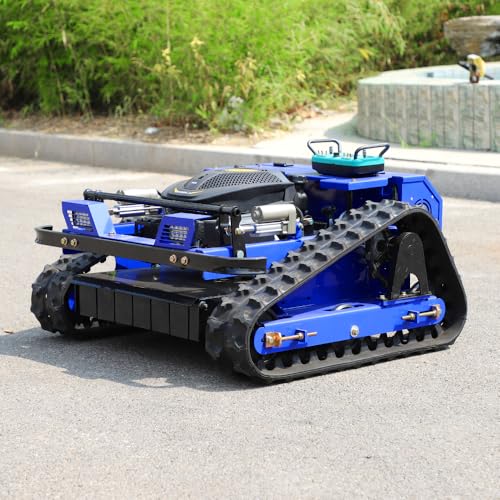
The INFRONT Remote Control Lawn Mower is a hybrid oil-electric crawler-track unit designed for large lawns and steep slopes. Its tracked chassis and sturdy build create an immediate impression of all-terrain capability, combining remote convenience with traditional mower durability for users seeking something beyond standard wheeled or fully autonomous robots.
In real-world performance the mower shines through its remote control for effortless operation, adjustable cutting height for customized results, and dual alloy blades that deliver even cuts with rebound protection against hard objects. The powerful gas engine paired with a brushed motor provides robust low-consumption power, while the zero-turn design and crawler tracks maintain stability on uneven ground, slopes, and around obstacles for both residential and commercial tasks.
Potential drawbacks include the need for continuous remote operation instead of set-and-forget autonomy, plus the hybrid system which requires fuel handling and occasional engine care. Exact runtime figures and full dimensions are not detailed in available specifications, so users should match it carefully to their acreage and terrain demands.
Overall this INFRONT model is ideal for property owners or professionals managing large, sloping, or complex lawns who value remote precision, traction, and hybrid power. Those seeking completely hands-off robotic mowing may prefer pure battery alternatives, but for versatile all-terrain control it delivers strong practical value.
Before You Start
Before you begin, it is important to understand the differences between mower types and gather the correct information and supplies. Proper preparation makes the job easier and prevents costly mistakes.
Is Your Mower a Walk-Behind or Riding Model?
Walk-behind mowers typically have smaller engines and may lack an oil filter, relying on simple splash lubrication. Riding mowers have larger engines, often include an oil filter, and hold more oil. The basic procedure is similar, but the exact steps, drain plug location, and oil capacity differ. Knowing your mower type helps you anticipate what you will need and where to look for components.
Where Do I Find the Correct Oil Type and Capacity?
The most reliable source of information is your owner’s manual, which lists the exact oil type, viscosity, and capacity for your specific model. If you do not have the manual, many manufacturers publish specifications online. You can also check the label near the oil fill cap or dipstick, which often indicates the recommended oil weight. Never guess, as using the wrong oil or overfilling can damage the engine.
Warming and Draining the Engine
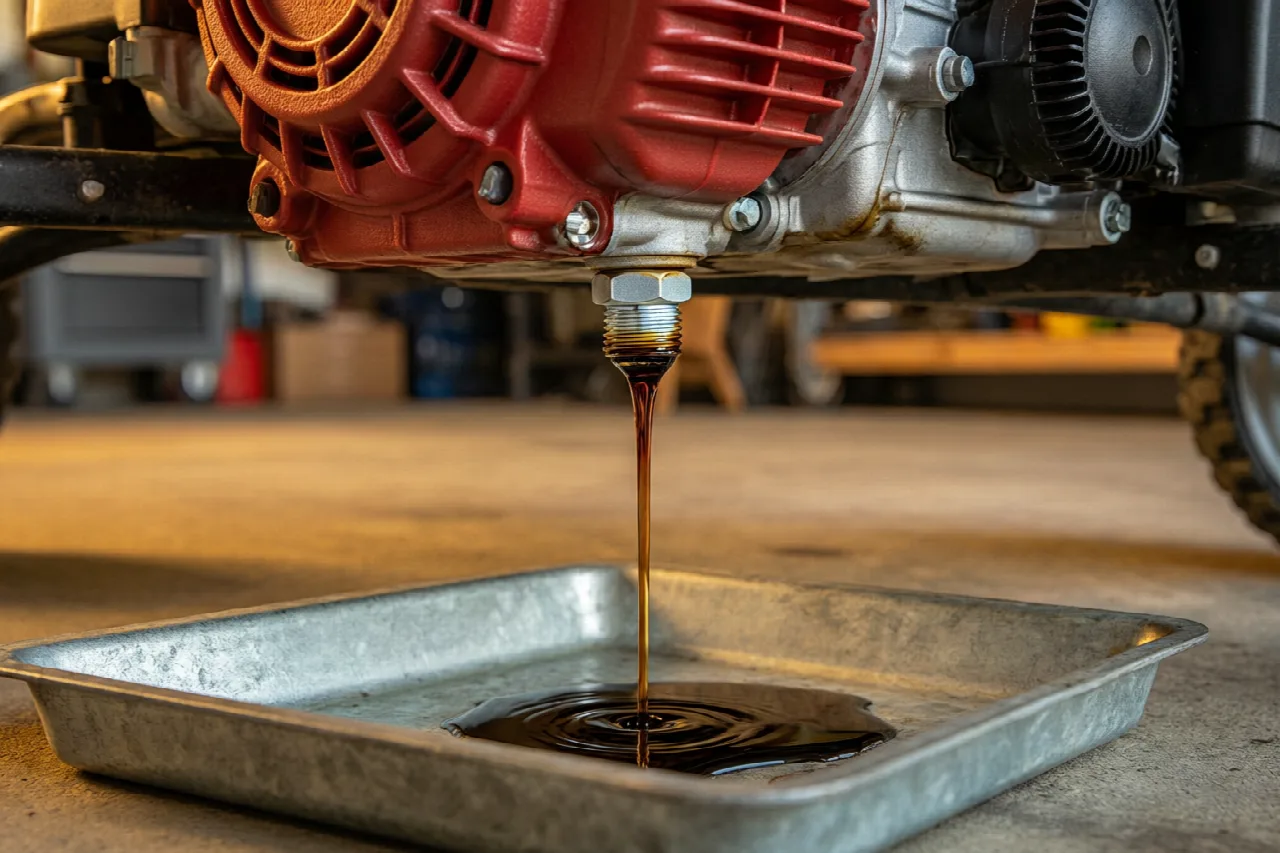
Draining the old oil is the core of the oil change. Warming the engine first and using the correct technique ensures the oil is removed completely and safely.
Why Should I Warm the Engine First?
Warming the engine thins the oil, reducing its viscosity so it flows out faster and more completely. Run the mower for about five minutes, then turn it off and let it cool slightly. Warm oil also carries more suspended contaminants, leaving the engine cleaner. Avoid draining oil that is hot enough to cause burns; a warm but not scalding temperature is ideal.
How Do I Access the Drain Plug or Tilt Drain Point?
Most mowers have a drain plug at the bottom of the engine or oil pan, accessible from underneath. On riding mowers, you may need to raise the deck or access a cutout in the frame. If your mower has no drain plug, you can drain through the oil fill tube by tilting the mower. Tilt it with the air filter and carburetor facing up to prevent oil and fuel from leaking into them, and hold it steady over a drain pan until the oil stops flowing.
What Container Should I Use for Old Oil?
Use a sturdy drain pan or catch container large enough to hold the full oil capacity of your mower. A pan with a spout or a wide, shallow design makes pouring the used oil into a disposal container easier. Avoid using containers that may tip over or leak. Once drained, transfer the oil to a sealed container for proper disposal.
Oil Filter Replacement
If your mower is equipped with an oil filter, replacing it during an oil change keeps the new oil clean and protects the engine from wear. Users looking for related component recommendations can explore our marshall stanmore iii vs harman kardon onyx studio 8 breakdown.
Does My Mower Have a Replaceable Oil Filter?
Many riding mowers and larger engines include a spin-on oil filter, while most small walk-behind engines do not. Check your owner’s manual or inspect the engine for a cylindrical filter housing near the oil pan. If your mower has no filter, you can skip this step, but be sure to drain the old oil completely to remove contaminants.
How Do I Remove and Install a New Filter?
After draining the oil, use an oil filter wrench to loosen the old filter by turning it counterclockwise, then remove it by hand. Apply a light coat of fresh oil to the rubber gasket on the new filter, screw it on by hand until snug, and tighten it an additional three-quarters of a turn. Do not over-tighten, as this can damage the gasket and cause leaks. Wipe away any spilled oil before refilling. Before finalizing equipment decisions, refer to our comprehensive dyson v8 cyclone vs bissell featherweight stick comparison.
Adding Fresh Oil
Refilling with the correct type and amount of oil is critical for engine performance. Adding too little or too much can cause serious problems.
How Much Oil Does My Mower Need?
The oil capacity varies by model and is listed in your owner’s manual. Small walk-behind mowers typically hold about 18 to 20 ounces, while riding mowers may hold 1.5 quarts or more. Always measure carefully and add oil gradually. Do not rely on estimates; check the manual or the label near the fill cap for the exact capacity. For broader ecosystem context, read through our operational guide on bissell crosswave hydrosteam vs shark stainforce.
What Oil Weight Should I Use?
Most small engines use SAE 30 for warmer temperatures or 10W-30 for a broader temperature range. Some modern engines may recommend a synthetic blend or a specific multi-grade oil. The correct weight depends on your engine and the climate in which you operate. Check your owner’s manual for the manufacturer’s recommendation, and use a high-quality oil that meets the specified standards.
How Do I Verify the Correct Level?
After adding oil, check the level with the dipstick. Insert the dipstick fully without screwing it in, then remove it and read the level. The oil should sit between the minimum and maximum marks. Add small amounts at a time, rechecking after each addition to avoid overfilling. Overfilling can cause foaming, leaks, and engine damage, so take your time.
Safe Disposal
Used engine oil is hazardous and must be handled responsibly. Proper disposal protects the environment and complies with the law.
Where Can I Recycle or Dispose of Used Motor Oil?
Many auto parts stores, service stations, and recycling centers accept used motor oil free of charge. Some municipalities offer designated drop-off sites or curbside collection programs. Store the used oil in a sealed, leak-proof container, and never mix it with other fluids such as antifreeze or solvents. Check with local facilities for their specific requirements, and never pour oil down a drain, onto the ground, or into the trash.
Related Maintenance and Operating Guides
To keep your equipment running at peak operating efficiency, explore our related technical walkthroughs and maintenance tutorials:
- Consult our detailed breakdown on heavy-duty chainsaw buyer guide.
- Consult our detailed breakdown on durable ride-on lawn tractor guide.
Where to Learn More About Oil Changes
A quick oil change goes smoothly when the drain pan and funnel are ready before you tip the mower. For a wider look at safe practices around small engines, consider American National Standards Institute (ANSI).