Quick Answer: Warm your Toro mower’s engine for 30 seconds, then turn it off. Locate the drain plug underneath the deck, place a pan below it, and remove the plug to let old oil drain for 5-10 minutes. Replace the drain plug, locate the oil fill cap on top of the engine, and pour in the recommended oil type and quantity until the dipstick reads full. Run the engine briefly to circulate the new oil, then verify the level again.
What You’ll Need Before Starting
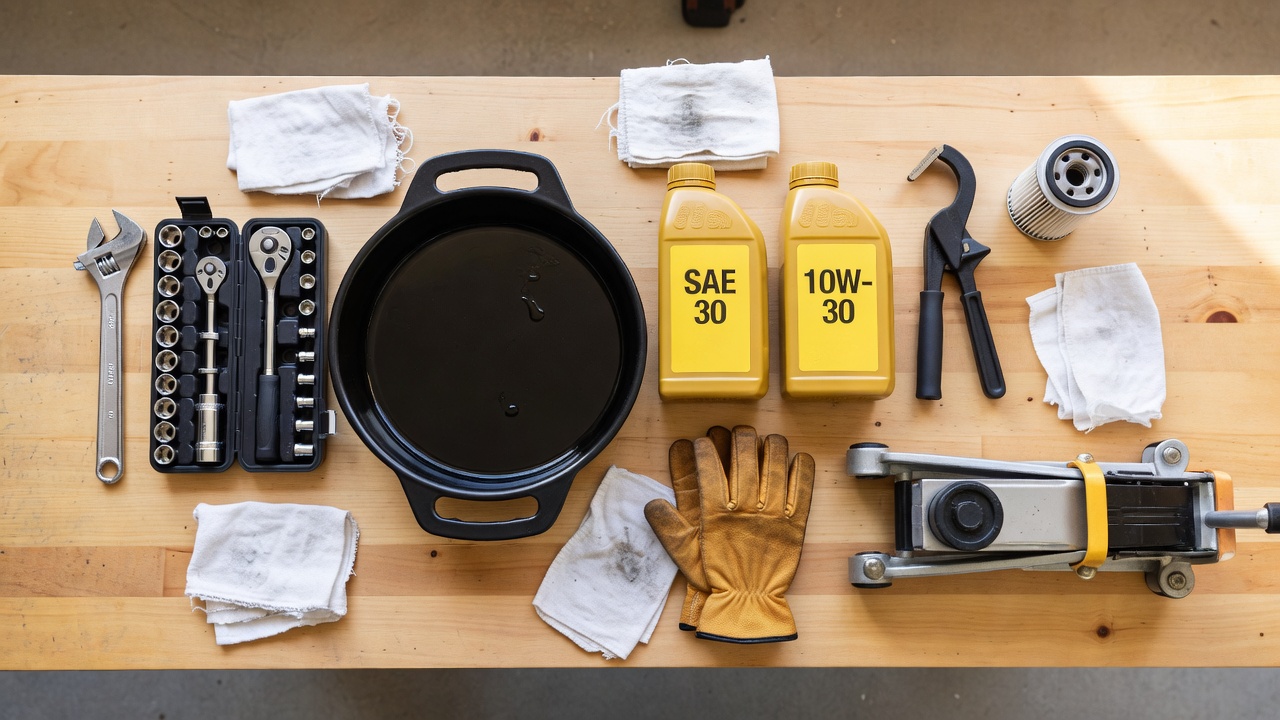
Changing oil in your Toro lawn mower requires minimal tools and materials, making this a straightforward maintenance task you can complete in 15-20 minutes.
Essential tools and supplies:
- Adjustable wrench or socket set (typically 10mm, 12mm, or 14mm depending on your model)
- Oil drain pan (at least 2-3 quart capacity)
- New oil meeting Toro specifications (SAE 30 for warm climates or 10W-30 for colder conditions)
- Oil filter wrench (if your model has a replaceable filter)
- Replacement oil filter (check your manual for the correct part number)
- Rags or paper towels for cleanup
- Work gloves for protection
- Jack and jack stands (for riding mowers only, if needed for drain plug access)
Finding your mower’s oil capacity: Consult your Toro owner’s manual, which specifies exact oil type and capacity. Push mowers typically require 0.5-0.6 quarts, while riding mowers need 1.5-2 quarts depending on the engine size. You can also find this information on the manufacturer’s website by entering your model number.
Safety Precautions and Preparation
Before you begin, take these essential safety steps to protect yourself and your equipment.
Pre-oil change safety checklist:
- Park the mower on a level surface in a well-ventilated area, away from children and pets
- Disconnect the spark plug wire to prevent accidental engine start
- Allow the engine to cool for at least 5 minutes if it has been running (warm oil is safer than hot oil, but cold oil is easier to handle)
- Place the mower on level ground and engage the parking brake (for riding mowers)
- Never work under a mower raised only by a jack; use appropriate jack stands
- Wear work gloves and safety glasses to protect against splashes and debris
Why warm up the engine? Warming the engine for 30 seconds before turning it off helps thin the oil and allows it to drain more completely. Warm oil flows faster and leaves less residue in the engine. However, the oil should not be hot enough to burn you—aim for warm to the touch.
Step-by-Step Oil Drain Process
Following these steps will ensure you safely remove all old oil from your Toro mower.
Locating and accessing the drain plug:
On most Toro push mowers, the drain plug is located on the underside of the engine or at the lowest point of the crankcase. To access it on some models, you may need to tip the mower on its side (tip toward the carburetor side only to prevent oil from entering the carburetor). On riding mowers, the drain plug is typically underneath the engine near the front or center of the mower deck. Check your manual for the exact location specific to your model.
Removing old oil:
- Position your drain pan directly underneath the drain plug
- Use an adjustable wrench or appropriate socket to loosen the drain plug by turning counterclockwise
- Once loose, carefully unscrew it by hand and set it aside on a clean rag
- Allow the old oil to drain completely into the pan—this typically takes 5-10 minutes
- Wipe the drain plug clean with a rag and inspect the washer (metal ring). If it’s damaged or cracked, replace it with a new one
- Reinstall the drain plug by threading it in by hand first, then tightening with your wrench (do not overtighten, as this can strip the threads—snug is sufficient)
Replacing the oil filter (if applicable): Some Toro models have replaceable spin-on or cartridge filters. If your mower has a filter, use an oil filter wrench to remove the old filter by turning it counterclockwise. Apply a thin layer of new oil to the rubber gasket of the replacement filter, then hand-tighten it until the gasket contacts the engine, then turn an additional three-quarter turn.
Installing New Oil and Checking Levels
Adding the correct amount and type of new oil is critical for proper engine function and longevity.
Adding new oil:
- Locate the oil fill cap on top of the engine—it typically has an oil can symbol printed on it
- Remove the cap and set it aside in a clean location
- Insert a funnel into the oil fill opening to prevent spills
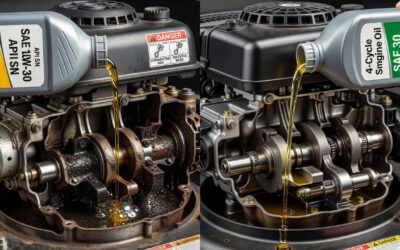
- Slowly pour in the recommended oil type and capacity for your specific model
- After pouring approximately three-quarters of the recommended amount, check the dipstick level (pull it out, wipe it clean, reinsert fully, then pull out again to read the level)
- Continue adding oil in small increments until the level reaches the full mark
- Replace the oil fill cap securely
Verifying correct oil level:
Run the engine at idle for 30 seconds, then turn it off and wait 2-3 minutes for the oil to settle. Check the dipstick again to confirm the level is at or just below the full mark. The dipstick should show the oil touching the full line without exceeding it. Overfilled oil can damage seals and cause leaks, while underfilled oil can lead to engine wear.
Differences Between Toro Push and Riding Mowers
While the oil change process is similar across Toro models, there are important variations to be aware of.
| Feature | Push Mowers | Riding Mowers |
|---|---|---|
| Oil capacity | 0.5-0.6 quarts | 1.5-2.5 quarts |
| Drain plug location | Underside of engine; may require tipping mower | Underneath engine near center or front of deck |
| Oil filter | Most models lack replaceable filters | Many models include spin-on filters |
| Access difficulty | Easy; minimal disassembly needed | May require mower lift or jack for comfortable access |
| Engine warm-up time | 15-20 seconds sufficient | 30-60 seconds recommended |
Push mower considerations: When tipping a push mower to access the drain plug, always tip it toward the carburetor side (usually the side without the air filter). This prevents oil from entering the carburetor and carb intake, which can cause starting problems. If you’re uncomfortable tipping the mower, some models allow drain plug access without tipping—check your manual.
Riding mower considerations: Riding mowers often provide easier drain plug access without tipping. However, you may need to raise the mower deck or use jack stands for comfortable access. Always secure the mower with jack stands before working underneath it. Some riding mowers have multiple drain plugs or require filter removal in addition to drain plug emptying.
How Often Should You Change Oil in a Toro Mower?
Regular oil changes extend engine life and maintain your mower’s performance and warranty coverage.
- First oil change: After the first 5 operating hours (new mowers may have break-in oil that needs early replacement)
- Ongoing schedule: Every 50 operating hours or at least once per year, whichever comes first
- Seasonal use: If you use your mower heavily during peak mowing season, you may need to change oil 2-3 times per season
- Commercial or frequent use: Professional landscapers and those mowing several times weekly should check oil level before each use and change oil every 25-30 hours
- Cold climate storage: Change oil before storing your mower for winter to prevent acid buildup in the old oil during the off-season
Tracking maintenance: Keep a log of oil change dates and operating hours. Many Toro mowers have hour meters on the dashboard (riding mowers) or you can track hours manually by noting when you perform maintenance.
Troubleshooting Common Issues
If you encounter problems during your oil change, these solutions address the most common issues.
Stuck or difficult drain plug: If the drain plug won’t turn, apply penetrating oil (like WD-40) around the plug’s base and wait 10-15 minutes. Use a socket wrench rather than an adjustable wrench for better leverage. If the plug is severely stuck, do not force it—applying too much pressure can strip the threads. Consult your Toro dealer for professional removal if needed.
Overfilled oil: If you’ve added too much oil, place the drain pan underneath and carefully open the drain plug slightly to let excess oil drip out. Check the dipstick frequently until you reach the correct level. Do not run an overfilled engine, as this can damage seals and cause leaks.
Oil leaking after change: If oil leaks after you’ve completed the oil change, check that the drain plug is tight (but not over-tightened) and that the washer is seated properly. If the leak persists, remove the drain plug, inspect the washer for damage, and replace it if needed. Leaks from the oil filter indicate the filter gasket wasn’t seated correctly—remove and reinstall it, applying a thin layer of oil to the new gasket first.
Black or dirty new oil after short running: This is normal. Old oil residue and metal particles from the engine will darken new oil initially. However, if the oil becomes very dark or you notice metal particles after a few hours of use, turn off the engine and check for internal damage. Consult your dealer if you suspect mechanical problems.
Frequently Asked Questions
Can I use synthetic oil in my Toro lawn mower?
Many Toro mowers can use synthetic oil (like 10W-30 synthetic or full synthetic equivalents), which offers better protection and longer drain intervals. However, check your owner’s manual before switching to synthetic, as some older models specify conventional oil only. Synthetic oil is more expensive but may reduce overall maintenance costs if you can extend drain intervals per your manual’s guidance.
What should I do with old lawn mower oil after draining it?
Never pour old oil down the drain or into the ground—it’s environmentally harmful and illegal in most areas. Instead, store the old oil in a sealed container and take it to a local recycling center, automotive service facility, or hazardous waste collection site. Many retailers that sell oil (including big-box home improvement stores) accept used oil for free recycling.
Why is my mower burning oil or losing oil level quickly?
If your mower consumes oil faster than normal, possible causes include worn piston rings, a cracked engine block, or an overfilled crankcase. Check that you filled the oil to the correct level—overfilling is the most common cause of rapid oil loss. If the level is correct but oil is still disappearing, the engine may need professional inspection. Do not continue operating a mower with insufficient oil, as this causes engine damage.
Do I need to change the spark plug when I change the oil?
Spark plug replacement is a separate maintenance task with its own schedule (typically every 100-150 operating hours). While changing spark plugs while you’re already servicing the mower is convenient, it’s not required as part of an oil change. Consult your manual for your specific mower’s spark plug change interval and procedure.