Direct Answer: Who Sharpens Mower Blades
Mower blades are sharpened by local lawn mower repair shops, hardware stores with sharpening services, small engine repair specialists, equipment dealers, blade sharpening specialists, and manufacturers. You can also sharpen blades yourself using basic tools like a file or angle grinder. The best choice depends on your budget, how quickly you need the work done, your comfort level with DIY projects, and blade type.

Pros
- Includes pre-installed 30° and extra 40° angle brackets
- 7-inch 60-grit ceramic grinding wheel per listing
- Lists support for high-lift, low-lift, gator, and flat blades
- Includes a blade balancer and six center-hole adapters
- Package lists extra replacement sandpapers
Cons
- Weighs 35 pounds, so it is not very portable
- Vibration reduction and sharpening performance are manufacturer claims

Pros
- Sharpener offers seven angles from 15 to 45 degrees
- Magnetic cone balancer for checking blade balance
- Listed as replacement for 5005A, 339075B, and 42-047
- Combines sharpening and balancing in one listing
Cons
- Compatibility with most blades is seller-stated, not tested
- Sharpening and balance benefits are manufacturer-stated

Pros
- Brown corundum stone, which the maker says resists melting at high heat
- Stainless steel base, described as avoiding plastic base wear
- Quick install, stated as about 10 seconds on a drill
- Built for lawn mower and lawn tractor blades, plus hoes and similar edges
Cons
- Requires a separate electric drill; the drill is not included
- Manufacturer recommends about 4000 RPM, as the stone underperforms at low speed
Local Lawn Mower Repair Shops
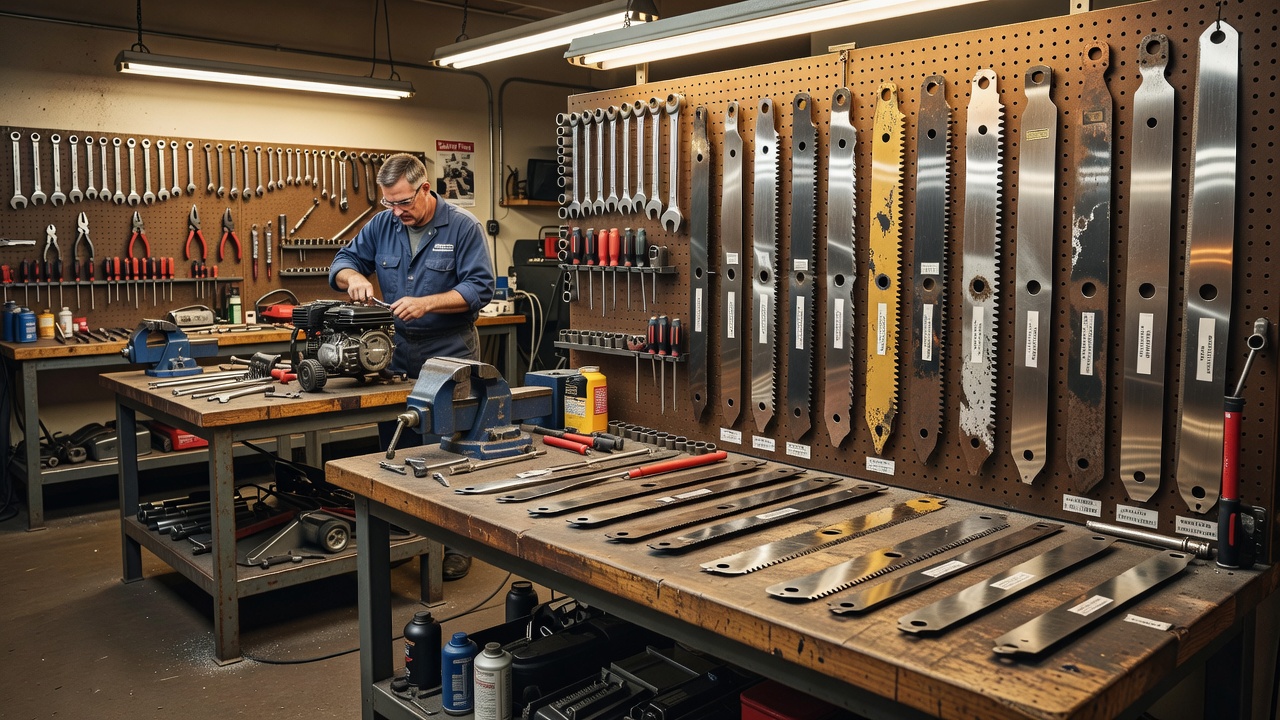
Local lawn mower repair shops are typically the most convenient and accessible option for most homeowners. These businesses specialize in small engine maintenance and are equipped to handle blade sharpening as part of routine service.
What They Offer
Repair shops provide professional blade sharpening, often as part of seasonal maintenance packages. Many also inspect blades for damage, balance them after sharpening, and check for safety issues. Some shops will sharpen blades while you wait, though this depends on how busy they are during peak seasons (spring and early summer).
Cost and Turnaround
Professional sharpening at local shops typically costs between $15 and $40 per blade, depending on blade condition and your location. Turnaround time is usually 1 to 3 business days for drop-off service, though some shops offer same-day or next-day service during off-season. If you need multiple blades sharpened or other maintenance done, you may receive package discounts.
How to Find One
Search online for “mower repair near me” or “small engine repair [your city].” Check Google reviews and ask neighbors for recommendations. Call ahead to confirm they offer blade sharpening and ask about current wait times, especially during spring.
Hardware Stores and Equipment Dealers
Major hardware chains and lawn equipment dealers often provide sharpening services, either in-store or through partnerships with local service providers. For troubleshooting and reliability insights, consult our in-depth z890 vs x870e motherboard report.
In-Store Sharpening Services
Stores like Home Depot and Lowe’s frequently offer blade sharpening at customer service desks or through in-store repair stations. Home Depot’s blade sharpening service typically costs around $8-$15 per blade and takes 1 to 2 weeks, though some locations offer faster service. Local lawn equipment dealers often provide faster turnaround since sharpening is core to their business model.
Mail-In Options
Some hardware stores and dealers accept mail-in blade sharpening. You drop off or ship your blades, and they’re returned within 7, 10 business days. This option works well if you have multiple blades or want to batch them with other maintenance tasks. Readers comparing setup options can review our technical analysis on marshall stanmore iii vs harman kardon onyx studio 8.
Specialized Blade Sharpening Services
Dedicated blade sharpening businesses operate independently or online, focusing exclusively on sharpening rotary blades, reel blades, and other cutting equipment.
Mail-In Services
Online sharpening services allow you to ship blades directly to them. These businesses typically charge $10, $25 per blade plus shipping costs. Turnaround is usually 5, 10 business days from receipt. Many services include blade balancing, which helps prevent vibration and uneven cutting. Services like blade-sharpening.com and regional specialists handle both standard rotary blades and specialty reel blades for push mowers. For complementary field maintenance guidelines, examine our breakdown of dyson v8 cyclone vs bissell featherweight stick.
What They Handle
Specialized services sharpen rotary blades (the most common type), reel blades for cylinder mowers, and sometimes industrial or commercial blades. Many also offer blade balancing using precision equipment that DIY methods cannot replicate. If your blade is severely bent or cracked, most services will refuse to sharpen and recommend replacement instead.
Manufacturer and OEM Services
Some equipment manufacturers provide direct blade sharpening services through authorized service centers or mail-in programs. This is particularly relevant if your mower is under warranty or if the manufacturer offers branded maintenance services. To evaluate matched hardware tolerances, consult our detailed overview of bissell crosswave hydrosteam vs shark stainforce.
How It Works
Contact your mower’s manufacturer directly or check their website for service center locations. Many manufacturers accept blades by mail or direct drop-off at authorized dealers. Costs vary widely depending on the brand; some offer sharpening as part of annual maintenance plans.
Warranty Considerations
Using manufacturer services may preserve warranty coverage for your mower, though routine blade sharpening is typically not a covered service. However, if a blade defect is found during sharpening, manufacturer service centers are more likely to provide warranty support than third-party shops.
DIY Blade Sharpening: Tools and Methods
Sharpening mower blades yourself is entirely feasible for most homeowners and can save $15-$40 per blade. The process requires basic tools and attention to safety.
Tools You’ll Need
- Hand file (10-inch flat file or 10-inch mill file), The most common and safest DIY option. Cost: $10-$20.
- Angle grinder with metal cutting disc, Faster but requires more skill and carries higher safety risk. Cost: $40-$100 (if you don’t already own one).
- Bench grinder, Ideal if you have one; provides controlled sharpening. Cost: $50-$150.
- Vise or clamp, Holds the blade securely during sharpening.
- Safety gear, Eye protection, work gloves, and hearing protection (especially with power tools).
- Marker or crayon, Helps identify which side you’ve sharpened.
- Blade balancer (optional), A simple tool that checks blade balance. Cost: $15-$40. Prevents uneven cutting and vibration.
Step-by-Step Sharpening Process
Step 1: Safety First
Disconnect the spark plug wires from your mower to prevent accidental starting. Wear safety glasses, gloves, and long sleeves.
Step 2: Remove the Blade
Tip the mower on its side (carburetor up to prevent oil leakage). Mark the blade’s top side with a marker so you reinstall it correctly. Unbolt the blade using an appropriate wrench.
Step 3: Secure the Blade
Clamp the blade in a vise, with the cutting edge facing up and accessible.
Step 4: Sharpen the Edge
Using a hand file, stroke from the top of the blade downward at a 30 to 45 degree angle. Make 10 to 15 strokes on each side of the cutting edge to maintain balance. If using an angle grinder, use light pressure and keep the blade cool to avoid hardness loss. Always file in one direction; don’t use a back-and-forth motion.
Step 5: Check Balance
After sharpening both sides equally, hang the blade on a nail through its center hole. A properly balanced blade hangs level. If one side dips, file that side a bit more.
Step 6: Reinstall
Reattach the blade with the marked top facing up. Tighten bolts firmly (typically 35 to 90 ft-lbs, depending on your mower model).
How Often to Sharpen
Blades should be sharpened every 20 to 50 operating hours, roughly every 1 to 2 months during mowing season for typical homeowners. Signs of a dull blade include:
- Ragged or torn grass tips (rather than clean cuts)
- Brownish or white discoloration on cut grass within hours of mowing
- Increased vibration or noise from the mower
- Difficulty pushing the mower or engine struggling
Safety and Skill Level
DIY sharpening with a hand file is relatively safe and requires minimal skill; most homeowners can do it successfully. Using power tools like angle grinders carries higher risk of injury if you’re not experienced. If you’ve never done this before, start with a file. The job typically takes 30 to 60 minutes for a beginner.
Key Factors: Choosing Your Option
Professional vs. DIY Cost Comparison
| Option | Cost per Blade | Additional Costs | Turnaround |
|---|---|---|---|
| Local repair shop | $15-$40 | Travel time | 1 to 3 days |
| Hardware store | $8-$15 | None | 7 to 14 days |
| Mail-in service | $10-$25 | Shipping ($10-$20) | 5 to 10 days |
| DIY (file) | $0-$3 | File ($10-$20, one-time) | Same day |
| DIY (angle grinder) | $0-$3 | Grinder ($40-$100+) | Same day |
When to Choose Professional Service
- You’re unsure whether the blade can be sharpened or needs replacement
- You want blade balancing using precision equipment
- You’re uncomfortable working with tools or your mower
- You need the job done quickly during peak season
- Your blade has minor damage that professional assessment can evaluate
When DIY Makes Sense
- You have multiple blades to sharpen (saves money on multiple service fees)
- You have time and aren’t in a rush
- You’re mechanically comfortable and have basic tools
- You want to save $15-$40 per blade
- You’re willing to learn a straightforward process
When to Replace Instead of Sharpen
Some blade damage cannot be corrected by sharpening:
- Significant bends or warping
- Cracks or breaks in the blade body
- Deep gouges or chunks missing from the cutting edge
- Rust or corrosion that compromises blade integrity
- Blades bent from striking rocks or debris multiple times
Replacement blades cost $20-$80 depending on mower type. Professional sharpening shops will refuse severely damaged blades and recommend replacement.
Impact of Dull Blades on Your Lawn
Dull mower blades do more than create a ragged appearance. They tear grass fibers instead of cutting cleanly, which:
- Increases water loss and stress on the grass plant
- Creates brown or white-tipped grass within hours, making the lawn look unhealthy
- Opens wounds that allow disease and fungal infections to enter
- Reduces the mower’s efficiency, forcing the engine to work harder
- Decreases fuel efficiency and increases emissions
Keeping blades sharp is one of the simplest ways to maintain a healthy lawn.
Buyer FAQs: Who Sharpens Mower Blades Solved
How long does professional blade sharpening take?
Turnaround depends on the service. Local repair shops typically take 1 to 3 business days for drop-off service. Hardware stores range from 1 to 2 weeks. Mail-in services take 5 to 10 business days after receipt, plus shipping time. Same-day service is available at some repair shops during slower seasons, but expect 3 to 5 days during peak spring and summer months.
Can I sharpen my own mower blades without special tools?
Yes. A 10-inch hand file (cost: $10-$20) is the only essential tool for DIY sharpening. You’ll also need a vise or clamp to hold the blade and basic safety gear. This method is safe, effective, and takes about 30 to 45 minutes for a beginner. Power tools like angle grinders are faster but require more experience and carry higher injury risk.
What’s the difference between sharpening a rotary blade and a reel blade?
Rotary blades (standard on most residential mowers) have a single cutting edge on each end and are sharpened with a file or grinder at a 30 to 45 degree angle. Reel blades (found on cylinder or push mowers) have multiple small blades arranged in a spiral and require more precision sharpening, usually best left to professionals. Reel blade sharpening is more specialized and costs $20-$50 per blade at shops equipped to handle them.
Does blade balancing matter?
Yes. An unbalanced blade creates vibration, which stresses the mower’s crankshaft and engine bearings, shortening equipment life and reducing cutting quality. Professional services include balancing, but most DIY methods cannot achieve true balance without specialized equipment. If you sharpen blades yourself, hanging the blade on a nail through its center hole and filing any dipping side can approximate balance. For precision balance, professional or specialized service is better.
Summary
Mower blade sharpening is widely available through local repair shops ($15-$40 per blade, 1 to 3 days), hardware stores ($8-$15, 1 to 2 weeks), mail-in specialists ($10-$25 plus shipping), or DIY with basic tools ($0-$3, same day). Choose based on your budget, timeline, and comfort level. Professional service is ideal if you want blade balancing or damage assessment. DIY sharpening is cost-effective and straightforward using a hand file. Keeping blades sharp improves lawn health, mower efficiency, and overall maintenance costs.
Safety Reading on Blade Sharpening
Some owners take blades to a repair shop, while others file them at home with a bench vise. Either way, disconnect the spark plug wire and secure the blade before any work begins.
Anyone looking for a starting point on general safety reading about yard equipment can try American National Standards Institute (ANSI).